What We Check Across the Full Fleet
Fleet assessment is for sites with a large number of bread pans, tray sets and oven floor tiles that need a proper condition review before money is spent on repairs or new production. At our Westmead base in Pinetown, we look at the fleet as a working set, not as single items, because one bent rack, worn rim or cracked weld can slow down an entire bake cycle.
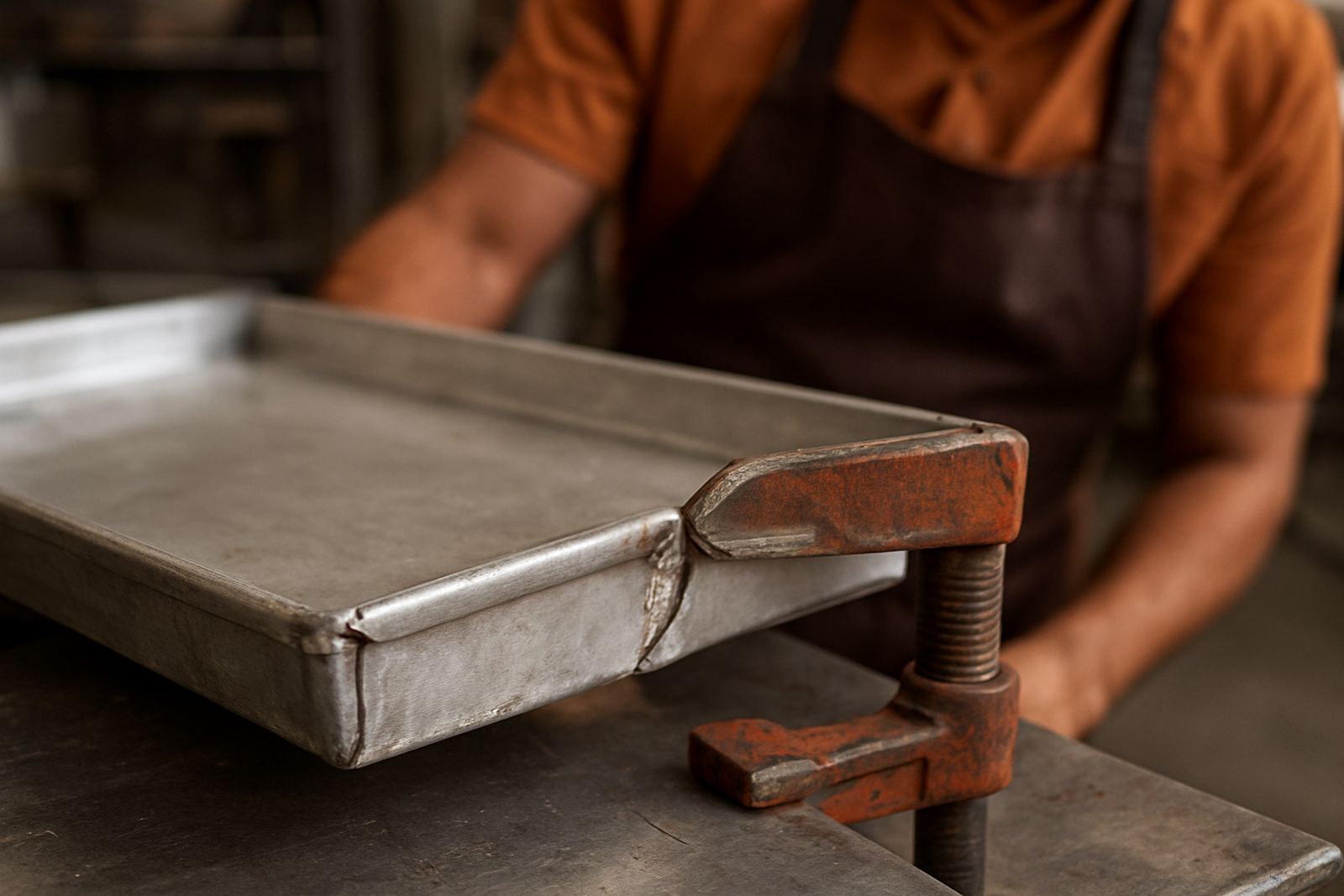
We check visible wear, heat damage, distortion, coating failure, broken corners, loose welds and any signs of strain from handling or stacking. For steel oven floor tiles, we also look for warping, broken edges and fit issues that can affect oven loading and heat flow. If your bakery runs long shifts or has had load-shedding interruptions, we pay close attention to damage that appears after hot and cold cycling.
- Standard bread pans and speciality pans
- Full tray sets for plant bakeries and retail baking rooms
- Steel oven floor tiles and related fitment points
- Spare lids and repeat-use parts
How the Assessment Is Carried Out
We start with a walk-through of the baking area, storage racks and wash-up section so we can see how the fleet is handled day to day. After that, we separate items into serviceable, repairable and uneconomical groups. This keeps decisions practical and helps avoid spending on items that will fail again too soon.
Where needed, we measure key dimensions such as pan mouth size, depth, rim profile, tray flatness and corner condition. We also note batch size, oven type, loading pattern and cleaning method, since these affect wear. Coastal humidity in Durban, Pinetown and nearby areas often speeds up corrosion, so we check for pitting and surface breakdown on stored items as well.
- Site walk-through and fleet count
- Condition grading by item type
- Measurements and distortion checks
- Usage notes from the bakery team
Repair Versus Replacement Decisions
The point of a fleet assessment is to show where repair will still give good value and where replacement is the better call. A pan with light straightening needs and a clean weld repair can often go back into rotation. A tray that has lost its shape, has repeated corner failure or no longer stacks correctly may be costing more in handling and downtime than it is worth.
For larger fleets, we group items by age, wear pattern and bake line use. That allows you to plan replacement in stages instead of all at once. This is useful for plant bakeries in KwaZulu-Natal and further afield, especially when you need to manage stock against peak production periods, school terms, hotel occupancy or retailer promotion cycles.
- Keep in service
- Repair and return
- Schedule for replacement
- Remove from rotation
Turnaround, Reporting and Action Plan
Once the physical check is done, we prepare a practical summary with the item counts, main defects and our recommendations. The report is written for operations teams, production supervisors and buyers, so the next step is easy to follow. You get a clear view of what can be repaired now, what should wait and what must be planned into your next spend cycle.
For larger fleets, we can split the report by area or by line if your bakery runs more than one site or more than one production area. That is helpful for Westmead, New Germany, Upper Highway and Durban supply routes where stock may move between branches. If items need urgent attention, we flag them first so your team can reduce risk without stopping the whole fleet.
- Item count and condition summary
- Priority list for urgent repairs
- Repair budget guidance
- Replacement planning notes
Pricing Approach for Larger Fleets
Fleet assessment is priced according to the number of items, the spread of item types and whether the inspection is done at our premises or on site. Bigger fleets need more sorting and recording, so we quote based on the actual time and the level of detail required. That keeps the pricing fair and avoids a one-size-fits-all charge that does not suit every bakery.
Where possible, we combine assessment work with current repair planning, which can reduce repeat handling. If you already know there are damaged pans, bent trays or worn floor tiles, tell us upfront so we can prepare the right inspection method. Transparent pricing matters when you are trying to balance repair budgets with production needs.
- Quoted on fleet size and complexity
- Separate pricing for on-site and workshop checks
- Options for phased assessment of very large holdings
- Repair plan can be bundled with the report
Maintenance Intervals That Keep Fleets in Use
Most bakeries benefit from a planned assessment cycle rather than waiting for failure. For busy plant bakeries, we recommend a fleet review every 6 to 12 months, depending on production volume, cleaning method and handling conditions. Sites with heavy use, frequent wash-downs or coastal exposure may need checks sooner.
Regular review helps catch cracks, rim wear and distortion before they spread through the fleet. It also supports better stock control because you can plan spare lids, pan recoating, tray recoating and weld repairs around your production calendar. In practice, a well-timed assessment can keep more items in rotation and reduce the number that are written off too early.
- Every 6 months for high-volume sites
- Every 12 months for lighter-use fleets
- Earlier review after flood, fire, transport damage or repeated load-shedding events
- Schedule follow-up with repairs already listed
Why Bakeries in Westmead and Beyond Use Our Checks
Bakerite has been making industrial bakeware in Westmead, Pinetown since 1997, and fleet assessment sits alongside the repair work we do every day. Because we manufacture, straighten, recoat and repair our own product types, we can judge whether an item still has useful life left or whether it is nearing the end of service. That practical view helps bakeries avoid guesswork.
We work with plant bakeries, retailers and hotels across South Africa, with direct support from our Westmead supply base and the surrounding KZN areas. If your fleet is spread across more than one site, or if the same pans and trays are being shifted between branches, we can help you get control of the whole set. It is often the difference between reactive repairs and a proper maintenance plan.
- Based in Westmead, Pinetown
- National supply to plant bakeries and hospitality sites
- Useful for mixed fleets and multi-site operations
- Supports planned maintenance and budget control
Key facts
| Service area | Westmead, Pinetown base with national supply |
|---|---|
| Assessment focus | Pans, trays, oven floor tiles and spare lids |
| Typical review cycle | 6 to 12 months, depending on usage |
| Condition checks | Warping, welds, corners, rims, coating failure, fitment |
| Output | Repair versus replacement plan with priority list |
| Best for | Plant bakeries, retailers, hotels and multi-site fleets |