What Pan Recoating Covers
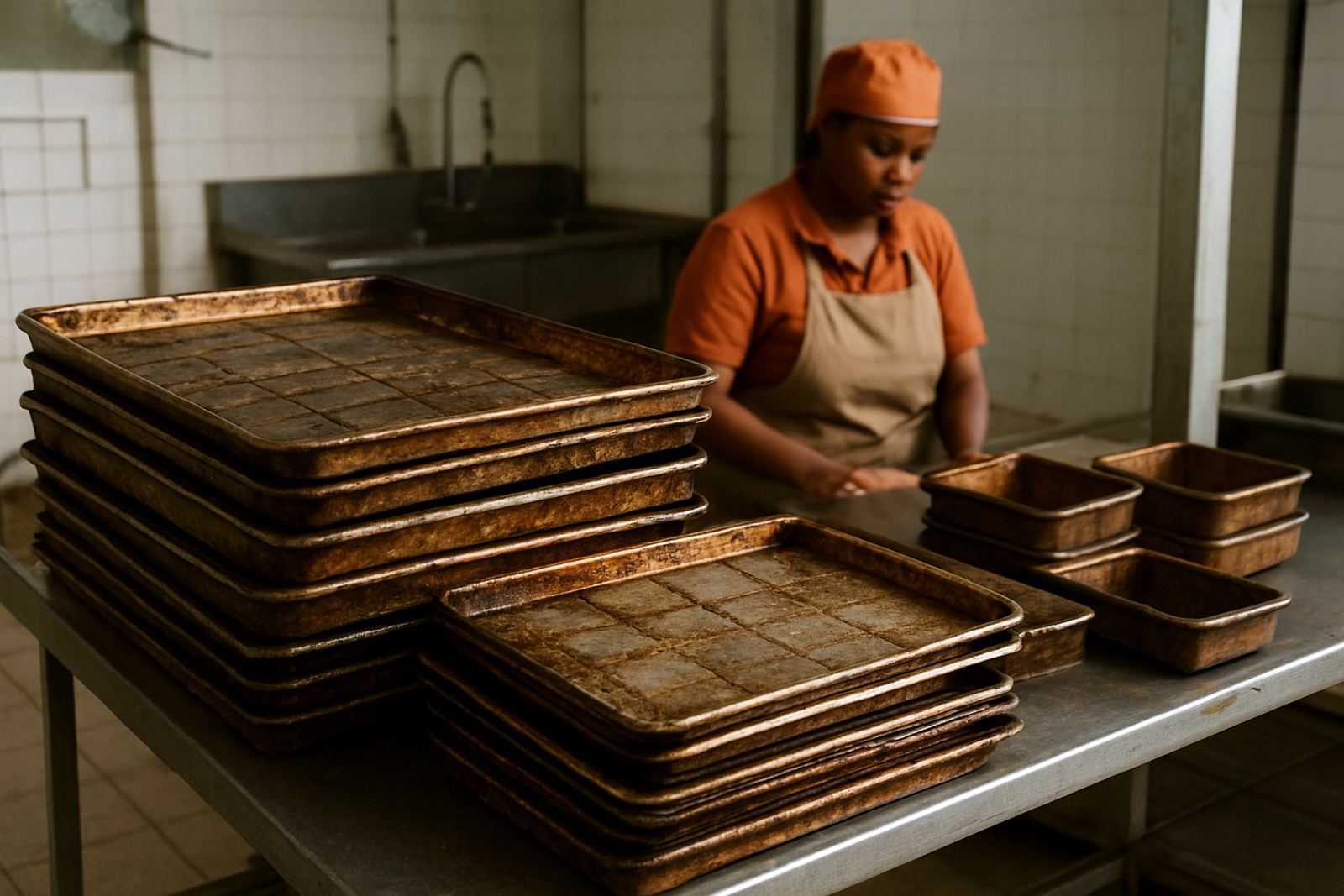
Pan recoating is for working pans that are still structurally sound but have lost their release performance, worn smooth spots, or started to mark product unevenly. We recondition the usable pan body and apply a fresh food-contact coating system suited to bakery service. The aim is to bring the pan back into daily rotation without the cost and delay of full replacement.
This service is used by plant bakeries, hotel bakeries and retail production teams that need consistent loaf release, cleaner pan surfaces and fewer rejects. It is especially useful in humid coastal areas like Durban and Pinetown where moisture and repeated wash cycles can wear pans faster than expected.
- Suitable for bread pans, loaf pans and similar bakery pans
- For pans with sound frames, sound seams and no major distortion
- Helps reduce sticking, patchy browning and surface build-up
- Can extend service life when carried out on a planned cycle
How We Assess Each Pan Before Recoating
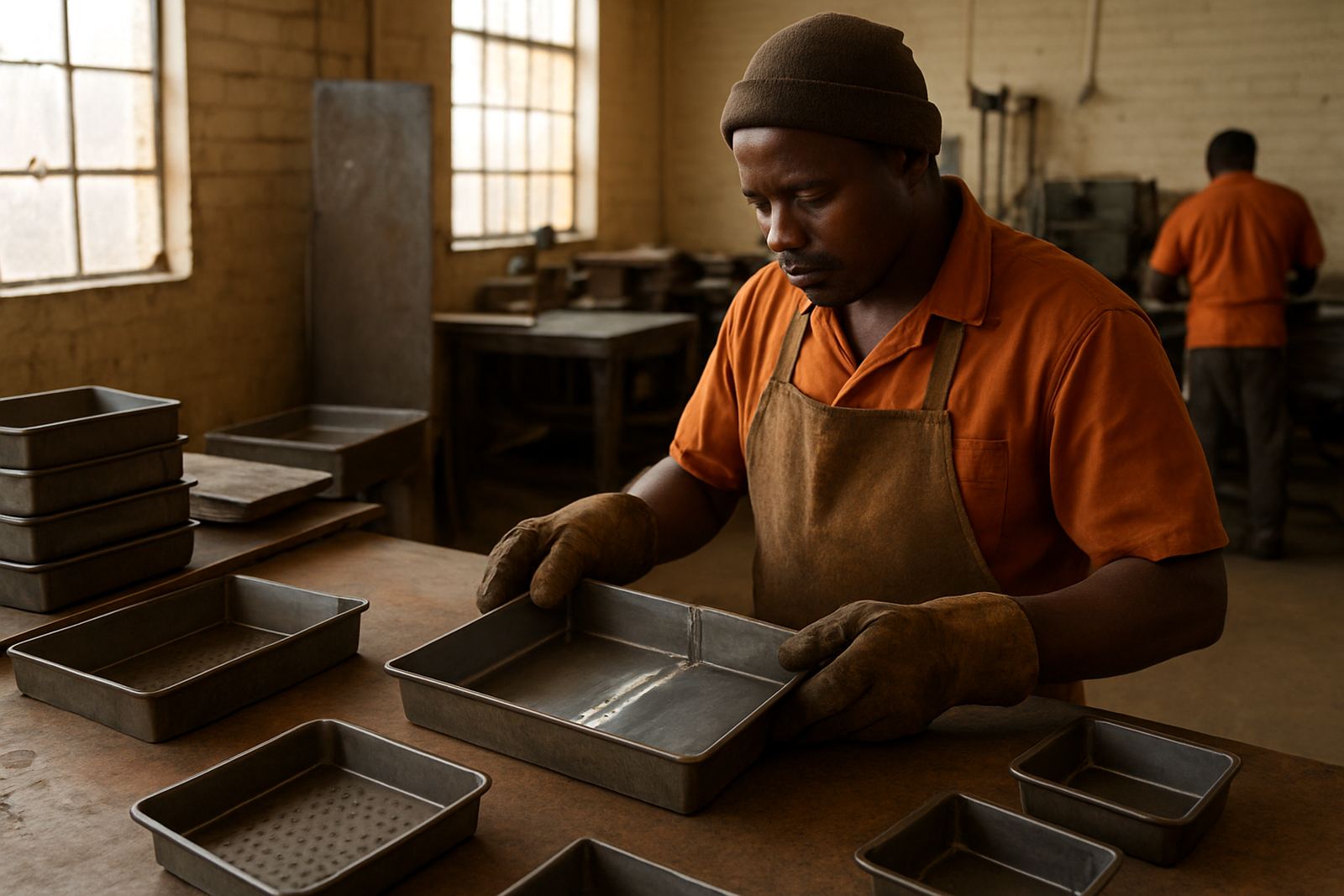
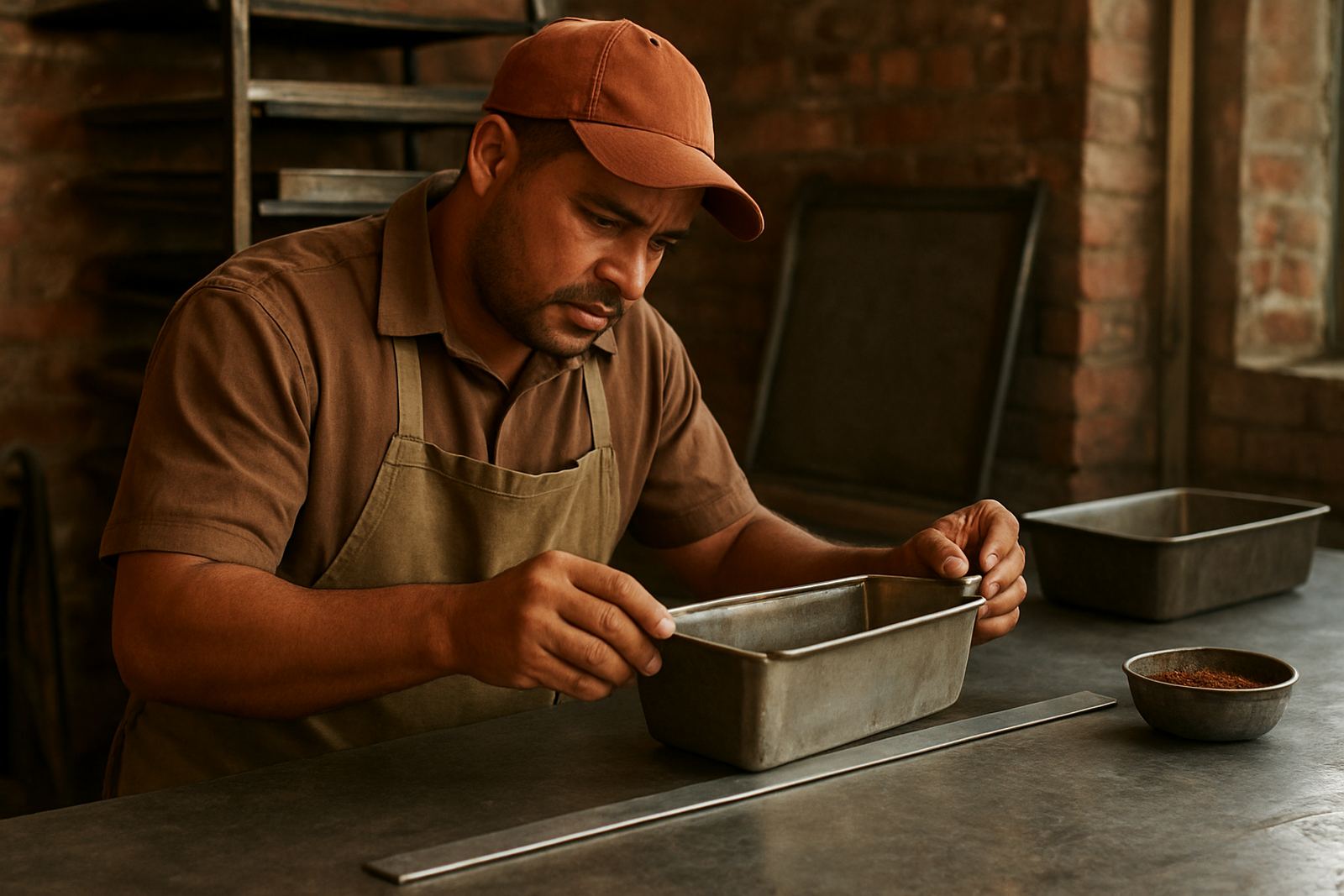
Every batch starts with an inspection. We check for bends, cracked welds, open corners, rim damage, twisted bodies and heat-fatigue damage. If a pan is too far gone, recoating will not hold properly and we will say so before work starts. That saves time and stops a short-term fix from becoming another breakdown on the line.
We also look at the current coating condition, residue build-up and the pan’s use history. A pan used on high-volume, high-heat production may need more surface preparation than a pan used in a smaller hotel bakery. If straightening, corner repair or weld repair is needed first, we can combine that with the recoating order.
- Visual check for distortion, fatigue and damage
- Surface test for residue, flaking and release failure
- Decision on whether repair, straightening or recoating is required
- Batch sorting so similar pans are processed together
Recoating Process and Surface Preparation
Proper surface preparation makes the difference between a coating that lasts and one that fails early. We clean each pan thoroughly, remove loose residue and prepare the surface so the new coating can bond evenly. Where required, we carry out deep cleaning to remove baked-on material that normal wash cycles leave behind. In some cases, light repairs are completed first so the coating is applied to a stable pan body.
Once the pan is ready, the coating is applied to the working surfaces in a controlled process designed for bakery use. The final finish is checked for even coverage, smooth release behaviour and consistent appearance. A well-coated pan should release cleanly, clean down faster and hold its shape across repeated heat cycles, even under heavy plant use.
- Deep cleaning and degreasing
- Surface preparation for adhesion
- Coating application on working surfaces
- Final inspection before dispatch
Turnaround Times for Production Schedules
We understand that bakery production cannot pause for long. Turnaround depends on quantity, condition and whether the pans need straightening or repairs first. Smaller batches can often move faster, while larger plant orders are planned in production runs so your team can keep stock moving. If your bakery is working around load-shedding or a tight dispatch window, tell us early and we will plan accordingly.
For urgent jobs, we look at the batch size and the condition of the pans first. If the pans are straight and ready, recoating can be processed more quickly than damaged sets. If you are sending pans from outside KwaZulu-Natal, allow time for transport in both directions. We prefer a clear schedule at the start so there are no surprises later on.
- Lead time depends on batch size and condition
- Urgent work is assessed case by case
- Repairs before recoating will extend the schedule
- Transport time should be included for out-of-town collections
Pricing Approach and Batch Planning
Recoating is priced according to pan type, condition, volume and the amount of prep needed before coating. A pan with light wear is not treated the same as a pan that needs straightening, corner repair or weld work. That keeps pricing fair and tied to actual labour and materials, not a one-size quote that misses the real condition.
For larger bakery operations, batch planning usually gives the best value. When pans are processed together, inspection and prep are easier to manage and your production team gets a clearer return on the work. We can also assess mixed batches, for example working pans, a few damaged units and spare lids at the same time. Please send photographs or a sample batch if you need a proper quote.
- Pricing based on condition, pan type and quantity
- Combined repair and recoating orders can be quoted together
- Batch work is often the most cost-effective option
- Photographs help speed up the first assessment
Maintenance Intervals and Care After Recoating
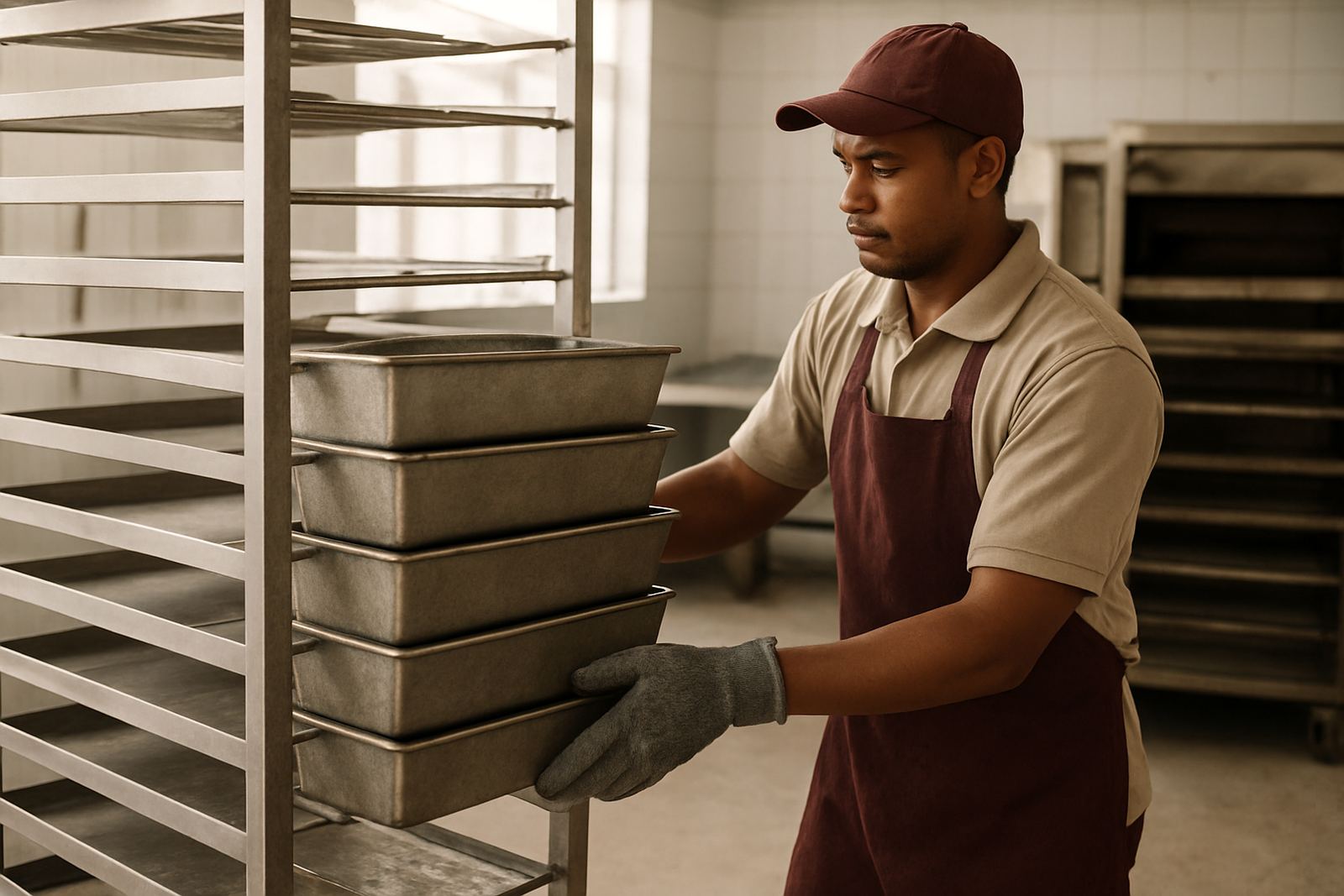
Recoated pans last longer when they are handled and cleaned properly. Use the right release practice for your product line, avoid harsh scraping and keep wash temperatures within sensible limits for the coating used. Excessive abrasion and poor stacking are common reasons good pans wear out early. A few small changes in handling can add months of useful life, sometimes more.
As a rule, high-output bakery lines should inspect pans on a regular cycle rather than waiting for visible failure. If you are seeing more sticking, darker spots, or product marking on the crust, the coating may be due for review. In coastal towns, and in plants where wash-down is frequent, it is worth setting a planned recoating interval instead of reacting when stock is already affected.
- Inspect pans on a planned maintenance cycle
- Avoid metal scraping and rough stacking
- Keep wash and dry routines consistent
- Reassess before sticking becomes a production problem
When Recoating Makes Sense Over Replacement
Not every pan needs to be scrapped. If the frame is still square, the corners can be repaired, and the pan body is still within serviceable tolerance, recoating is often the sensible option. That is especially true for large bakeries with repeating pan sizes, where matching the working stock matters more than starting over with a mixed set.
Replacement makes sense when there is major distortion, repeated cracking, or severe damage that cannot be corrected safely. In every other case, recoating can be the practical middle ground. It restores usable pans, reduces waste and helps keep your bakery operating with less interruption. If needed, we can also advise on spare lids and related repairs while the pans are in our hands.
- Best for pans that are worn but still structurally sound
- Often cheaper than full replacement
- Useful for standardised production lines
- Can be combined with other repair services
Key facts
| Service | Pan Recoating |
|---|---|
| Typical items | Bread pans, loaf pans and similar bakery pans |
| Base | Westmead, Pinetown |
| Area served | National supply from KwaZulu-Natal |
| Condition required | Pans must be structurally sound or repairable |
| Typical use | Restore release performance and surface condition |