What our tray recoating service covers
Tray recoating is for steel bakery trays that have lost their non-stick finish, have light surface wear or are starting to mark product during bake-out and release. It suits plant bakeries, hotel bakeries, wholesalers and retail production kitchens that run repeat tray cycles every day.
We recoat trays used for buns, pastries, biscuits and other baked items where clean release matters. The work is done for flat and formed trays, with attention to the edges, corners and base surface so the tray goes back into service with a consistent finish.
- Removal of loose coating and baked-on residue
- Inspection for bends, cracks and heat damage
- Surface preparation before recoating
- Recoat application for improved release
- Final check on fit, finish and tray condition
How the recoating process is done
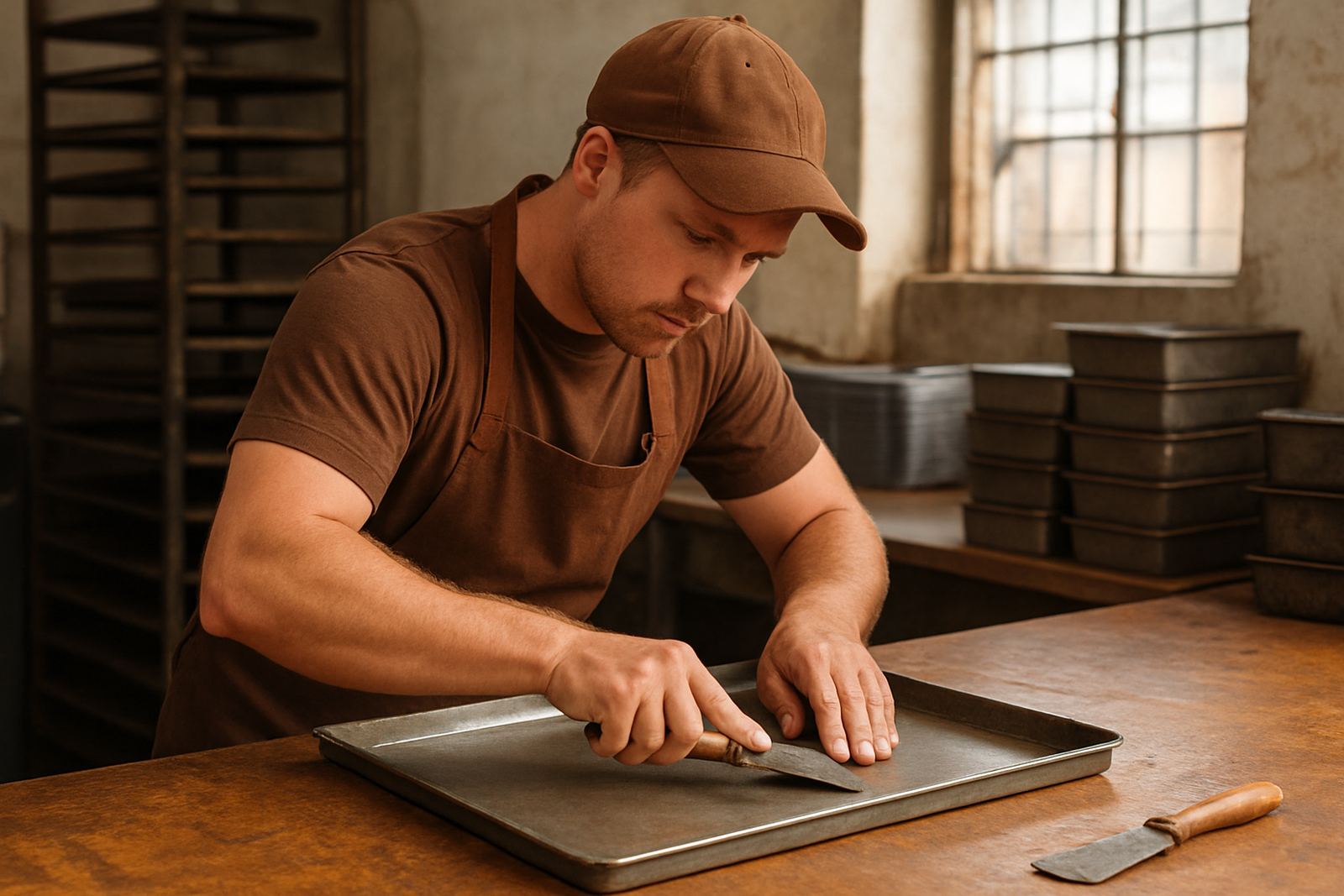
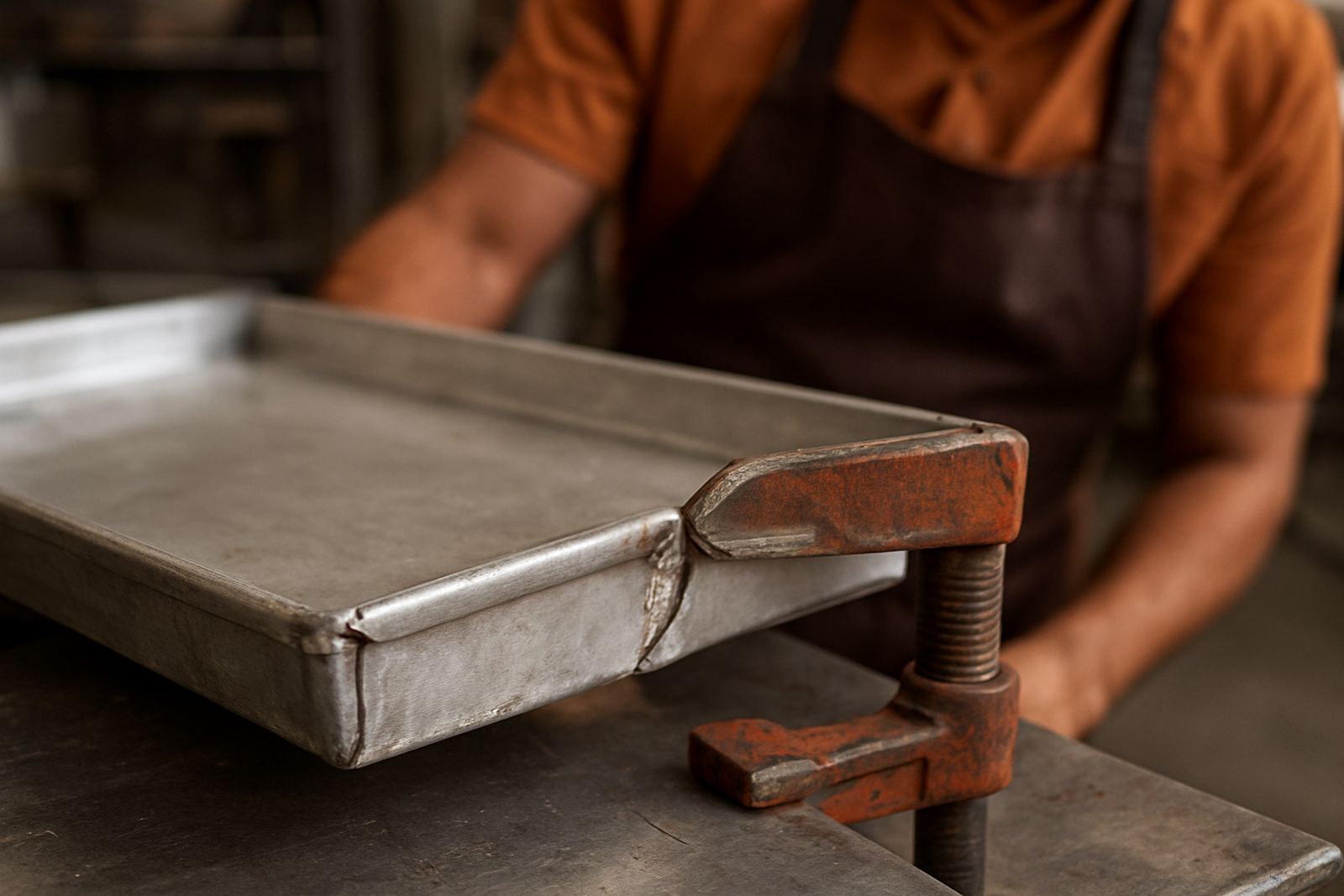
Every tray starts with a visual check so we can see whether recoating is suitable or whether straightening, corner work or weld repairs are needed first. Trays with heavy distortion, deep rust or broken sections are flagged early so you dont waste money on a finish that will fail quickly.
Once approved, the tray is cleaned down and prepared for recoating. Where needed, we do light rectification first, then apply the coating evenly across the working surface. After that, each tray is checked for finish consistency and handling condition before release.
- Initial inspection and condition grading
- Cleaning and stripping of worn surface material
- Minor repairs if required before coating
- Recoating on the baking surface
- Quality check before collection or dispatch
Turnaround for bakery production schedules
Turnaround depends on the condition of the trays and how many units are booked in at one time. Small batches can often be handled faster than large fleet jobs, especially where trays arrive sorted by size and condition. For plant bakeries we also work around planned shutdowns, stock counts and maintenance windows.
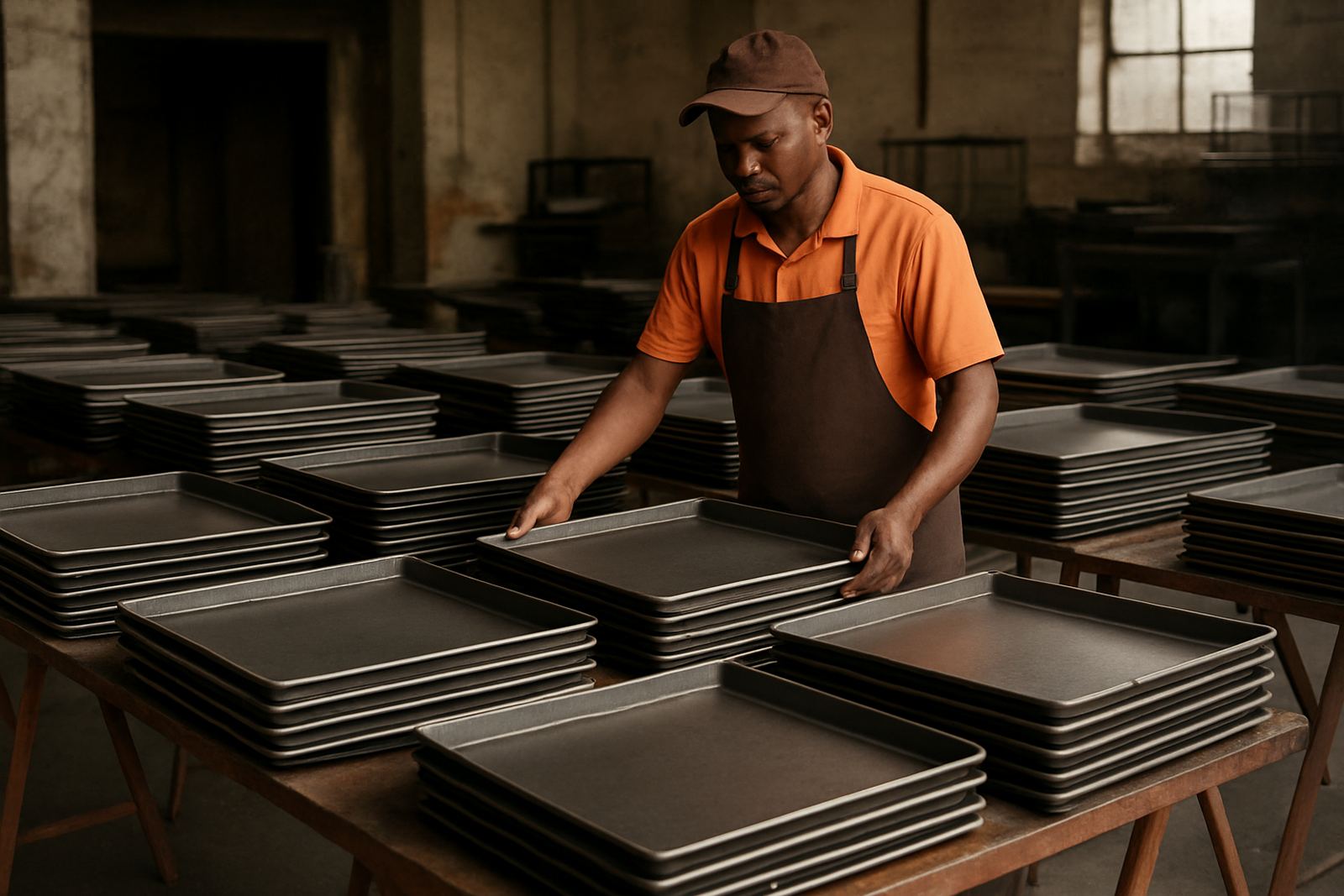
If your trays are used in a high-volume line, it helps to send them in batches so there is still enough rotation on site. That avoids a full stop at the oven and gives you better control over production. In Durban, Pinetown, Westmead and surrounding industrial areas, many customers plan recoating together with cleaning and repair work to save transport time.
- Batch work for planned bakery downtime
- Collections can be arranged for larger fleets
- Sorting trays by size speeds up handling
- Urgent jobs are assessed case by case
Pricing that suits repair and replacement planning
Tray recoating is priced according to tray size, coating condition, cleaning time, and whether any repair work is needed before the new finish is applied. A simple tray with light wear will cost less than a tray that needs straightening, corner repair or weld work first.
We normally assess trays first so the quote matches the real condition on the day. That gives you a clear choice between recoating, repair or replacement and helps with budget planning across your fleet. For bakeries dealing with load shedding and tight run times, this kind of planning can make a real difference to output.
- Quotes based on actual tray condition
- Repair and recoating can be combined
- Larger quantities are costed as a fleet job
- Good option where replacement stock is limited
When trays should be recoated again
Most trays show the need for recoating when product starts sticking, the surface becomes patchy, or the finish has gone dull and hard to clean. In busy plant bakeries that run daily shifts, tray wear builds up faster than in a hotel bakery or smaller production kitchen.
Good maintenance can stretch the interval between recoats. Keep trays dry after washing, avoid harsh scraping with metal tools, and do not leave trays sitting with residue on them overnight. Coastal humidity can also speed up surface wear, so Durban and nearby areas often need closer checks than inland sites.
- Watch for sticking, flaking or uneven release
- Inspect trays after every cleaning cycle
- Store in a dry area where possible
- Book checks before peak production periods
Why plant bakeries use recoated trays
Recoated trays help keep product presentation steady and reduce waste from damaged release surfaces. They also support cleaner handling on the line, which matters when you are moving buns, pastries or biscuits through large batches and need the tray to perform the same way each time.
Bakerite has worked from Westmead, Pinetown for many years, serving plant bakeries nationally from our KwaZulu-Natal base. We understand the pressure of production timing, municipal water quality changes and the wear that comes from daily oven use, so the work is done with that reality in mind.
- Better release and cleaner tray surfaces
- Less product loss from sticking
- Useful for high rotation bakery fleets
- Supports longer tray life before replacement
Key facts
| Service | Tray recoating for bakery trays |
|---|---|
| Tray types | Flat trays, formed trays and production trays for buns, pastries and biscuits |
| Condition range | Light to moderate surface wear, loss of release finish, minor distortion |
| Preparation | Cleaning, surface prep and inspection before recoating |
| Related work | Straightening, corner repairs, rim repairs and weld repairs where required |
| Area served | Westmead, Pinetown, Durban, KwaZulu-Natal and national supply |