What frozen dough sites need from bakeware
Frozen dough operations are harder on bakeware than a normal hot line. Trays sit in cold rooms, move through high humidity, then go back into ovens and trolleys all day. If the steel is too light, or the rim work is weak, you get twisting, bowed sides and poor release. That slows the line and causes waste.
For frozen dough sites, the real job is not only baking. It is make-up, proof staging, blast freezing, loading, off-loading and holding product in a way that protects size and finish. We make and service steel oven floor tiles, bread pans and custom trays that support those steps in plant bakeries across South Africa.
Typical equipment set for make-up and bake-off
A frozen dough site usually needs a mix of heavy duty trays and matched pans. The set depends on whether the site is doing loaves, rolls, French sticks, buns or mixed product for retail packs and hotel supply. Many sites also need spare lids, stackable trays and a few special sizes for changeovers.
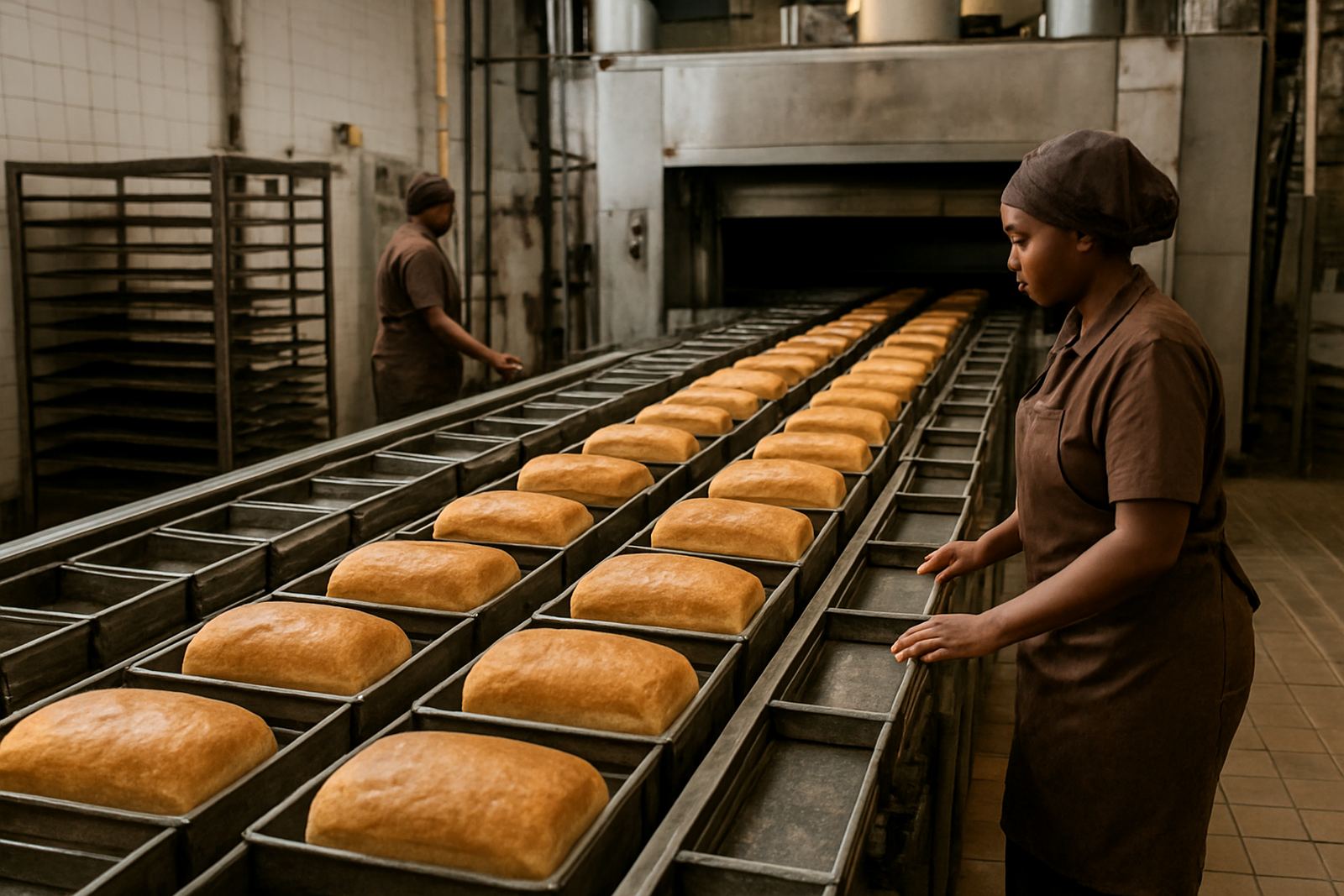
- Bread pans for tin loaves, small loaves and pullman style products
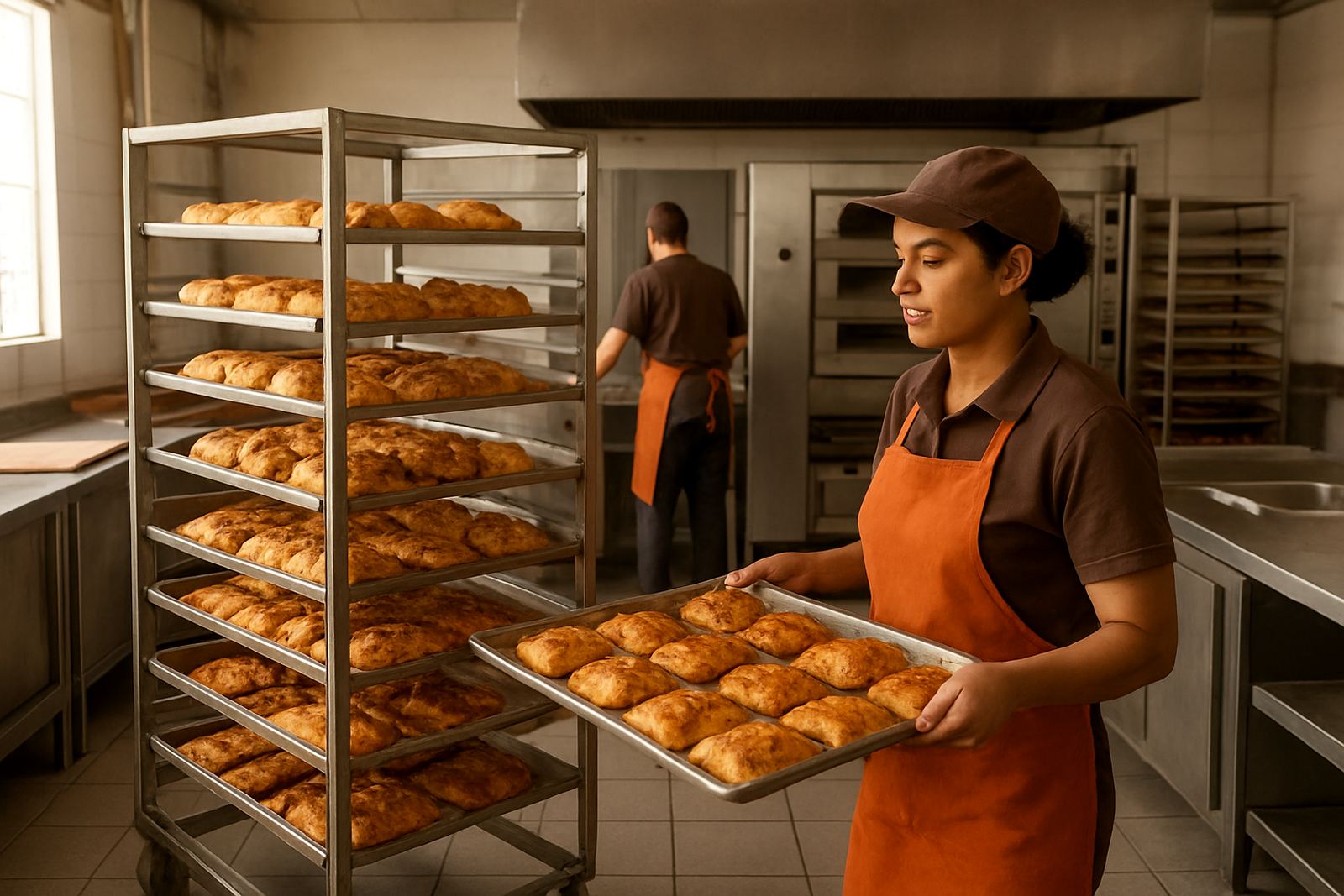
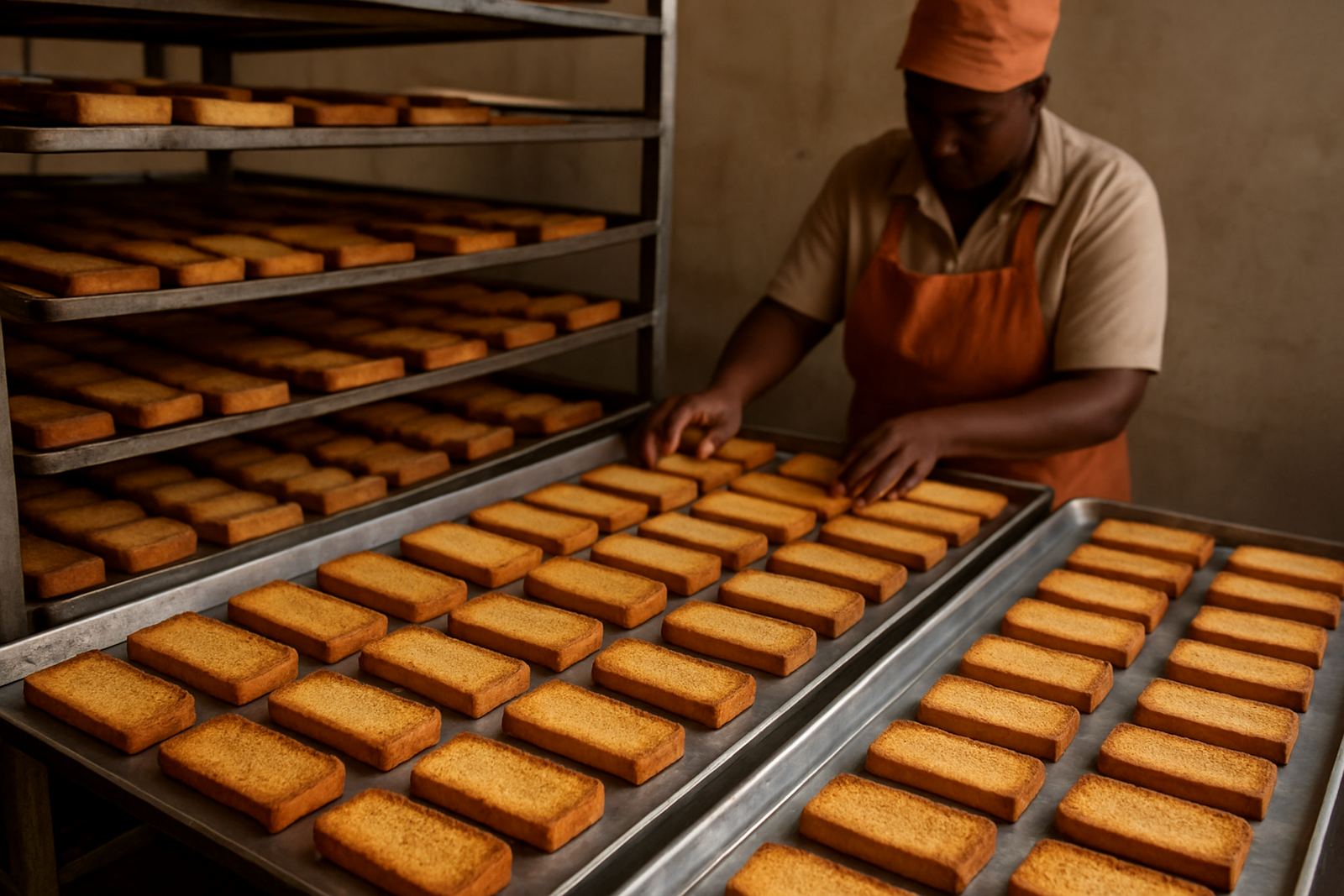
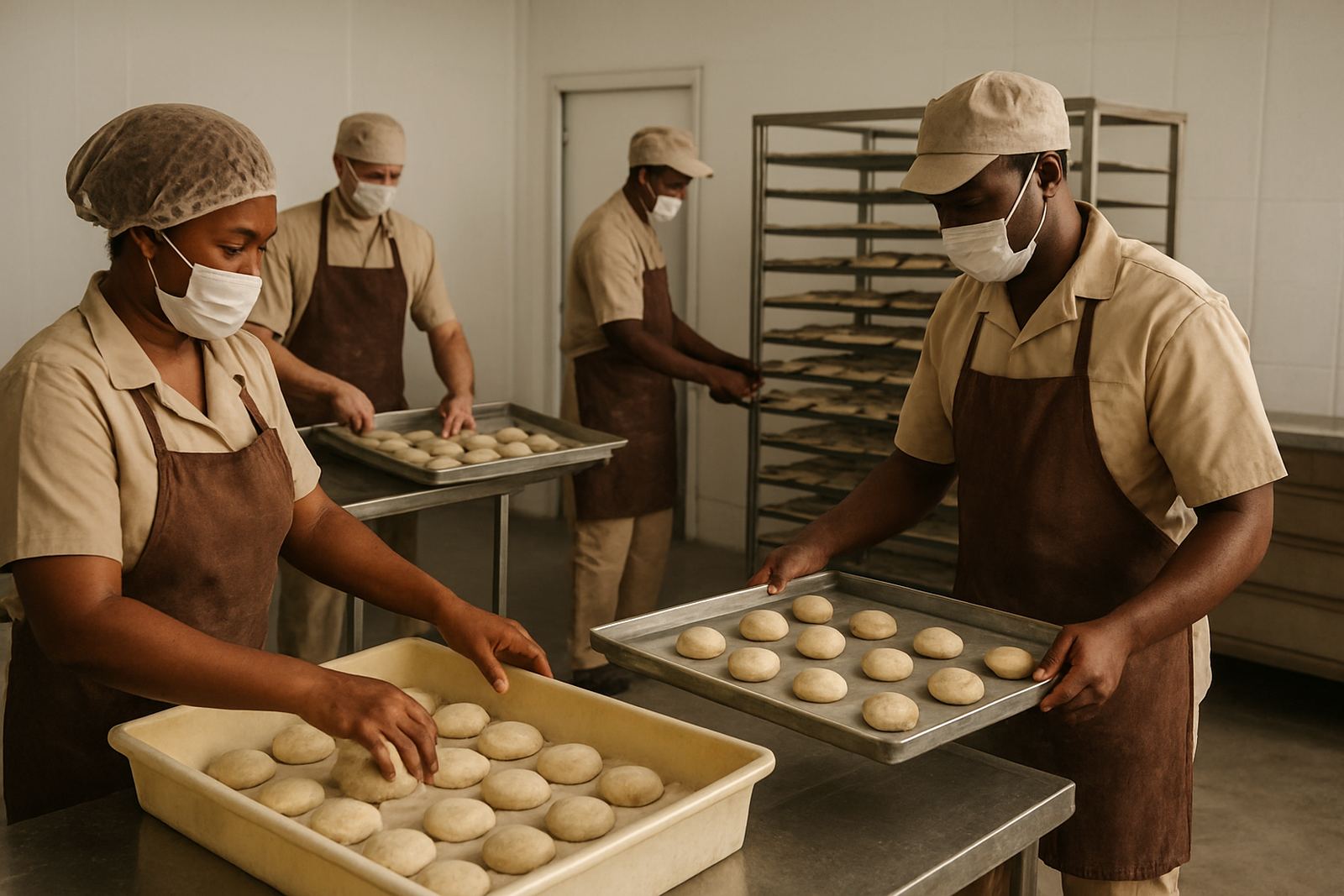
- Open trays for rolls, buns, garlic breads and shaped dough pieces
- Steel floor tiles for direct oven loading and stable heat transfer
- Custom trays for odd sizes, divider lines and customer specific pack formats
- Spare lids for proofing and handling where covered staging is needed
We also supply Pan Recoating, Tray Recoating and Pan Straightening, which helps when sites already have a stock of usable bakeware but need it brought back into line. In many cases a recoated set costs far less than a full replacement order, especially for a site that is running several shifts and cannot wait for a long lead time.
Layout planning for freezing, staging and oven flow
Good layout planning starts with the product path. Dough should move in one direction as far as possible, from make-up to staging, then into blast freezing, storage, thaw control and bake-off. If your trays cross paths with trolleys, pallets or cleaning traffic, you lose time and create handling damage.
We normally look at tray footprint, trolley spacing, oven deck opening, and the amount of movement between chilled rooms and ambient packing areas. In coastal places like Durban, humidity can be a real problem. Steel parts that sit wet for too long will stain and pick up surface corrosion, so drainage, drying space and a sensible wash area matter just as much as the bakeware spec.
For sites in Pinetown, New Germany and the Upper Highway, power interruptions also need to be planned for. When load-shedding hits, a bakery that can hold product safely in trays and move it back into flow without distortion will usually lose less stock than one using thin, badly supported pans.
Common mistakes that cost frozen dough sites money
One of the biggest mistakes is buying trays by size only and not by duty. A tray that looks right on paper can still fail if the steel gauge is too light for daily shuttle work. Another common issue is mixing old bent pans with new stock, which creates uneven stacking and poor oven loading.
- Using light trays for repeated cold to hot cycles
- Ignoring rim damage until trays no longer stack properly
- Ordering without checking trolley pitch and oven clearance
- Letting wet pans stand overnight in coastal humidity
- Replacing the whole set instead of repairing the serviceable pieces
We also see sites under-spec the number of spare pans they need. If the line is tight, one broken tray can hold up a full run. A sensible spare ratio keeps cleaning, repairs and production from fighting each other.
Repair and upkeep for longer service life
Frozen dough sites can extend the life of their bakeware with proper upkeep. That means deep cleaning, regular inspection and fixing problems before they spread. A small crack at the corner or a weak weld may seem minor, but once a tray is moving through freeze and heat cycles it gets worse fast.
Our service work includes Corner Repairs, Rim Repairs, Lid Repairs, Weld Repairs, Fleet Assessment and Deep Cleaning. For sites that are running old stock, Pan Straightening is often worthwhile before new production starts. We can assess what should be repaired, what should be recoated and what should be replaced, so the kitchen or bakery does not spend money in the wrong place.
Budget ranges for a frozen dough site
Budget depends on tray size, steel thickness, quantities and whether the site needs custom forming. A small replacement order for standard pans may run from about R8 000 to R25 000. Mid-size project work for a plant bakery or retail support centre often sits between R25 000 and R90 000.
For larger frozen dough operations, especially where custom trays, steel floor tiles and multiple spare sets are needed, budgets can move from R90 000 to R250 000 and beyond. Recoating and repair work usually comes in far below full replacement, which helps when the aim is to stretch the life of an established fleet rather than start from zero.
It is worth costing the full cycle, not only the purchase price. If a tray warps, causes sticking or slows unloading, the hidden cost shows up in labour and waste very quickly.