What rusk producers need from tray and pan gear
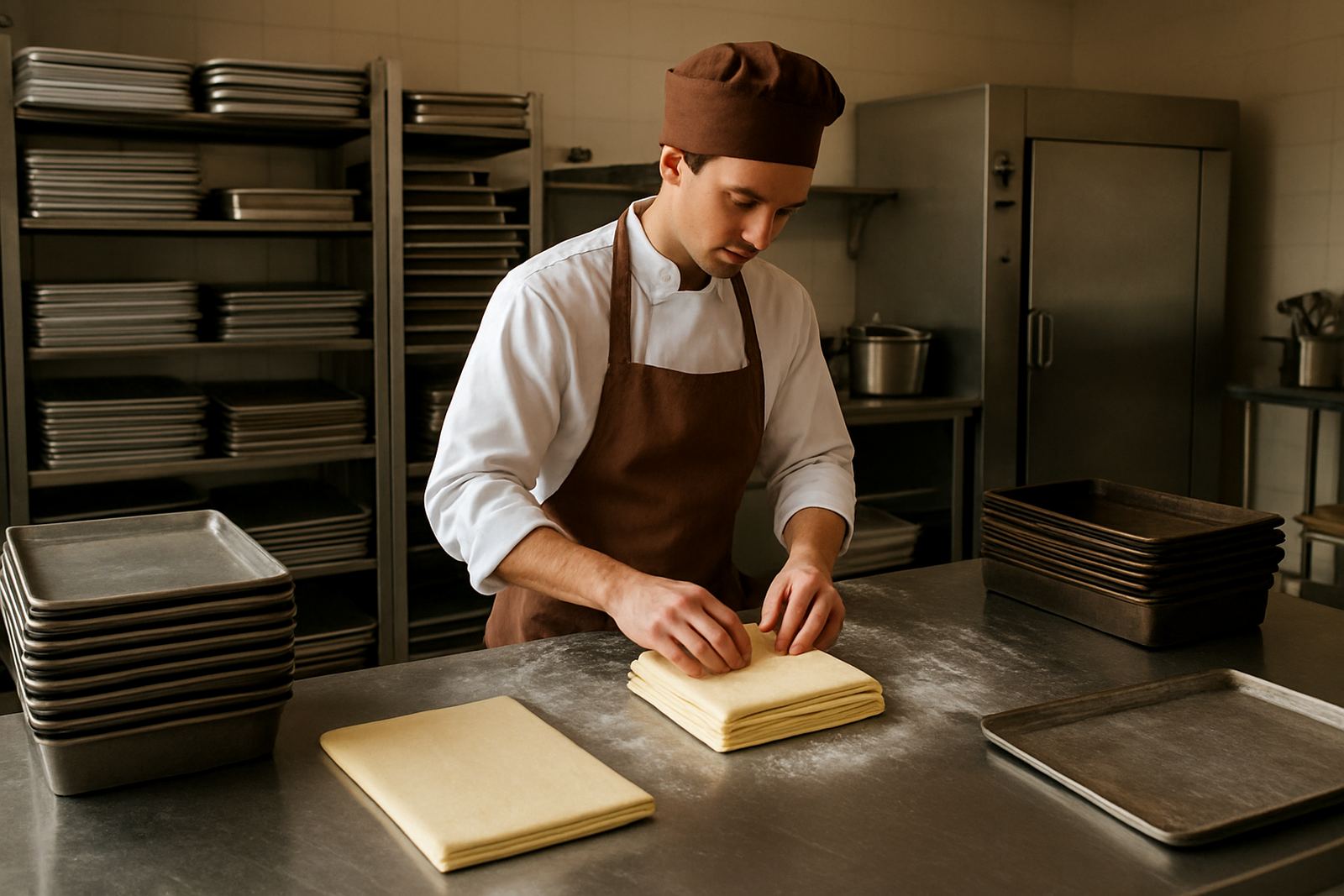
Rusk lines are hard on bakeware because the same set of trays often moves from dough deposit to oven floor heat, then to slicing, then back into the oven for drying. If the tray twists, the loaf bars shift and the cut is not even. If the pan corrodes or the rim lifts, you lose consistent sizing and spend more time sorting rejects. For producers in Durban, Pietermaritzburg, Johannesburg and other plant bakery hubs, the main need is simple: trays that hold shape, carry heat evenly and keep working through repeat cycles.
At Bakerite in Westmead, Pinetown, we make steel oven floor tiles, bread pans and custom trays for this kind of work. The original Bakerite steel floor tile was made here and the same practical approach still applies. Rusk producers usually need a mix of standard pans for the first bake and stronger trays for cooling, slicing and rebake drying. Coastal humidity in places like Durban can also cause faster surface wear, so finish and maintenance matter just as much as thickness.
Typical equipment set for a rusk plant
A rusk operation does not usually run on one tray type only. Most plants need a set that covers forming, baking, handling and drying without changing dimensions from batch to batch. We usually look at the full line before quoting, because the wrong tray size can slow everything down or force staff to rework product by hand.
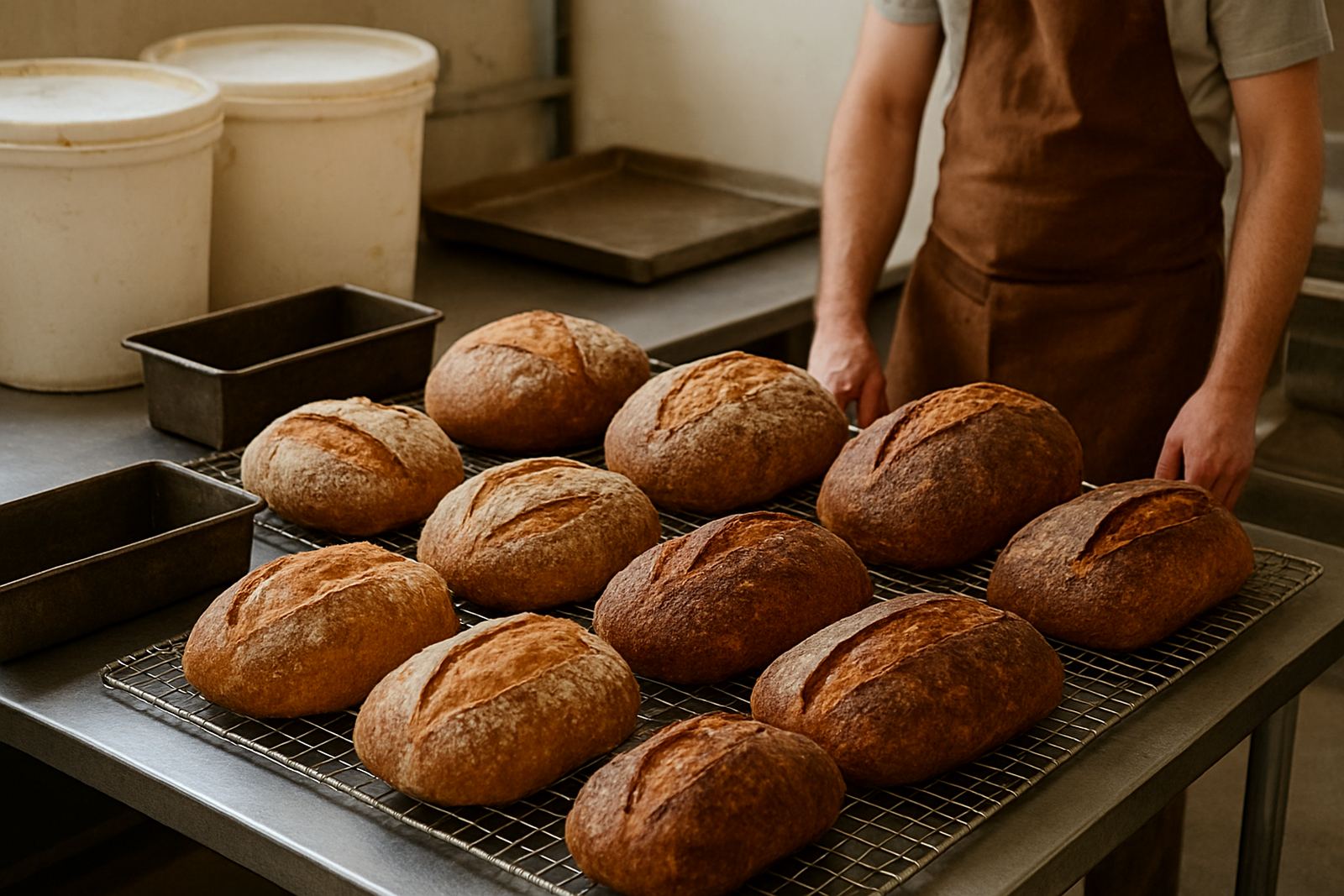
- Bread pans for first-bake loaves or bars that will be sliced later
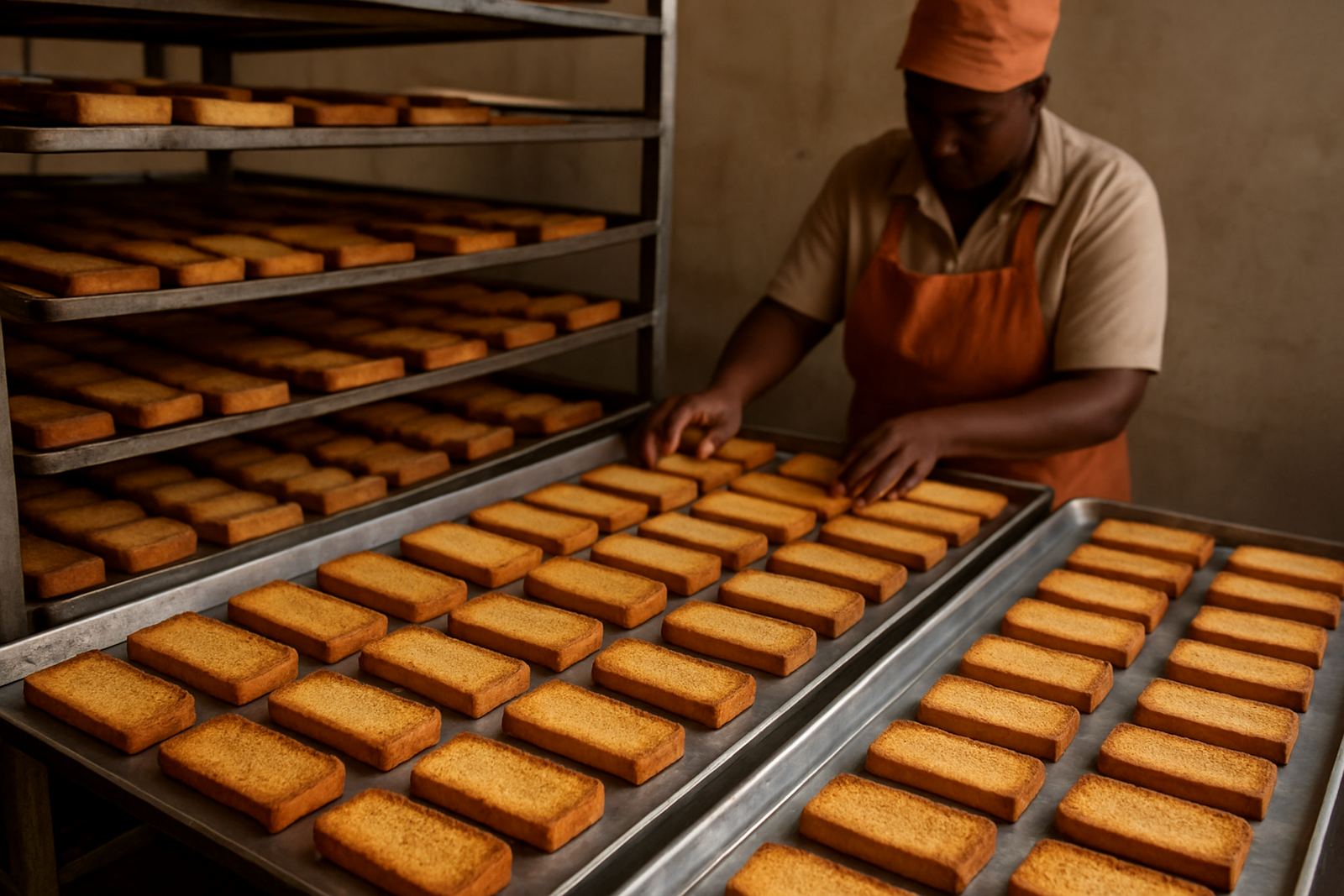
- Custom trays for cut pieces, drying racks or transfer between stages
- Steel floor tiles for ovens where stable base heat is important
- Spare lids where covered proofing or protection is part of the process
- Replacement parts and repairs for older trays that are still worth keeping in service
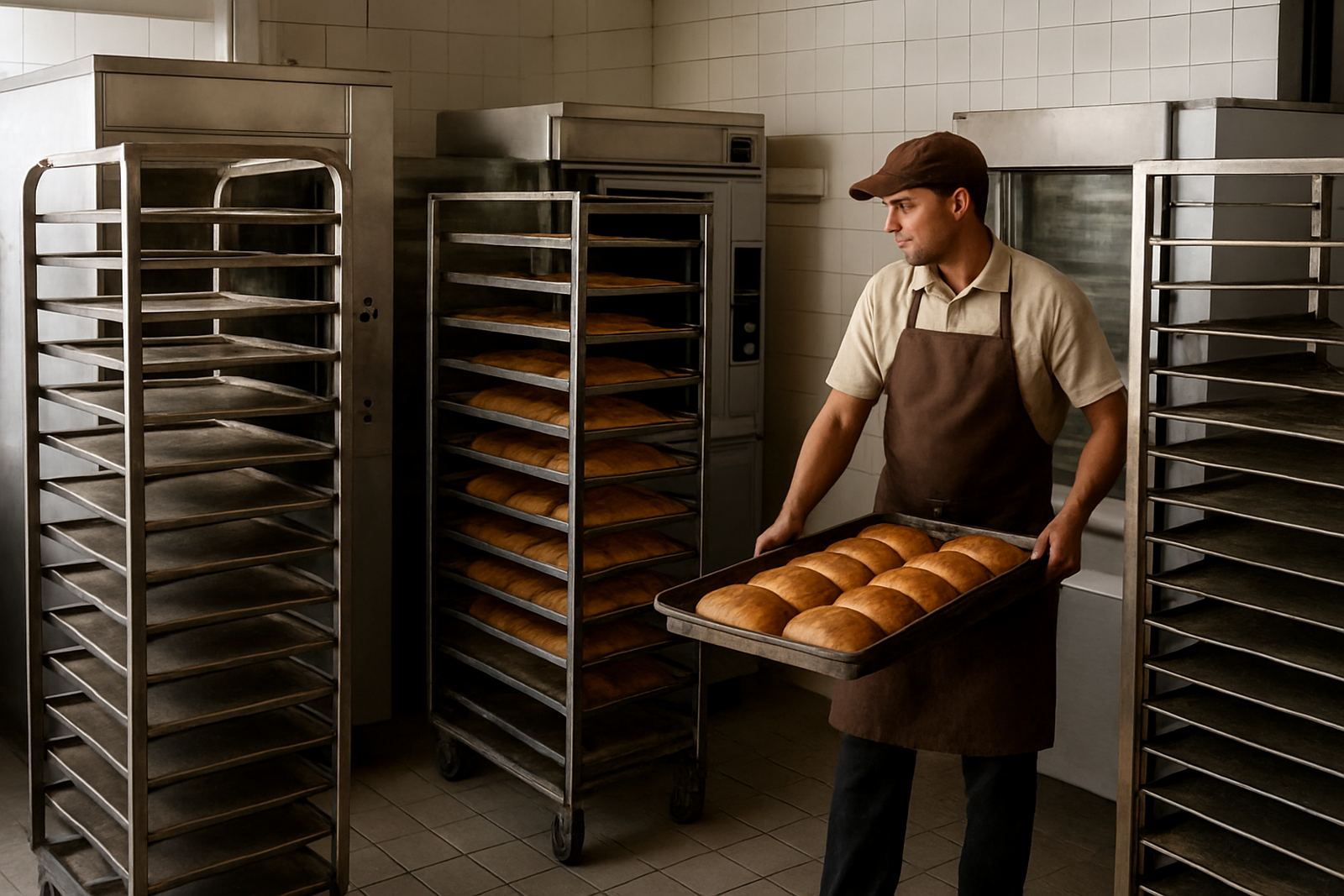
For high-volume bakeries, a good set-up often includes a spare pool of trays so production does not stop when a unit goes out for repair or deep cleaning. That helps during municipal water interruptions and load-shedding as well, because plants can shift work around without waiting for a single batch of gear to come back from service.
Layout and sizing advice before you order
The best tray is the one that fits the oven, the slicer and the handling route. We ask for the internal oven dimensions, rack spacing, conveyor width if there is one, and the finished product size you need after bake and slice. A tray that is 10 mm too wide can create sticking points all the way down the line. In older plants, the real issue is not the recipe, it is often a mismatch between the oven opening and the bakeware that has been used for years.
When planning a rusk line, leave enough room for heat movement and staff handling. Tight layouts create knocks and dents on the corners, especially where trays are stacked too high or pushed through narrow doors. In humid areas, allow for airflow after washing so trays dry properly and do not pit or rust along the rims.
- Measure the usable oven space, not just the outer shell
- Check rack lip depth and the clear height between shelves
- Allow for gloves, tongs and loading space at the oven mouth
- Keep tray weights manageable for repetitive handling
- Plan storage so clean and dirty trays do not mix
Common mistakes that shorten tray life
Rusk producers often try to stretch old trays a bit too far. A bent tray may still slide into the oven, but it can create uneven bake colour and a poor slice. Once the corners are gone, the tray starts working against the product. Another common mistake is using general purpose pans for a process that needs repeated heating and cooling. That kind of cycle shows up quickly in warped bases, open seams and loose rims.
We also see plants using the wrong cleaning method. Hard scraping and harsh soaking can take the life out of good steel, especially if the tray is already thinning. If a tray has shallow twist or a lifted edge, pan straightening, corner repairs or rim repairs may give it more service life. If the welds are split or the surface is too far gone, recoating or a replacement tray is the better spend. You do not want to keep patching something that has already reached the end of its run, because that costs more in downtime than in steel.
Repair, recoating and cleaning for longer service life
Many rusk producers do not need a full replacement schedule every time. If the body of the tray is still sound, services like tray recoating, pan recoating, weld repairs and deep cleaning can keep equipment in rotation while you plan the next batch of orders. That matters for plant bakeries serving supermarkets, hotels and regional distribution routes, where a missed production day can affect deliveries across KZN and beyond.
Our service team handles fleet assessment, spare lids and the kind of practical repair work that keeps bakeware moving. The key is to bring trays in before the damage becomes structural. A tray with early wear can often be brought back into line, but once the base has been badly distorted it starts affecting oven loading and product consistency.
- Deep cleaning removes baked-on residue that holds moisture
- Recoating helps protect the steel surface from repeated wash cycles
- Straightening restores tray fit for racks and oven floors
- Corner and rim repairs reduce snagging and handling damage
Budget ranges for rusk producers in Rand
Budget depends on size, steel thickness, quantity and whether the order is standard or custom. As a working guide, smaller runs for bread pans and custom trays can start in the low thousands of Rand per item, while heavier or specialised trays cost more because of material and fabrication time. A full plant order, especially where multiple sizes are needed, can move into the tens of thousands quickly. That is normal for bakeries that need long service life and a reliable fit.
Repair work is usually the lower cost option when the base metal is still usable. Recoating, straightening and rim or corner repairs are normally priced below replacement, but the real saving is keeping a tray in production instead of losing a shift. For larger rusk operations, we often recommend budgeting for a mix of new builds and repairs, so the line keeps running while older stock is rotated out in stages.
If you are setting up a new rusk line or replacing an old one, send through tray dimensions, oven type and the quantity you need. We can work from the Westmead base and supply plant bakeries nationally, including Durban, Pinetown, New Germany and the Upper Highway area.