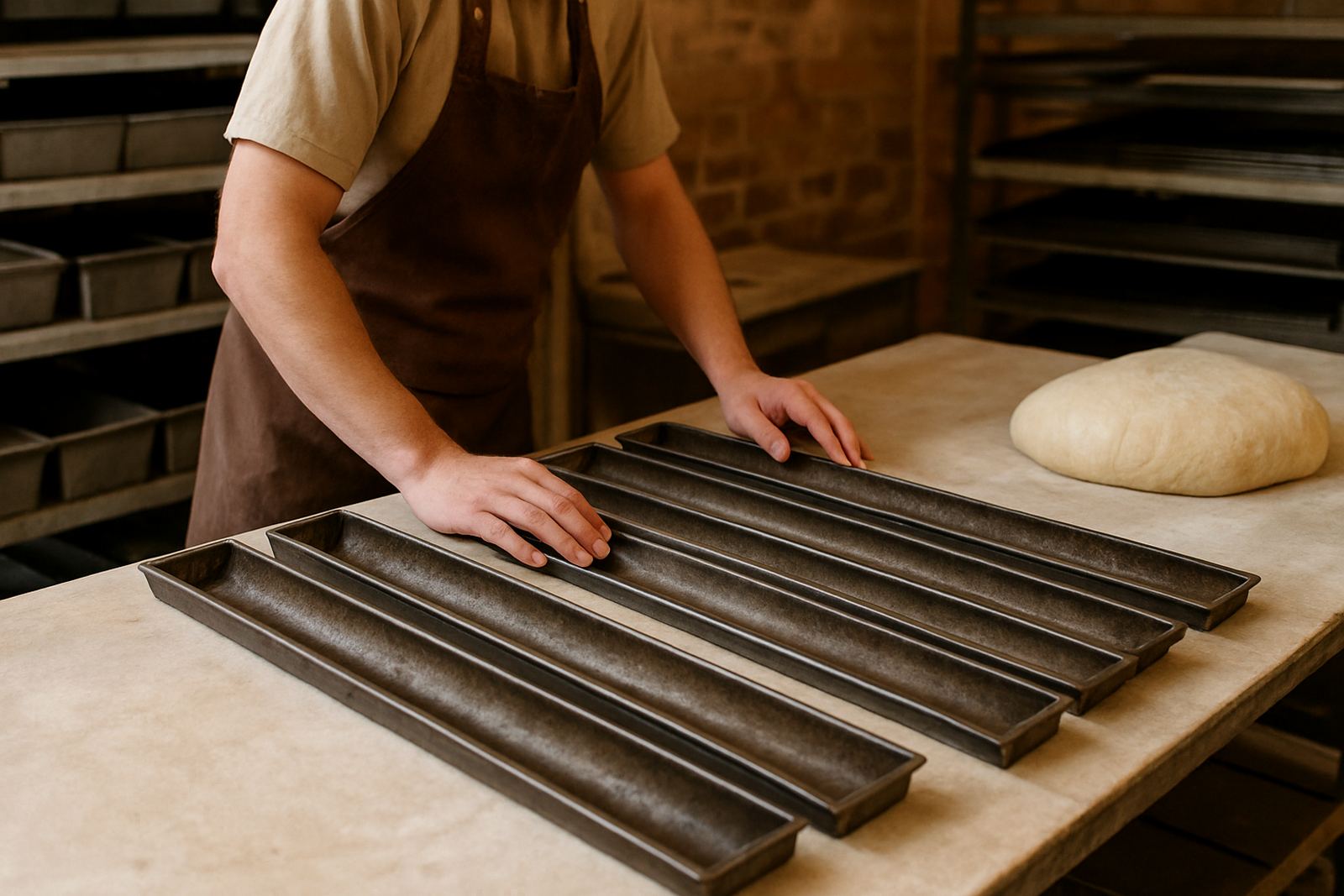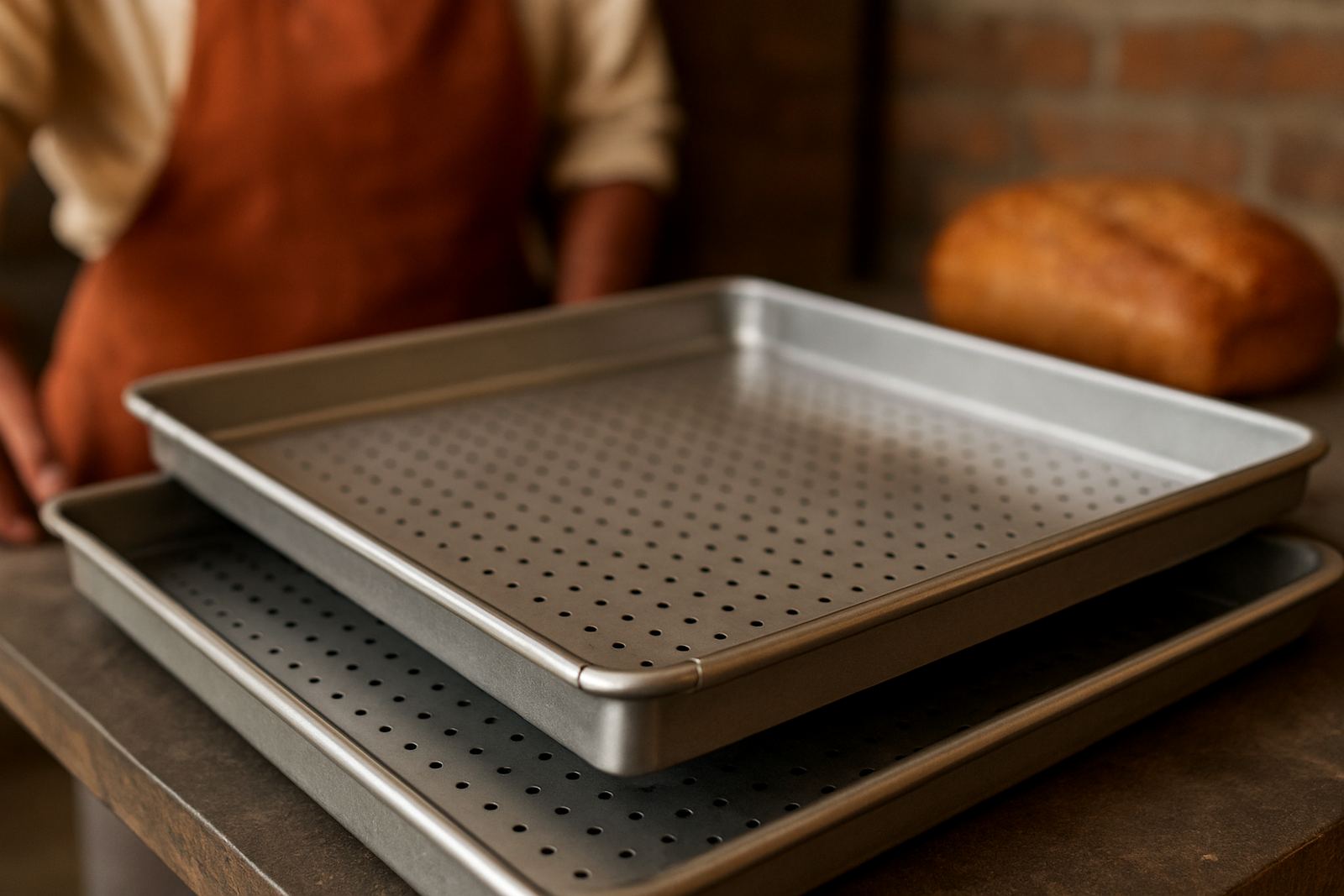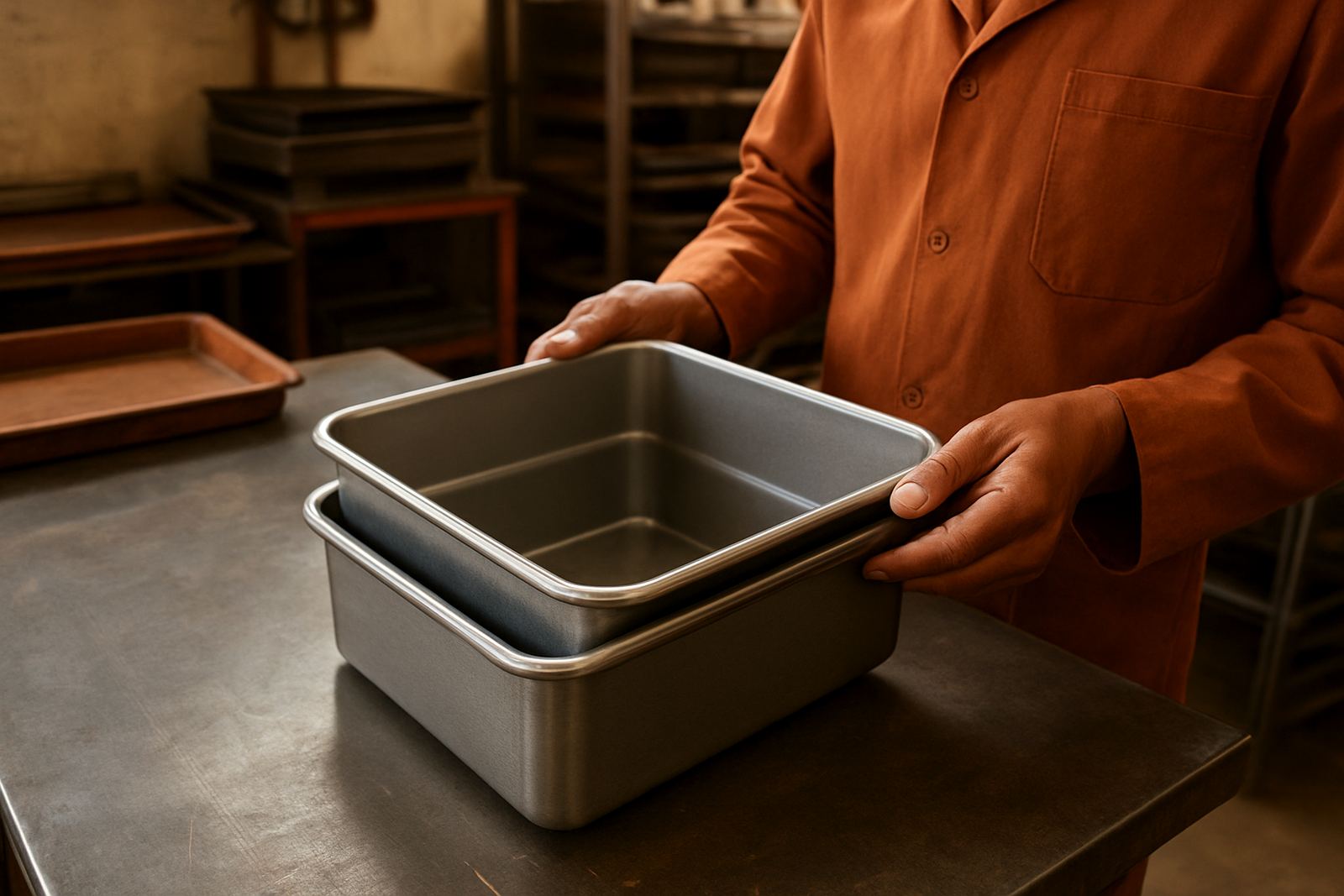
Steel bread pans for daily loaf production
Bakerite bread pans are built for high-volume baking of sandwich loaves, brown bread and speciality tin breads. They are made from steel for even heat transfer and long service life, so trays hold their shape through repeated oven cycles and handling on the bake floor.
These pans are used in plant bakeries, hotel kitchens, supermarket bake rooms and wholesale production lines where consistency matters. If a loaf must fit a slicer, wrap easily and present well on shelf, pan shape and finish make a real difference. A worn pan can give a crooked top, sticky release or side bulge, which costs time later on.
The pans are suited to South African baking conditions, including humid coastal sites in Durban and hot inland plants around Gauteng or the Midlands. In many bakeries, the issue is not only heat but also steam, frequent washing and rough stacking. That is where proper steel thickness and a clean, sound rim help a lot.
Sizes, capacities and common bread formats
We supply bread pans in common commercial sizes and can make custom dimensions to match your line, moulding setup or pack size. Some sites need a standard sandwich loaf pan, while others need a deeper tin for brown bread, a narrower pan for small loaves or a special section for artisan-style tin bread.
- Standard sandwich loaf pans for retail and slicing work
- Deeper pans for brown bread and heavier doughs
- Speciality tin breads for hotel buffets and plated service
- Custom pans to suit proofing frames, oven shelves and tray spacing
- Matched sets for multi-lane production where uniform fill is needed
We also make sure the pan profile works with the rest of the bakery process. A pan that is too wide may waste shelf space, while one that is too deep can affect bake time and crust colour. If your team is filling by hand, on a divider or from an automated line, the opening and side angle must be right for your workflow.
For sites in places like Pinetown, New Germany and the wider KZN corridor, we can check whether your existing oven floors, racks and cooling trolleys allow for the same footprint, or if a slight size change will improve throughput. Small changes save time every day, not just on paper.
Where bread pans work best in South African bakeries
These pans suit production where output is steady and the baking schedule is tight. They are commonly used where loaves must come out in shift after shift, sometimes with load-shedding backup and a shortened bake window. In those situations, you need pans that release well, stack neatly and do not warp when ovens cool down between runs.
Bakerite bread pans are a good fit for:
- Plant bakeries supplying retailers and wholesalers
- Hotel kitchens making buffet loaves and breakfast breads
- In-store bakeries with daily fresh production
- School, canteen and contract catering operations
- Regional bakeries serving townships, suburbs and coastal holiday traffic
Because we are based in Westmead, Pinetown, we understand the practical side of local bakery work. Coastal humidity can affect storage and surface rust, while inland dust and heat can change how pans are handled and cleaned. A good pan should cope with all of it without constant fuss.
Installation, oven fitment and power or gas use
Bread pans do not need a complex installation, but they do need the right fit. The pan must sit properly on oven shelves, conveyor bands, tray racks or floor loading frames without rocking or pinching. If a pan catches on the rack, it slows the line and can damage the rim.
We can supply pans to suit electric ovens, gas ovens and combination bake systems. The pan itself does not require power, but the oven cycle, preheat time and tray handling process all affect performance. In plant bakeries with gas-fired ovens, the heat pattern can vary from front to back, so pan size and spacing should be checked carefully. On electric decks, even contact and stable pan placement matter more than people think.
When ordering for a new oven or replacing old tins, check these points first:
- Internal oven shelf width and depth
- Clearance between pans for air flow and crust colour
- Whether the line uses manual or mechanical filling
- How pans are moved, stacked and cooled
- Whether the dough weight has changed since the last order
We often find that the original pan size was copied for years even after dough weights changed. That can lead to poor crown, splitting or underfilled tins. A quick check saves time and waste.
Care, cleaning and reconditioning support
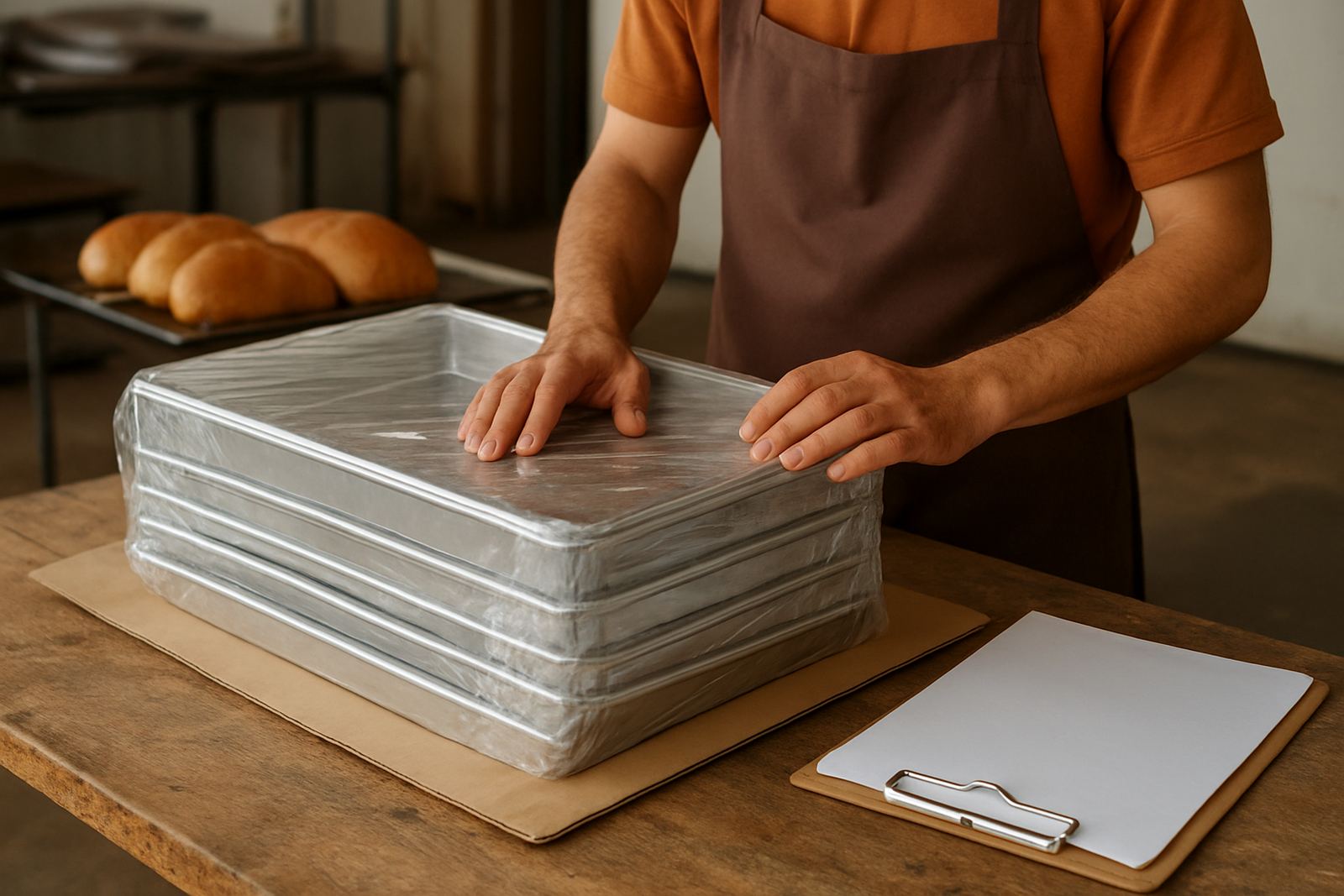
Good care extends the life of bread pans and keeps release more predictable. After baking, pans should be cooled properly before washing, then dried fully before stacking. If they go away damp in a humid store room, rust spots will show up fast, especially near the coast.
Routine care should include:
- Removing baked-on residue before it hardens
- Checking for bent rims or corner damage
- Keeping stacks even so pans do not twist
- Storing off the floor in dry conditions
- Using the correct release method for your dough and lining process
If your existing pans are still structurally sound, we can help with pan recoating, straightening, corner repairs and rim repairs. That is often the practical choice when the pan body is good but the finish has worn through. For many bakeries, reconditioning is easier than buying a full new set, and it keeps matching pan sizes in service. It also helps when spare stock is tight and the shift still has to run.
For damaged lids or special tray sets, we can also look at weld repairs and spare lids where required. A quick service assessment can show whether the pan is fit for more work or whether replacement is the better call.
What to check when ordering bread pans
Before you place an order, it helps to collect a few basic details from the bakery floor. The more exact the information, the better the fit. This is especially useful when the order is for a chain, a hotel group or a plant that uses more than one oven room.
Please check the following:
- Loaf type and finished weight
- Internal pan length, width and depth
- Steel thickness or the weight of your current pan, if known
- Quantity needed for daily output plus spares
- Whether you need standard or custom dimensions
- Current problems such as sticking, warping or split corners
If you are replacing old pans, a sample or clear measurement is best. We can work from a usable pan, a damaged pan or a simple sketch with dimensions. For national supply, especially to bakeries outside KwaZulu-Natal, we keep the process practical so your team can get back to production without delay.
Bakerite has been making industrial bakeware in Westmead, Pinetown since 1997. That long running experience shows in the small things, like making sure the pan is right for the loaf, the oven and the way your team works each day.
Key facts
| Product type | Commercial steel bread pans |
|---|---|
| Use | Sandwich loaves, brown bread and speciality tin breads |
| Material | Steel |
| Finish | As supplied or reconditioned to suit bakery use |
| Manufacture | Standard and custom sizes available |
| Base | Westmead, Pinetown, KwaZulu-Natal |