What a stick tray is and where it earns its keep
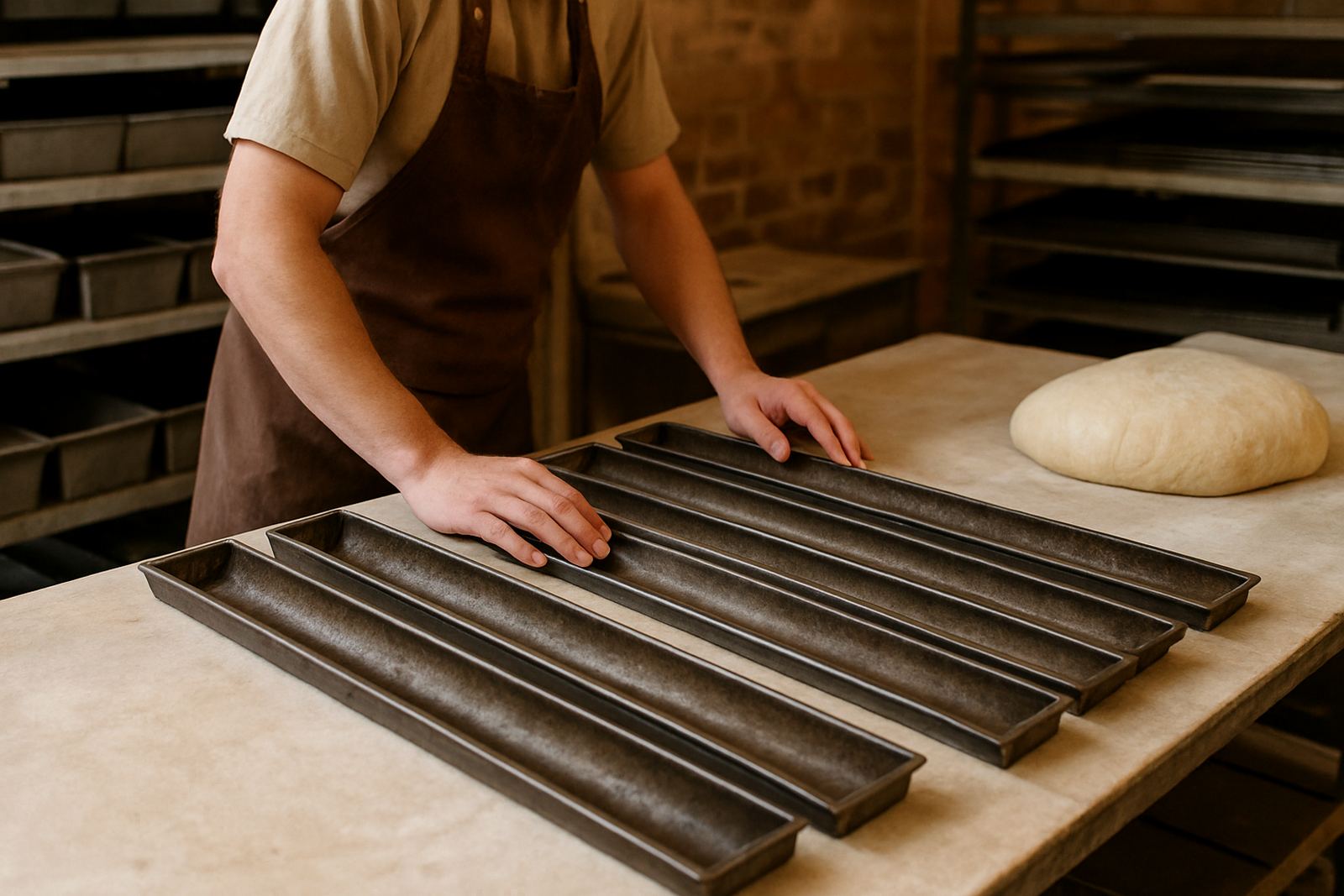
A stick tray is a long, narrow bake tray with a shallow form that keeps slender dough pieces in line while they prove and bake. It is used for finger rolls, cocktail rolls, bread sticks, cheese sticks, seed sticks and slim pastry items that need support without spreading too much. In a busy bakery, the right tray saves oven space because you can pack more pieces across a deck or trolley than you would with wider pans.
Bakerite stick trays are made for daily plant use, not light domestic baking. They are formed from steel for consistent heat transfer and better wear in high-volume runs. The narrow format also helps with portion control, since product spacing stays more even from tray to tray. For bakeries in Durban, Pinetown and inland towns where humidity changes dough behaviour through the day, that extra control makes a difference.
- Suitable for baked goods with a slim profile and even length
- Helps reduce waste where wider pans would leave unused space
- Works well on peel loading, rack loading and conveyor-fed lines
Standard sizes, gauge options and tray build
Stick trays are made to suit the product and the oven system, so the size and fold can be set for your plant. The usual build uses mild steel sheet with a formed edge for strength, easier handling and better tray life under repeated heating and cooling. For some lines, a heavier gauge is better because it resists warping. For lighter hand-loaded lines, a medium gauge can be practical and easier to lift.
Common options include single-piece trays, paired trays for matching product runs, and trays with turned sides for stiffness. Where bakeries need a specific footprint for racks or oven decks, the tray can be set to match the available width and length. That matters in older premises in Westmead or New Germany where every centimetre on a rack counts.
- Custom lengths and widths to suit oven decks and trolleys
- Choice of tray depth, side turn and corner finish
- Heavier gauge for high-heat, high-cycle plant use
- Matching layouts for repeat production and batch control
When a customer asks for a special run, we look at the dough weight, how the tray is loaded, and whether the tray will move by hand, on a rack or on a conveyor. That helps us give a tray that fits the process, not only the oven opening.
Where stick trays work best in the bakery line
These trays are used wherever slim baked goods need a steady base and tidy shape during baking. They are common in plant bakeries supplying retailers, hotel kitchens making breakfast items, and contract bakers running short production windows. Because the tray profile is narrow, more product can be moved through the oven with less wasted surface area. That is useful when gas supply is measured, or when an electric oven is already running near capacity during peak periods.
Stick trays are especially useful where products must release cleanly for packing or slicing. The tray helps keep the underside level and supports a more uniform finish. In coastal areas, bread dough can behave differently on a warm, humid morning and a cooler afternoon, so a tray that keeps shape under load is worth having.
- Finger rolls and mini hotdog rolls
- Bread sticks, savoury sticks and cheese sticks
- Slim pastry fingers and filled snack items
- Retail bakery runs where product count matters
If your bakery mixes stick products with other tray-baked items, we can set up a matched tray list so replacements are simpler later on. That is useful when a line has to keep going and one tray gets bent or cracked at the corner.
Heat, oven fit and what installation needs
Stick trays themselves do not need a power connection or gas connection, but they must suit the oven they are going into. Check the rack spacing, deck size, conveyor width and clearance at the doors before ordering. If a tray is too wide or too deep, it can catch on the runner or sit unevenly and affect the bake. In a plant bakery that runs through load-shedding recovery periods, ovens are often restarted and loaded quickly, so tray fit has to be right the first time.
For deck ovens and rack ovens, the tray should sit flat and move without snagging. For gas-fired ovens, it is also worth checking heat pattern across the chamber, because a longer narrow tray can show hot spots if the oven is not balanced. We can help you work from the actual oven opening and internal usable size, not just the brochure size.
- Measure internal oven space, not only external machine dimensions
- Check rack runner spacing and trolley clearance
- Confirm whether the tray will be hand loaded or machine loaded
- Allow for gloves, lifting tongs and product spread during proofing
Where bakeries use municipal extraction or fire rules, tray materials and storage layouts should still allow safe handling and cleaning access around the oven. A well-sized tray reduces double handling, which is better for the crew and the product.
Care, cleaning and servicing for longer tray life
Stick trays last longer when they are cleaned after each shift and stored dry. Burnt sugar, oil and flour build-up can create hot spots and make release worse, so a simple wash-down or scrape-out routine helps. Do not leave trays soaking for long periods if the tray has any exposed steel edges, as standing moisture can encourage rust, especially on sites close to the coast.
If a tray starts to twist, bow or pick up a damaged corner, it can often be straightened and returned to use. Bakerite also handles tray recoating, deep cleaning and repair work on suitable bakeware. That is useful when a bakery wants to extend the life of an older tray set rather than replacing everything at once.
- Remove dough residue before it hardens after a shift
- Dry trays fully before stacking or racking
- Keep bent trays out of the line until they are checked
- Book servicing early if you see repeat sticking or uneven bake
For plant bakeries running day and night, a tray inspection plan is practical. Small defects often show first at the corner or lip, and if they are fixed early the tray can stay in service much longer.
What to check before placing an order
Before you order stick trays, gather the product dimensions, batch size and oven details. We need to know the finished length of the roll or stick, the space between pieces, and the tray footprint your line can handle. If the trays are for a retailer pack line, tell us the pack count per tray as well. For hotel use, let us know whether the tray must fit under a salamander, in a deck oven or on a standard rack.
It also helps to confirm how the trays will be used day to day. A tray that is lifted often by hand may need a different edge return than one that stays on a trolley. If the site has a lot of handling between proofing and baking, a sturdier side and corner detail is worth it. Small choices here can prevent bent rims and uneven load later on.
- Product size, weight and spacing
- Tray width, length and depth required
- Oven type, rack size and loading method
- Cleaning routine and expected daily output
If you are not sure what to send, measure one current tray and one finished product piece, then compare that against your oven opening. That is usually enough for us to start sizing the right stick tray for your line.
Key facts
| Material | Mild steel bakeware sheet, formed for daily plant use |
|---|---|
| Use | Finger rolls, bread sticks, slim pastries and similar products |
| Typical build | Custom lengths and widths to suit oven and rack size |
| Tray style | Narrow profile with formed edges for strength |
| Finish options | Standard steel or serviceable recoated trays where required |
| Supply area | Westmead, Pinetown and nationwide delivery to plant bakeries |