What a perforated tray does in the oven
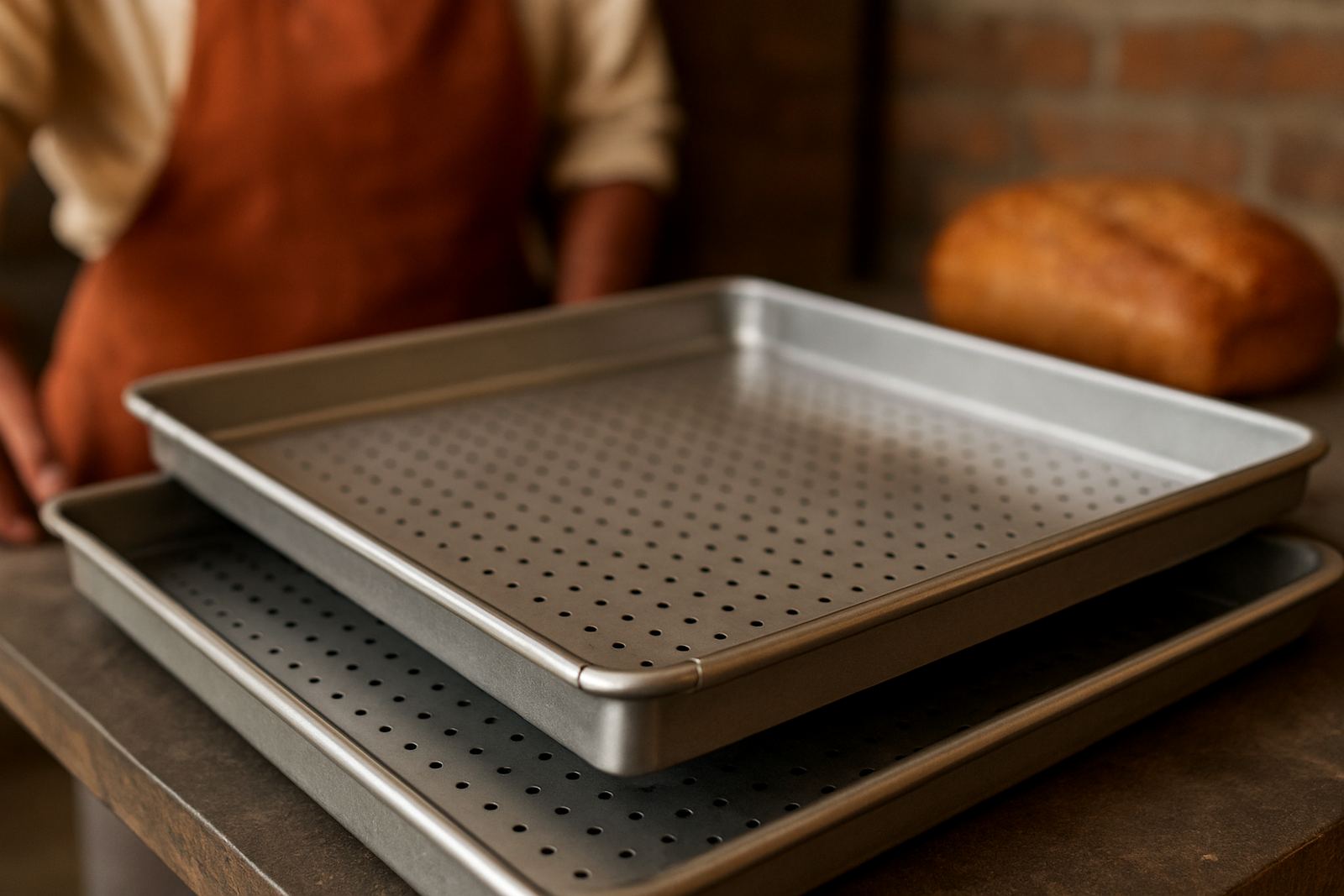
A perforated tray is a metal baking tray with evenly spaced holes through the base and, on some builds, the sides as well. The openings let hot air move under the product and around the edges, which helps with base colour, moisture release and a cleaner bake on selected products. It is a practical choice where steam or trapped moisture can soften the bottom of a product, especially in busy bakery lines where trays run back to back all day.
We supply perforated trays for continuous production, batch baking and display prep. They are commonly used where consistency matters from one shift to the next, and where tray weight, handling and oven fit must be kept under control. On the right product, a perforated tray can reduce patchy colouring and help the base dry properly without overbaking the top.
Typical uses include bread rolls, artisan loaves, savoury items, rusks, buns, pastry products and items that need stronger airflow than a solid tray can give. If the dough is very soft or the product has a wet bottom finish, the tray pattern and hole size must be chosen carefully so the dough does not mark or sink through.
Tray sizes, hole patterns and build options
We manufacture perforated trays to suit plant bakery ovens, rack systems and custom production lines. The tray can be made in standard sizes or built to a specific footprint where the oven deck, trolley or loader has fixed dimensions. Material thickness, rim height and hole layout are matched to the weight and heat load of the job.
- Standard and custom tray sizes to suit ovens and trolley systems
- Perforated base only, or base and selected side areas
- Round, slot or mixed perforation patterns depending on the product
- Light, medium and heavier gauge steel options
- Flat trays, rimmed trays and deeper side profiles available
- Options for single product runs or mixed production schedules
For high use bakeries in Durban, Pinetown and inland production sites, we usually look at tray life first, then airflow and handling. A tray that is too light can distort near the edges, while one that is too heavy can slow down loading and unloading. The right balance keeps the line moving without giving trouble at the oven mouth.
Where perforated trays suit best
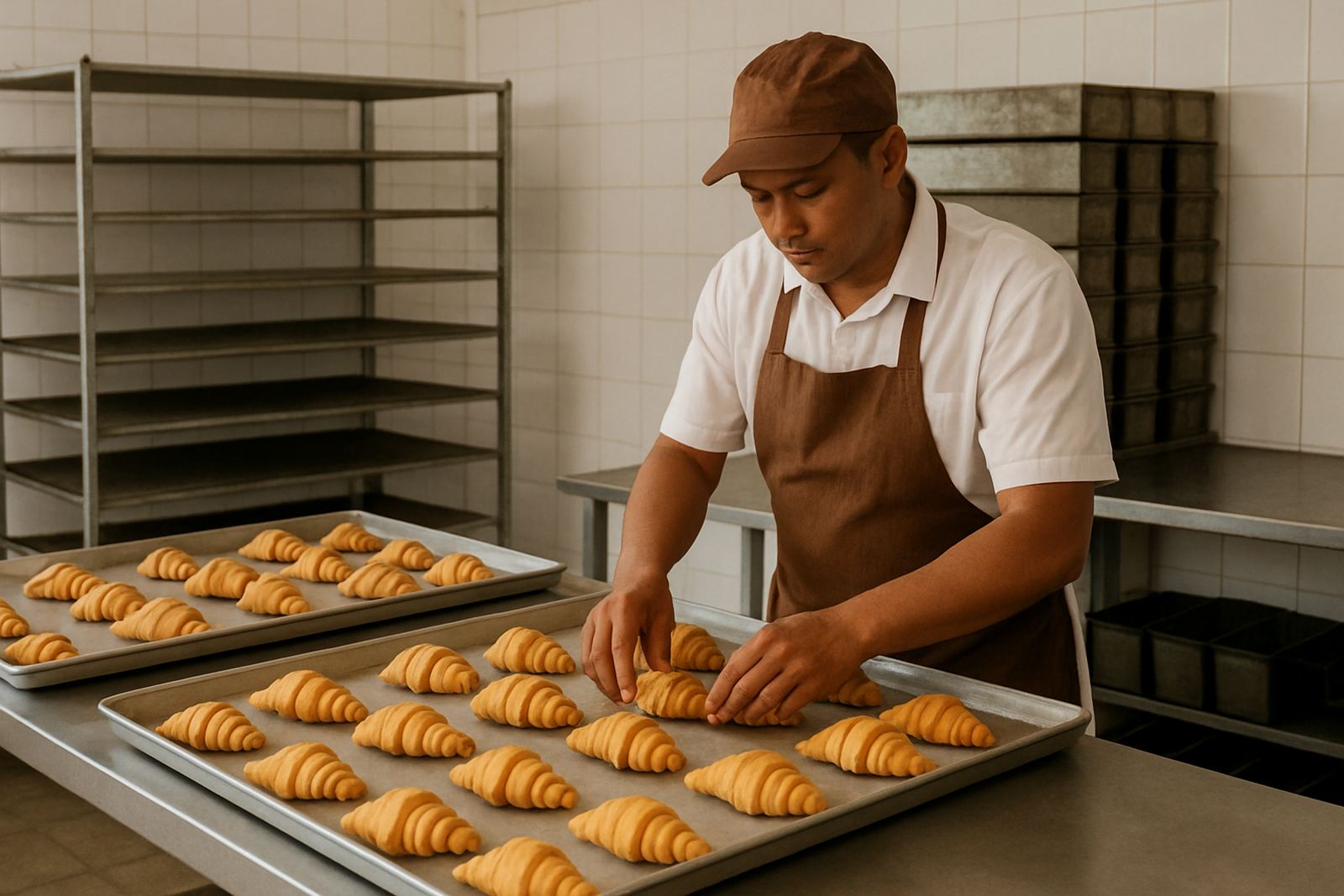
These trays suit any operation that needs airflow under the product or a firmer, less damp bottom. Plant bakeries use them on fast lines where tray turnover is high and product appearance must stay uniform through long shifts. Hotels and retail bakeries use them where the product is baked in-house and then cooled quickly for service or packing.
They are a good fit for coastal kitchens too, where humidity can hold moisture in baked goods for longer than expected. In places like Durban, Umhlanga and Richards Bay, the extra airflow often helps with base drying and reduces the risk of a soft underside after cooling. In cooler inland plants, they work well for products that need sharper base colour without changing the top heat too much.
- Plant bakeries running repeated batch production
- Retail bakeries needing consistent base colour on selected items
- Hotels producing rolls, pastries and savoury bakes for breakfast and banquets
- Sites where fast cooling and cleaner release are important
- Operations that need trays to fit existing racks and trolleys exactly
For products with high sugar, heavy fillings or very soft dough, solid or partially perforated options may be better. We can advise on what works for the product rather than forcing a one-size answer.
Power, gas and oven setup notes
Perforated trays themselves do not need power or gas, but they do respond to the oven system around them. They are used in electric ovens, gas ovens and some convection setups, provided the heat pattern is suitable for the product. The oven must be able to keep a steady temperature and move air properly, otherwise the perforations cannot do their job.
In gas ovens, the base colour may be stronger because of the higher air movement and radiant heat, while electric ovens can give a gentler finish if the tray and product are matched properly. Where load-shedding affects production, many bakeries in South Africa need trays that can handle stop-start baking and short cool-downs without warping or twisting. That means the tray gauge, welds and rim support matter as much as the hole pattern.
When ordering, tell us the oven type, shelf spacing, whether the trays are loaded by hand or trolley, and how the oven cycles through the day. That helps us build a tray that sits correctly and does not snag during transfer.
Care, cleaning and servicing on busy bakery lines
Perforated trays need regular cleaning because flour, grease and small crumbs can sit in the holes and around the rim. If those openings block up, airflow drops and the tray starts behaving more like a solid tray. For that reason, routine washing and drying is part of proper tray care, not just a hygiene issue.
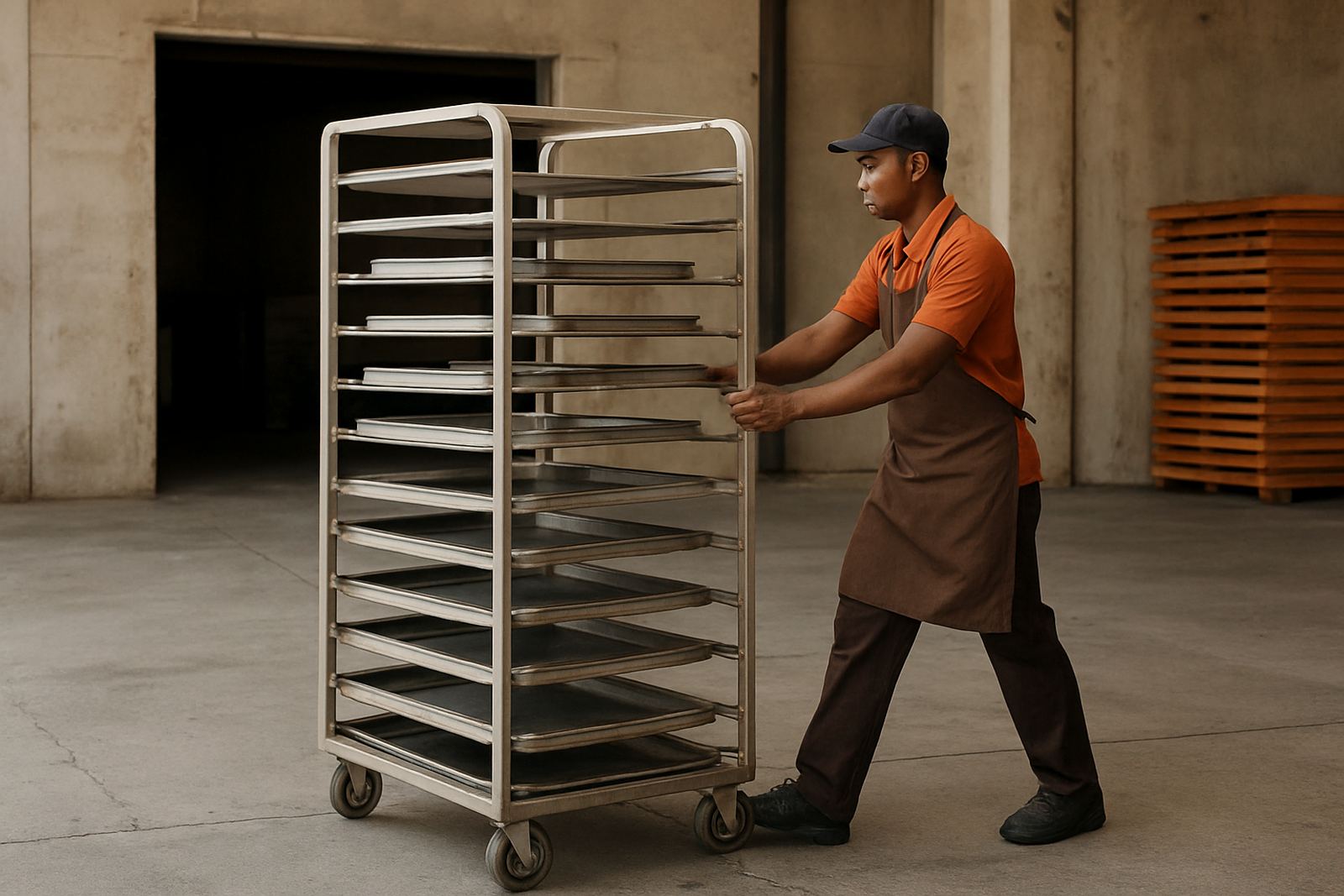
We service bakeware for plant bakeries, retailers and hotels from our Westmead base, including deep cleaning, straightening, rim repairs and weld repairs where needed. If the tray has stretched, bowed or lost edge support, it may still be recoverable. In many cases, a repair costs less than replacing a whole batch, especially on large fleets.
- Brush out loose flour after each run
- Wash before build-up becomes baked on
- Dry fully to avoid corrosion in coastal conditions
- Check rims and corners for lifting or cracking
- Keep perforations open so airflow stays even
If trays are stored wet or stacked while still warm, rust can start quickly and the tray may stain product. A simple drying rack and clear storage area can save a lot of trouble later.
What to check before you place an order
Ordering the right perforated tray starts with the product, not just the size. We need to know what is being baked, what finish you want on the base, and how the tray will be used in the plant. A tray for rolls is not the same as a tray for pastries or savoury items, and the wrong perforation can leave marks or cause poor release.
Have the following ready when you enquire: internal tray size, outside tray size if the frame is fixed, rim height, gauge preference if known, product weight per tray, oven type and loading method. If you are replacing an older tray, send the sample or photos with measurements taken across the top and the base. Small differences can matter when a tray has to fit into a rack with little clearance.
- Exact length, width and rim height
- Hole size and spacing if you have a current pattern to copy
- Oven make-up, gas or electric, and tray loading method
- Product type and desired base finish
- Quantity needed for the current fleet and future spares
We also supply matching bakeware support services from Westmead, Pinetown, including fleet assessment and spare lids where required. If you are running trays in bulk, it makes sense to check the full fleet at once so the new units and the repaired units wear evenly.
Made in Westmead for national supply
Bakerite has been making industrial bakeware in Westmead, Pinetown since 1997, and we supply plant bakeries nationally from our base in KwaZulu-Natal. That includes bakeries in Durban, New Germany, the Upper Highway and further afield where production needs to keep moving despite long shifts, coastal humidity and the odd power interruption. Our team works on standard production and custom jobs, with practical support from quote to delivery.
If you need perforated trays for a new line, a replacement run or a custom size for existing equipment, we can build to suit and advise on the details that affect tray life. A tray is only a small part of the bake, but if it does not fit or breathe properly, the whole batch feels it.
Key facts
| Product type | Perforated steel baking trays |
|---|---|
| Use | Airflow-assisted baking for selected products |
| Manufacture | Made in Westmead, Pinetown |
| Material options | Light, medium and heavier gauge steel |
| Build options | Base only or base and selected side perforation |
| Typical supply | Custom and production-run tray sizes |
| Service support | Repairs, straightening, recoating and fleet checks |