Steel bun trays for regular production runs
Bun trays are the work trays used to prove, carry and bake shaped dough pieces where consistency matters. In a plant bakery they have to move smoothly through proofing, loading and oven cycles, then come back for the next shift with the same spacing and finish. Bakerite bun trays are made for that daily use, with clean edges, accurate forming and steel selected for repeat heating and cooling.
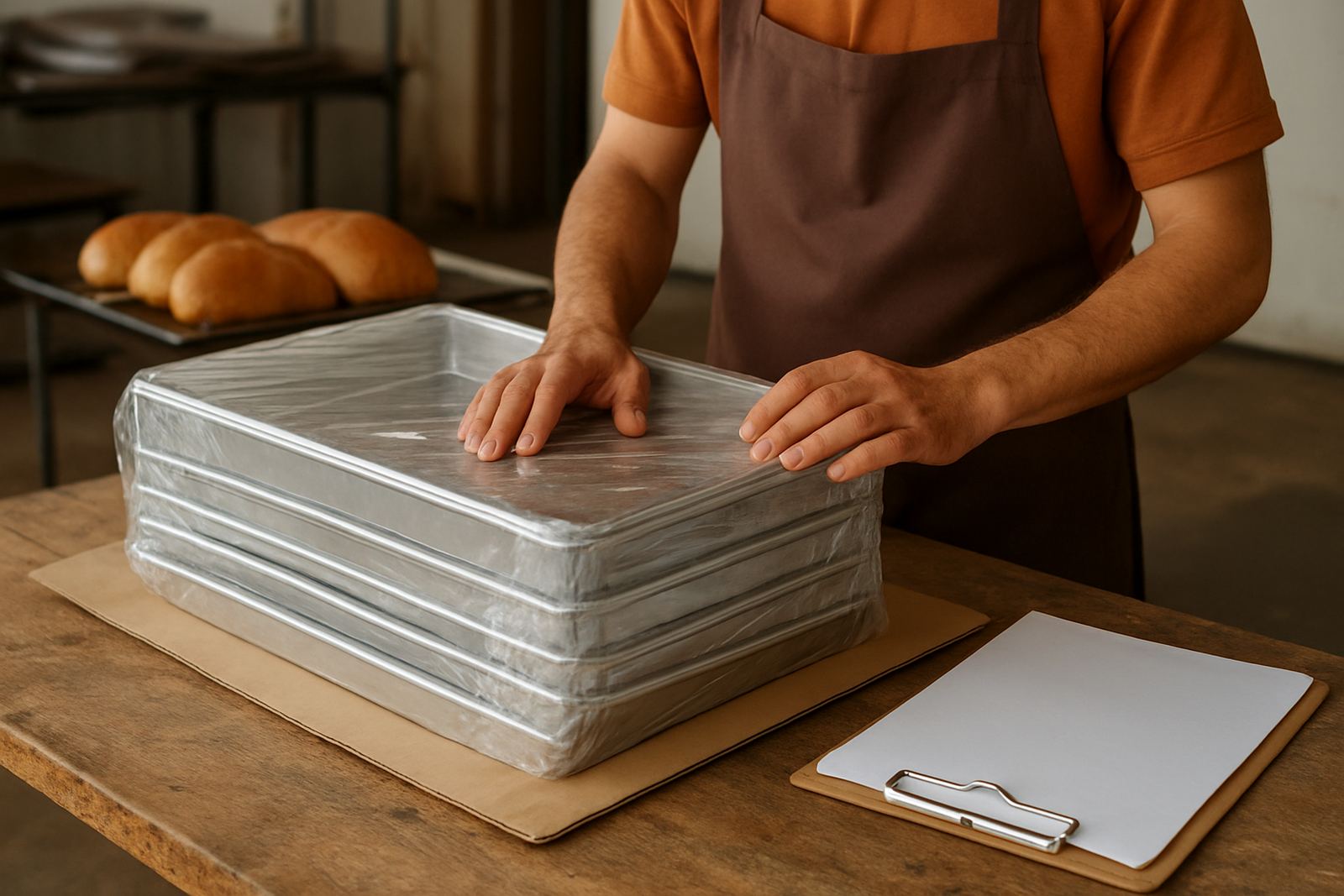
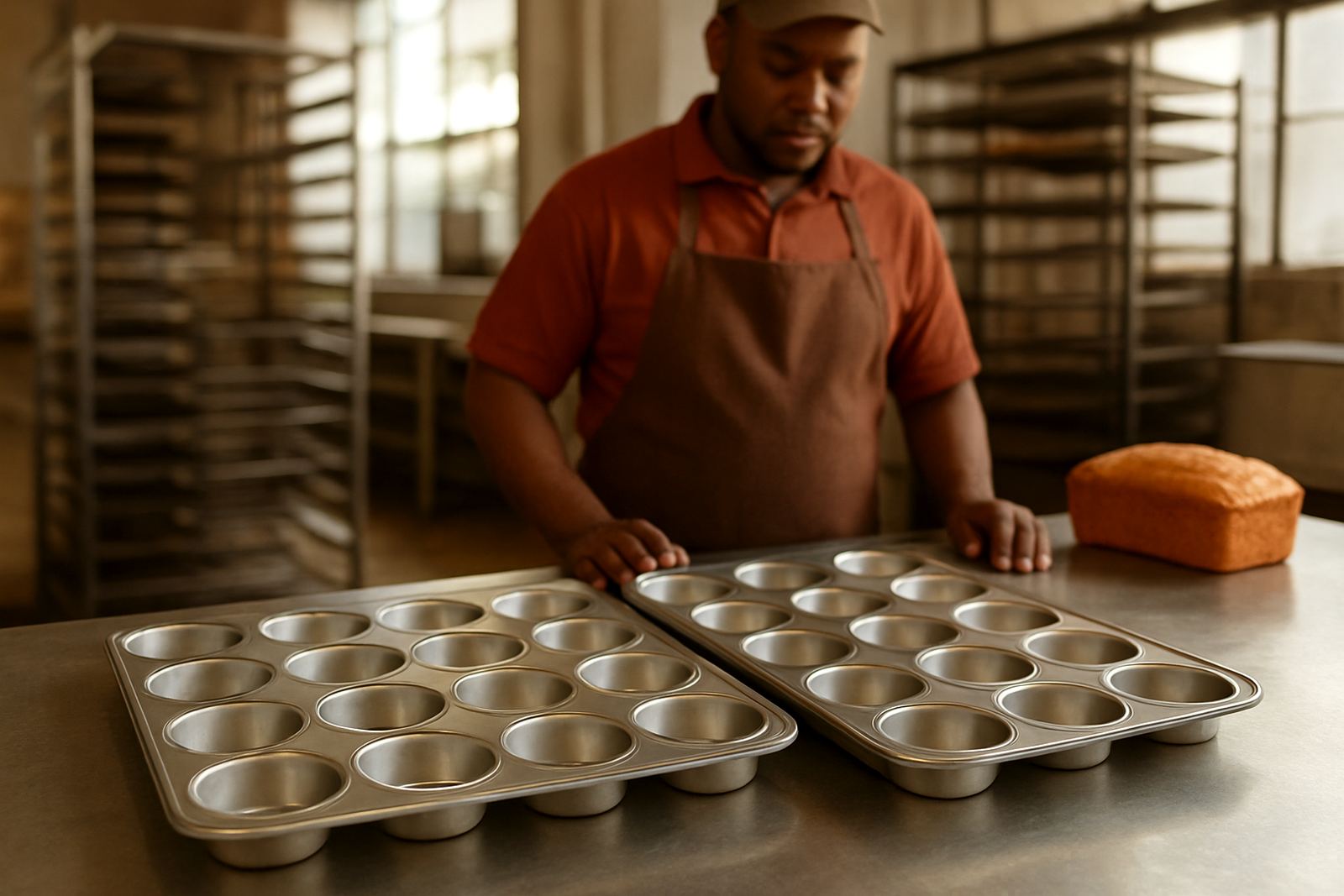
We supply flat trays for loose product and formed trays for lines that need more support. Flat trays suit rolls and burger buns where the dough is placed in rows, while formed trays help keep larger portions controlled during proof, loading and baking. For hot cross bun lines, tray dimensions and hole or cavity layout can be set to suit your method of production and oven loading pattern.
Because the trays are made locally, they can be matched to your oven rails, rack sizes and handling equipment instead of forcing your process to fit one generic size. That saves time on loading and reduces waste from damaged pieces or trays that do not sit right in the oven.
Sizes, layouts and tray formats we make
There is no single bun tray size that suits every bakery. The right choice depends on piece weight, tray count per rack, oven width and the type of bun line you run. We work with plant bakeries, retailers and hotels on standard and custom formats, including trays for buns, rolls and mixed lines. If you need trays for a tunnel oven, rack oven or deck oven, we can build to the opening and loading pattern you use every day.
- Flat bun trays for rolls, burger buns and plain bun lines
- Formed bun trays for better shape control during proofing and bake
- Custom hole spacing for hot cross buns and specialty portions
- Sizes matched to rack depth, side guides and manual loading methods
- Single and multiple cavity layouts for small or high output runs
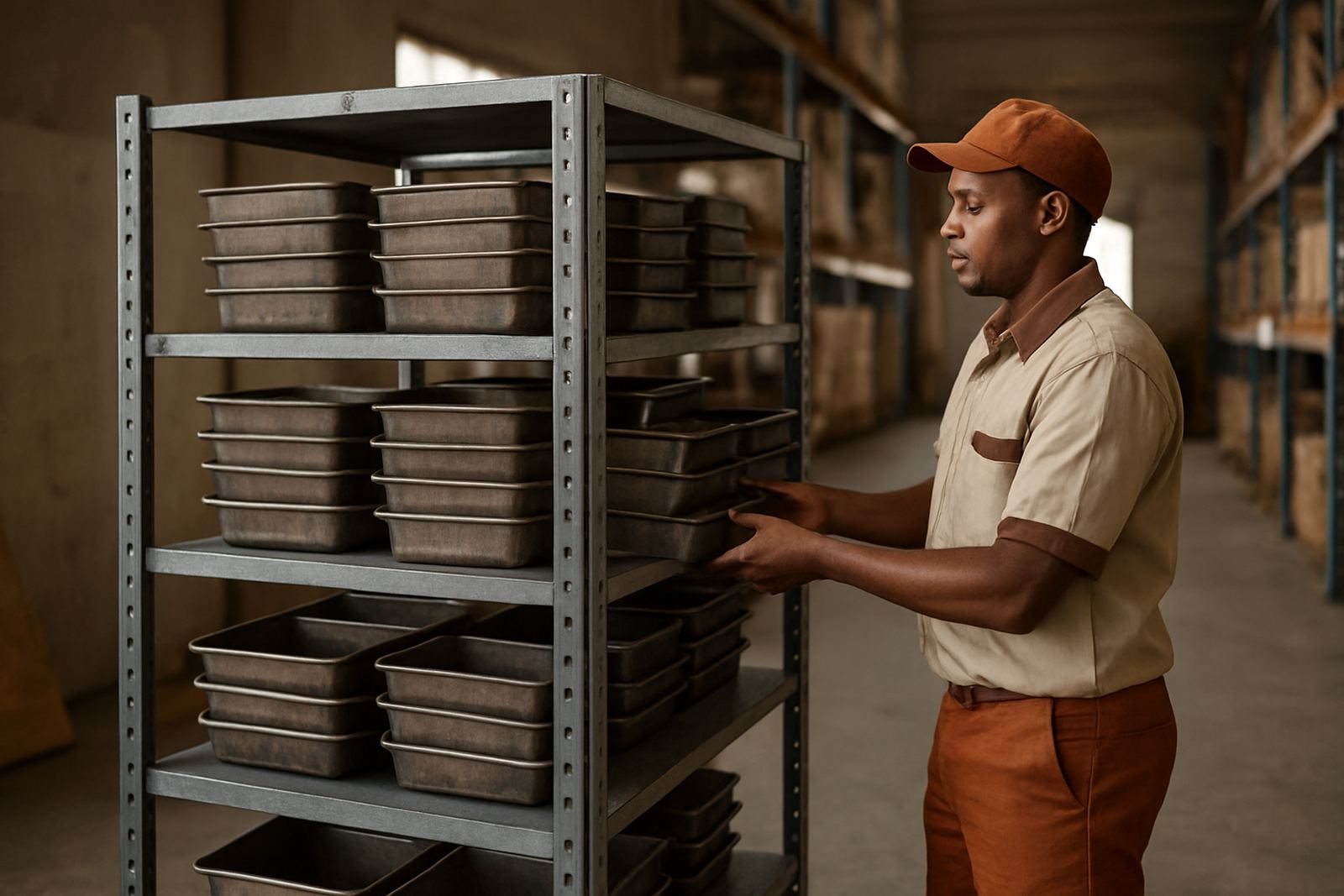
Common tray builds use food-safe steel with a hard working surface that handles repeated heating. Where production is heavy, thicker sheet and stronger edge forming can help reduce bowing. In wet or coastal conditions around Durban and Pinetown, proper finish and storage matter too, since humidity can affect both tray life and handling.
Where bun trays suit best in the bakery
Bun trays are used wherever dough pieces must hold their shape from the prover to the oven and out onto cooling tables or packing lines. They suit plant bakeries making roll packs for retailers, burger buns for food service, and seasonal runs like hot cross buns. Hotels and food manufacturers also use them when they need consistent batch control and a tray that can be cleaned and reused without fuss.
They are also useful when your product is sensitive to spreading. If the bun line has a softer dough, a formed tray can help keep the pattern square and the buns evenly spaced. That makes a difference in the oven, where over-close product can touch, bake unevenly or require trimming. On busy lines, even a small gain in spacing control can cut handling problems and keep changeovers moving.
For bakeries in Westmead, Pinetown, New Germany and the wider KwaZulu-Natal supply area, locally made trays also make sense when quick reorders are needed. You are not waiting on long lead times for a critical tray size that keeps a line running.
Fitting bun trays into your oven and handling system
Bun trays do not need power or gas on their own, but they must match the oven and handling setup so they work properly. Check the oven rail width, rack spacing, door opening and the clearance needed for safe loading. If trays are too wide they can scrape, sit crooked or catch on the rails. If they are too light or thin, they may twist under heat and cause uneven bake. If they are too heavy, your team feels it on every shift, especially during load-shedding when production windows are tight and every minute counts.
Before ordering, measure the internal tray area, not only the rack outside size. Also check whether the trays will move by hand, on trolleys or through mechanical loading aids. If your process uses a proving room with high humidity, ask for tray details that tolerate repeated washing and drying without a rough surface building up.
- Confirm tray width, length and height against your oven rails
- Check whether you need flat, formed or cavity trays
- State the piece count per tray and the dough weight per piece
- Tell us if trays must suit manual loading or trolley systems
- Share the oven type so spacing and heat flow can be matched
Care, recoating and repair for longer tray life
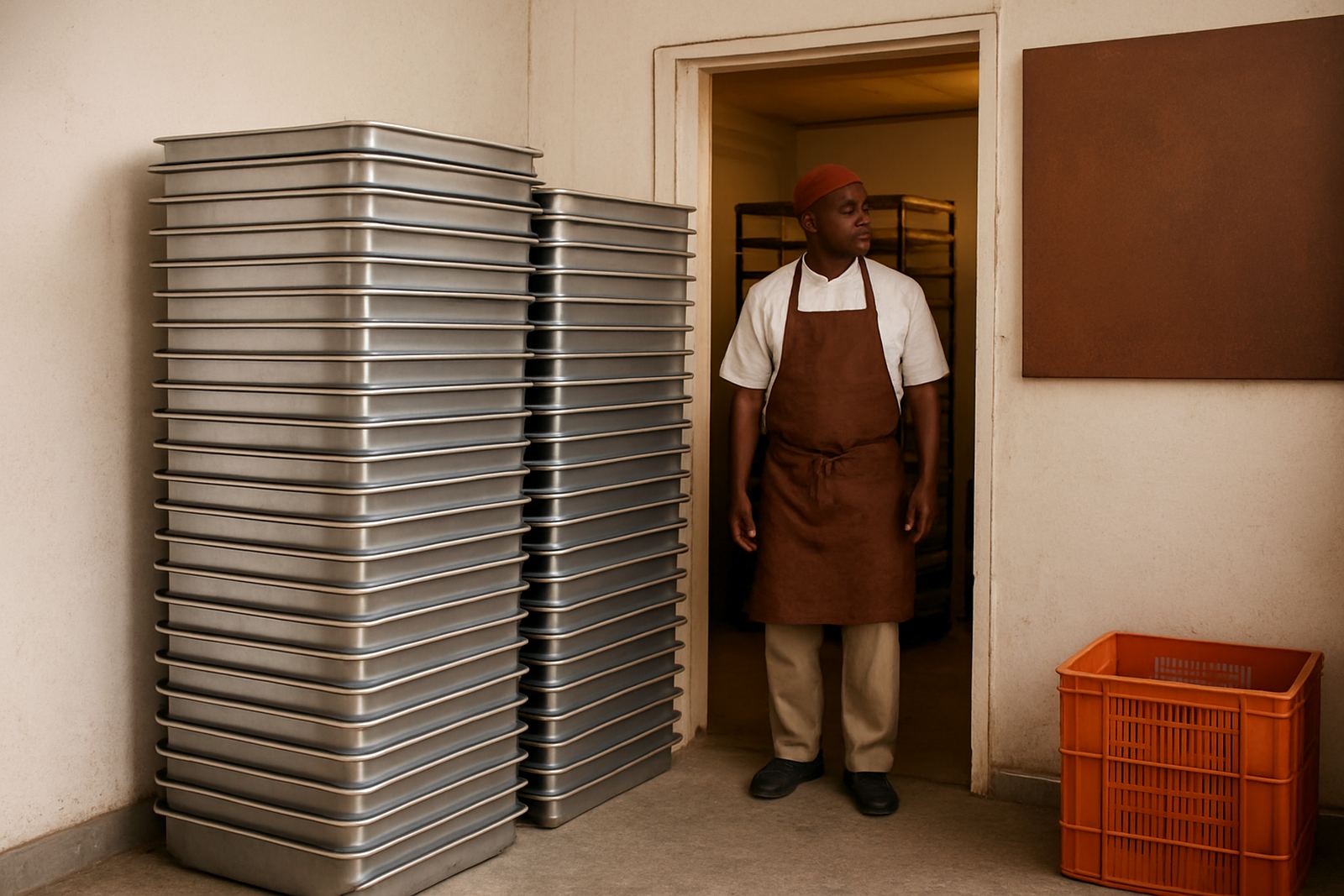
Good tray care starts with cleaning while the trays are still manageable, before baked on residue becomes hard to remove. Use methods that suit the tray finish and avoid rough scrapers that dent the steel or open up the surface. In many bakeries, trays fail early because they are stored wet, stacked badly or bent during handling rather than because the steel itself wore out.
Bakerite also services used bakeware through recoating, tray straightening, corner repairs, rim repairs and weld repairs. That is useful where the tray body is still sound but the working edge or surface needs attention. Deep cleaning can help remove build-up that affects release and bake consistency. If a tray has lid or spare part issues in related bakeware lines, we can advise what can be repaired and what should be replaced.
For coastal sites and high-volume plants, a planned inspection cycle is worth it. It helps catch small bends, worn corners and surface damage before they turn into broken lines or uneven product. A tray that is checked and returned to service on time is cheaper than one pulled out after a batch failure.
What to check before you place an order
When you order bun trays, the more detail you give us the better the fit will be. Start with the product type, then add the tray dimensions, cavity layout, steel preference if known and the oven or rack it must suit. If you are replacing existing trays, send the old sample or give the exact measurements, because a few millimetres can matter on a busy line.
It also helps to tell us how the trays will be used. A bakery making burger buns for retail packs may need a different spacing and edge strength from a hotel kitchen baking smaller proofed rolls in batches. If your line is for hot cross buns, the piece pattern and seasonal volume can change the tray design quite a bit. We can work from drawings, samples or a simple set of measurements.
- Product type and piece weight
- Tray size, cavity count and spacing
- Oven type, rack size and loading method
- Whether you need flat or formed trays
- Expected daily volume and cleaning method
- Any special handling, storage or humidity concerns
Once those details are clear, the tray can be made to suit the job instead of being adjusted later. That saves time, and in a bakery time is money.
Key facts
| Product | Bun trays for rolls, burger buns and hot cross bun lines |
|---|---|
| Build | Steel, made as flat or formed trays |
| Custom options | Tray size, cavity layout, spacing and edge forming |
| Typical use | Plant bakeries, retailers, hotels and food production lines |
| Service area | National supply from Westmead, Pinetown |
| Maintenance | Recoating, straightening, corner repairs and deep cleaning |