Single loaf pans built for daily baking
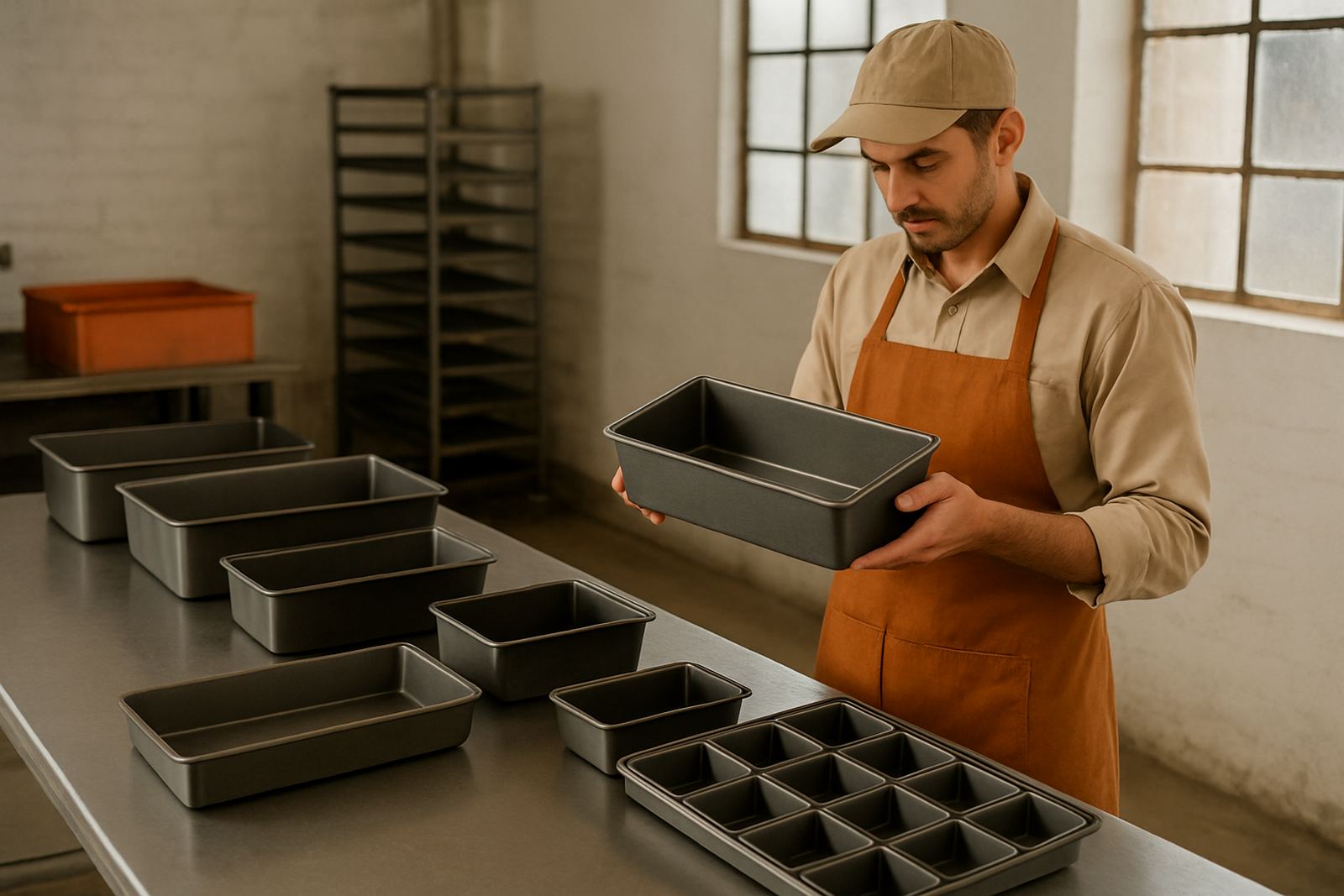
A single loaf pan gives one even loaf per pan, which makes it easier to manage portion control, presentation and bake times on busy production runs. These pans are used for sweet loaves, seeded breads, tea-time loaves and other products that need a neat square or rounded profile once turned out. In a plant bakery, that consistency helps when you are slicing, wrapping or packing for stores and foodservice.
Our loaf pans are made for repeated heating and cooling in commercial ovens. They are formed from steel for reliable heat transfer, with a straight-sided shape that helps the loaf hold its form. Where needed, we can make pans to suit your batch size, slicing line, tray spacing or oven rack pattern. That matters in kitchens where every centimetre counts and the pan must fit the system already in place.
Sizes, finishes and custom options
We supply loaf pans in common single-loaf sizes and can manufacture to sample or drawing if your product line has a fixed weight or pan profile. Standard options are usually chosen to suit small retail loaves, medium family loaves, and larger bakery loaves for slicing. If your recipe carries more fruit, nuts or banana mix, the pan depth and top width can be adjusted to suit the batter rise.
Finishing options are selected according to the product and how the pans are handled in your plant. Smooth steel is often preferred for direct use with release spray or lining, while recoated pans can help with release on higher-volume runs. We also make custom handles, rim details and stacking features where a bakery wants easier handling between prep and oven loading.
- Single loaf pans for sweet and savoury loaves
- Custom length, width and depth to match your recipe
- Options for straight, tapered or rounded profiles
- Suitable for manual filling and production-line use
- Can be made to match existing tray spacing or racks
Where loaf pans suit best
These pans suit plant bakeries that bake banana loaves, fruit loaves, brown bread loaves and speciality sandwich loaves for retail shelves. They also work well in hotel bakeries, hospitality kitchens and contract baking operations where the product must look tidy after unmoulding. In coastal areas such as Durban, salt air and humidity can affect storage, so pans should be kept dry and stacked correctly after washing.
Loaf pans are also practical for bakeries that need predictable portioning. If the recipe has to produce 400 g, 500 g or 1 kg finished loaves, the pan size and fill level need to match. A pan that is too deep can give a pale top and heavy centre, while one that is too shallow may overflow during proving. We help customers choose a pan that fits the dough rather than forcing the dough to fit the pan.
- Plant bakeries producing packaged loaves
- Hotels and conference kitchens baking in small batches
- Retail bakeries supplying sliced loaves
- Food manufacturers making seasonal fruit loaves
- Sites with deck ovens, trolley ovens or rack ovens
Oven use, loading and site requirements
Loaf pans need no electrical connection or gas supply of their own. They are placed in an existing oven system, so what matters is oven temperature, airflow, loading method and the pan fit on your racks, trays or trolleys. For bakeries dealing with load-shedding, it helps to have pans that are easy to move quickly when production windows are short and ovens are available only at certain times.
Before ordering, check the internal oven width, rack spacing, tray runner clearance and whether the pan will be loaded by hand or on a trolley. If you are using gas ovens, the pan material and fill level should be matched to the heat pattern, especially in smaller bakeries where the flame distribution is not even. Good results start with a pan that sits flat and keeps its shape at baking temperature.
- No power or gas connection required for the pans themselves
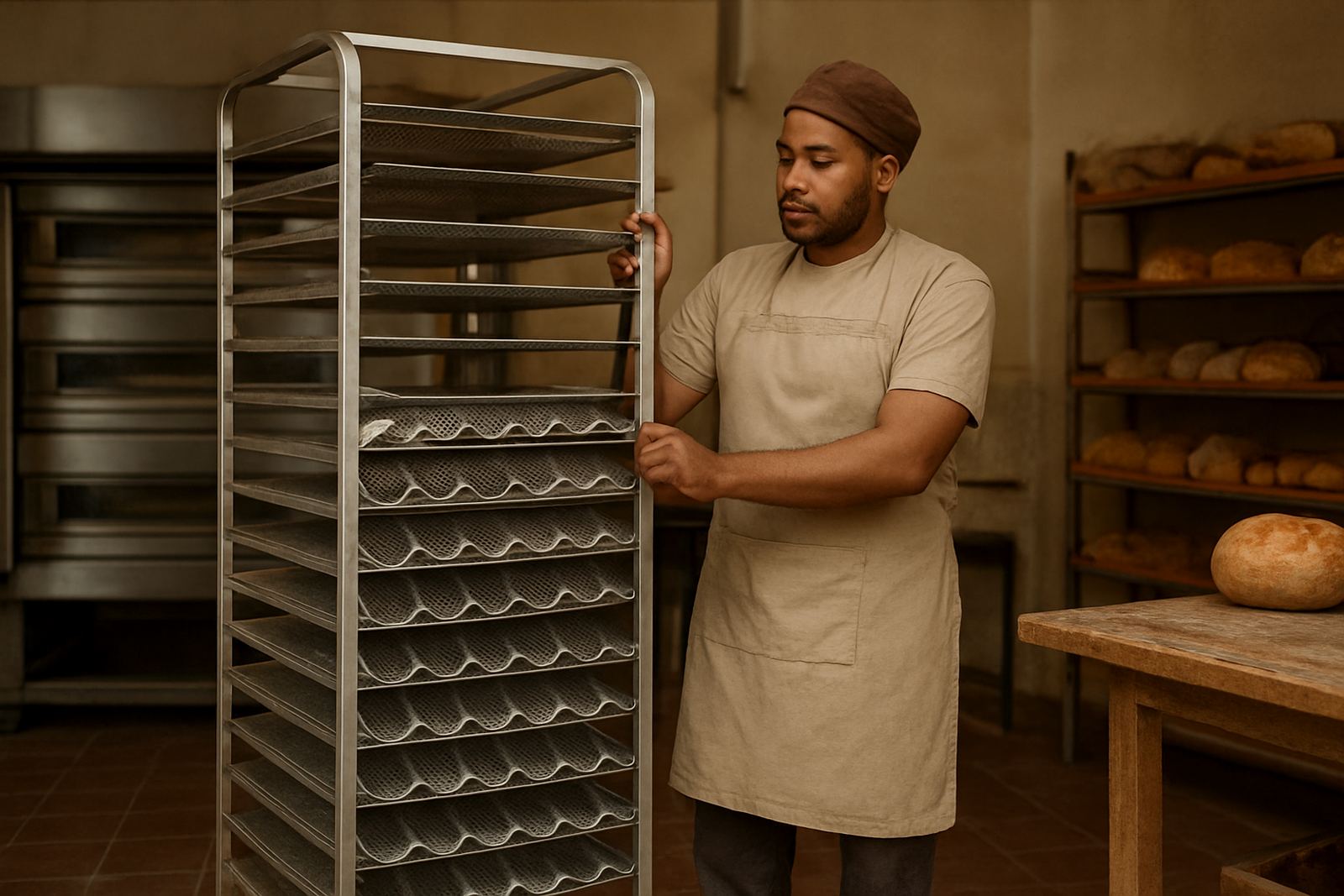
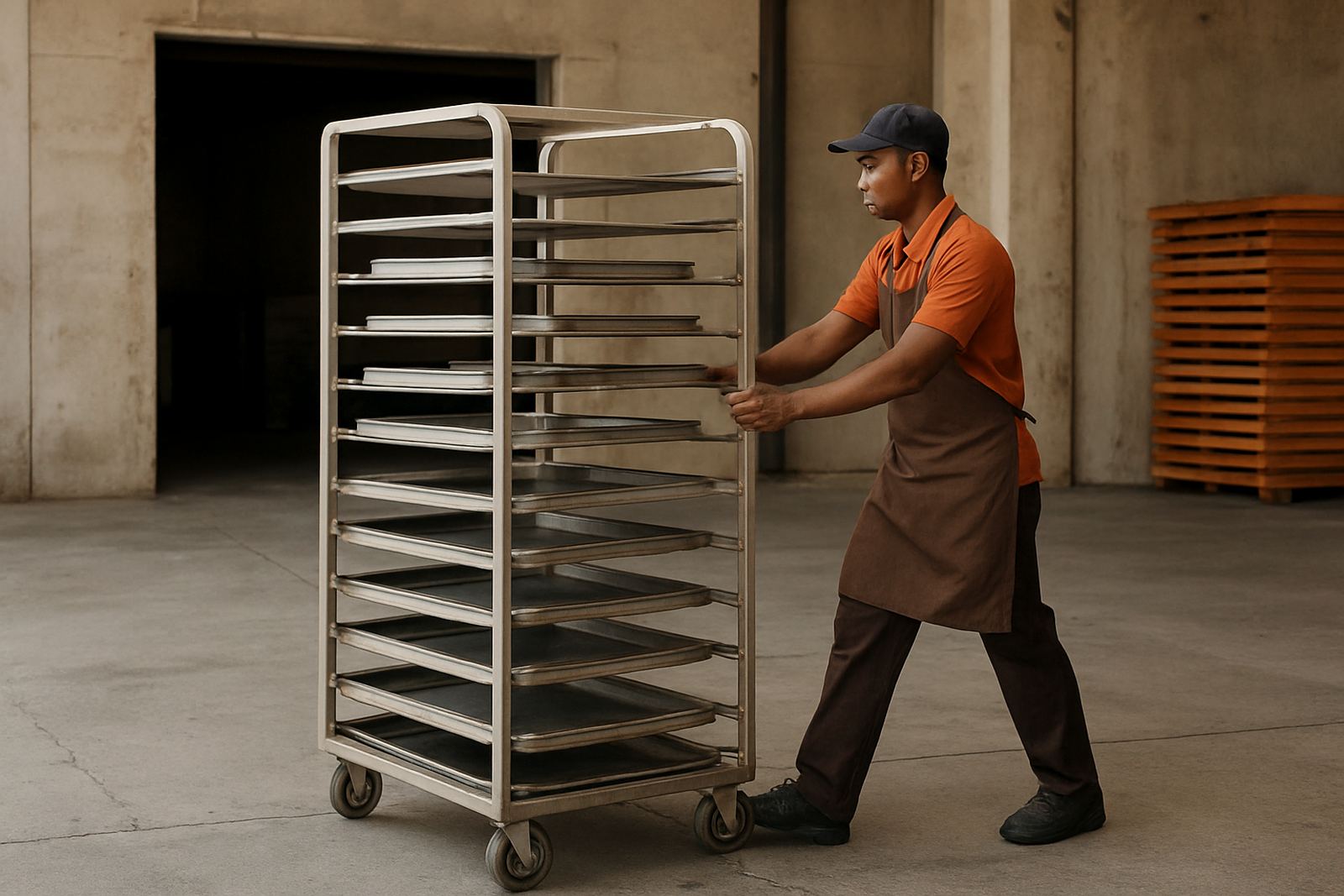
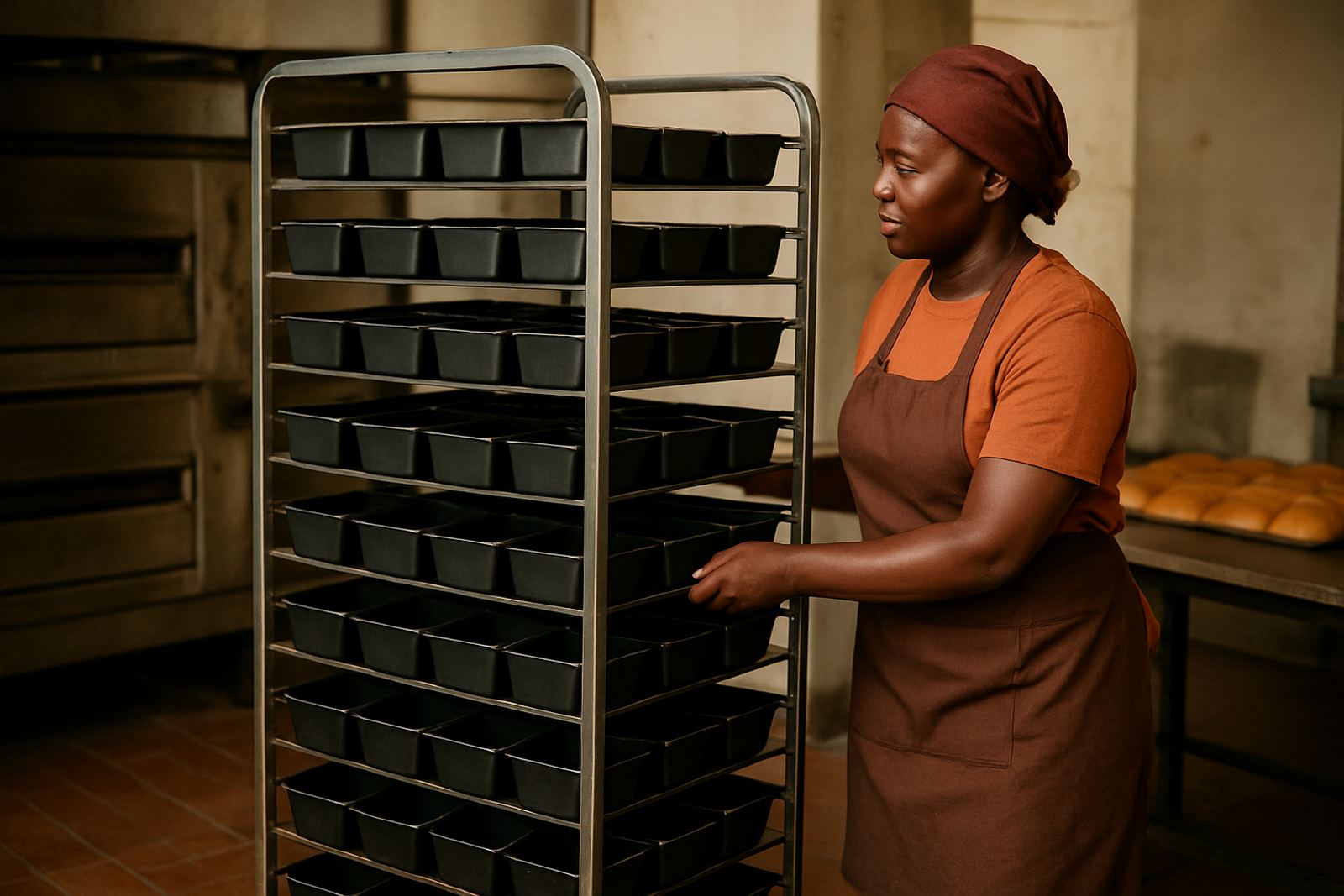
- Match pan size to oven shelf, trolley and rack spacing
- Check clearance for fingers, gloves and loading tools
- Allow for baking expansion and product rise
- Confirm whether the oven gives top heat, bottom heat or both
Care, release and servicing over time
Like most bakery tins, loaf pans last longer when they are cleaned properly and not scraped with hard steel tools. After baking, allow the pan to cool before washing or wiping down, then dry it fully before stacking. Standing moisture can cause surface rust, especially in humid areas or if the pans are stored in a wash-up area with poor airflow. A light food-safe release spray is usually enough when the pan is kept in good condition.
If your pans start sticking, losing shape or showing worn edges, we can help with servicing. Bakerite offers pan recoating, pan straightening, corner repairs, rim repairs and weld repairs for bakery equipment that is still worth keeping in production. If a pan has a weak section or slight twist, fixing it is often cheaper than replacing the whole set. We also do deep cleaning and fleet assessment for larger bakeries that want to sort usable pans from the ones that should be written off.
What to check before placing an order
When ordering loaf pans, the most useful details are the finished loaf weight, the recipe type and the oven system. Banana loaf batter behaves differently from a lean bread dough, so the pan size and release requirements are not the same. If you already have an old pan that works, send the sample dimensions and we can match it closely. If not, give us the pack size, loaf length and whether the bread is sold whole or sliced.
Please also tell us how the pans will be handled. Some clients need pans that can nest for storage, while others need a fixed stack height for trolleys and racks. If your bakery is in a hot inland site such as Polokwane or a coastal plant in KwaZulu-Natal, storage and drying methods should be planned at the same time. That avoids rust, bent corners and unnecessary down time later on.
- Finished loaf size and target weight
- Product type: bread, banana loaf, fruit loaf or speciality loaf
- Oven type and rack or trolley dimensions
- Need for standard or custom pan sizes
- Preferred finish, release method and cleaning routine
Westmead supply for bakeries across South Africa
Bakerite has been making industrial bakeware in Westmead, Pinetown since 1997, and we continue to supply plant bakeries, retailers and hotels nationwide. From our base in Westmead, we support customers in Durban, New Germany, the Upper Highway area and across KwaZulu-Natal, with national supply to other provinces as required. If you need single loaf pans for a new line or to replace tired tins in service, we can help you choose the right size and finish.
We also work with bakeries that need related services on existing equipment, including tray recoating and spare lids where applicable. For ordering or technical questions, contact our sales team on sales@bakerite.co.za. If you are not sure whether your current pan pattern can be matched, send the measurements and a photo, then we can advise on the next step.
Key facts
| Product type | Single loaf pans for commercial baking |
|---|---|
| Material | Formed steel |
| Typical use | Speciality breads, banana loaves and fruit loaves |
| Supply | Standard and custom sizes |
| Oven compatibility | Deck, rack and trolley ovens |
| Origin | Made in Westmead, Pinetown |