What a tray trolley does in a working bakery
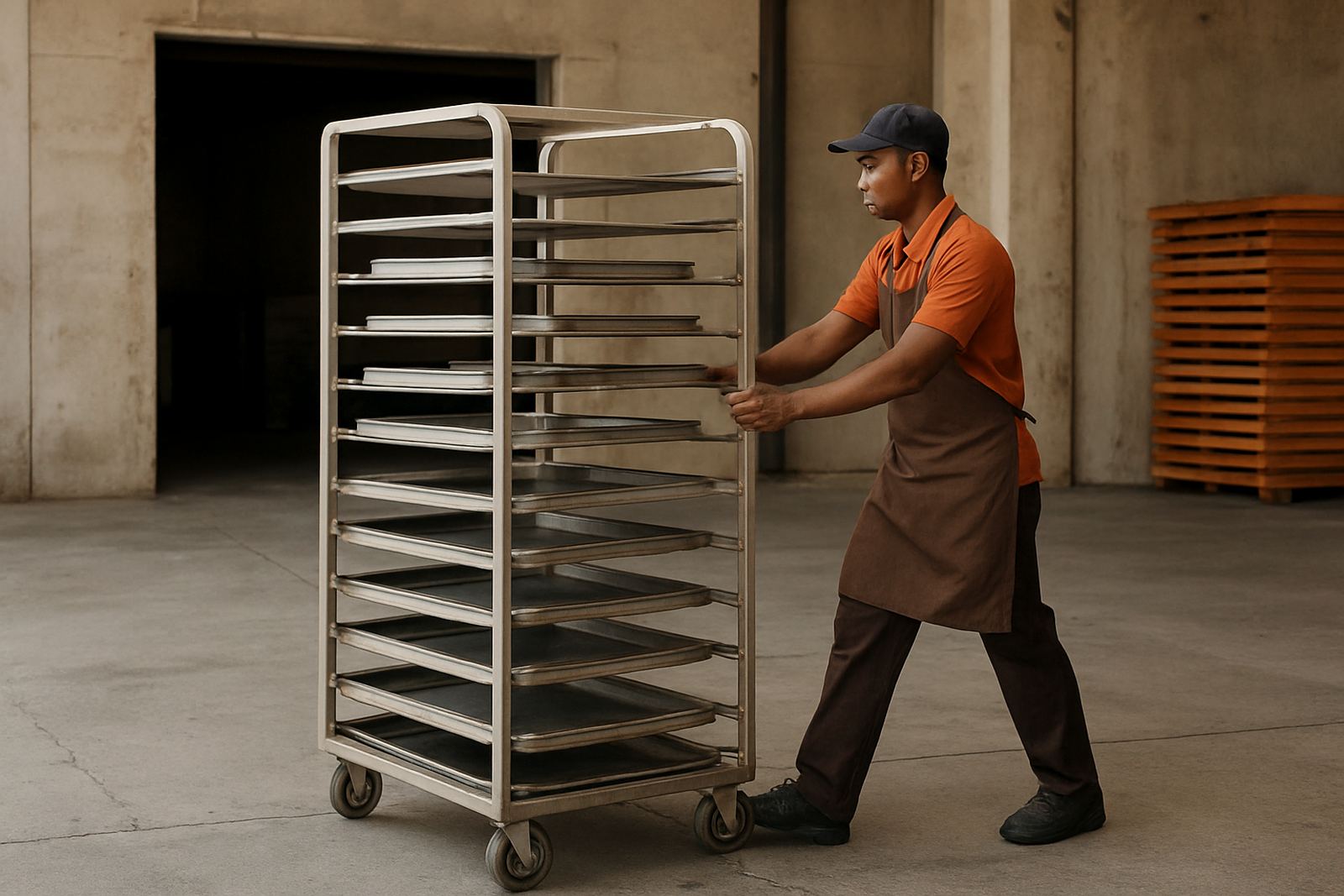
A tray trolley is a mobile steel unit made to carry trays, pans or bakeware between prep areas, ovens, cooling space and dispatch. In a plant bakery it cuts handling time and keeps product moving in order, instead of stacking trays on floors or on makeshift frames. That helps with hygiene, product protection and fewer knocks on the edges and rims.
Our tray trolleys are used for staging dough pieces, loaded trays, cooled pans and empty bakeware returning for washing or recoating. In humid coastal areas like Durban and Pinetown, a proper trolley also keeps trays off damp floors and away from standing water after wash-downs.
- Moves trays safely between work areas
- Helps reduce tray damage from dragging and twisting
- Keeps loading and offloading areas neater
- Works well with fixed oven lines and batch production
Sizes, frame layouts and carrying options
Tray trolleys are usually built to suit the tray size and spacing used in the plant. The most common layouts are single-column rack trolleys, double-sided trolleys and heavy-duty frame trolleys for deeper loads. If your bakery uses different tray depths or pan sizes, we can set the rail spacing to match the way your team works.
Typical units are built in mild steel with strong welded frames and smooth-running castors for floor movement. Where space is tight, a narrower footprint makes it easier to move through prep rooms and cold rooms. For large plants or hotel back-of-house areas, wider formats can carry more per trip and reduce traffic through doorways.
- Single-sided or double-sided frame layouts
- Custom rail spacing for trays or pans
- Heavy-duty castors for smooth movement on sealed floors
- Locking wheels available for loading points and staging bays
Where tray trolleys suit best
These units suit plant bakeries, retail bakery production rooms, hotel kitchens, central cooking facilities and bakery support stores. They are useful where trays must move from forming to proofing to baking, then out to cooling and packing. They also help in operations that run early starts, shift handovers and batch production through the day.
For businesses in Westmead, New Germany and the Upper Highway, tray trolleys are often chosen to improve floor flow in tighter plants. In inland sites they help with dust control and order, while on the coast they keep bakeware moving cleanly through wash areas where moisture can sit on the floor.
- Plant bakeries with regular batch turnover
- Hotels and institutional kitchens with back-of-house movement
- Retail production rooms and central bake stores
- Sites that need safer handling during load-shedding recovery and peak morning rush
Power, installation and floor checks
Tray trolleys do not need electricity or gas. They are manual handling equipment, so the main setup concern is the floor and the path the trolley will travel. A sealed level floor is best. Broken screed, open joints and uneven thresholds can cause wheels to snag and can also stress the frame over time.
Before ordering, check doorway widths, turning space, lift sizes and whether the floor has drainage falls or ramps. If your bakery has wash-down areas, the trolley should suit wet movement and not sit where water pools around the wheels. In most cases the trolley can go straight into use once delivered, but the route between oven, prep and store should be measured first.
- No power connection required
- No gas connection required
- Check doorway width and turning radius
- Check floor level, ramps and threshold heights
Care, cleaning and servicing on the floor
Tray trolleys last longer when they are cleaned regularly and not overloaded. Flour, oil and sugar build-up can make wheels drag and leave grime around the castor brackets. A daily wipe-down and a proper wash during deeper cleaning keeps them easier to move and better looking for longer.
Because bakery floors often see heat, steam and wash water, wheel wear should be checked often. If a castor starts wobbling or making noise, it should be replaced before it damages the frame or marks the floor. Straightening, weld repairs and corner repairs are useful if a trolley takes a knock from a loaded pallet or a tight turn. We also handle deep cleaning where old grease and flour have built up. A small issue left too long can become a bigger repair, so it pays to inspect the trolley each month.
- Clean wheels and brackets to stop drag
- Check welds and corners after impacts
- Inspect castors for flat spots or wobble
- Keep loaded units within the intended weight limit
What to confirm before you place an order
When ordering tray trolleys, the main point is fit. The trolley must suit the tray size, the working aisle width and the way your team loads and offloads product. If your trays are used with lids, covers or inserts, that must be allowed for as well. It also helps to know whether the trolley will move between hot and cool areas, because that affects the type of wheel and the finish needed.
Tell us the tray length, width and depth, plus the quantity you want to carry per trolley. If the unit needs to fit through a scullery, lift or narrow store room, send those measurements too. For bakeries in Durban and surrounding towns, coastal humidity can also influence material care, so it is worth saying where the trolley will stand overnight. We can assist with custom trays, spare lids and repair work where existing bakeware needs attention.
- Tray size and load per trolley
- Working aisle widths and doorway measurements
- Hot, cool or wash area use
- Need for locking wheels or custom frame spacing
Made in Westmead for bakery handling that stays orderly
Bakerite has supplied industrial bakeware from Westmead, Pinetown since 1997, and tray trolleys sit naturally alongside that work. Our team in Westmead supports plant bakeries, retailers and hotels across KwaZulu-Natal and nationally. If your operation needs a new trolley, or an existing one needs checking, we can look at the use case and make the frame suit the job instead of forcing the job around the trolley.
We also support related bakery equipment with pan recoating, tray recoating, pan straightening, rim repairs, lid repairs, weld repairs and fleet assessment. That means one supplier can help with movement, storage and repair planning, which saves time when orders are due and floors are busy.
Key facts
| Product type | Mobile tray trolley for bakery and kitchen bakeware handling |
|---|---|
| Construction | Welded mild steel frame with industrial castor wheels |
| Typical use | Staging, moving and storing trays, pans and bakeware |
| Custom options | Single-sided, double-sided, rail spacing and locking wheel options |
| Power or gas | None required |
| Service support | Cleaning, wheel checks, straightening, weld repairs and fleet assessment |