What a baguette tray does in the bakery
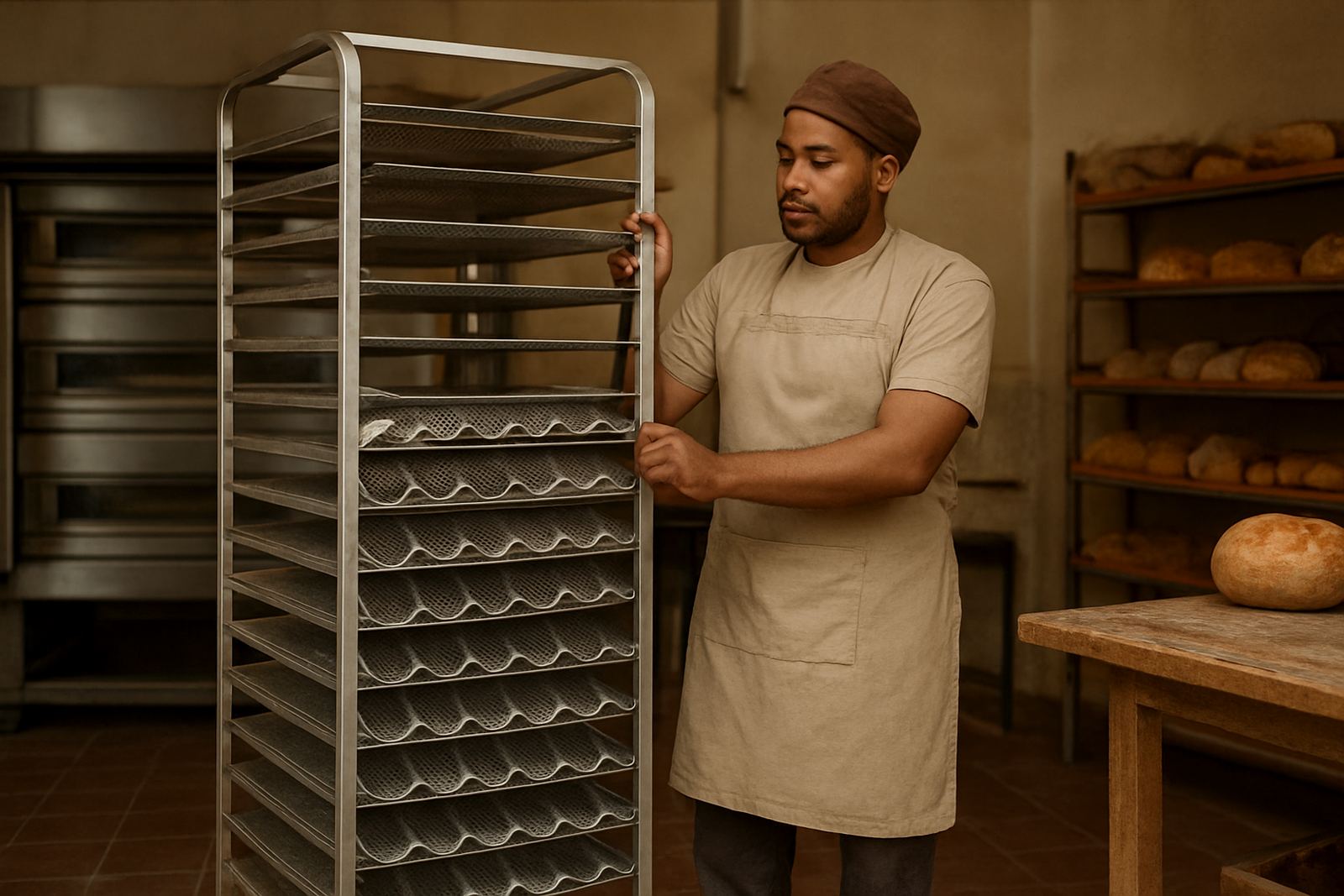
A baguette tray is a channelled steel tray that keeps each loaf in shape while it proofs and bakes. The channels hold the dough with enough support to stop spreading, while still allowing heat circulation around the base and sides. That gives you a neater loaf, more even colour, and less handling before the oven.
At Bakerite, we make trays for bakery lines that run every day, not just the odd batch. That means attention to tray depth, channel spacing, rim strength and how the tray moves through racking, retarder space and oven loading. In humid coastal areas like Durban and the North Coast, the tray finish and the way the dough is handled matter as much as the tray itself.
Our baguette trays suit plant bakeries, hotel kitchens, supermarket bakeries and contract bakers who need dependable tray life. They can be made to fit existing trolleys and oven decks, which helps if your plant was set up years ago and you do not want to replace the whole line.
Sizes, channels and tray construction
We make baguette trays in practical production sizes and can adjust them for your baking system. The exact layout depends on your loaf weight, the number of pieces per tray, and the width of your racks or oven. Common layouts are 2, 3, 4, 5 or 6 channels per tray, with channel profiles shaped to support standard baguette lengths and slimmer dough pieces.
Trays are manufactured from steel for steady heat transfer and long working life. Where needed, we can supply heavier gauge material for higher cycle use, or lighter trays where handling and lifting are frequent. Side rims, end supports and return edges can be specified to suit trolley loading and to help prevent twisting.
- Steel construction for regular plant bakery use
- Channelled base to support long dough pieces
- Available in multiple channel counts
- Custom dimensions for rack and oven fit
- Optional reinforced rims for busy depots
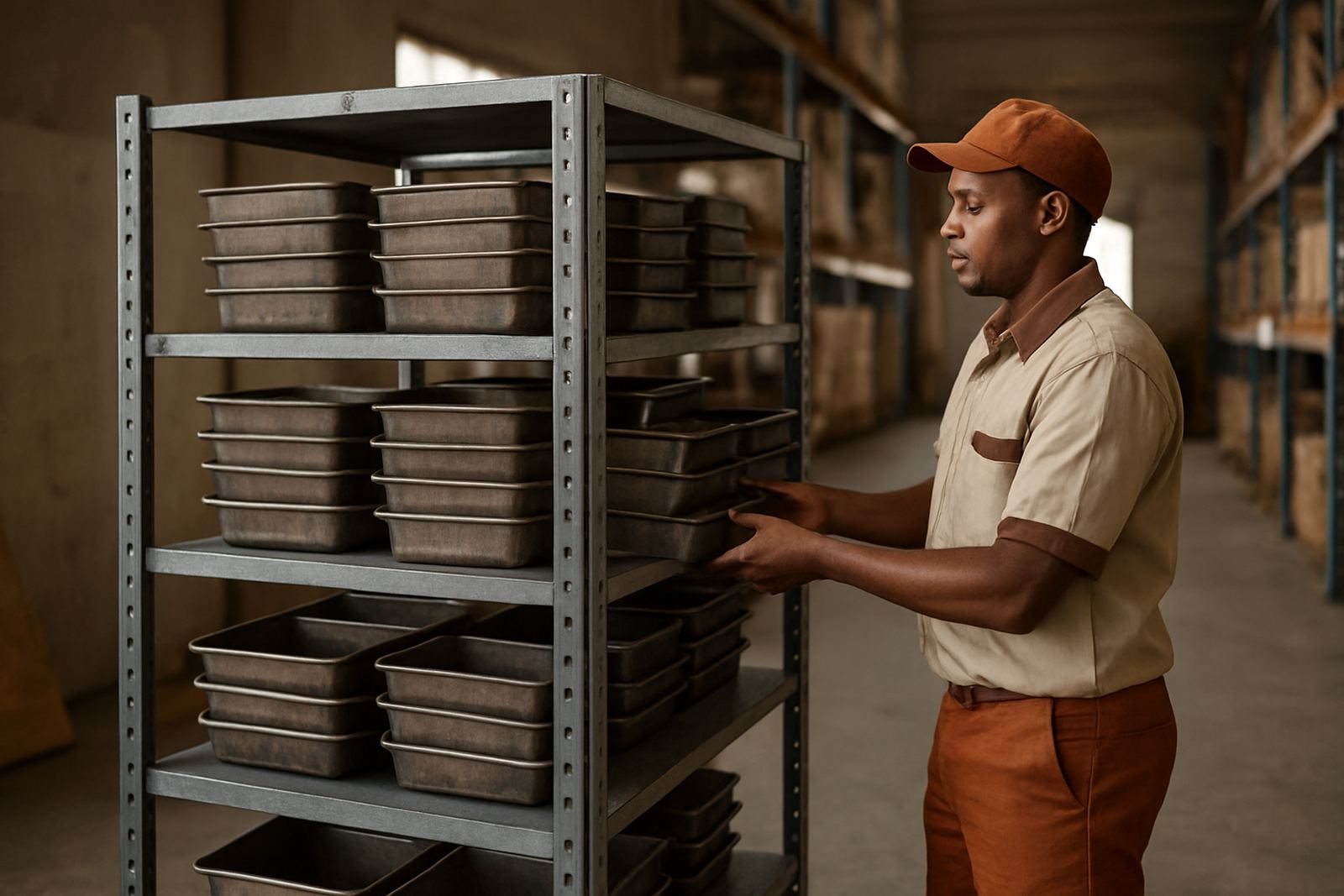
If you are replacing older trays, it helps to bring one sample or exact measurements. A few millimetres out can cause tray snagging, poor stacking or uneven spacing on the rack, so we measure carefully before production.
Where baguette trays work best
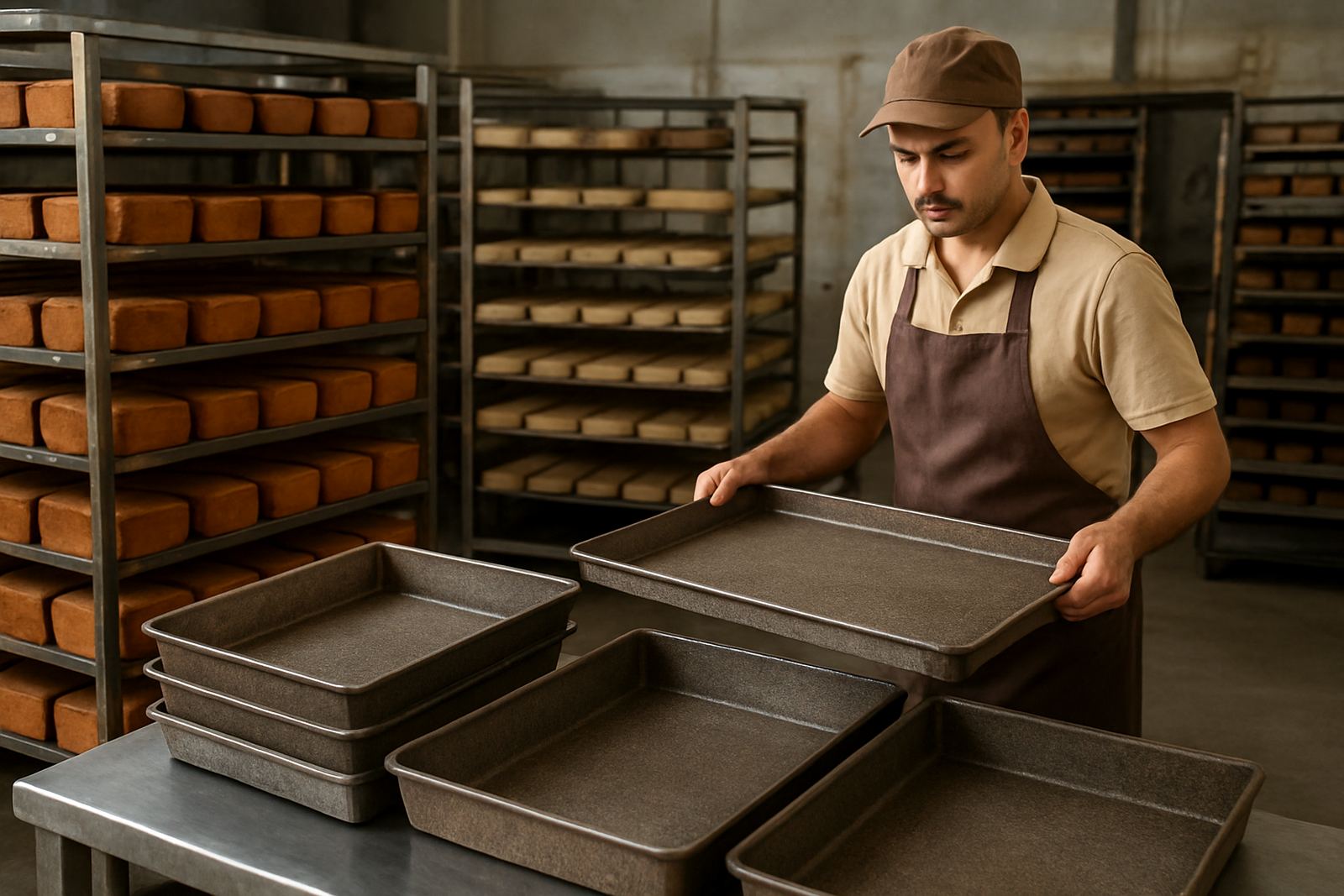
Baguette trays are used anywhere long, shaped dough needs consistent support. They work well in retail bakeries that bake through the day, hotel kitchens serving breakfast and conference trade, and industrial plants supplying multiple branches from one site. They are also useful for loaves that need to keep their shape during proofing in warm rooms or retarder cabinets.
These trays are especially practical where oven loading has to be quick and repeatable. In a busy plant, the operator wants to load, bake, unload and stack without re-shaping trays after every run. That is where proper tray formation and straightness matter. A tray that sits flat and tracks true through the oven saves time and gives better batch control.
- Plant bakeries with continuous output
- Retail bakery production rooms
- Hotel and catering kitchens
- Supermarket bakery sections
- Contract bakers and commissary kitchens
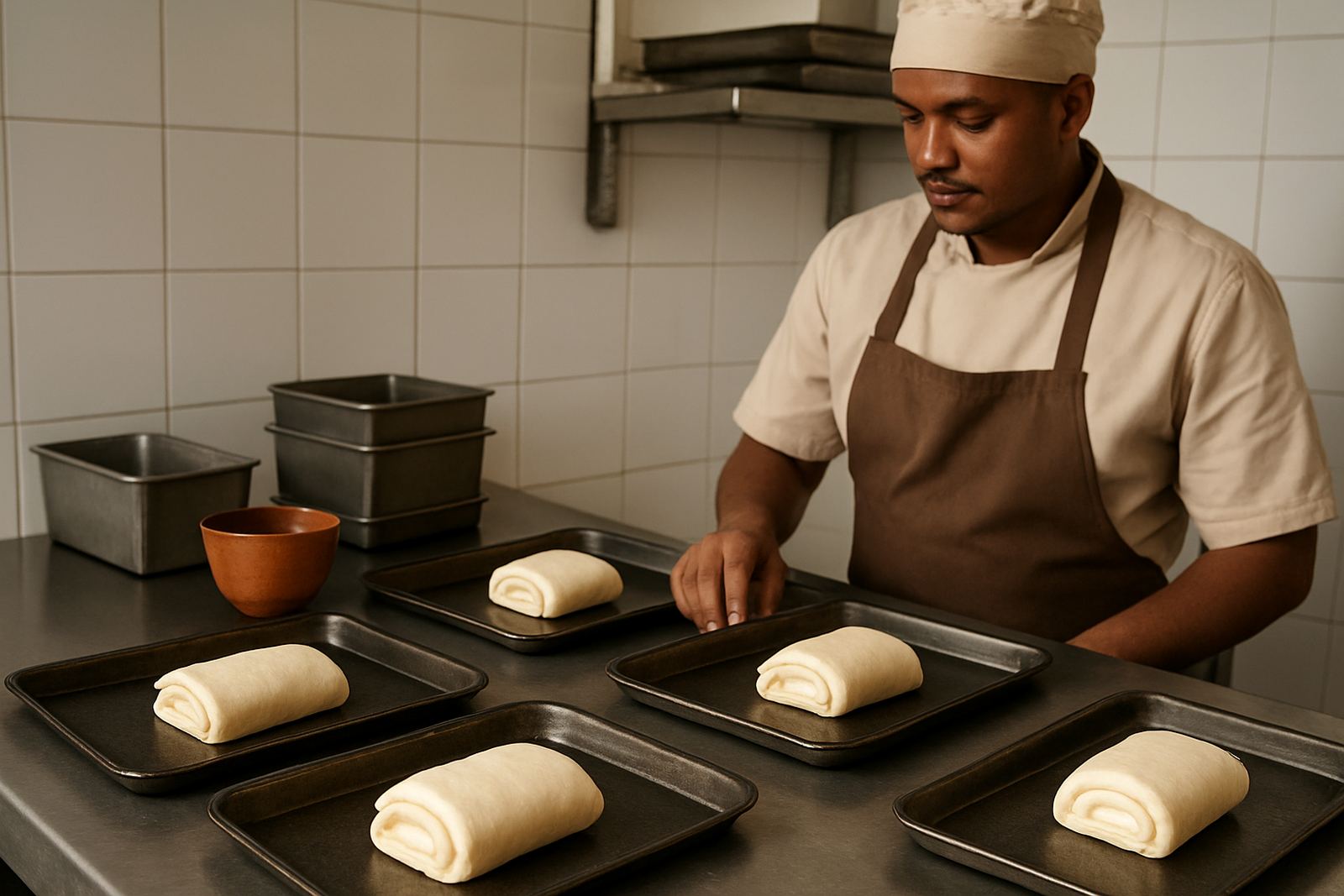
We also see good results in bakeries near the coast where humidity can make dough handling tricky. A tray that supports the loaf properly reduces the chance of slumping during the proof stage, which helps when temperatures change through the day.
Installation, oven fit and utility checks
Baguette trays themselves do not need power or gas, but they must match the equipment around them. Before ordering, check the rack width, tray pitch, trolley wheel clearance and oven deck opening. If trays are too tight, operators lose time. If they are too loose, they shift during loading and can be difficult to stack safely.
If your bakery uses gas ovens, electric ovens or combination systems, the main concern is still fit and airflow. Trays must allow enough circulation so the loaf bakes evenly. On older ovens, a tray that is too wide or too deep can block heat movement and affect colour across the batch. We can make trays to suit South African plant bakery equipment, including older installations where a standard imported size is not a clean fit.
For new installations or refurbishments, it is best to confirm the full tray path from mixing area to proofing to oven and cooling. That includes lift points, trolley stops and how trays are returned to the wash or storage area. A tray that works in the oven but jams on the trolley is no help at all.
Care, cleaning and tray life
Good tray life starts with basic care. Remove dough build-up before it hardens, clean the channels after production, and dry trays properly before stacking. In humid areas and coastal sites, damp stacking can shorten tray life and lead to surface corrosion. If trays are used in harsh shifts or handled roughly, bent rims and twisted channels can show up sooner than expected.
Our workshop can assist with tray-related servicing where practical, including straightening, weld repairs and deep cleaning. If the tray body is still sound, repairs can extend service life and save replacement cost. This is often useful for bakeries that run six or seven days a week and need every tray in circulation. A small repair now is cheaper than losing a tray in the middle of a production run.
- Brush out crumbs and flour after use
- Do not stack wet trays
- Check for bent rims and twisted corners
- Keep trays away from standing water
- Inspect weld points during routine maintenance
What to send when you want a quote
To quote correctly, we need the tray length and width, the number of baguette channels, and the loaf size you are aiming for. If you have an existing tray, send a clear sample or exact measurements. Photos also help, especially where the tray has worn corners, missing sections or past repairs. If the trays must fit a specific trolley or oven deck, include that detail from the start.
It also helps to tell us how the trays will be used. For example, a hotel kitchen running a few batches a day may need a different build to a plant bakery working through load-shedding backups and long production hours. If the trays are exposed to frequent washing, stack pressure or transport between branches, we can recommend a stronger layout. We work from Westmead, Pinetown and supply nationally, so we are used to matching trays to real bakery conditions, not just drawings.
Give us the basics below and we can advise quickly:
- Tray length and width
- Number of channels per tray
- Loaf weight or dough piece size
- Oven or rack type
- Quantity required
- Whether you need standard or custom sizes
Key facts
| Product type | Channelled steel baguette tray |
|---|---|
| Material | Steel bakeware for repeated plant use |
| Typical options | 2 to 6 channels per tray |
| Use case | Proofing and baking long dough pieces |
| Supply area | Westmead, Pinetown and national supply |
| Custom work | Made to size for racks, ovens and trolleys |