Built for sandwich loaves and daily plant output
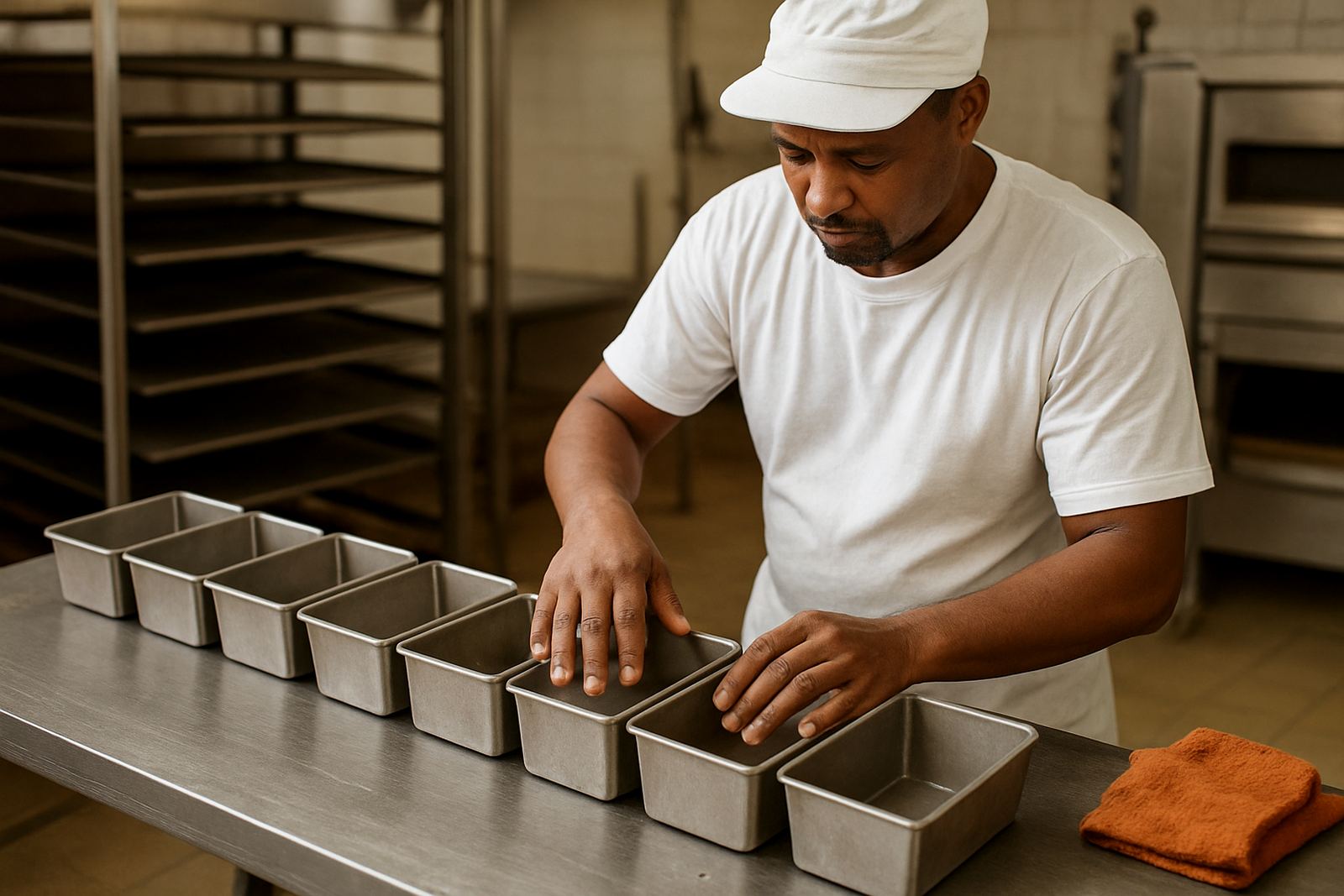
Toast bread pans are the workhorses of a bread line. They are used for square white loaves, brown loaves and other sliced bread products where a neat top, straight sides and even bake are needed. Our pans are made in steel for repeated use in plant bakeries, hotel kitchens and larger wholesale baking rooms where pan counts are high and downtime is costly.
The shape is suited to standard toast bread slices and to loaves that must fit slicers, baggers and retail shelves. Many bakeries in Durban, Pinetown, Pietermaritzburg and further afield order these pans in matched sets so every loaf comes out the same size. That helps with portion control, packing, and tray loading, and it cuts waste from uneven loaves. In hot, humid coastal conditions, good steel and proper upkeep also help keep the pan shape true over time.
We can supply plain pans, coated pans, and custom-built sizes for lines that use a fixed tin width or loaf weight. If you need the same pan across several ovens or sites, we can build to sample or to a drawing. That is useful where a plant wants one spec for the whole group, instead of patching together mixed tins from different suppliers.
Sizes, wall styles and finish options
Toast bread pans are usually specified by internal length, width and depth, together with wall profile and material thickness. Common production sizes range from single loaf pans to multi-unit trays used on deck ovens and conveyor systems. Where bakeries run square sandwich loaves, the pan depth and top opening need to match the dough weight, proving time and pan lid arrangement if lids are used.
Options can include straight sides, rolled edges, reinforced rims, welded corners and removable or fixed lids. For bakeries that are handling heavy daily use, thicker steel and stronger corner detail are worth the extra cost because they hold shape better during repeated loading and knock about on the floor. If the line is using automated de-panning or rack handling, we can work to the measurements needed for the equipment clearance.
Typical ordering choices include:
- Single loaf pans for bakery counters, hotel kitchens and pilot lines
- Multi-loaf trays for high-volume plant baking
- Lidded toast pans for square top loaves
- Open pans for loaves that will rise above the rim
- Custom lengths and widths to suit existing oven shelves
- Repairable steel construction for long service life
If you are replacing old tins, measure the internal opening, outside footprint and stacking clearance. A pan that is only a few millimetres off can jam on a rack or leave the loaf leaning, which is a nuisance when the shift is moving fast.
Where toast bread pans suit best
These pans suit plant bakeries making sliced sandwich bread at volume, as well as retailers with in-house bakeries and hotels that bake bread fresh through the day. They are also a good fit for contract bakers supplying schools, canteens, hospitals and local food service accounts where consistency matters more than decorative presentation.
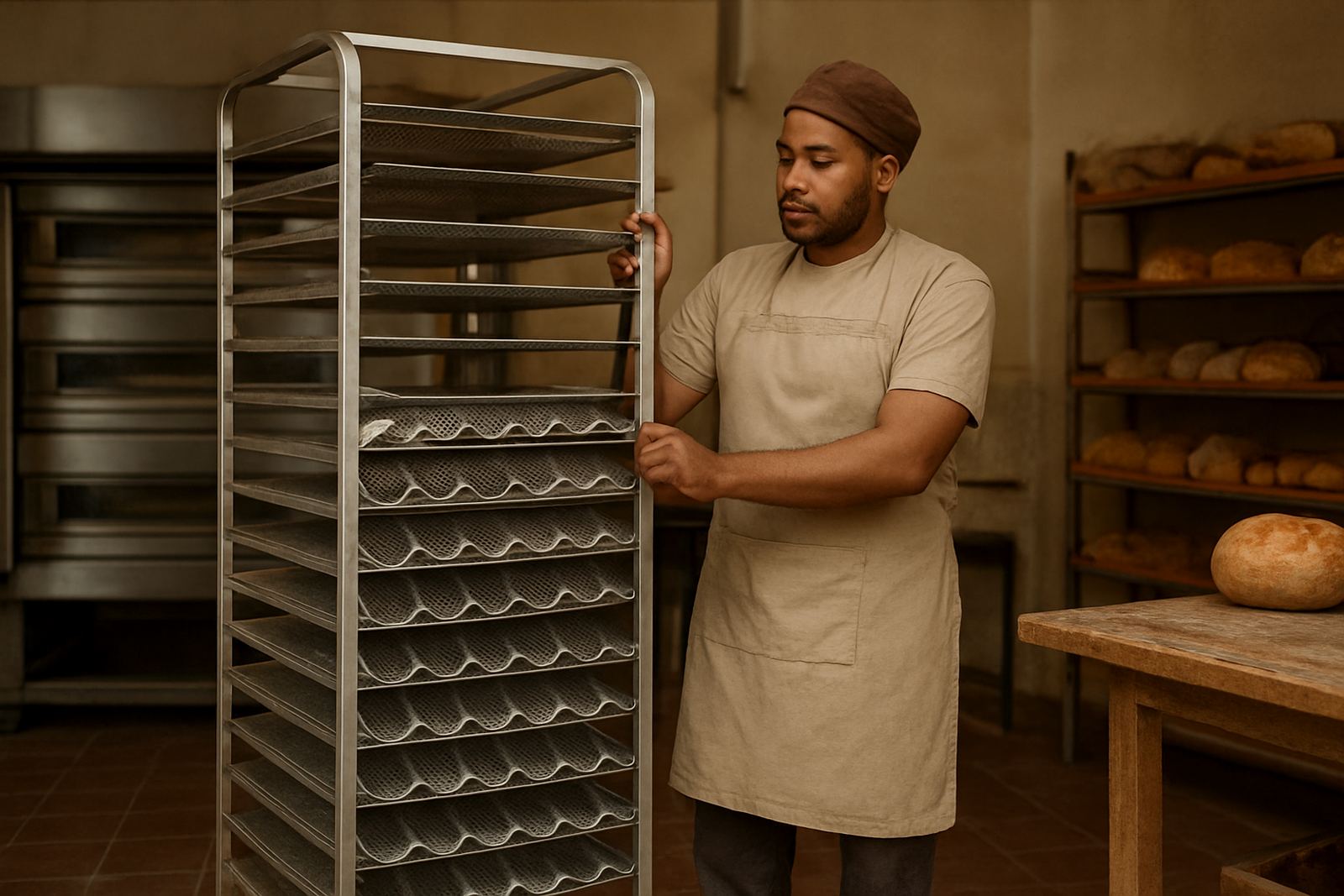
For production sites in KwaZulu-Natal, Gauteng, the Eastern Cape and the Western Cape, the main thing is to match the pan to the oven and handling method. Deck ovens need pans that sit flat and transfer heat evenly. Rack ovens need pans that are easy to load and unload without sticking. Conveyor lines need repeatable dimensions so the pans move cleanly and the loaf shape stays even from first shift to last.
Useful checks before ordering:
- Oven type, shelf size and loading method
- Desired loaf weight and finished slice size
- Whether the loaf must be domed or flat topped
- Need for lids, handles or reinforced rims
- Current pan wear, warping or corner cracking
- Whether the line is manual, semi-automatic or automatic
In coastal bakeries where humidity is high, pans that are stored damp can stain or pit faster. A dry holding area and a clear cleaning routine help the pans last longer, especially when the plant runs through load shedding and the ovens are started and stopped more often than planned.
Installation, oven fit and power or gas needs
Toast bread pans themselves do not need power or gas, but the line they sit on must suit the pan size and production rhythm. When we quote or make to order, we look at oven type, rack spacing, proofing room conditions and how the pans will be moved around the site. If a bakery is changing from gas-fired deck ovens to electric units, or from manual loading to rack systems, the pan dimensions may need a small adjustment so the process stays efficient.
For new installations, check that the pan can move freely through the oven opening without scraping. Leave enough clearance for gloves, loaders and trolleys. Where lids are used, make sure the proving and bake cycle allow for expansion and that the lid can be removed without damaging the rim. A pan that is too tight can slow the shift and create handling damage, and that soon becomes an avoidable cost.
We often work with bakeries that already have equipment on site, so the practical step is to measure the existing set and compare it with the oven deck, rack and discharge area. If the old tins were bent or repaired before, bring one good sample and one worn sample. That gives a better reading of the real dimensions than trying to guess from memory.
Care, recoating and repair that keeps pans in service
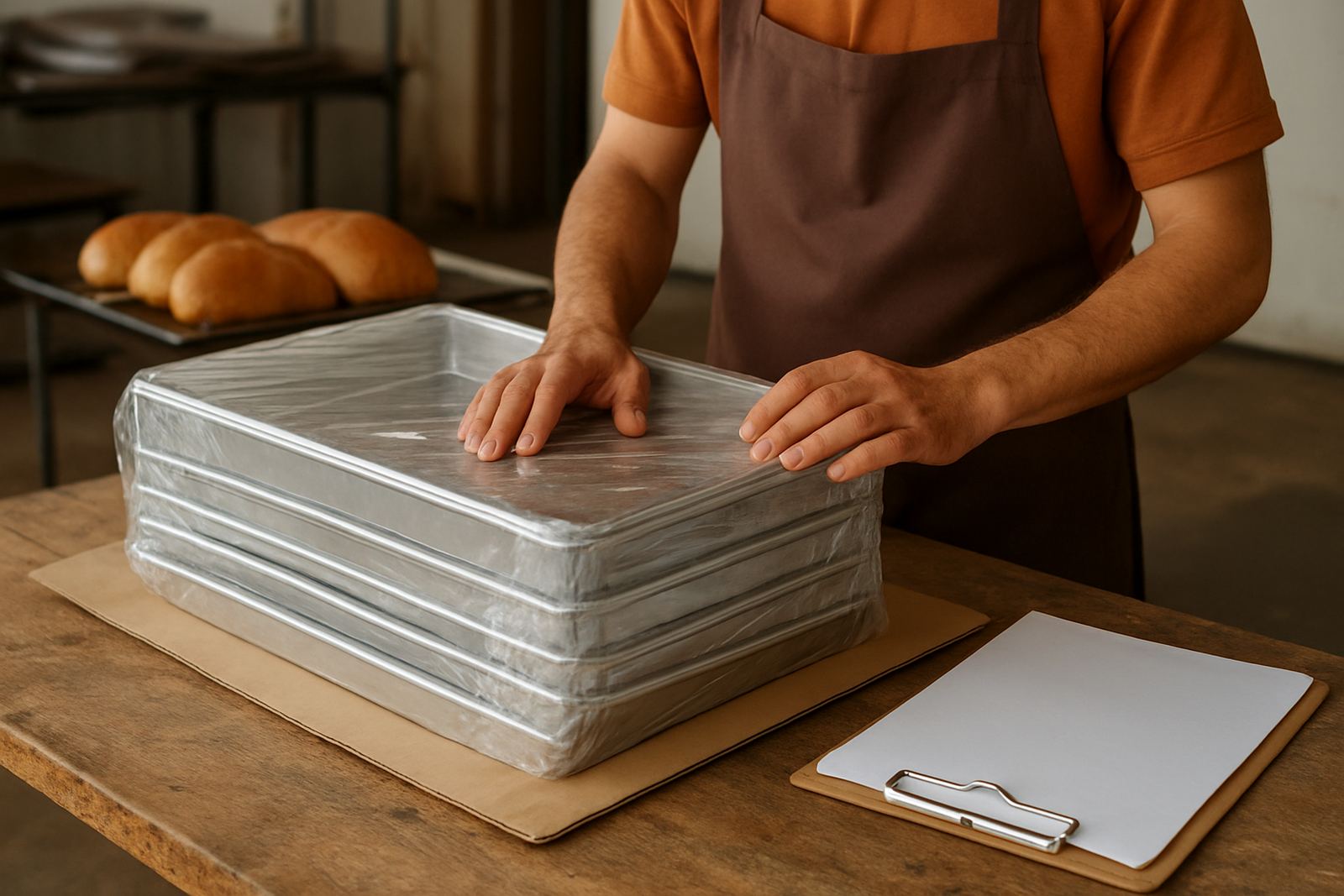
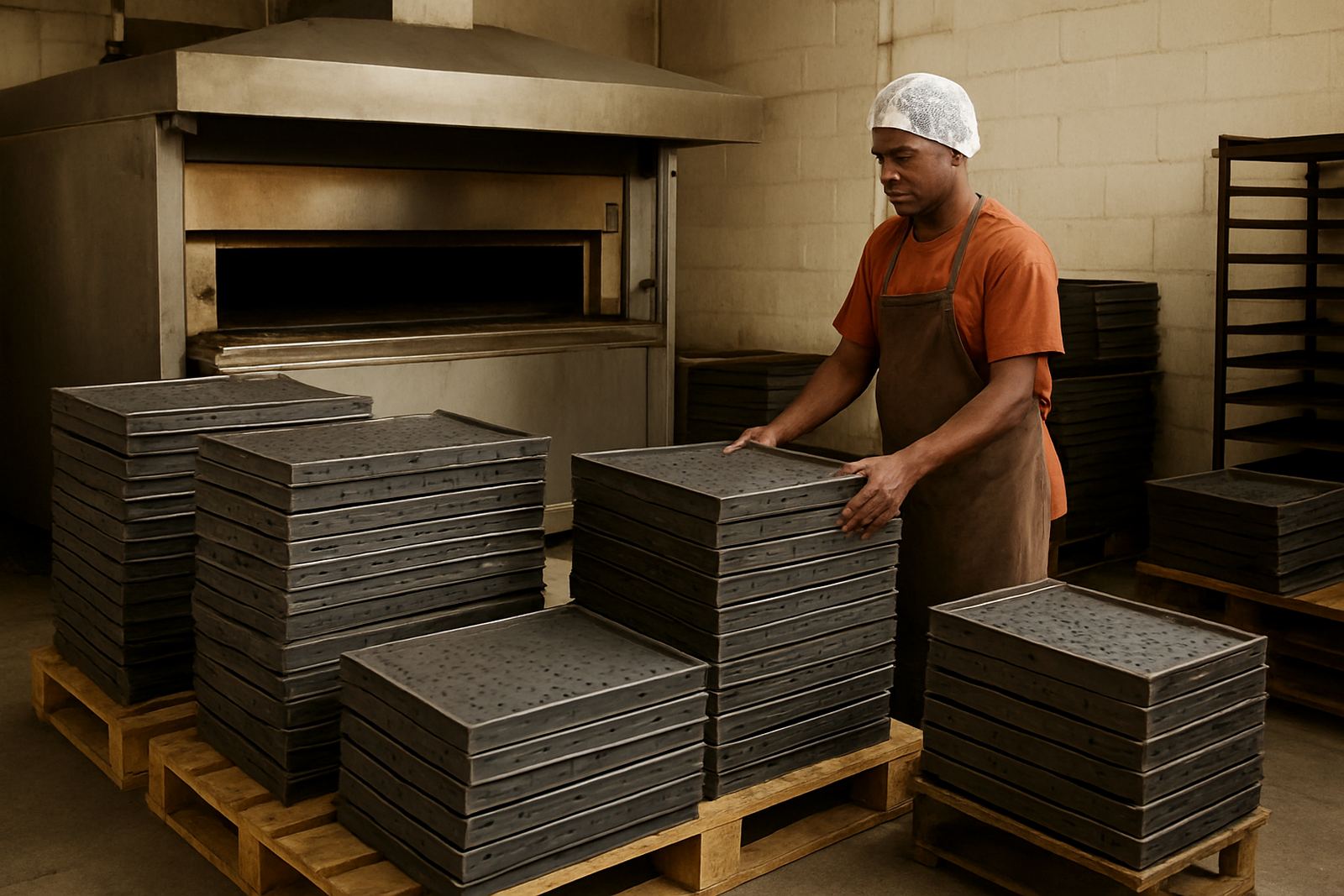
Steel toast bread pans last longer when they are cleaned before build-up becomes hard and the surfaces are kept dry after washing. Heavy scraping can remove protective coating and encourage rust, especially in Durban, Umhlanga and other humid coastal areas. It also helps to stack pans neatly so the corners do not take unnecessary knocks.
We offer pan recoating, tray recoating, pan straightening, corner repairs, rim repairs, lid repairs and weld repairs. If pans are still structurally sound, recoating and straightening can give them a second run rather than replacing the full set. That is often the better option when the bakery has a large fleet and can not afford long gaps in production.
Good care basics are:
- Allow pans to dry fully before stacking
- Avoid metal tools that gouge the surface
- Remove burnt-on residue before it hardens
- Inspect corners and rims for early movement
- Keep spare lids where lidded loaf production is constant
- Book a fleet assessment when wear starts spreading across the set
If a pan starts to twist, drag or bake unevenly, do not wait until the whole batch goes off spec. A small repair on one pan is easier than reworking a full line of tins later.
What to check before you place an order
Before ordering toast bread pans, have the basic production details ready. The more accurate the information, the better the fit and the less chance of delays once the pans arrive at your site. If you are in Westmead, Pinetown or another KZN industrial area, you can often send through measurements, photos and a sample pan for comparison.
What we need to know:
- Internal length, width and depth required
- Whether you need plain, coated or lidded pans
- Material thickness preference
- Quantity per batch and ongoing monthly volume
- Oven make-up, shelf size and tray spacing
- Any special handling, stacking or cleaning issues
It also helps to say what is wrong with the current pans. If loaves are caving in, sticking, baking unevenly or coming out with a misshapen edge, that usually points to a sizing issue, worn coating, bent rims or damaged welds. We can then match the pan spec to the real fault instead of just copying an old problem.
For plant bakeries that run every day, the right toast bread pan is not just a tin. It is part of the line, and it has to hold up under repeated use, hot washdowns and quick turnarounds between batches.
Key facts
| Product type | Steel toast bread pans for production loaves |
|---|---|
| Typical use | Square sandwich loaves, sliced bread and high-volume bakery output |
| Material | Industrial steel construction with optional coating |
| Options | Plain, lidded, reinforced, welded, straightened and custom-made |
| Services available | Recoating, straightening, corner repairs, rim repairs, lid repairs, weld repairs |
| Base | Westmead, Pinetown, supplying nationally |
| Founded | 1997 |