Start with the order window, not the truck booking
For plant bakeries and hospitality sites, delivery planning should start the moment the item list is confirmed. Steel floor tiles, bread pans and custom trays may share a route but not a finish date, and recoated items often need more handling time than new production. If the order includes custom sizes, special corners, lid work or weld repairs, build in extra days for fabrication checks before dispatch.
As a rule, confirm three things first: quantity, delivery town and receiving hours. A load going to Westmead or Pinetown is not planned the same way as one going to East London, Polokwane or George. Long-distance runs need a clear dispatch date, a safe arrival slot and a contact person who can receive after-hours if the site runs shifts. If the bakery starts early, the truck should not arrive when the receiving bay is still blocked by morning stock.
- Confirm full item count and sizes before production starts
- Set a target dispatch date and a realistic arrival date
- Share site contact names, cell numbers and gate times
- Flag any custom work, recoating or repairs at order stage
Plan packing around weight, stacking and finish protection
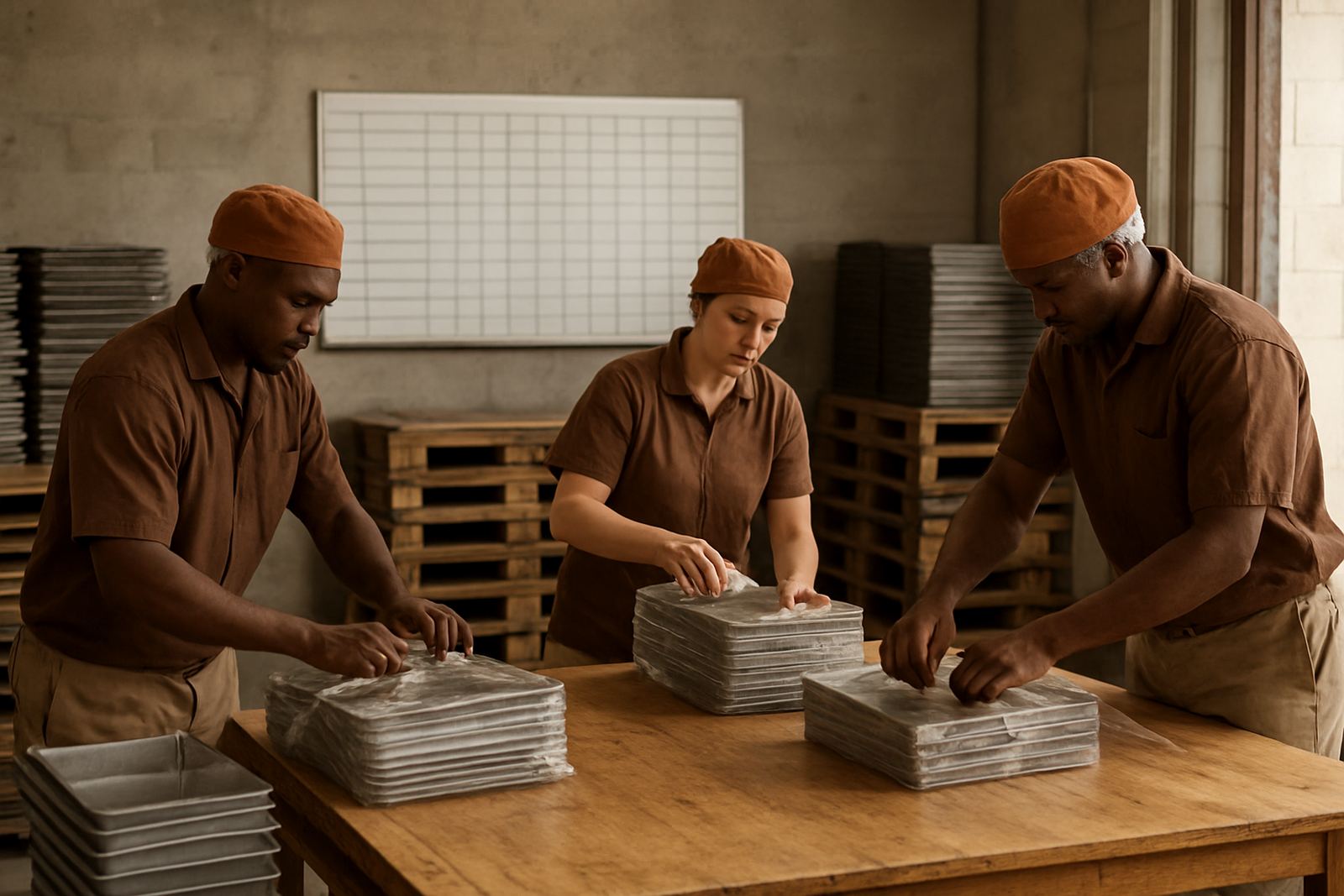
Industrial bakeware must be packed so it arrives square, clean and usable. Bread pans and trays can nest or stack, but only if the finish is protected and the weight is distributed properly. Steel floor tiles need even support in transit because rough handling can bend edges or bruise corners. If the order is going to coastal sites such as Durban, Richards Bay or Port Elizabeth, keep moisture control in mind too. Salt air and condensation can mark bare steel if the packing is not closed properly.
For larger consignments, ask how the load will be split. A full pallet may be fine for one site but too heavy for a small dock with a manual trolley. Mixed orders should be grouped by site or by item type so the receiving team does not spend time sorting pieces on the floor. Where possible, label every bundle clearly. That helps when an order is moving through more than one depot or when the receiving team is working under load shedding and has limited lighting. A neat label can save a lot of time, sometimes a whole shift.
- Use closed wrapping for recoated or cleaned items
- Separate heavy steel tiles from lighter trays
- Label bundles by branch, item type and count
- Protect corners, rims and welded points from rubbing
Match delivery timing to plant shifts and receiving capacity
Many bakeries run before sunrise, during the day and again at night. That means delivery timing must fit the receiving team, not only the transport line. If a site in Durban North can only offload between 8am and 11am, then a truck that arrives at lunch time may sit for hours and disrupt the route. For national orders, one late stop can affect the next three deliveries, so timing needs to be fixed and shared early.
Site receiving should also consider forklift access, pallet jack width and turning space. Some retail depots have strict loading dock rules, while hotel kitchens may only accept small drops through a side entrance. If the site is inside a municipal controlled area or a busy CBD, check whether there are gate passes, delivery permits or time limits for heavy vehicles. In places with narrow streets or truck restrictions, a smaller feeder vehicle may be the better option even if it means one extra transfer.
When load shedding is active, tell the receiving team what backup lighting or generator power is available. A dark bay slows counting, increases the risk of mistakes and makes it harder to inspect for bent edges or transport damage. It is better to delay the handover by thirty minutes than to sign for a load that has not been checked properly.
Use a receiving checklist at every site
Every delivery should be checked before the signature goes onto the note. A quick visual glance is not enough for steel floor tiles, pans with lids, or trays that have been straightened after repair. The receiving person should count, inspect and mark any issue while the driver is still on site. If the load is split across two pallets or more, check each pallet against the packing list one by one.
The checklist should be simple enough for any shift supervisor to use. This helps when the order lands at a branch in Pinetown, a retailer warehouse in Johannesburg, or a hotel group site in Cape Town. Keep the same process every time and the handover will stay consistent, even if the receiving team changes. It also makes claims easier if something is missing or damaged in transit.
- Count all items against the delivery note
- Check corners, rims, welds and lids for damage
- Confirm the finish is clean and dry
- Note shortages or transport marks before signing
- Keep one signed copy at site and one with the driver
Build a route plan for national and multi-branch orders
National orders work best when each branch is planned separately, even if they leave the workshop in one run. A bakery group may need trays sent to Durban, Pietermaritzburg and Newcastle in the same week, while a retailer wants replacement pans to land at two DCs and one store. If each stop has its own contact person, opening hours and dock rules, the route can be arranged with fewer delays and less double handling.
For long routes, factor in rest stops, driver handover points and weather. Heavy rain on the N3 can add time, and coastal humidity can affect packaging if loads sit open overnight. If the order includes recoated pans or freshly repaired lids, ask for dry storage on arrival so the items do not go straight into a warm, damp room. Good route planning is not only about speed, it is about getting the load there in a condition that is ready to use.
Where possible, keep one person in charge of the whole movement from dispatch to sign-off. That person should know what is leaving, which branch gets what, and who to phone if the receiving bay is blocked or the truck is delayed. It sounds simple, but it saves plenty of back and forth.
Sort out special cases before the load leaves Westmead
Certain orders need extra planning because the receiving site has a special process or the product itself is more delicate. Deep-cleaned pans should be fully dry before packing. Recoated trays should not be stacked tight against rough steel. Spare lids need to be matched to the correct pan or trolley set, and repaired items should be separated from new stock so there is no confusion on site. When a bakery is replacing old equipment during a shutdown window, timing becomes critical and the delivery may need to go in after hours or over a weekend.
Before dispatch, confirm whether the site needs any documents for internal stock control, supplier entry or municipal access. Some plants need a purchase order number on the note, some want the driver’s ID details, and some require proof of delivery to be sent the same day. A little admin at the start avoids a lot of chasing later, especially on bigger orders that cross provincial lines.
- Separate repaired, recoated and new items on paperwork
- Confirm any gate or security documents in advance
- Ask whether after-hours delivery is allowed
- Check that storage space is ready before the truck arrives