Start With The Main Causes Of Tray Damage
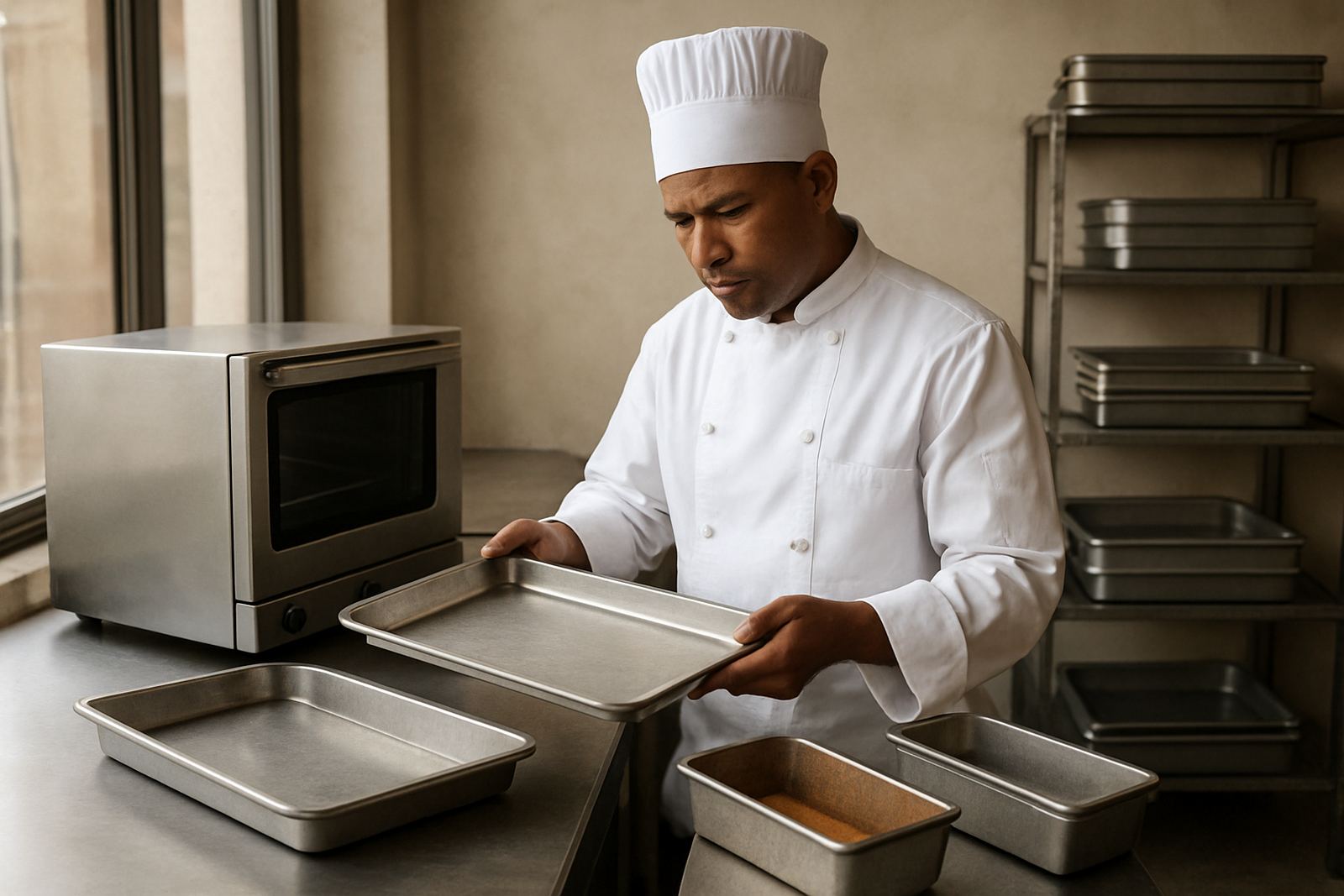
Most tray problems come from repeated knocks, uneven heat, overloading and poor storage. In plant bakeries around Pinetown and Durban, trays often take a beating during rush periods when staff are moving fast and ovens are running flat out.
Aluminium and steel trays react badly to sudden drops, damp floors and hard stacking. If a tray lands on a tile edge, gets bent against a rack or is left with heavy product on one side, the damage starts small but gets worse with every bake.
- Watch for bent corners, twisted rims and rippled bases.
- Check whether trays are being stacked too high or too tightly.
- Look for hot trays cooled on wet benches or cold concrete.
- Review whether one person is carrying more trays than is safe.
Handle Trays The Same Way Every Shift
Tray care works best when every shift follows the same routine. The aim is not to move slower, only to move properly. A clean handover between prep, oven and wash-up reduces the little knocks that build up over time.
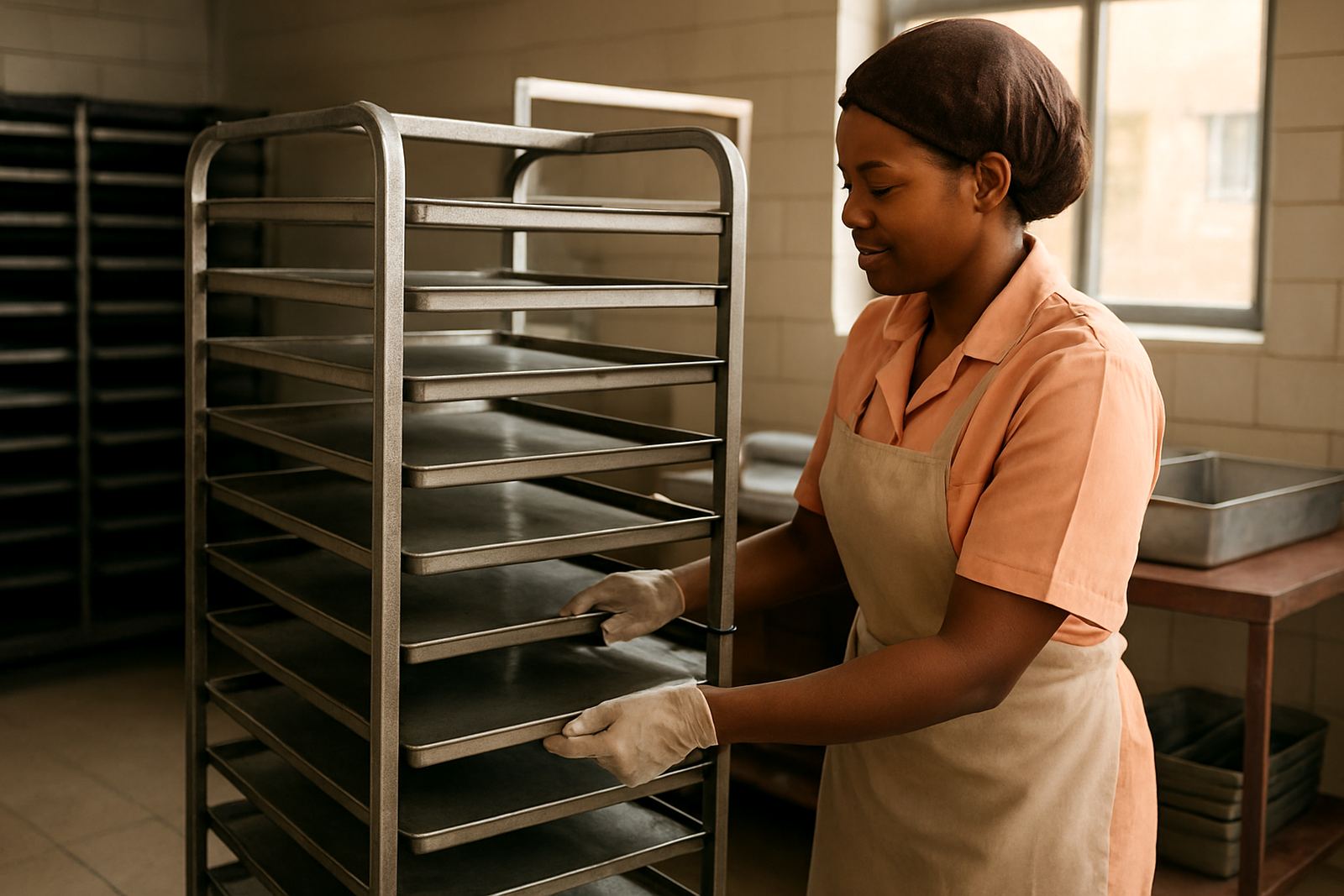
Use both hands for full trays, keep trays level and avoid dragging them across metal racks. If a tray is stuck, lift it clear instead of forcing the rim. When staff know the correct path from make-up area to oven and back, there is less chance of corner damage and less chance of dropping trays on the way.
- Carry trays flat, not on an angle.
- Never slide one tray over another to separate them.
- Do not use damaged trays as push tools for other trays.
- Keep walkways clear so staff are not turning sharply with loaded trays.
Stacking And Storage That Prevent Warping
Poor stacking is one of the main reasons trays warp. If weight is uneven or the stack leans, the lower trays take the pressure and slowly lose shape. This is common in bakeries working long shifts where trays are stored near the oven and not fully cooled before restacking.
Store trays on level shelving, with enough support under the base. Do not overfill racks and do not leave mixed sizes wedged together. If trays are used in damp coastal conditions, allow proper drying before storage or you will get rust spots and sticky residue that makes handling harder.
- Separate damaged trays from the working stock straight away.
- Stack by size and type only.
- Keep storage off the floor where possible.
- Leave space for air movement after wash-up.
Cleaning Habits That Protect Edges And Coatings
Tray life drops quickly when cleaning is too aggressive. Steel wool, sharp scrapers and harsh twisting at the wash bay can open up corners and lift protective finishes. Once that happens, the tray starts to rust or blister faster, especially in humid areas like Durban and along the KZN coast.
Use the right soak time, rinse properly and avoid banging trays together to dislodge burnt bits. If residue is hard to remove, warm water and a suitable cleaner are safer than force. Give staff a clear rule that trays must be checked after washing before they go back into service.
- Remove baked-on waste before it hardens fully.
- Do not stack wet trays without drainage.
- Use non-abrasive brushes where possible.
- Keep wash bay drainage clear so trays are not standing in dirty water.
Load, Heat And Oven Conditions Matter
Tray damage is not always caused by handling. Heat stress, uneven loading and rapid temperature changes can bend trays just as quickly. In high-output bakeries, one tray may come out fine while the next one is overloaded and bows in the middle. That small difference changes how the tray sits on the rack and creates future wear.
If your bakery has load-shedding or frequent interruptions, watch the cool-down and reheat cycle. Sudden changes in oven temperature can make trays move out of shape. Try to keep loading weights consistent and do not place cold wet product on a tray that is still very hot.
- Match tray load to the product and size.
- Do not overpack heavy items near one edge.
- Let trays cool in a level position.
- Check oven floors and racks for high spots that can mark the tray base.
Weekly Checks That Catch Damage Early
A short weekly inspection can save a lot of tray replacement cost. Many kitchens only notice tray problems when product starts baking unevenly or when trays no longer sit properly on the oven floor. By then the damage has already spread through the batch process.
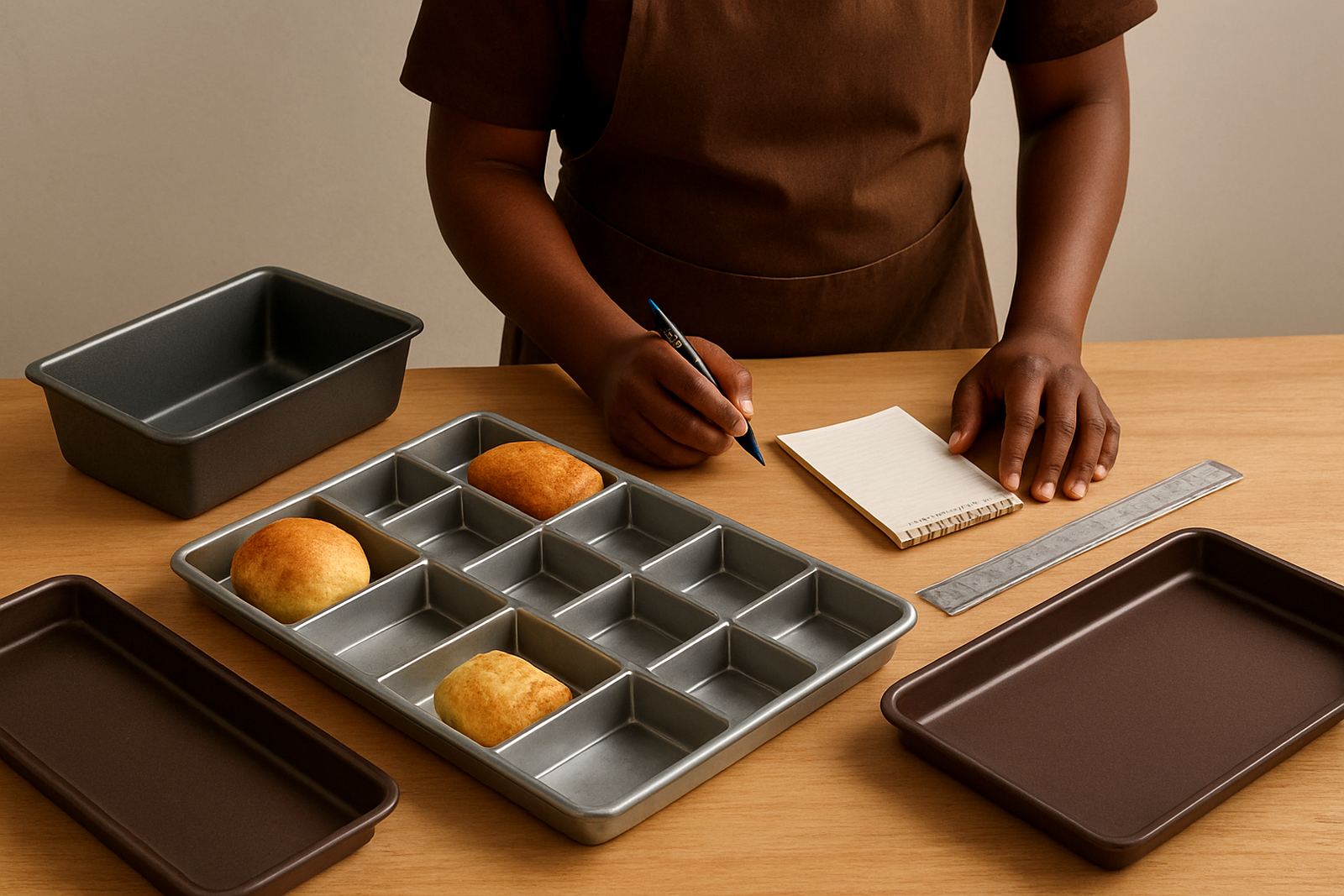
Use one person to do a walk-through and record what needs attention. Keep damaged trays separate and decide whether they need straightening, corner repairs or recoating. Small repairs are usually cheaper than letting the tray fail in service.
- Check rims for splits and lift points.
- Lay trays on a flat surface to spot twist.
- Look for scorch marks, rust and worn coating.
- Confirm that spare lids and covers are still fitting properly.
When To Repair Instead Of Replace
Not every damaged tray needs to be thrown away. If the body is still sound, straightening, weld repairs, rim repairs or corner repairs can put it back into use. That is useful for plant bakeries and hotels that need to keep stock moving while controlling spend.
It is worth assessing trays before they fail completely. A proper fleet assessment shows which trays can be recovered and which ones are no longer safe for daily use. For bakeries in Westmead, Pinetown and the wider KwaZulu-Natal area, this can help avoid last minute shortages when production is already under pressure.
If you are seeing repeated edge knocks, warping or finish loss, the handling process needs attention too. Repairing trays without changing the daily routine only delays the same problem.