Why bread pan corners matter in daily baking
On a busy line, the corner of a bread pan takes more punishment than most people notice. It is where dough pressure, stacking, washing and trolley movement all meet, so the corner shape has a direct effect on the life of the pan.
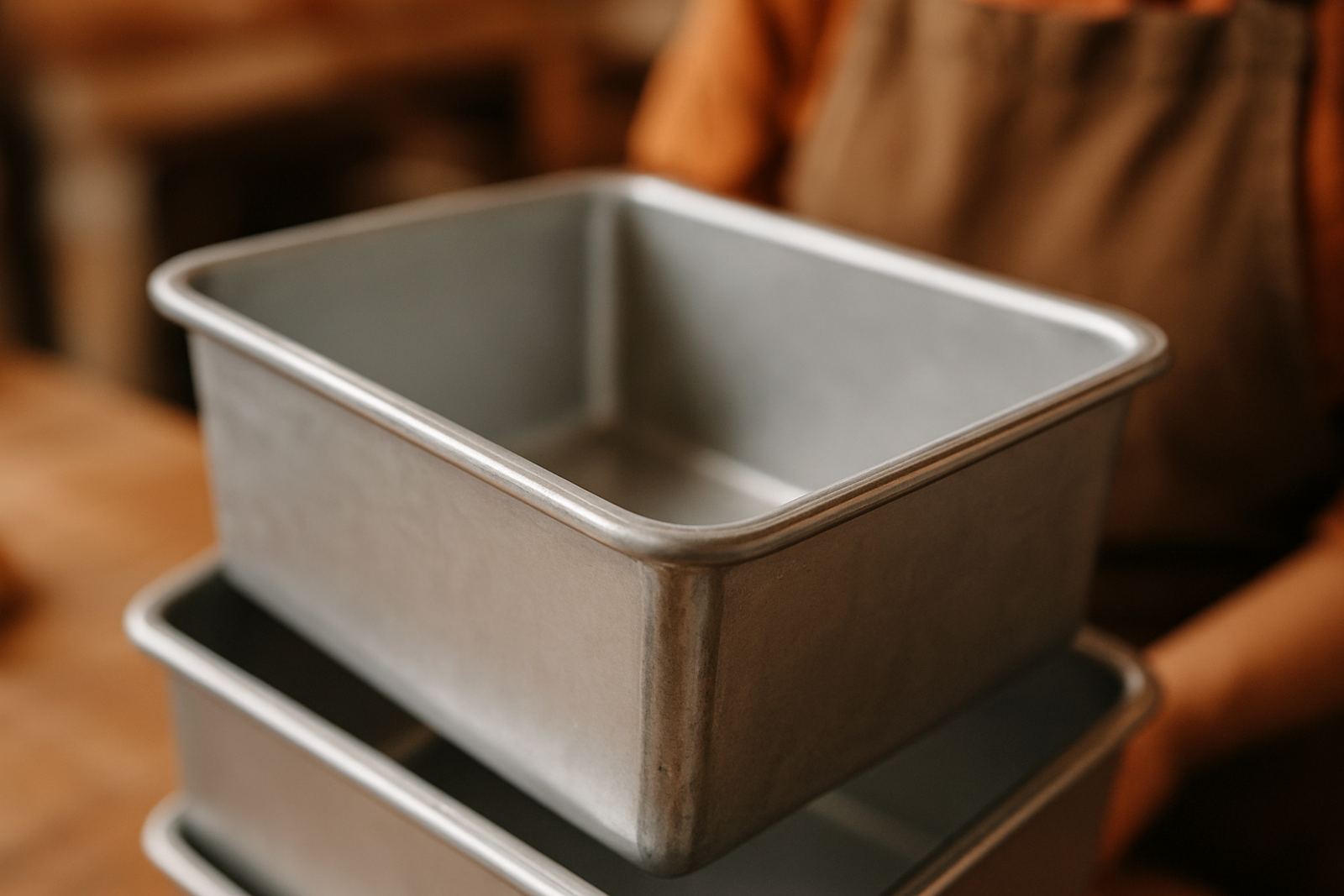
A square corner can hold shape well, but it can also trap crumbs, flour paste and wash water if the finish is not right. A softer radius is easier to clean and often lasts better under repeated handling. The right choice depends on the bakery's oven loading style, washing routine and the type of loaf being made.
Corner styles and what each one does
There is no one corner shape that suits every plant bakery. Some operations want a sharper corner for a more defined loaf profile, while others want a rounded corner to reduce build up and improve release.
- Square corners: Better for a defined loaf edge, but they need careful finishing to avoid wear at the join.
- Rounded corners: Easier to clean and generally kinder on coatings and weld lines.
- Reinforced corners: Useful where pans are handled often and stacked hard on trolleys.
- Custom corner blends: A practical option when the loaf shape, tin depth and line speed all need to work together.
In a plant bakery, even a small change in corner radius can alter how dough settles during proofing. That is why good pan work starts with the product, not just the drawing.
How corners affect loaf shape consistency
When a pan corner is uneven, bent or worn thin, the loaf can rise differently from one end to the other. That shows up as a loaf that leans, bulges or bakes with an uneven top. It also changes how the crust forms at the edges.
Consistent corners help the dough rise evenly against the full length of the tin. This matters in retail supply where every loaf needs to pack and slice the same way. If one pan is slightly open at a corner, it can also leak dough during proofing which creates cleaning problems later.
For hotels and smaller bakeries, the issue is often batch consistency. A customer notices when one loaf is neat and the next is misshapen, even if the recipe has not changed.
Cleaning, hygiene and corrosion in South African conditions
In Durban and other coastal areas, salt in the air and daily wash-downs can wear pan corners faster than expected. If a corner is creased, pitted or poorly repaired, moisture stays there and corrosion starts sooner. That is why the finish around the corner is just as important as the steel itself.
Good cleaning access matters too. Corners with tight dirt traps need more scrubbing, more chemical use and more labour. Over time that adds cost. In a bakery running through load-shedding, there is already enough pressure on production without fighting pans that hold grime in the wrong places.
- Check corners after every wash cycle for cracks, swelling or flaking coating.
- Dry pans fully before stacking them to reduce rust at the edges.
- Keep damaged tins out of service until the corner is repaired properly.
- Use a cleaning method that does not hammer the corner fold or weld.
Repair options when corners start to fail
Not every damaged pan needs to be replaced. Straightening, corner repairs and weld repairs can put many pans back into service if the body of the tin is still sound. The key is to inspect the full corner, not only the visible dent.
If the steel has thinned badly or the corner has opened at the join, a quick patch will not hold. In those cases a proper repair plan should include cleaning, measurement, straightening and, where needed, replacement of worn parts. That approach usually costs less than constant short term fixes.
Our view is simple: if the corner can still be restored safely, repair it. If it has reached the stage where the pan no longer holds shape, move it out before it affects production.
A Westmead example from a plant bakery line
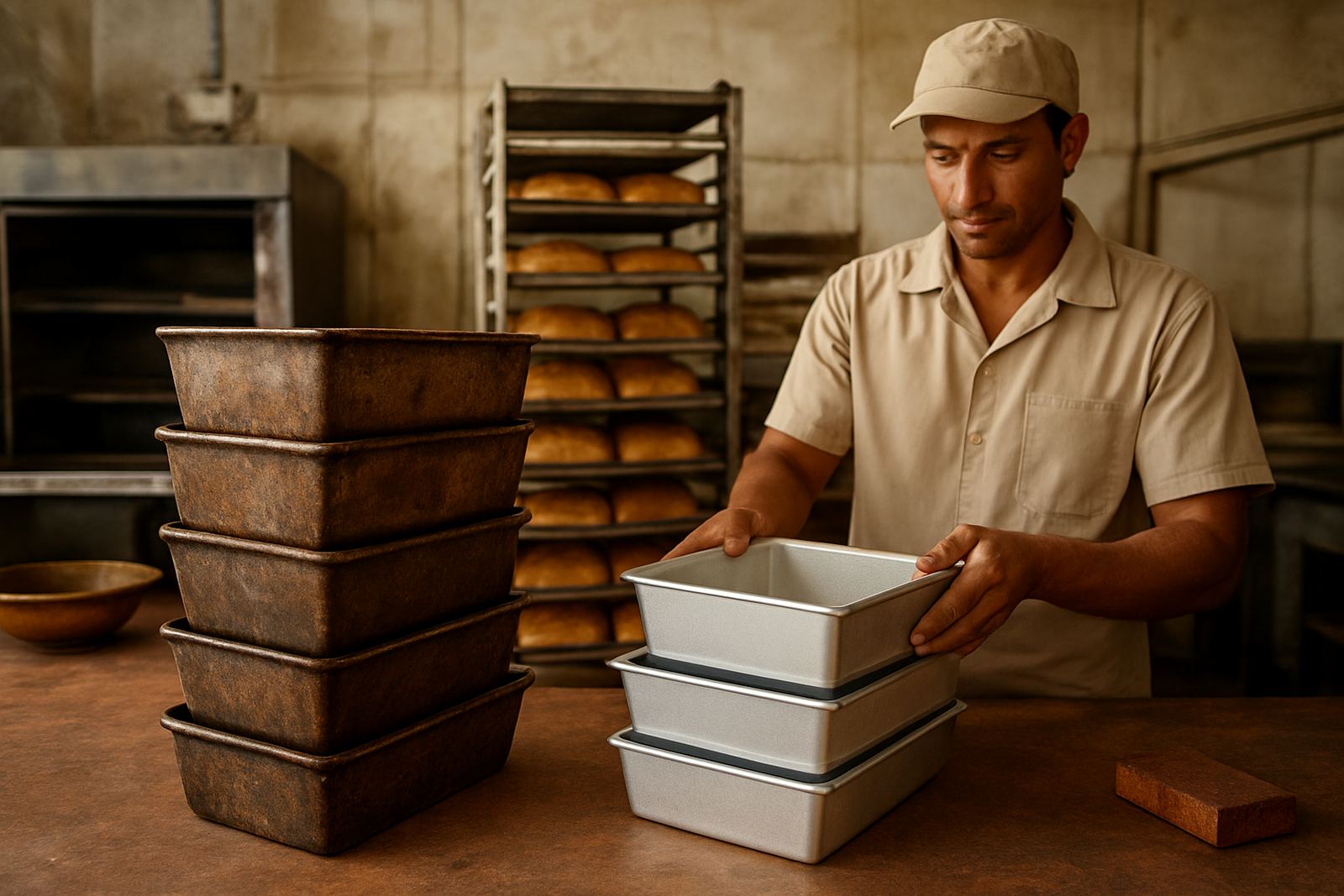
A plant bakery in KwaZulu-Natal was seeing repeated issues with loaves leaning on one side and extra scraping during wash-up. The problem traced back to a batch of pans with tired corners on the same side of the line. The pans had been stacked hard on trolleys and the corner bends had opened slightly over time.
After inspection, the bakery separated the worst pans for corner repair and straightening, then changed stacking practice at dispatch. The result was better loaf consistency and faster cleaning at the end of shift. The team also kept a spare pool for busy runs so damaged pans did not stay in rotation too long.
That sort of practical change often matters more than a full equipment swap. In a production bakery, the small details at the corner can save many hours over a month.
Choosing the right corner spec for your operation
When planning new pans or reviewing old ones, ask how the tins are used every day. A bakery with high volume retail supply may need stronger corner support than a hotel kitchen that bakes in smaller batches. A line with frequent trolley movement may need a different finish from one that stays in fixed racks.
- What loaf size and tin depth are you running?
- How often are the pans washed, stacked and moved?
- Do the tins need a sharper loaf profile or easier release?
- Are you dealing with coastal humidity or dry inland conditions?
The right corner choice should match the bakery's pace, cleaning method and handling routine. That is how you get better life out of each pan and steadier loaves from one run to the next.