1. Product starts sticking more than it should
The first sign is usually simple: loaves, rolls or tray bakes do not release cleanly. If staff are scraping, tapping or twisting pans harder than usual, the coating may be tired. You might still get a usable bake, but the extra handling slows the line and increases damage to both the product and the pan.
In plant bakeries, this often shows up after long runs or during humid weather near the coast, when residue builds faster and old coatings lose grip. A pan that once released a full batch with one clean turn can start needing flour dusting, extra grease or repeated knocks on the side. That is the point to inspect it properly.
- Loaves leave torn corners or broken crust edges
- Tray items stay behind on one side
- Staff add extra release agent just to keep moving
- Product waste is creeping up, even if the pan still looks serviceable
2. The finish looks worn, patchy or shiny in the wrong places
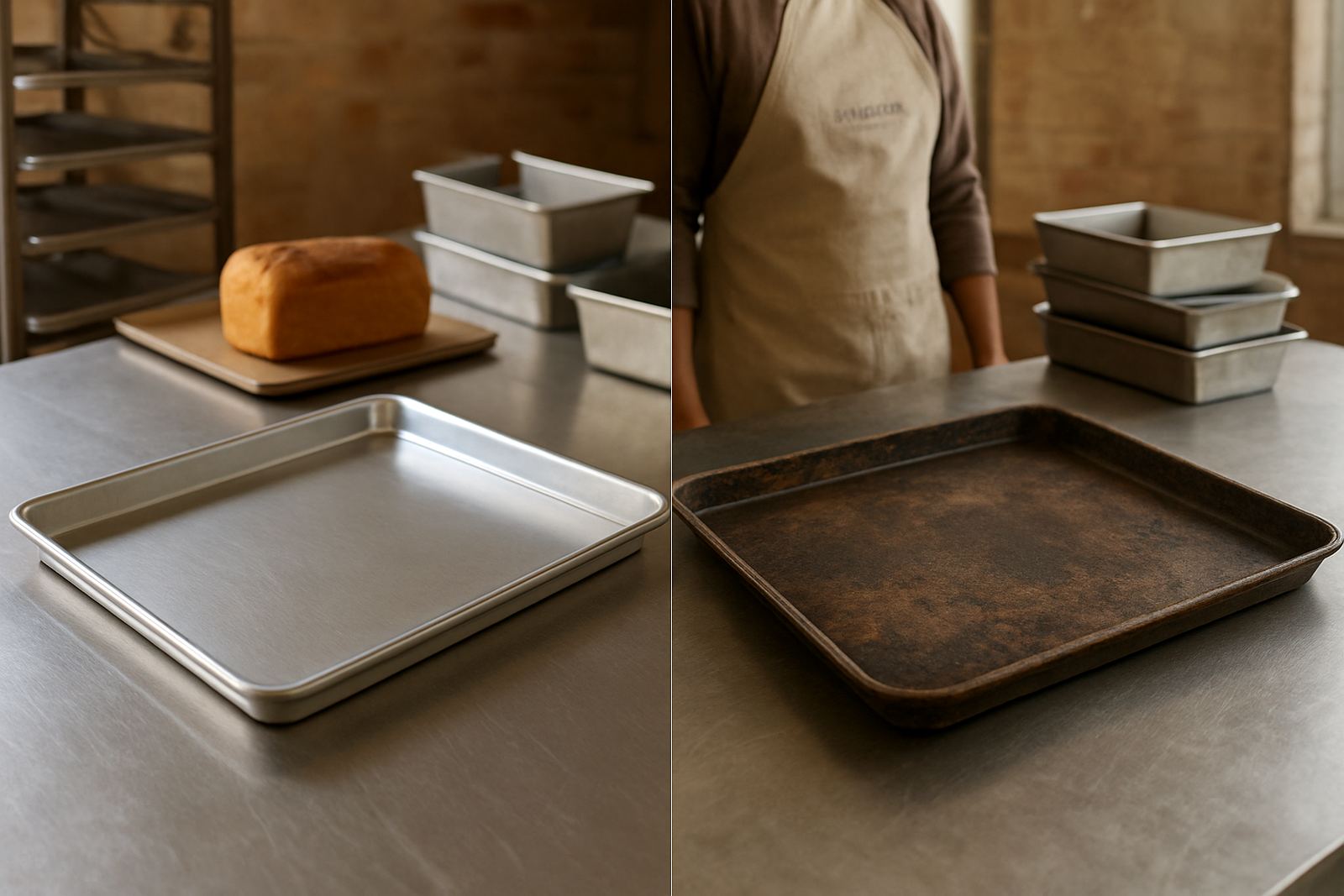
Recoating is not only about sticking. A worn surface often shows as patchy colour, bare steel spots, dull scratches or a polished shine where the coating has thinned right down. Once the protective layer is uneven, heat behaves differently across the pan and the bake becomes less predictable.
This matters on bread pans and oven floor tiles alike. A tray that has lost its even surface can create hot spots, dark patches or pale areas on the same batch. If the same line gives different results from one shift to the next, the bakeware may be telling you something.
- Visible bare metal on corners, bases or edges
- Surface flaking, powdering or light rust showing through
- Uneven colouring after bakeout
- More frequent rejection from quality control
3. Bent frames and small repairs keep adding up
Some pans do not fail all at once. They come back from circulation with small bends, twisted rims, split corners or tired welds. If you are already booking the same item for straightening, corner repairs, rim repairs or weld repairs, recoating should be considered at the same time. There is little value in putting fresh coating on a pan that still sits out of shape.
A proper assessment can show whether the steel is still worth saving. In many cases, a pan only needs cleaning, repairs and recoating to return to service. In other cases, the damage is too far gone and the better call is to retire it before it starts causing line stops or tray jams.
- Pan rims no longer sit flat in the rack
- Stacking is difficult because units have bowed or twisted
- Spot welds are opening at stress points
- The same tray keeps needing the same repair
4. Cleaning takes longer than the bake itself
When a pan or tray is in good condition, cleaning should be manageable with normal plant practice. If staff are spending too much time soaking, scraping or sending items back through the wash, the surface may be holding residue because the coating has broken down. That extra cleaning time costs labour and can slow the next shift.
We often see this with older bread pans in busy bakeries around Durban, Pinetown and the Upper Highway. The production line wants speed, but the old surface keeps grabbing crumbs, sugar and oil. Once that starts happening, recoating can be more cost effective than pushing the item through another few months of hard use.
- Built-up residue remains after normal washing
- Dark deposits keep returning in the same spots
- Extra soaking is needed before the pans can be stacked
- Cleaning chemicals are being used more heavily than before
5. You are losing control over batch quality
Some signs show up in the product rather than the pan. If batch colour is uneven, bases are overbaked in one section and pale in another, or release is inconsistent across the shift, the bakeware could be part of the problem. Old coatings and damaged surfaces change how heat moves across the steel.
For plant bakers supplying retailers and hotels, that inconsistency is a nuisance and a cost. One bad run can affect shrink, returns and staffing pressure. In a large operation, even a small improvement in release and consistency makes a difference across hundreds of units a day.
It is worth checking for these patterns:
- Different browning from one side of the oven to the other
- More product variation after pans are rotated in the line
- Trays that bake faster on certain corners
- Load-shedding recovery runs that perform worse than normal because the surface is already tired
6. A local assessment beats guessing from the factory floor
In Westmead, we often see bakeries keep using pans long after the first warning signs because the steel still looks passable at a glance. Then the problems start to spread across the line, with more waste, more handling and more complaints from the ovens. A proper fleet assessment gives a clearer answer: what can be recoated, what can be repaired and what should be replaced.
That is especially useful for national plant bakeries with mixed stock, older trays from different batches and equipment moving between sites. If the pans are going back to service in high-volume production, the decision should be based on condition, not guesswork. A good recoating job only works when the base steel is still sound.
- Assessment helps plan downtime before the line is under pressure
- It separates minor wear from structural damage
- It helps set a refresh cycle instead of waiting for failure
- It reduces panic repairs during peak production
7. The best time to recoat is before failure, not after
Once a pan starts failing badly, the cost is no longer only about the service job. It includes waste, line delays, extra labour and unhappy customers waiting for a consistent product. Recoating works best when it is planned early, while the steel is still useful and the wear is still manageable.
If you can see sticking, patchy wear, bent rims, stubborn residue or repeated small repairs, it is time to book an assessment. For bakeries in Pinetown, Durban, New Germany and further afield, that keeps the plant moving and helps extend the life of the bakeware already in circulation. The earlier you catch it, the easier it is to put right.