Where wear starts on daily bakery runs
In most plant bakeries, damage begins at the same few points. Trays get knocked on trolley edges, bread pans rub against each other in storage, and floor tiles pick up heat stress where loads sit unevenly. Once a tray is bent or a pan lip is out of shape, it no longer stacks neatly and the wear spreads faster.
We see this often in busy sites around Pinetown and Durban where shift work is tight and there is not much time for careful handling. A trolley bump at the wrong angle can leave a corner twisted, and then the next lift makes that twist worse. The damage looks minor at first but it changes how the whole batch handles.
- Corner dents from trolley contact
- Worn rims where trays rub during stacking
- Flat spots on floor tiles from uneven loading
- Loose seams and weld cracks after repeated flexing
Stacking pressure and the hidden bend problem
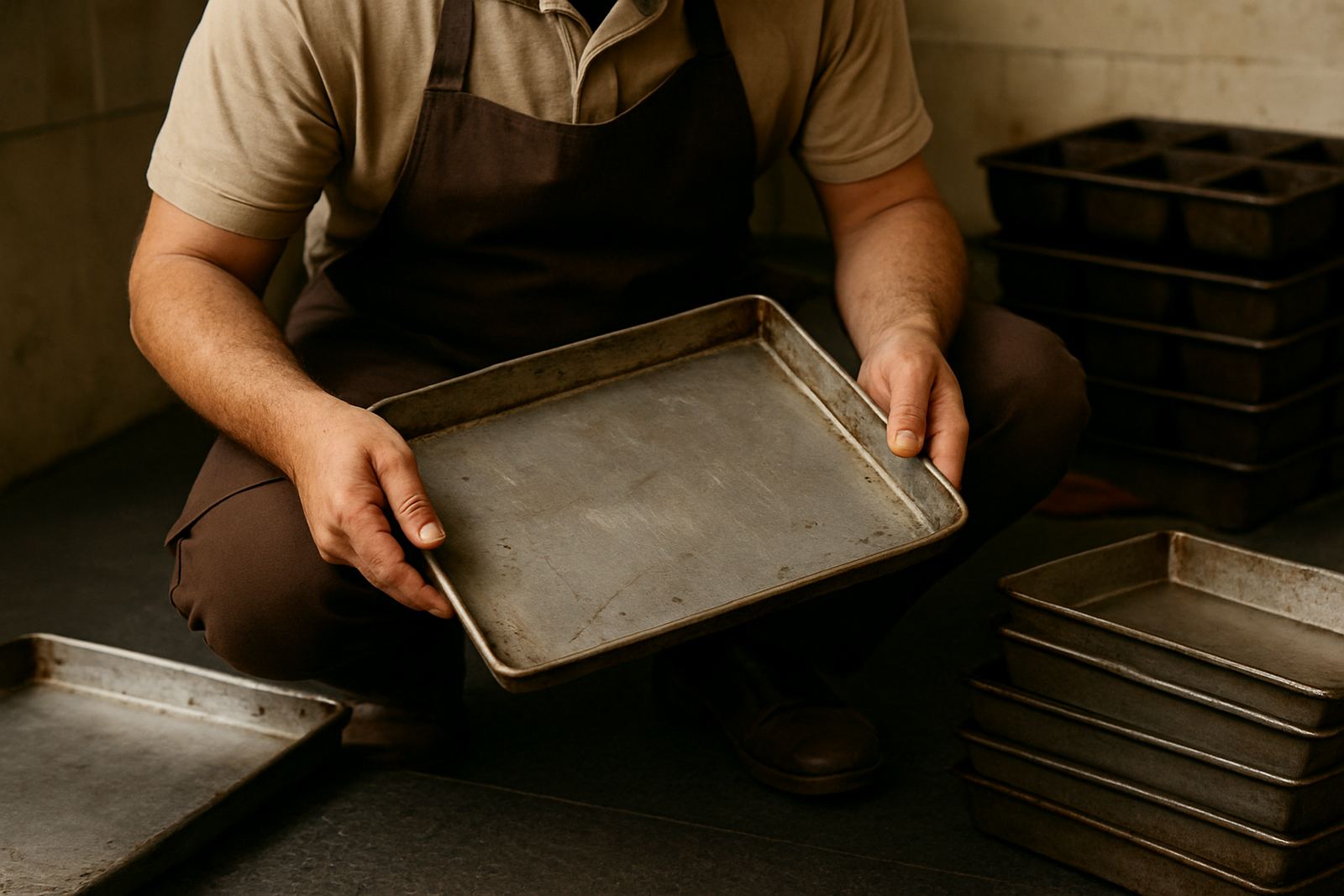
Stacking is one of the main causes of wear patterns because weight lands in the same places every day. If trays are nested while still warm, the metal shifts a little, then settles that way. Over time you get a shallow twist that is hard to spot until the tray starts catching on guide rails or seating badly in an oven rack.
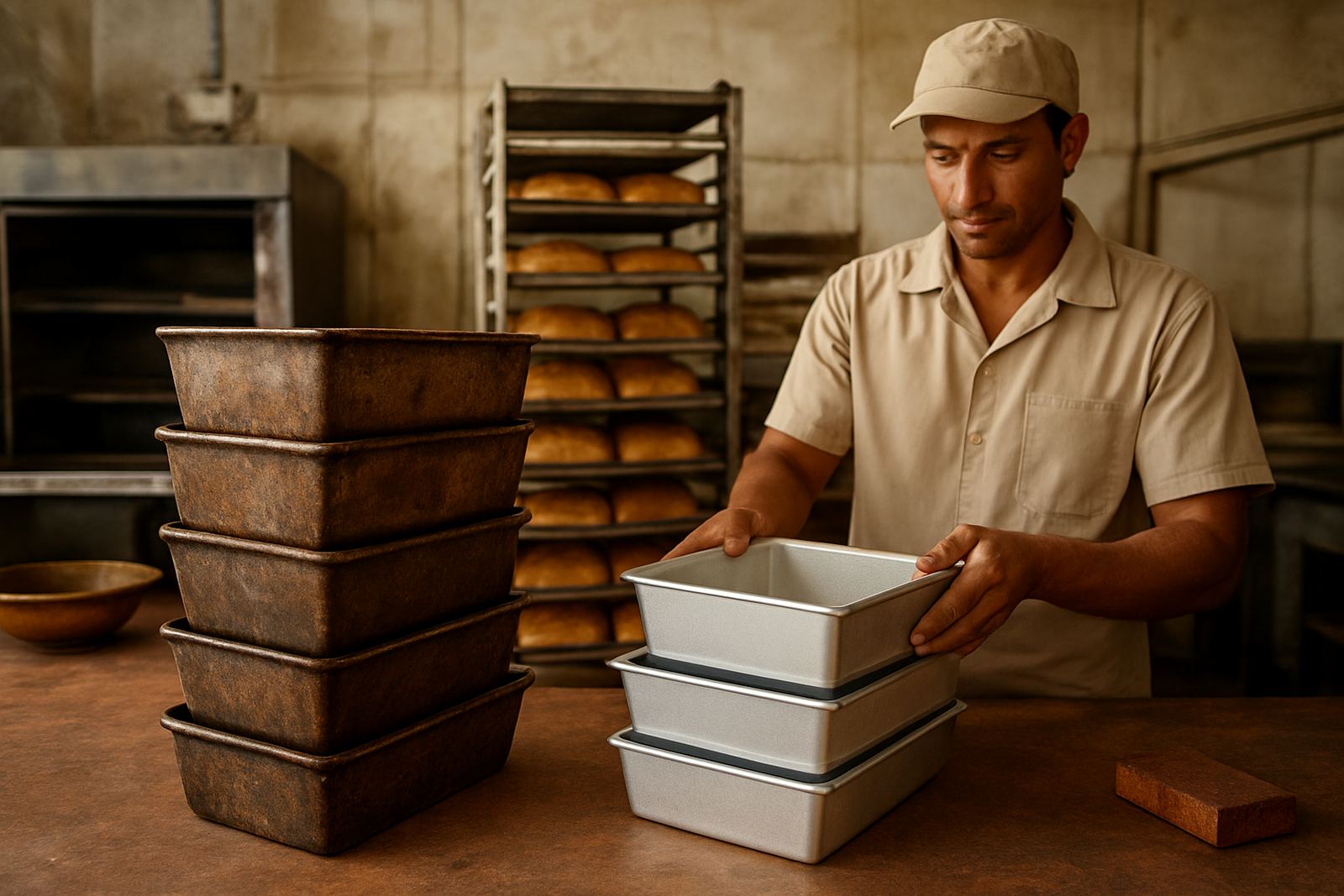
On bread pans the usual problem is sidewall pressure. The pan may still bake, but if the sides bow out then the loaf size changes and release becomes uneven. That is why pan straightening is not just a neatness job, it keeps the batch size and movement more consistent.
- Do not force bent trays into a tight stack
- Separate hot items before full cooling where possible
- Check that storage trolleys are square and level
- Rotate stock so the same pans are not always at the bottom
Trolley impacts in narrow spaces
Trolleys take a lot of abuse in any bakery with narrow aisles or quick turns. The front edge of a trolley can catch a tray lip, especially where floors are uneven or where a loading bay has a lip between surfaces. Once the tray edge is rolled or torn, it starts cutting into the next tray in the stack.
This is a common issue in older industrial kitchens and hotel bakeries where storage space is tight. The wear pattern tells the story: one side gets scuffed more than the other, or one corner is always the first point of impact. In coastal sites, moisture and salt in the air can make light surface damage spread faster too.
- Look for repeated marks on the same corner
- Check trolley wheels for wobble and flat spots
- Keep loading routes free of loose scraps and packaging
- Replace trays that are beginning to hook on each other
Rough loading and damage at the oven face
Rough loading usually shows up at the oven face first. Operators push trays in too hard, pull them out at an angle, or lift them by the lip instead of supporting the base. That creates rim repairs, weld repairs and sometimes full edge failure on trays that are otherwise still usable.
In plant bakeries serving supermarkets, a few seconds saved on each load can turn into constant repair work later. A tray that drops from a rack or scrapes the same guide every shift will often show shiny wear lines before the coating fails. Once that starts the metal is exposed and the wear moves faster than most teams expect.
- Train staff to lift trays level, not by one corner
- Keep oven guides straight and clear of burrs
- Inspect for sharp edges after any impact
- Record repeat damage by shift or line
What to inspect before small damage becomes downtime
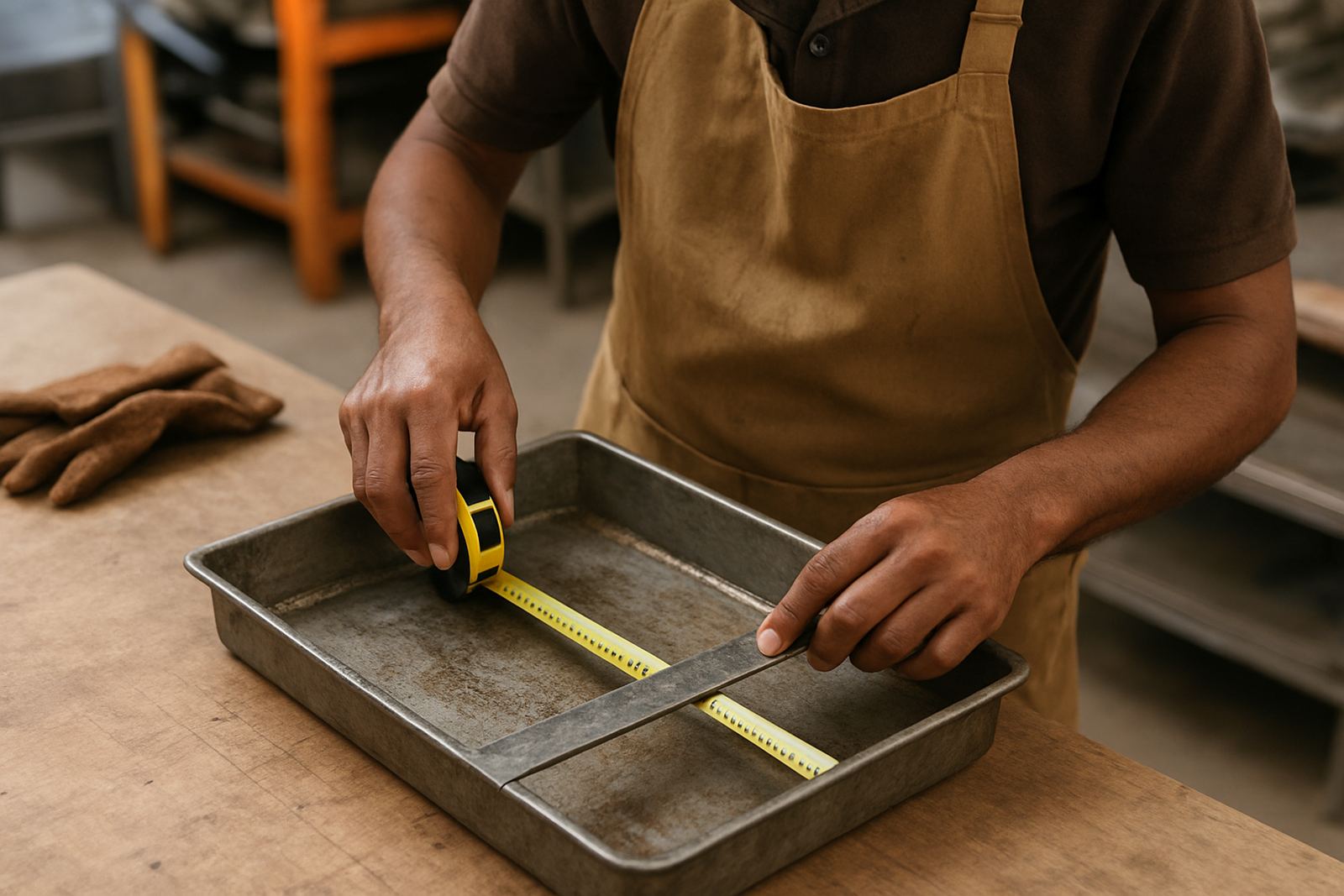
A proper inspection is quicker than a full breakdown and it saves money. Start with the items that touch the most: corners, rims, welds, and the base where the load sits. If a pan no longer sits flat or a tray rocks on a bench, it is already telling you there is a shape issue.
Fleet assessment helps here because it shows which items can be repaired and which ones are costing more than they should. A deep clean also matters since flour build-up and baked residue hide cracks, especially near corners and seams. You cannot fix what you cannot see, and sometimes the damage is small enough to miss until the tray fails in service.
- Check each batch of trays for the same wear marks
- Mark items that wobble, twist or no longer stack properly
- Separate repairable stock from scrap stock
- Use a fixed inspection day each month
A Westmead example from a busy plant bakery
At a plant bakery near Westmead, repeated damage was showing up on the same corner of a set of trays. The team thought it was normal wear, but the real cause was a trolley turn at the same narrow point on the route to the oven area. The trays were also being stacked before they had fully settled, which added more bend.
After a proper check, the damaged trays were straightened, the worst rims were repaired, and the loading route was adjusted. The staff also set aside a small group of spare lids and trays for high-use shifts. The result was fewer stops for replacement and a better handle on stock rotation. Small changes, but they made a real difference.
That is the practical side of handling wear patterns. When the cause is found early, you spend less on replacement and more on keeping the line moving.
Keeping good bakeware in service for longer
The goal is not to make bakeware last forever. The aim is to keep it flat, safe and consistent for as long as possible. Good handling, regular checks and timely repairs all work together. In a hot, busy bakery, that is far cheaper than waiting for a full failure on a Monday morning.
If your trays, bread pans or oven floor tiles are showing repeat damage, the pattern is usually there to read. Once you know where the pressure is coming from, the fix gets simpler.
- Repair early, before the shape is lost
- Keep loading routes clear and level
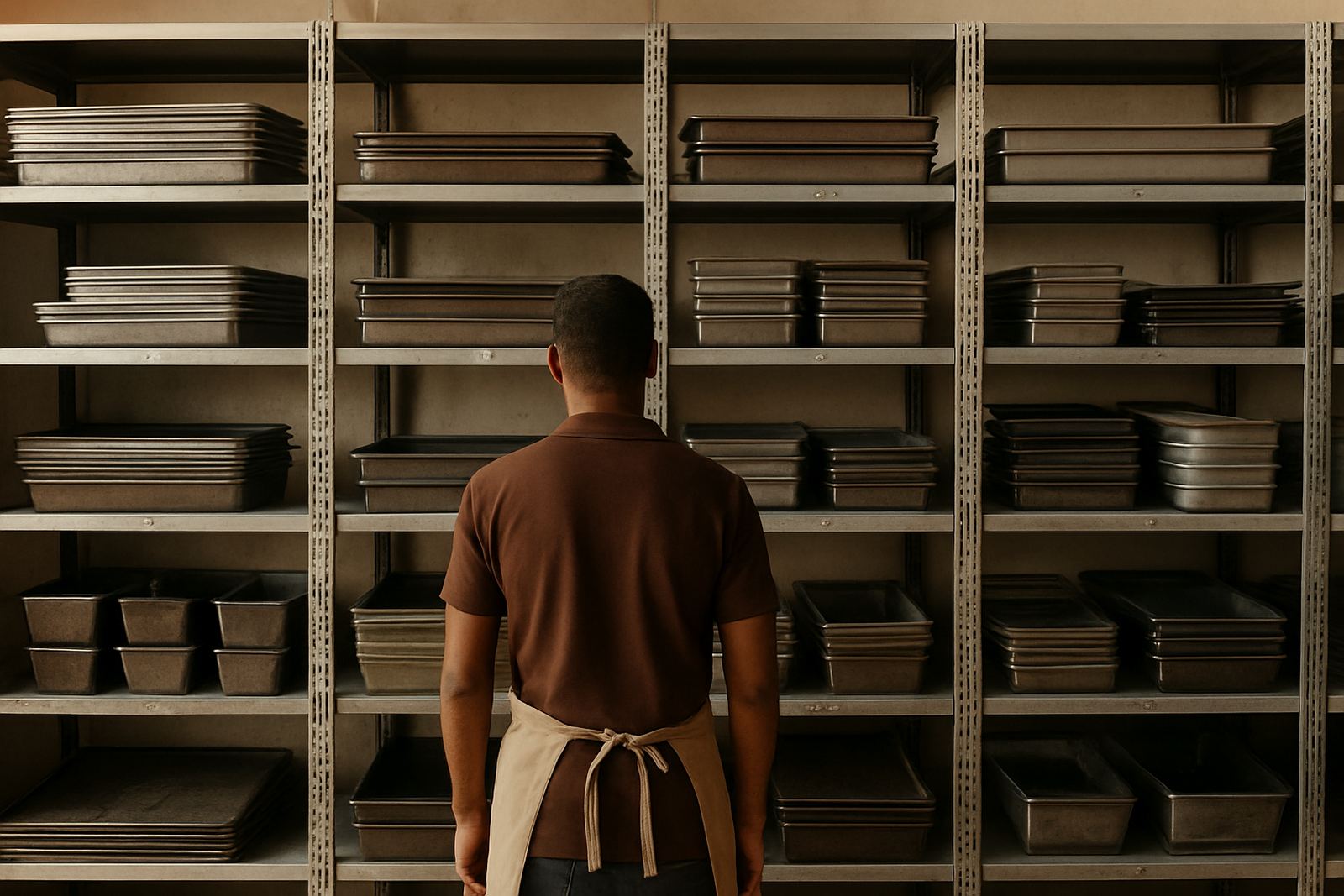
- Match the storage method to the weight of the item
- Replace only what is beyond straightening or welding