Start With a Clean, Dry Hand-Over After the Shift
Most storage damage starts before the racks are even cleared away. If trays go back into store with flour dust, oil, sugar or damp cloth marks on them, that residue holds moisture and can lead to staining, pitting and surface distortion. In coastal areas like Durban and Pinetown, where humidity stays high, this happens faster than many teams expect.
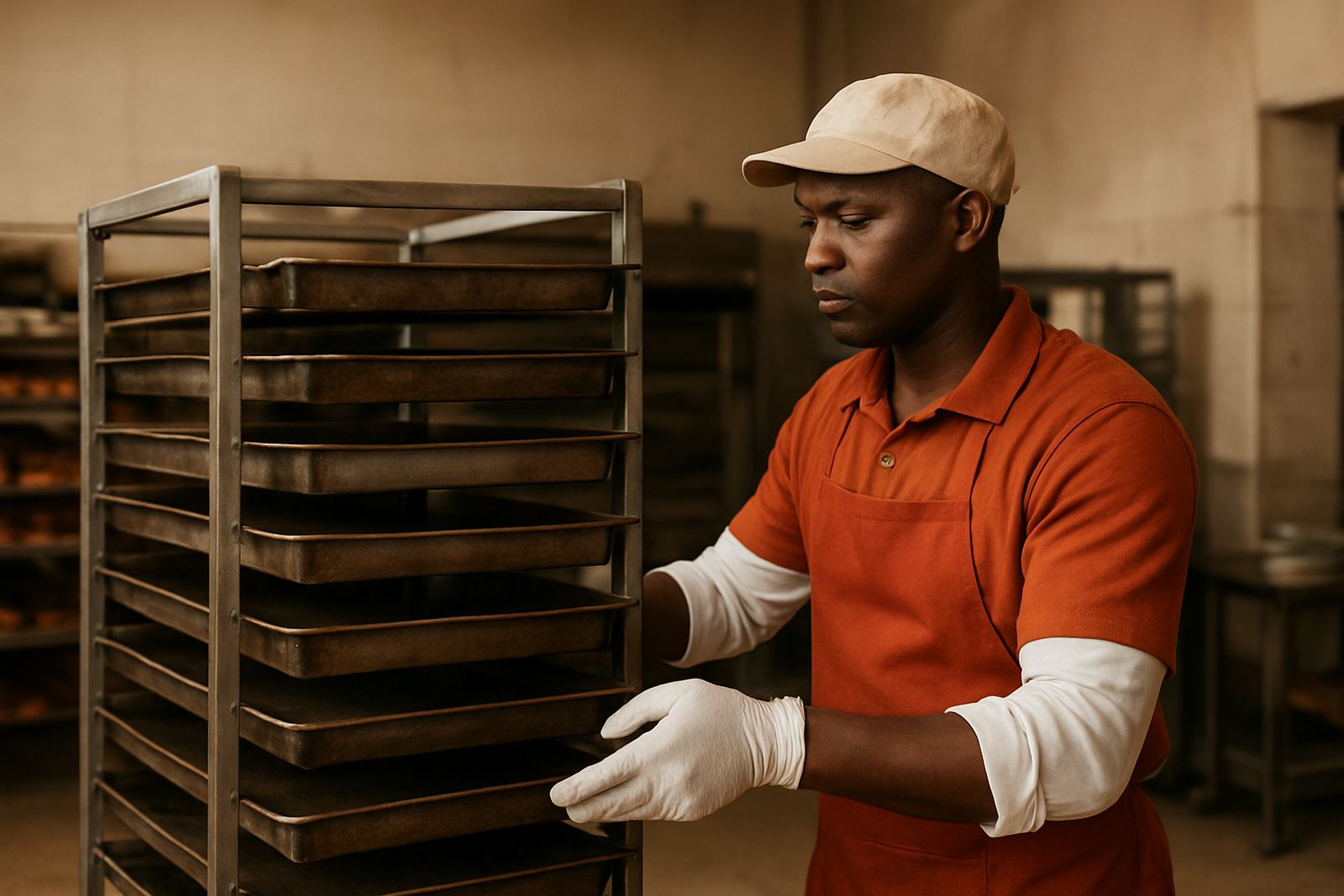
Make it standard practice to wipe down each item once it has cooled, then check for stuck product, loose crumbs and visible bends. Do not stack hot pans straight after use. Heat trapped between layers can mark the coating, pull thin sections out of shape and make the next shift fight a warped tray. A short cooling window pays for itself very quickly.
- Let bakeware cool before washing or stacking
- Remove oil and dough residue before storage
- Separate damaged items from serviceable stock
- Dry all items fully, including corners and rolled edges
Stack by Size and Use, Not by Spare Space
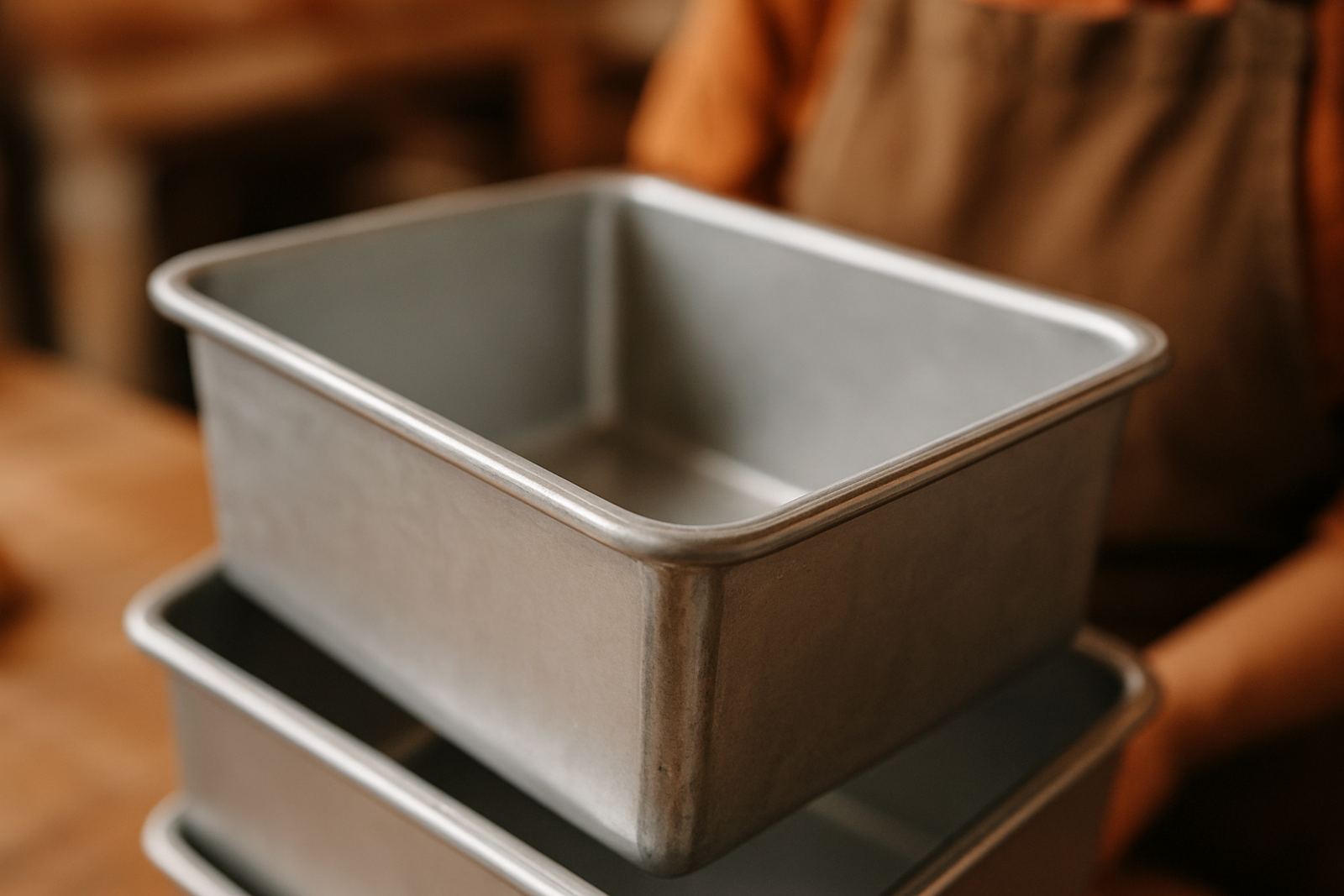
Random stacking is one of the quickest ways to bend a pan. When a smaller tray sits inside a larger one, pressure lands on the corners and rim. When a heavy tray sits on a lighter one, the lower item takes the load and starts to dish. Over time that means poor heat contact, uneven baking and more rejects.
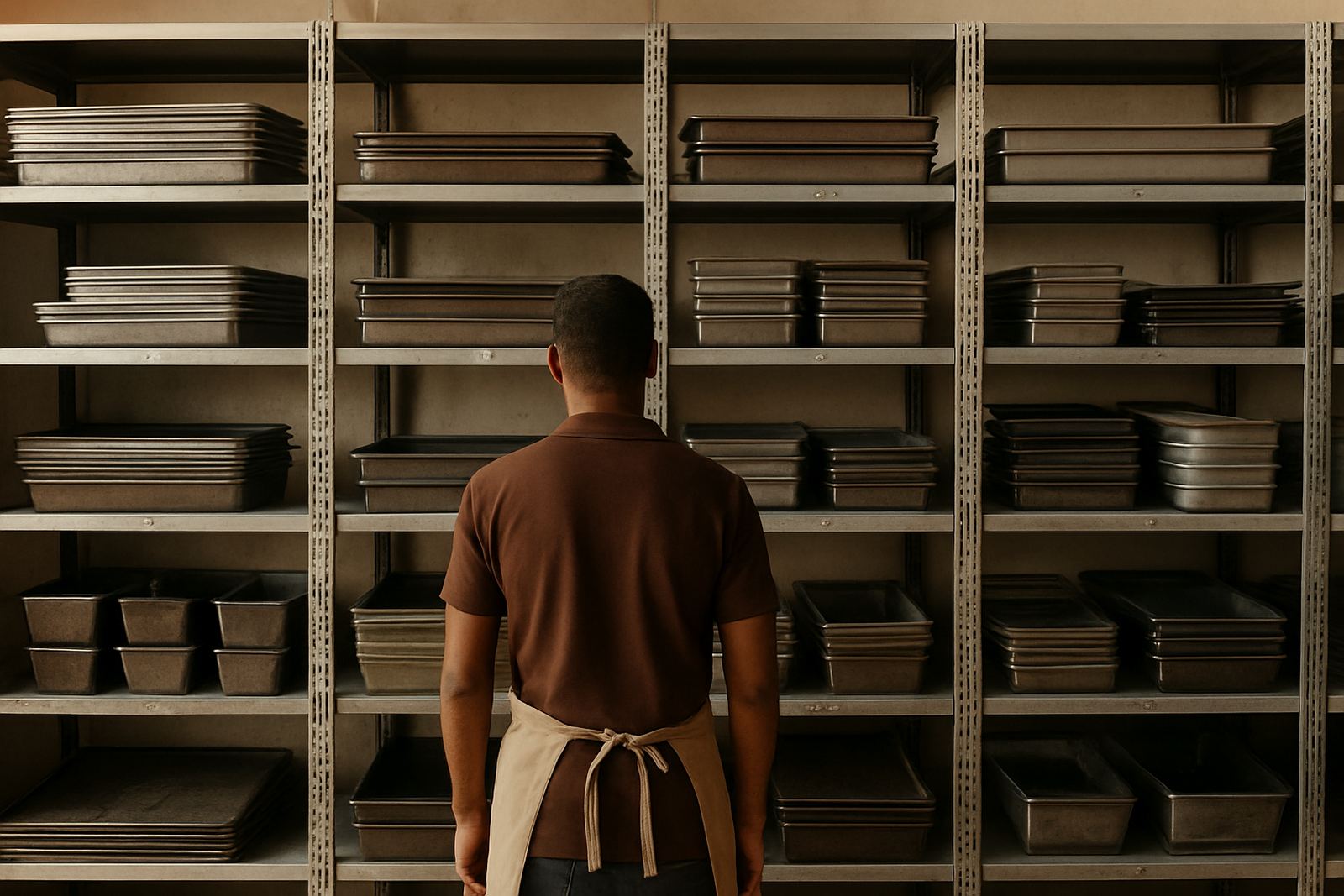
Set storage zones for specific sizes and product lines. Bread pans should sit with bread pans, tray sets with tray sets, and repairable items separate from current production stock. If your bakery runs day and night, assign the same storage rule across both shifts so the system stays consistent. Clear labelling helps too, especially where several departments share one store room.
- Group by length, width and depth
- Keep heavy items on lower shelves
- Do not mix good stock with bent or awaiting repair items
- Use tags for batch numbers or department use where needed
Use Racks and Shelves That Support the Full Frame
Storage furniture must support the full tray or pan, not just one edge. If the shelf opening is too narrow or the rack bends under load, the bakeware can twist while it sits. This is common in older plant bakeries where improvised storage ends up carrying more weight than intended. A tray that looks fine at first may show a slight belly after a few weeks on an uneven rack.
For steel floor tiles and larger custom trays, flat support matters even more. Store these pieces on level pallets, flat stillages or properly braced shelving. Avoid leaning large items against a wall for long periods, because gravity and contact points can leave permanent marks. If your site has to deal with load-shedding, keep backup storage areas tidy and predictable so staff are not shifting stock in the dark.
- Check shelves for sagging and loose brackets
- Keep storage floors level and dry
- Use spacers where airflow is needed
- Do not overload one section of the rack
Control Moisture, Rust and Dust Between Shifts
Storage best practice is not only about shape. It is also about condition. Steel bakeware can rust if it is put away damp, and even light surface corrosion can shorten service life. In inland towns, dust is often the bigger issue. Fine dust gets into corners, hinges and weld points, then turns into abrasive grime once the pans are handled again.
If your operation is near the coast or in a high-humidity area, use covered storage where possible. Keep windows and roller doors closed during wet weather, and make sure the store room is not sitting next to steam lines, wash bays or open drains. A few small controls help a lot:
- Dry items completely before stacking
- Keep bakeware off bare concrete where moisture rises
- Use covered trolleys or shrink wrap for long holds
- Inspect corners, seams and rolled edges for early rust
Once rust starts at the edge of a pan, it tends to spread faster than people expect. Catching it early is far cheaper than replacing a full run of stock.
Move Stock the Right Way, Not the Fast Way
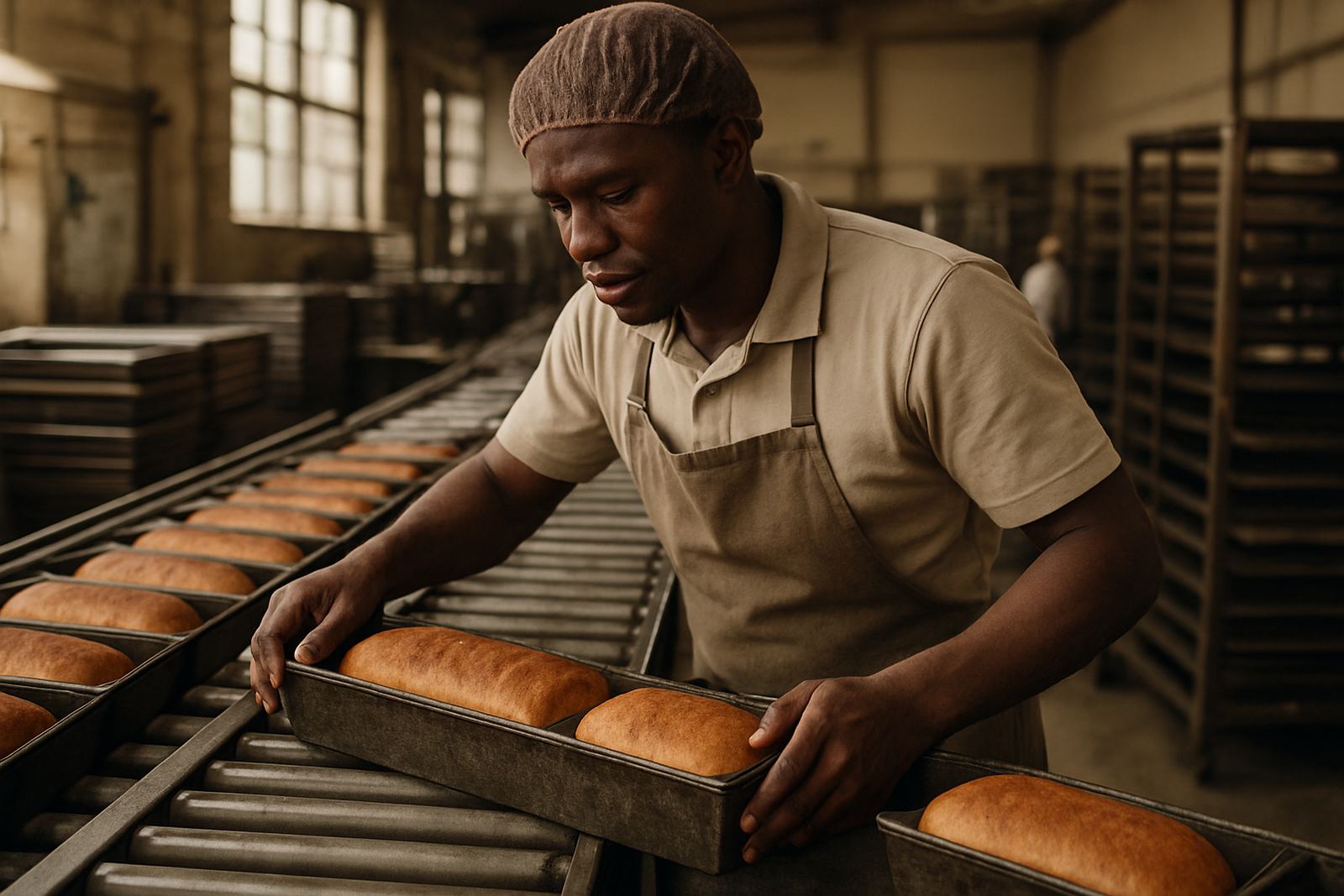
Storage damage often happens during movement between the oven, wash-up area and store. One dropped tray can distort a stack, chip a corner and cause a chain reaction of bent items behind it. Staff under pressure may be tempted to carry too many pans at once, but that usually creates more damage and slows the shift down in the end.
Use trolleys, stillages and handovers that suit the size of the load. Train staff to place items down gently and never drag pans across floors or rough concrete. If a tray has to be moved through a narrow passage, it should be carried by two people rather than forced through at an angle. On busy production sites, a good route plan reduces knocks and saves time.
- Move heavy or oversize items with proper support
- Keep walkways clear of bags, hoses and loose packaging
- Mark the route from wash-up to storage
- Check trolleys for bent wheels or broken welds
Inspect Weekly and Repair Before the Damage Spreads
Storage routines work best when they include a simple inspection. Once a week, someone should check for bent rims, open welds, loose lids, twisted corners and warped bases. That small check helps separate normal wear from the items that need repair before they start affecting production. A pan that does not sit flat can throw off baking times and product shape, which means more waste downstream.
At a bakery in Westmead, the maintenance team may already know which racks get overloaded on Friday night and which trays come back from the oven with rim damage. That kind of local knowledge is useful, but it needs to be written into the storage routine so nothing is missed when the shift changes. Keep a simple repair log and remove damaged stock from circulation immediately.
- Inspect for warping, cracks and damaged corners
- Send problem items for straightening or repair early
- Record repeated damage by area or shift
- Keep spare lids and replacement parts ready where needed
A Simple Storage Routine Makes the Whole Line Run Better
Good storage is not complicated. It is clean, dry, organised and consistent. When that routine is followed every day, trays last longer, pans stay straighter and floor tiles keep their fit for longer. It also makes stock counts easier, because staff can see what is serviceable, what needs recoating and what must go for repair.
For bakeries, hotels and retailers working under pressure, especially where power interruptions and humid weather are part of normal life, storage is not an afterthought. It is part of production control. A straight pan stored well today is one less problem on the line tomorrow, and that saves both time and money.