Why steel contact changes the first colour you see
When dough sits on steel, heat moves fast into the base. That first contact sets the bottom colour before the top has fully finished, so a pan or floor tile can make the same loaf come out lighter one day and darker the next. In a plant bakery, that matters because the crust has to look the same across a full shift, not just on one tray.
Steel also holds shape better than light materials when ovens cycle through heat up and cool down. If a tray bows or a floor tile lifts, the loaf stops making full contact and the colour turns patchy. In coastal areas like Durban and Pinetown, moisture in the air can add another layer too, because damp tins and trays heat a little differently if they have not been dried properly before use.
Oven heat is not even, even when the dial says it is
Most ovens have hot spots. The left side may brown quicker than the right, or the back row may take more colour because air movement is stronger there. On a busy production line that can show up as pale loaves on one rack and deep brown loaves on another, which creates sorting problems and waste.
- Check colour at the same point in every bake cycle, not just by time alone.
- Rotate trays or pans if the oven makes one side darker than the other.
- Watch the bottom crust as well as the top, because the base often tells you more about contact heat.
- Allow for load-shedding starts and restarts, since a cold restart changes the bake curve.
That kind of discipline helps when bakeries are running early morning production for retailers, hotels or school contracts. A few minutes after restart can shift colour enough to affect customer acceptance, and once the crust is too dark there is no fixing it.
The role of floor tiles in steady browning
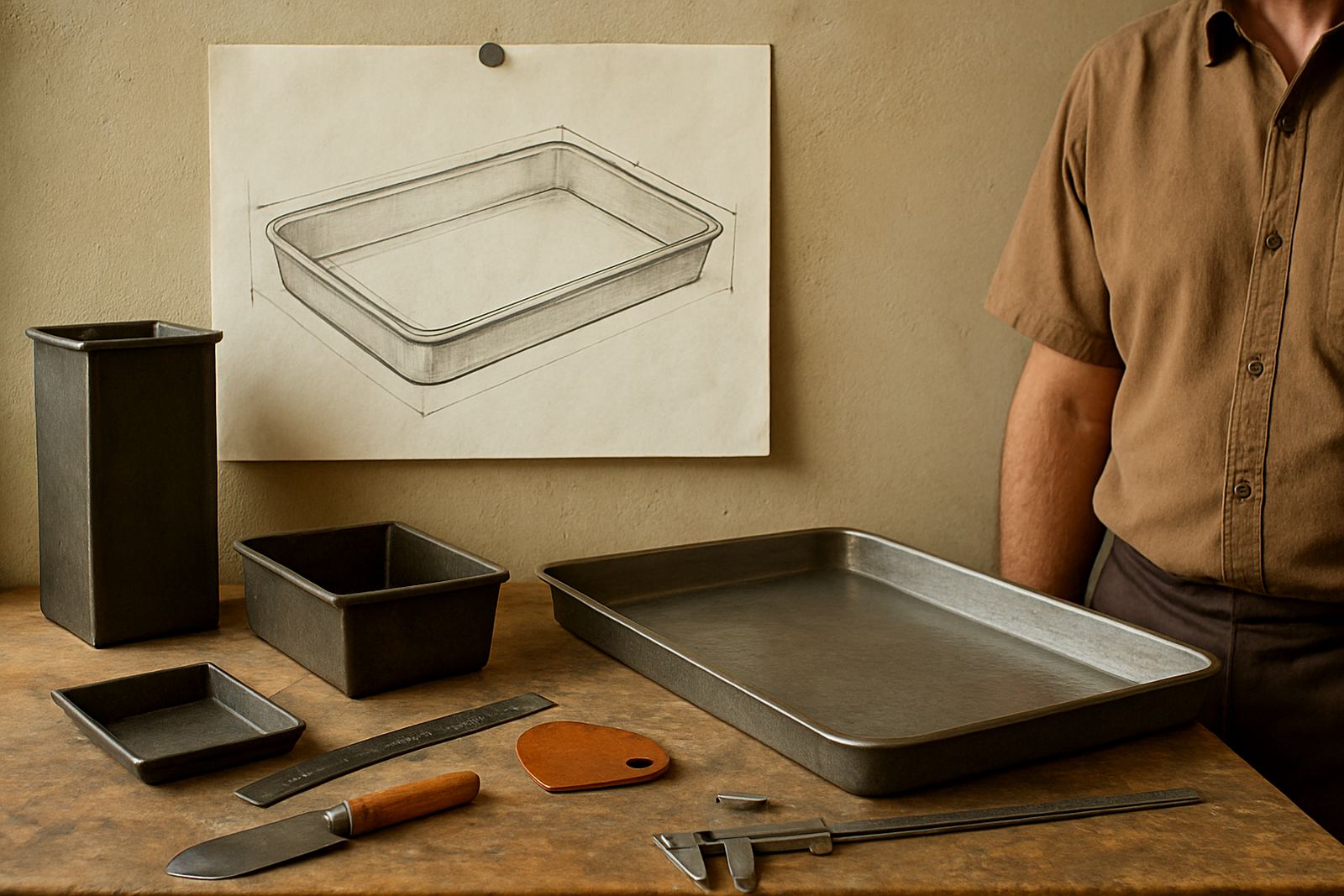
Steel oven floor tiles are used where the base needs direct, even heat. They spread the heat across the loaf base instead of letting one spot scorch first. For bakery lines that want a firm crust and a clean lift off the oven deck, the tile surface has to stay flat, clean and correctly fitted.
BAKERITE has been making the original steel floor tile for years from the Westmead base in Pinetown, and the point is simple: if the floor is uneven, the bake will be uneven. A tile that has warped from repeated heat cycling can give you a darker edge on one side and a pale centre on the other. That is a small fault on paper but a big problem when you are filling orders for plant bakeries across KwaZulu-Natal or further afield.
Pans, trays and lids can change colour more than the recipe does
Pan depth, tray finish and lid condition all affect how fast the loaf takes colour. A shallow tray exposes more dough surface to dry heat. A deeper pan protects the sides longer, which can keep the crust lighter. If the lid does not sit correctly or a corner has been bent, steam escapes and the top dries too early.
- Use straight pans where corners are still square and the rim is not twisted.
- Replace or repair lids that do not seat properly.
- Keep tray surfaces clean so old oil and flour do not burn onto the bake.
- Separate damaged bakeware from good stock so one bad set does not affect the whole batch.
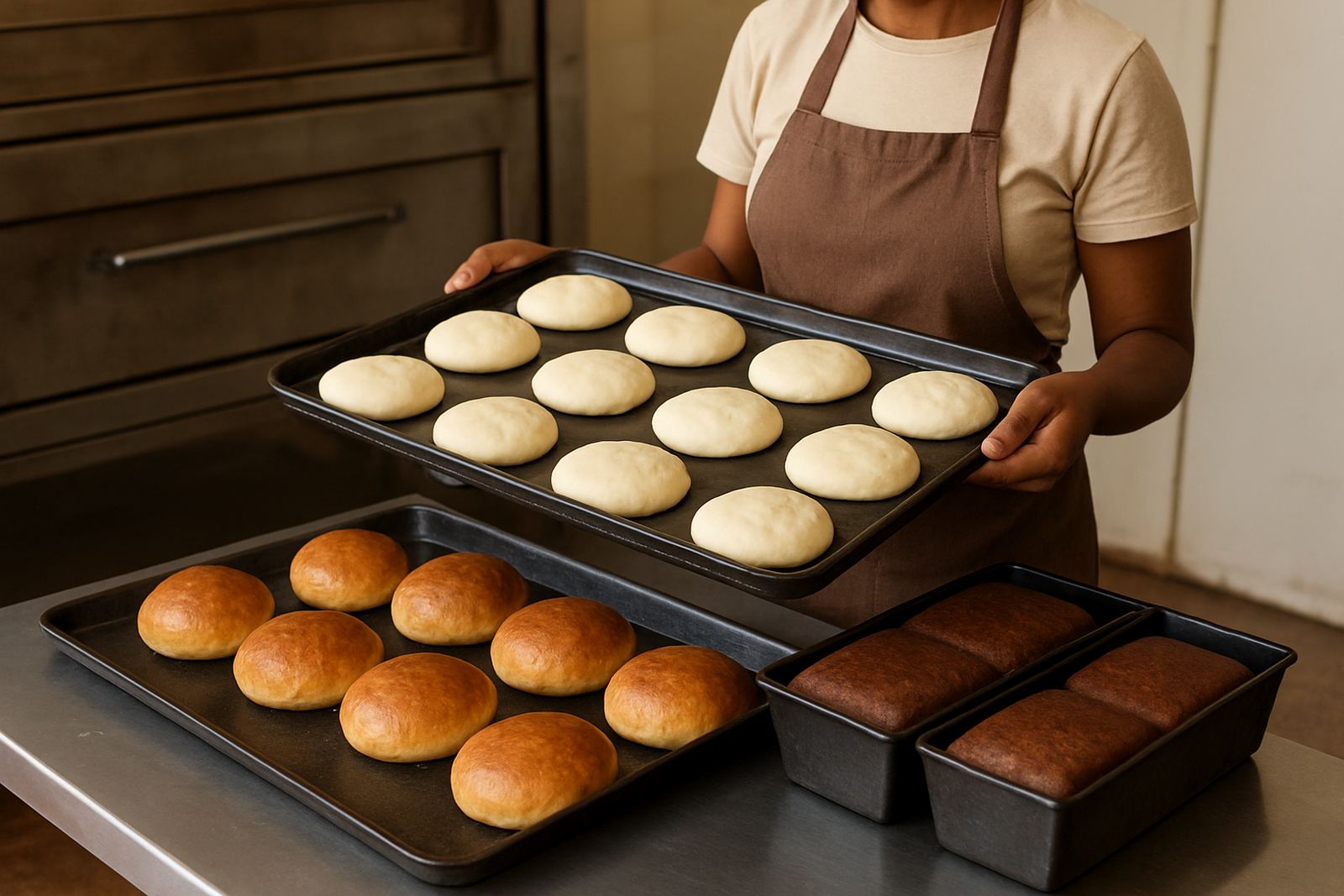
For hotels and retailers, colour consistency matters because customers pick with their eyes first. A row of buns that are one shade too dark can make a fresh batch look overbaked, even if the crumb is fine.
A Durban morning example from plant bakery production
Picture a bakery in Durban running early rolls and sliced loaves for delivery by 7am. The shift starts in humid air, the oven has just come off standby and the first trays go in a little cooler than normal. The back row browns quickly because the airflow is stronger there, while the front row needs another minute to catch up. If the trays are slightly bowed, the middle loaves stay pale at the base and the ends take more colour.
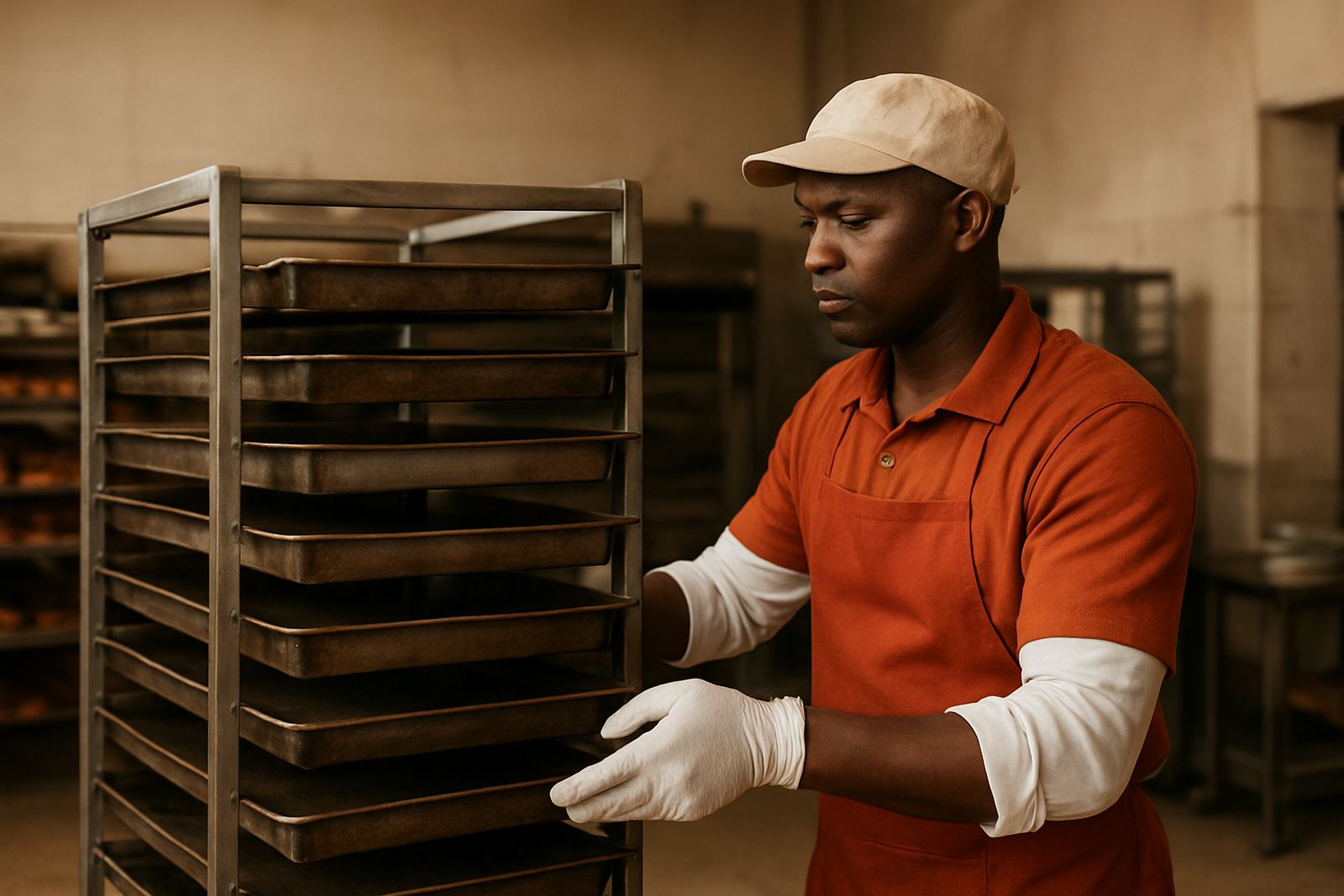
The answer is not to push the whole bake darker. It is to check the bakeware first, then correct the oven pattern. A service team may find that some pans need recoating, a few lids need repair and two trays need straightening. Once those parts are back in line, the colour becomes easier to hold shift after shift, and waste drops without changing the recipe.
Keeping colour consistent is mostly about maintenance
Good bake colour is built through routine checks. Deep cleaning removes baked-on residue that steals heat. Pan recoating and tray recoating help maintain release and reduce sticking. Weld repairs, corner repairs and rim repairs keep the shape true so heat contact stays even. If you leave damage too long, the oven starts telling you what the bakeware should have been telling you already.
That is why a fleet assessment is worth doing before small faults spread through a full pan set. For a bakery in Westmead, New Germany or Upper Highway, it is easier to sort wear early than to lose a whole production day because loaves are coming out too dark on one side and too light on the other. Colour is not just appearance, it is proof that heat is moving the way it should.