Start With What You Have On Site
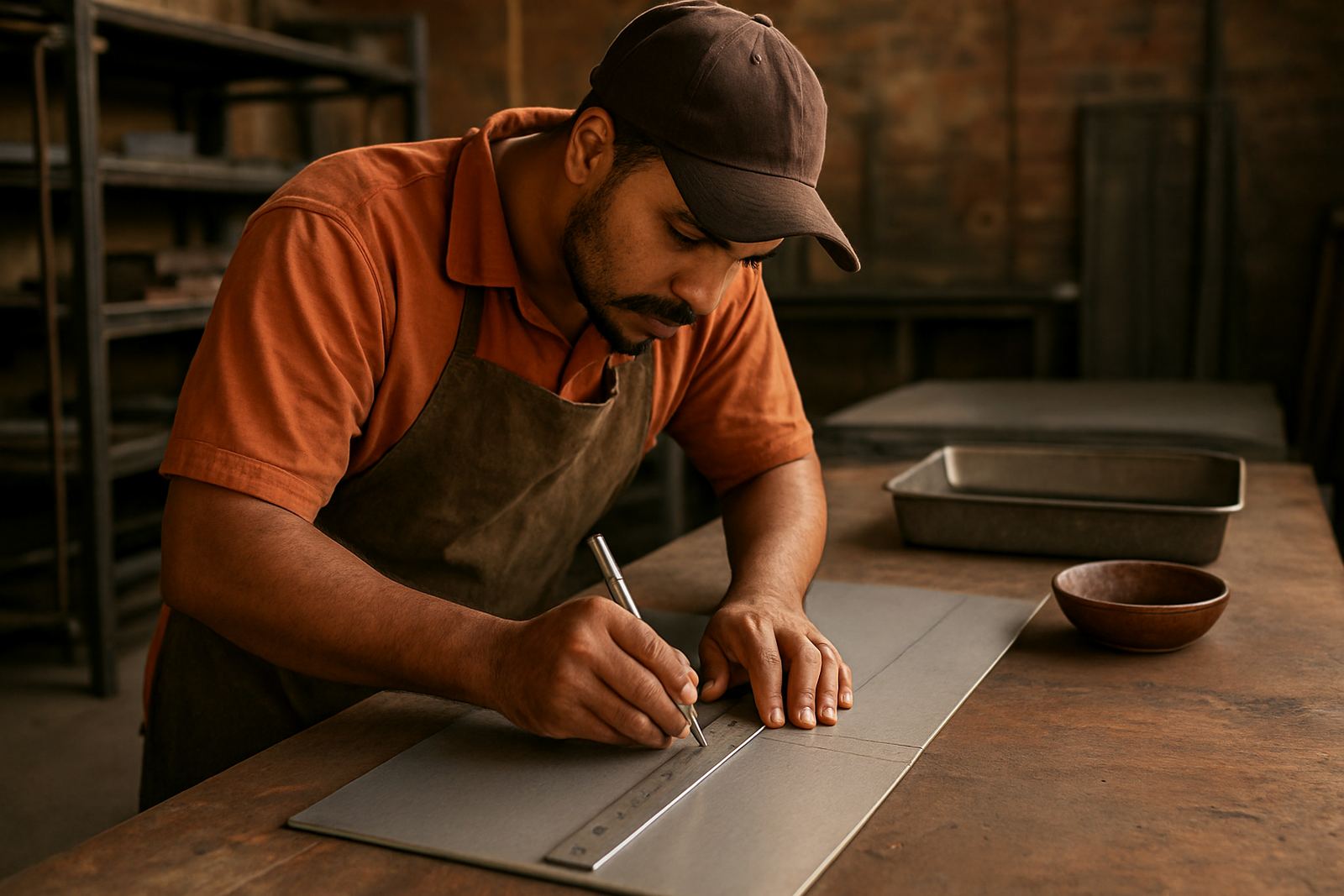
Most custom jobs do not begin with a neat CAD file. They begin with a tray that is bent, a bread pan with one good side, or a quick sketch from a bakery manager who is trying to keep the line moving. That is enough to start if the notes are clear and the measurements are taken properly.
At our Westmead base in Pinetown, we often work from what the client can gather between shifts. A photo, a ruler, a tape measure and a few written dimensions will usually tell us more than a vague request for “something like the old one”. The more detail you give on lip height, corner radius, depth and flange width, the less back-and-forth later.
Measurements That Matter On A Bakery Floor
For bakeware, the smallest difference can affect how a product loads, releases and stacks. That is why we ask for more than length and width. We also need wall height, base thickness, handle position, weld points, lid fit and any clearance needed for rails or trolleys. If a tray sits in a heated tunnel or a gas oven with uneven heat, those details matter even more.
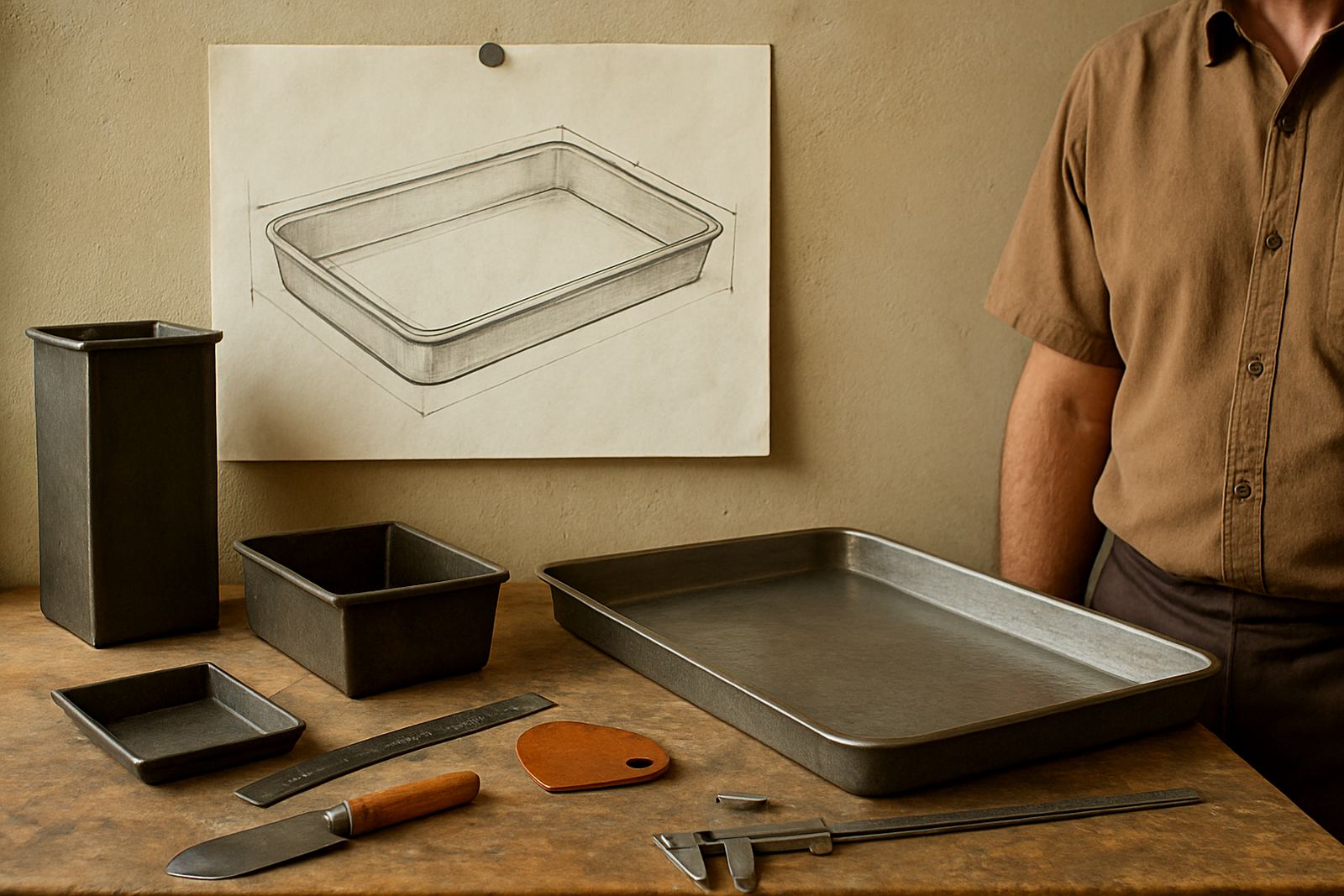
When drawings are prepared well, the conversation is quicker and the build is cleaner. The best notes usually include:
- Overall dimensions in millimetres
- Material type and gauge if known
- Depth, rim style and corner shape
- Any bends, folds, perforations or reinforcements
- Quantity needed and whether the item must nest for storage
A sample or old unit helps us see wear patterns too. A pan that has bowed after repeated use tells us where to strengthen the next batch.
Samples Show What Drawings Cannot
Some jobs cannot be explained properly on paper. A tray may need to pass through a tight proofing rack, or a bread pan may need a specific release angle so the loaf comes out clean. In those cases, a sample gives us the shape, the feel and the practical limits of the item.
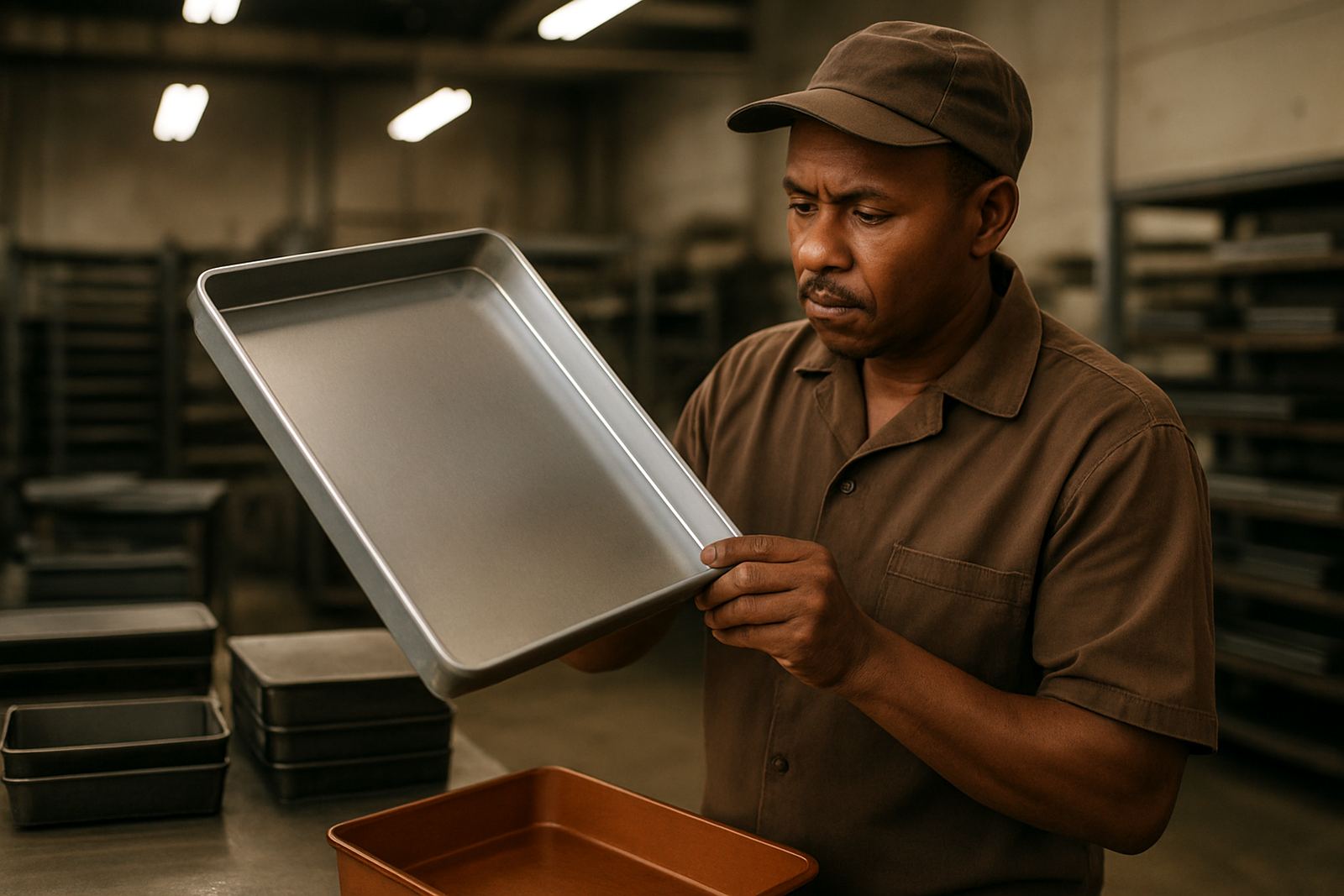
We often compare an old pan against the measured notes, then check where the damage starts. If the corner repair is enough, we can advise that. If the base has started to twist, a full remake may be the better call. That saves money over time and avoids making a part that fails in the same place again.
Samples are also useful when a bakery has had several versions of the same tray over the years. A plant in Durban may have one rack size, while a hotel kitchen in Pietermaritzburg may use a slightly different oven opening. The sample helps confirm which version is actually in service, not just the one on file.
Turning Rough Notes Into A Build Plan
Once the drawing, sample or sketch is in hand, the next step is to turn that information into a build plan. That means checking which parts are worn, which dimensions are fixed, and which can be adjusted without affecting use. It also means deciding whether the item needs new steel, recoating, straightening, weld repairs or a complete remake.
Our team looks at how the item is used day to day. A tray for a hotel breakfast run will wear differently from a floor tile used in a plant bakery running long shifts. Load-shedding also affects handling because some sites stack and move pans faster when power returns, which can lead to extra knocks and bends.
- Confirm the oven or rack size before approving production
- Check whether the item must fit existing lids or covers
- Allow for heat movement in long, flat parts
- Note any site rules for delivery, offloading or hygiene control
Good notes at the start reduce surprises when the order is ready for collection or delivery.
Local Conditions Change The Drawing
In KwaZulu-Natal, humidity near the coast can change how bakeware ages. Steel that sits in a warm, damp store room may show wear differently from stock kept in a dry back area. That is one reason we ask where the item is used and where it is stored. The drawing may be the same, but the working conditions are not.
A bakery in Westmead with fast turnover and a busy wash-up area may need a different finish from a hotel kitchen that runs smaller batches but handles trays all day. If municipal waste rules affect how scrap or damaged parts are collected, we can factor that into the service plan as well. Small details like these make the final item easier to manage on site.
We also take note of transport. Long items need careful packing, especially when they are moving from Pinetown to other parts of the province or farther inland. A clean drawing means less handling, fewer corrections and a safer fit when the part arrives.
A Westmead Example: From Worn Pan To Repeat Order
One local plant bakery brought us an old bread pan with one side worn thin and the base starting to ripple. The manager had no full drawing, only a folded sheet with measurements written in pen and a sample pan that had been in service for years. That was enough to start. We measured the pan, checked the weld points and compared the worn section against the rack spacing on site.
From there we prepared a build that matched the working unit but added support where the wear had started. The result was not just a replacement, it was a pattern for the next order. Once the bakery saw that the fit and release were right, they sent us the updated notes for future production, which made the next batch quicker to process.
This is how drawings should work in practice. They are not paperwork for its own sake. They are the record that keeps a custom item consistent, whether it is for a plant bakery, a retailer or a hotel kitchen.