Why tray stacking matters in a busy bakery
In a plant bakery, trays are moved more times than most people notice. They go from cooling racks to trolleys, from wash-up to storage, then back to the oven line. If they are stacked badly, the weight starts to sit on the wrong points and the tray edge takes the strain. That leads to twisting, bowed corners and damage that shows up later when products slide or bake unevenly.
Good stacking also helps staff work quicker. A neat stack is easier to count, easier to lift and less likely to fall when someone pulls one tray out in a hurry. At busy sites in Westmead, Pinetown and Durban, where space is often tight and production keeps moving, that small bit of order makes a real difference.
Start with the tray shape, not just the pile height
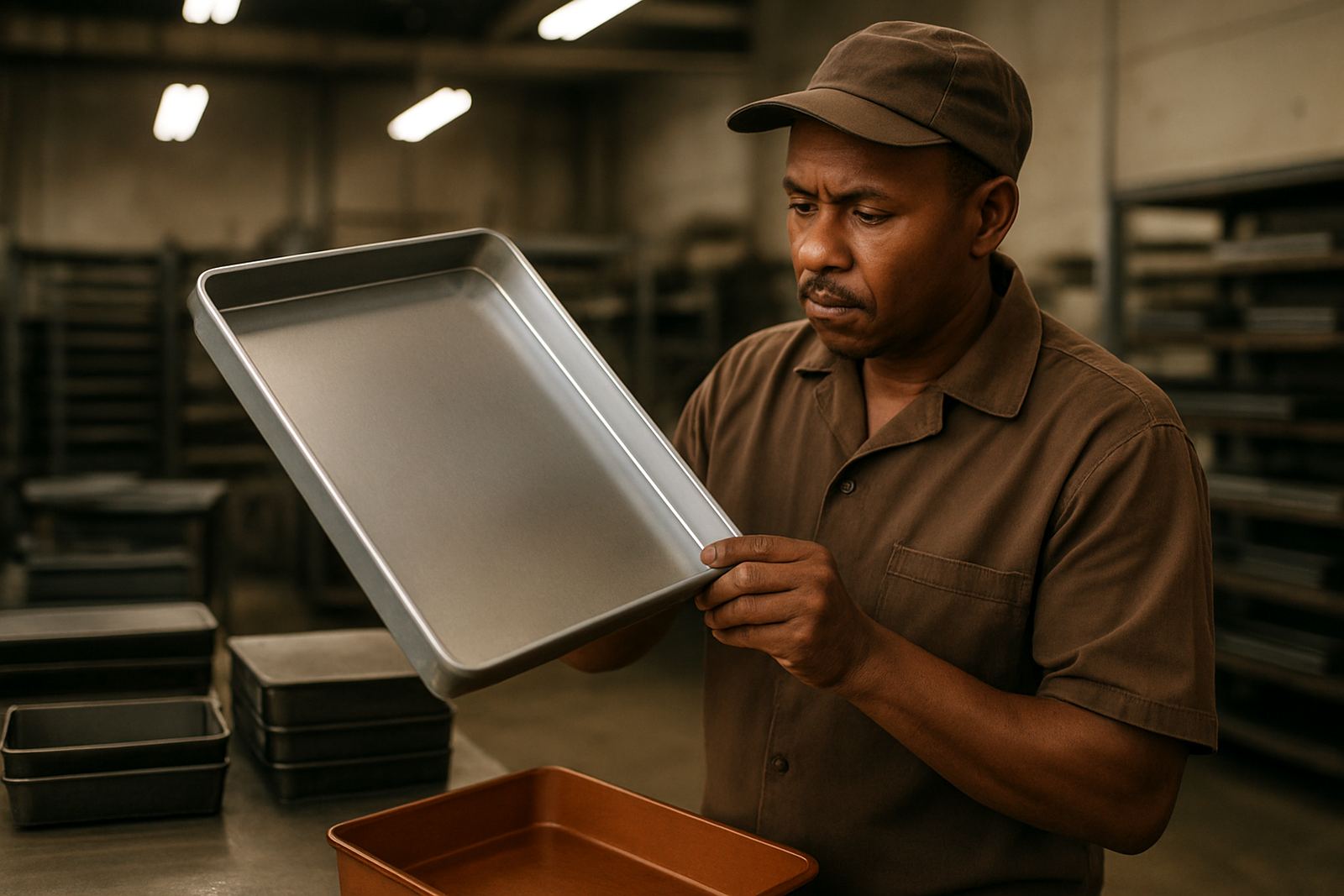
Before a tray goes into storage, check if it is still sitting flat. Even a slight bend in one corner can spread through the stack. If the base is not true, the trays above it settle unevenly and the whole pile starts to lean. That is when corners rub, rims wear and the stack becomes awkward to move.
- Stack only trays that are the same size and form
- Do not mix bent trays with straight ones in the same pile
- Keep heavier steel trays lower, lighter trays above
- Check that the stack sits square on the trolley or floor
For bakeries using steel oven floor tiles and custom trays, the shape should be checked after every wash, repair or recoating cycle. A tray that looks fine from one side may still be carrying a twist from heat or handling.
Use the right spacing so trays do not bind
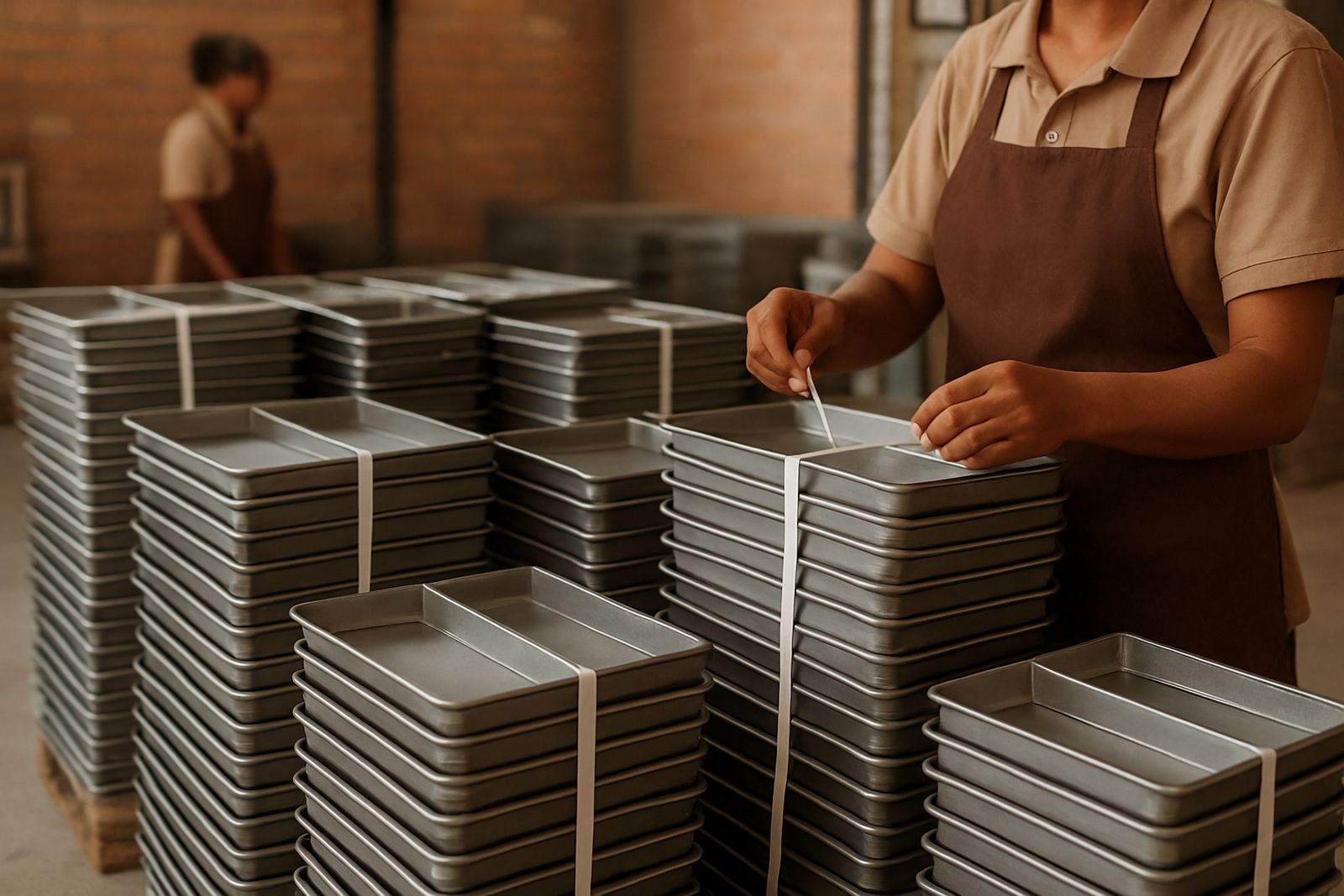
Trays should sit cleanly on one another, but not so tight that staff need to force them apart. If the fit is too snug, the sidewalls and rims scrape on each lift. If it is too loose, the pile shifts and the top tray can slide off during movement. The aim is steady contact with enough release for easy handling.
In coastal areas like Durban and along the Upper Highway, humidity can make trays cling after washing if they are put away too soon. Let them dry fully before stacking. Water trapped between trays encourages staining and makes lifting harder, especially at the start of a shift when speed matters.
- Dry trays completely before nesting or stacking
- Do not trap cloths, liners or offcuts between trays
- Keep the contact points free of crumbs and burnt grease
- Use even surfaces for storage, not uneven blocks or loose bricks
Safe lifting and trolley loading on the bakery floor
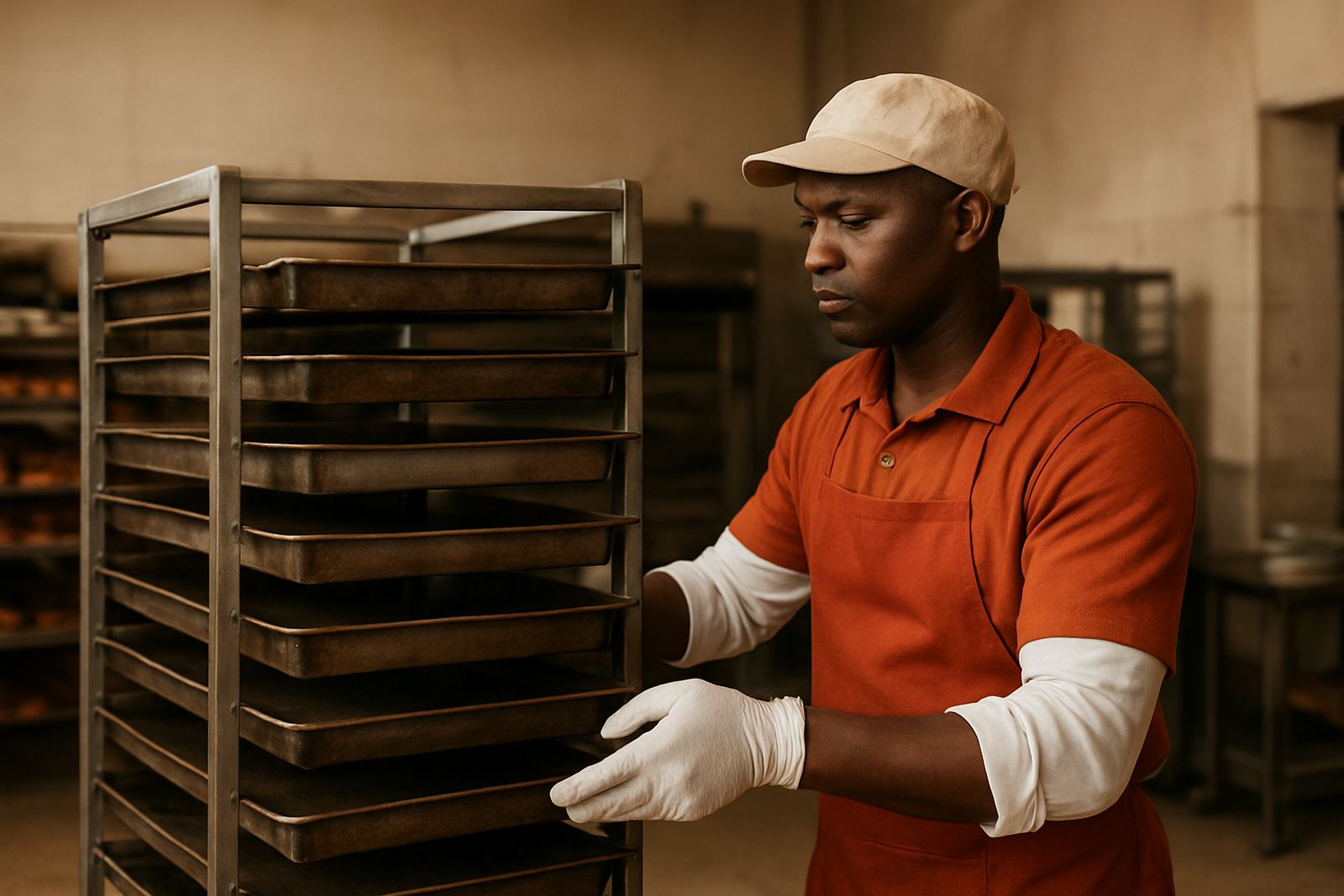
Most tray damage happens while people are moving them, not while they are baking. A stack that is too high is hard to control, and once it starts tilting, staff tend to catch it at the rim. That is where bending starts. The safer method is a controlled load, with the stack kept low enough to stay balanced through doorways, around corners and past mixers or proofing areas.
When power cuts or load-shedding interrupt the shift, teams often rush to reset the line. That is when trays get dropped, dragged or stacked too fast. It helps to keep a clear rule for maximum stack height, and to use trolleys with sound wheels and straight frames. A bad wheel can do more damage than one might think, because the whole load jolts every time it hits a floor joint.
Signs your stacking method is causing damage
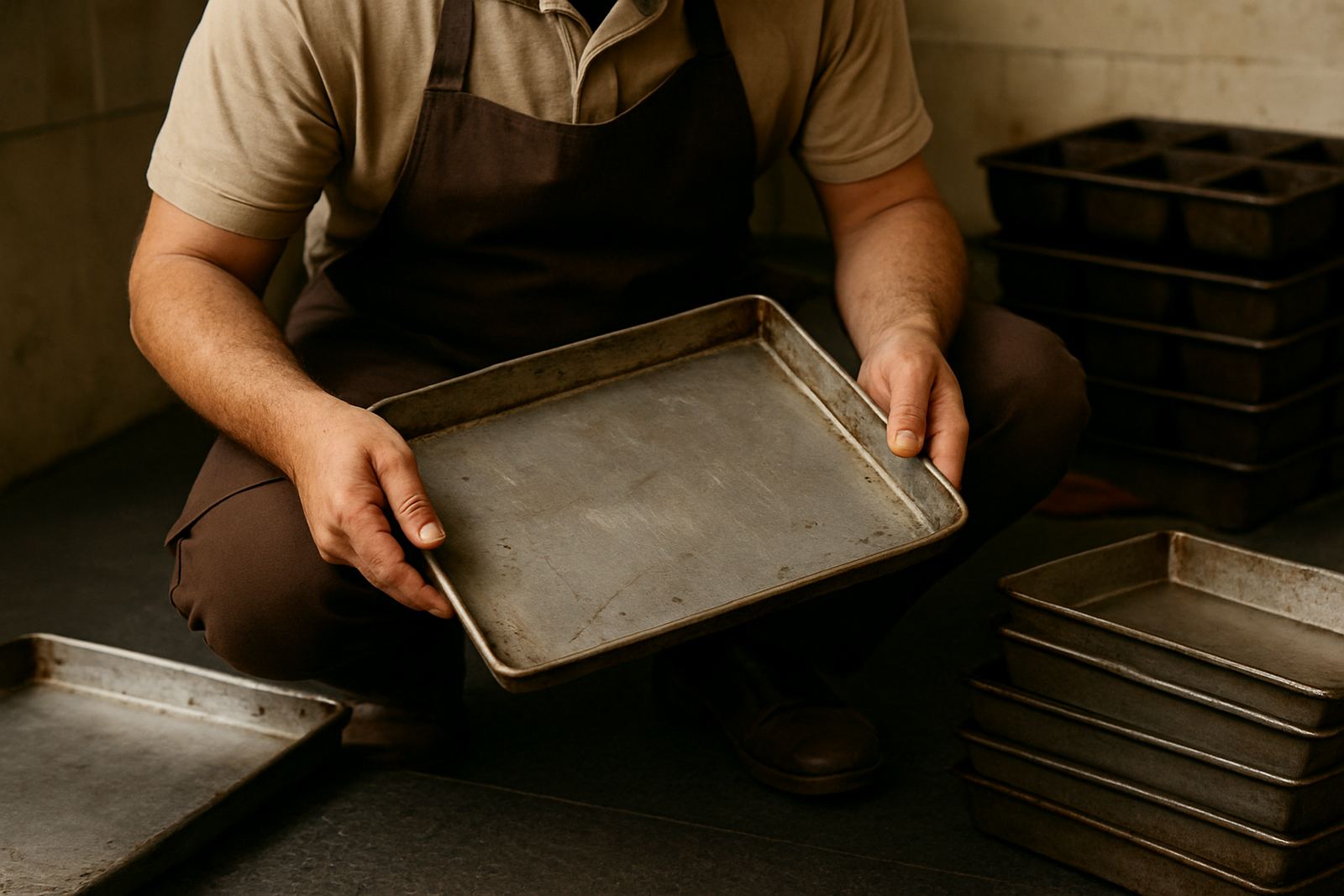
If trays are being stacked badly, the signs usually show before a complete failure. Look for polished wear lines on the rim, corners that no longer sit flush and trays that rock when placed on a flat table. Rust spots can also show where moisture has been trapped between stacked pieces.
A regular fleet assessment helps catch this early. It is worth checking the same set of trays every few weeks, especially on sites producing bread, rolls and bulk baked goods where trays turn over all day. Small faults are cheaper to fix than replacing a whole run of trays later.
- Rim edges that flare outward or curl in
- Corner gaps that grow after repeated lifting
- Uneven stacks that lean to one side
- Repeated scraping marks in the same place
How Westmead bakeries keep trays in service longer
In Westmead and across Pinetown, many bakeries keep a mixed tray fleet going for years by using a simple routine: clean, dry, inspect, then stack by condition. Straight trays go back into production first. Trays needing corner repairs, weld repairs or tray recoating are set aside before they can affect the rest of the stack.
That routine saves money and time because staff are not fighting bent trays every morning. It also helps with hygiene. Deep cleaning between runs removes old dough, oil and burnt residue, which means fewer sticky points and less chance of contamination carrying from one batch to the next. For plant bakeries supplying retail and hotel kitchens nationwide, that kind of control matters a lot.
A simple stacking rule that works in practice
The easiest rule is this: if a tray does not sit flat on the one below it, do not stack it with the production set. Put damaged pieces into a repair line, keep dry trays in matched piles, and never overload a stack just to clear floor space. Good stacking is not only about storage, it protects the shape of the tray and the safety of the people handling it.
At BAKERITE in Westmead, Pinetown, that is the approach we see working best for plant bakeries, hotels and retailers. A tidy stack lasts longer, moves better and causes fewer headaches on a busy shift.