Why perforation changes the bake
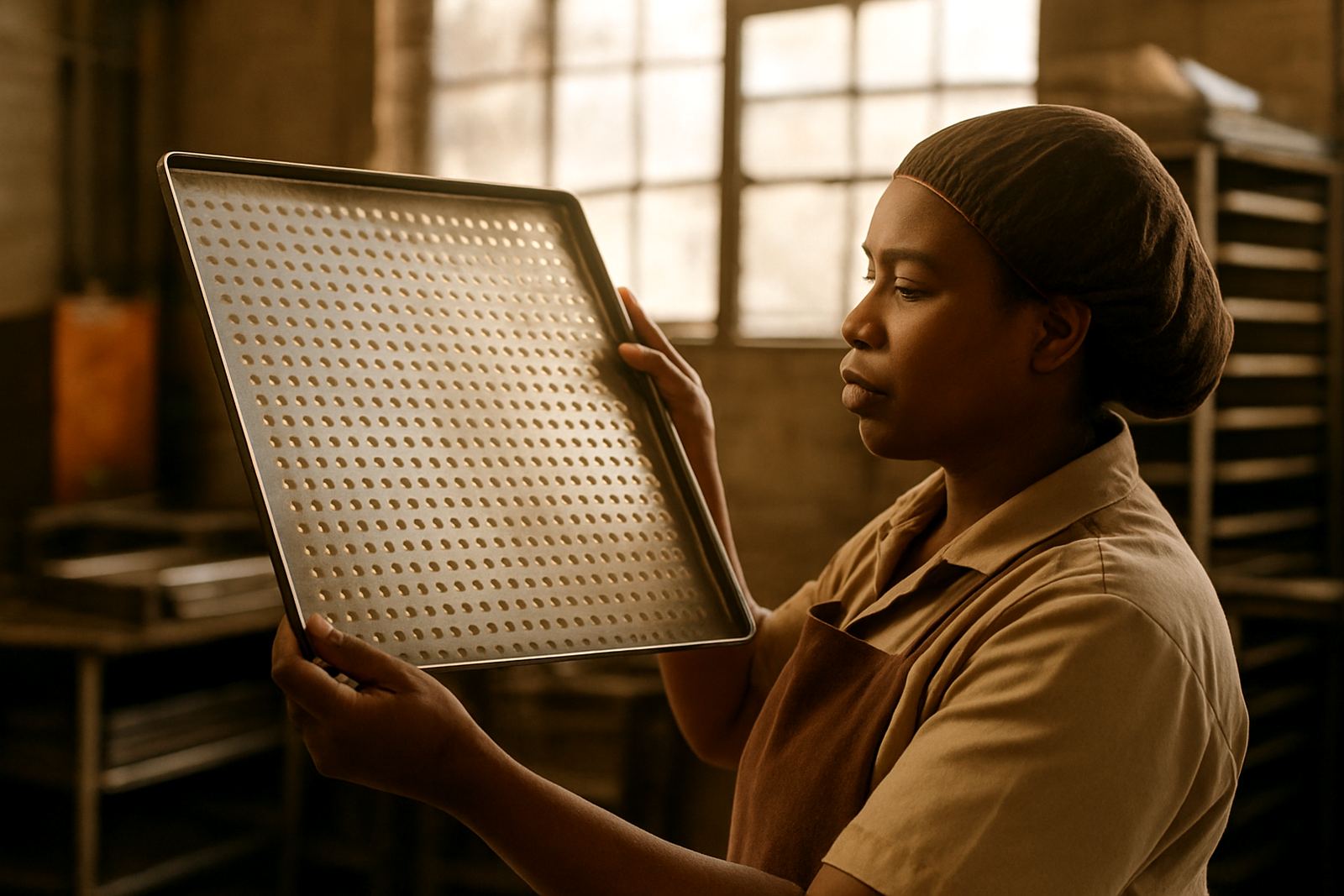
Perforation does one simple thing very well: it lets heat and moisture move more freely around the product. In an oven, that means the underside does not sit in trapped steam for as long, so the base can dry and colour more evenly. For breads with a crusty finish, rolls that need a lighter bottom and pastry items that must lift cleanly, this can make a clear difference.
The benefit is not only about speed. It is also about consistency across a production run. In a busy bakery in Westmead, Durban or further up the coast, ovens can vary from rack to rack and shift to shift. Perforated trays help reduce the small hot and damp spots that cause uneven colour. That matters when you are sending out to retailers or supplying hotels where every tray must look the same.
There is a practical limit though. Very wet doughs, sticky sweet products and heavy batters may spread through the holes or mark on contact. That is why perforation has to match the product, the proofing stage and the oven setup.
Where perforated trays work best
Not every item needs the same base support. Some products want direct airflow and a faster release from the tray surface, while others need a solid base to keep their shape. The best results usually come from products with a firm dough structure and a target finish that values a dry, even underside.
- Crusty breads that need a drier base and steady browning
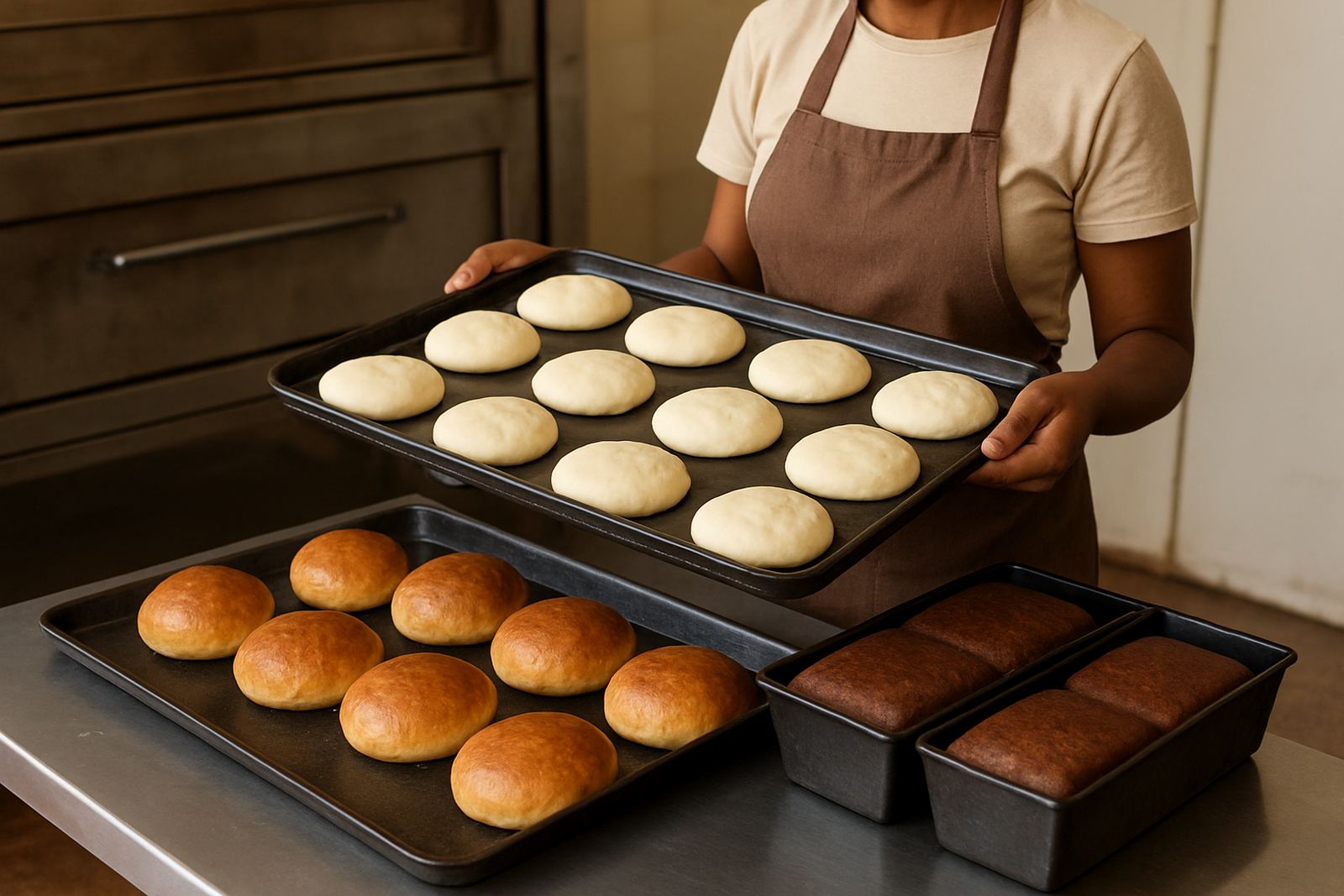
- Rolls and buns where even colouring is important across the tray
- Par-baked items that must finish quickly after freezing or chilling
- Hotel and catering products where presentation matters on the underside too
In plant bakeries, the upside is often found in high-volume bread lines where the same product is baked all day. If the tray is matched properly, perforation can help with release, reduce sticking and keep the batch moving without as much handling. That is useful when staff are working around load-shedding schedules or trying to make the most of a limited oven window.
What better airflow does inside the oven
Airflow is often the hidden part of bake quality. When heat moves freely under and around the product, you get a more even bake from the first tray to the last. Perforation allows hot air to reach the underside sooner, which can help set the base before the dough spreads too much.
This is especially useful where humidity is high, such as along the KZN coast. Moisture in the air can hold back browning and leave the bottom softer than expected. A perforated tray gives that moisture a way out, so the product finishes drier and usually with better colour under the crust or crumb.
For some bakeries, the gain is small on one tray but significant over a full production day. Less trapped steam can mean fewer pale bases, fewer soft spots and less need to rework product after cooling.
When perforation is the wrong choice
There are products where a solid tray or pan is still the safer option. If the dough is loose, highly hydrated or expected to spread, perforations can create marking, sagging or leakage. That applies to some rye styles, delicate enriched doughs and products that need a heavier base support during proofing and early bake.
Perforation also needs careful cleaning. Flour, fat and small crumbs can build up in the holes if the tray is not washed and dried properly. In a coastal bakery, that residue can hold moisture and lead to rust faster than on a solid surface. A tray that is left damp after cleaning will not last as long, no matter how good the design is.
- Use solid trays when the dough is soft, sticky or likely to run
- Avoid perforation where product needs strong base support during proofing
- Check cleaning routines so holes do not trap residue and moisture
- Inspect for distortion if trays are handled roughly between shifts
Choosing the right hole pattern and metal thickness
Perforation is not just a row of holes. Hole size, spacing, sheet thickness and edge finishing all influence how the tray behaves in daily use. If the holes are too large, product can mark or sink. If they are too small, the airflow benefit drops and cleaning gets harder.
That is why bakery equipment should be matched to the actual product and oven conditions. A tray for a bread line in Pinetown may need a different pattern from one used in a hotel bakery or a retailer finishing part-baked items. The oven type, fan speed and loading method all matter. Even the way staff stack and store trays between shifts can affect how long they last.
Good fabrication also helps with straightness and rim strength. A perforated tray that warps quickly will lose contact, bake unevenly and become hard to handle. The best value is usually found in a tray that stays flat under heat and still cleans easily at the end of the run.
A local bakery example from Westmead conditions
Think of a plant bakery in the Westmead and New Germany area supplying bread into Durban, the Upper Highway and inland routes. In summer the humidity rises, ovens are busy and staff are often working around power interruptions. A solid tray can leave the base softer than expected, especially when batches are loaded back to back and the oven door opens often.
Switching the right product to a perforated tray can help the bakery get more predictable colour without pushing the bake longer than needed. That can mean fewer returns from customers who want a pale loaf turned away or a browned base that flakes too much. The change may be small on paper, but in a full production week it saves time and cuts waste.
For bakeries dealing with worn stock, recoating, straightening and repairs can also bring old trays back into service instead of replacing everything at once. That matters where budgets are tight and the line still needs to keep moving.
- More even base colour on humid days
- Better release for the right dough types
- Less waste from soft bottoms or uneven bake
- Longer tray life when maintenance is done early