Why flow starts with the bakeware on the line
Throughput is often blamed on the mixer, the oven or the pack bench, but the first bottleneck is sometimes the bakeware itself. If pans are bent, trays are uneven, or floor tiles no longer sit properly in the oven, the line starts fighting itself. Product sticks, loading slows down, and staff spend time correcting issues that should not be there in the first place.
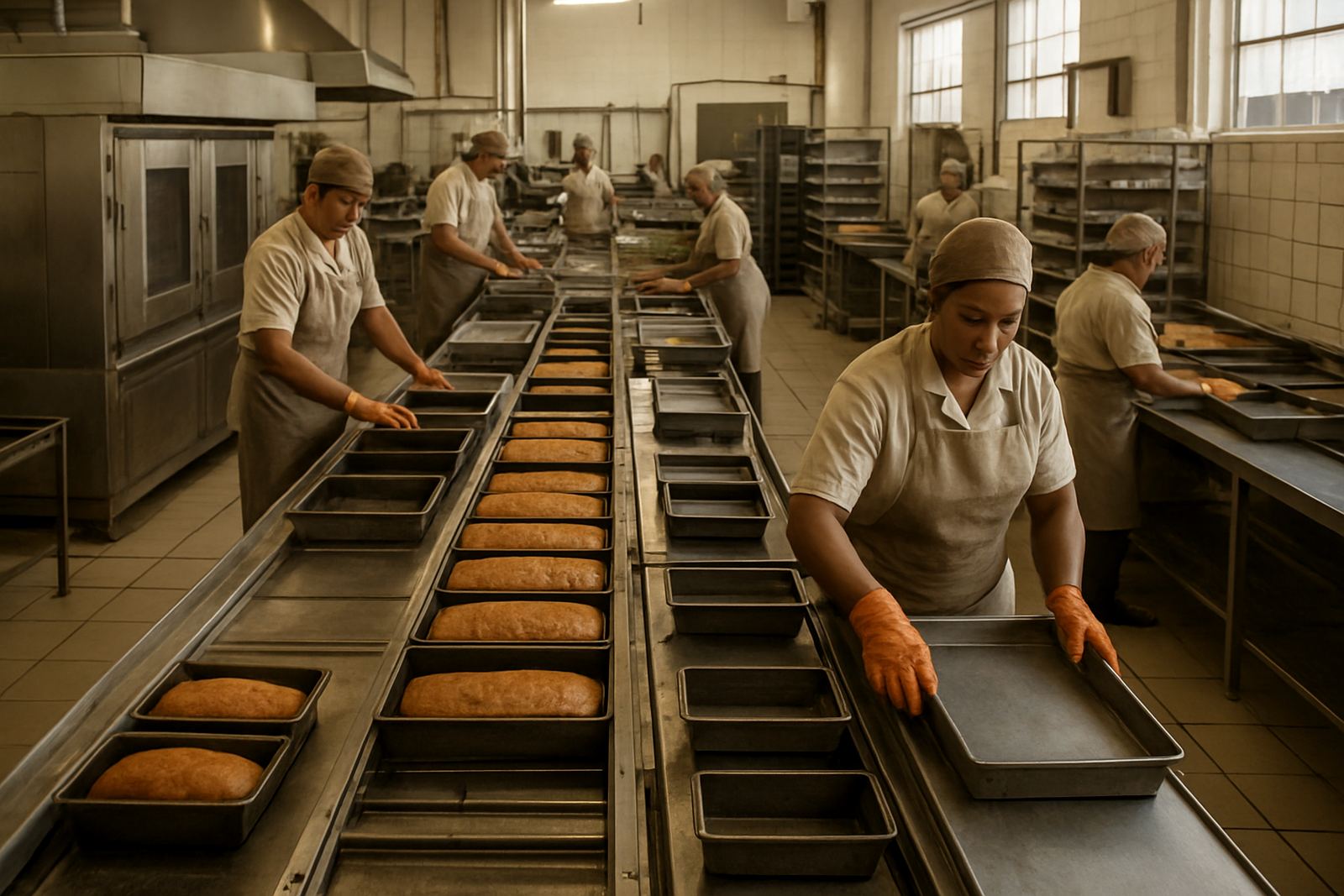
In a plant bakery the flow has to work in order. Mixing, portioning, proving, baking, cooling and packing all depend on the previous step finishing on time. A tray that does not release cleanly can hold up a whole rack. A floor tile that has warped from heat can cause hot spots, poor bake colour and more waste. That is why bakeware should be treated as part of production control, not just a purchase item.
Getting the right rhythm between oven and packing
Once the oven is set, the line should run at a steady rhythm. That rhythm is what keeps staff moving without rushing. When every tray and pan returns at roughly the same condition, changeover is quicker and the next batch starts on time. If the bakeware is mixed, with different heights, sizes or damaged rims, operators spend extra time sorting instead of loading.
This matters in larger bakeries serving schools, supermarkets and hotels, because a delay of even 10 minutes can throw off the rest of the shift. The same applies in coastal areas where humidity affects flour handling and release. In Durban and Pinetown, for example, a bakery that has reliable pans and clean trays will usually see fewer stops between batches, because staff are not scraping, straightening or searching for usable stock.
- Keep bakeware grouped by size and use, so changeovers are faster.
- Remove bent or cracked items before the next shift starts.
- Match tray depth and pan shape to the product, not just to what is available.
- Check that oven floor tiles sit level before blaming the recipe.
Changeover control saves more time than most managers expect
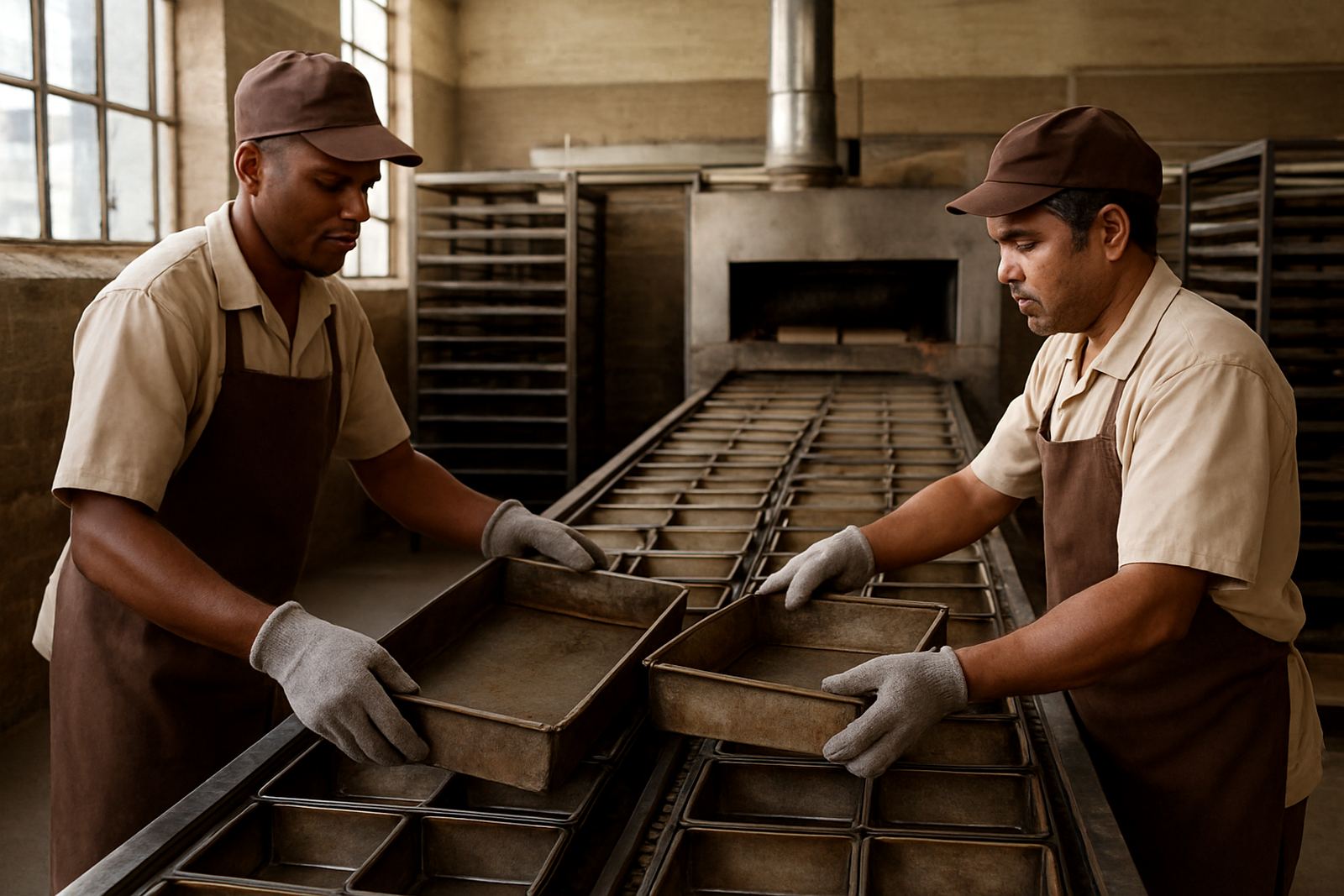
Changeover control is about what happens between products. It covers cleaning, inspection, sorting and getting the right bakeware back into the right place. On paper it sounds simple, but in a busy plant it is where time is lost. If one team is waiting for spare lids, repaired pans or a set of clean trays, the next production run starts late and the shift absorbs the delay.
A practical changeover process should be short enough for the floor team to follow without confusion. If the process is too loose, damaged items stay in circulation. If it is too rigid, staff waste time handling items that could have been repaired and returned to use. The best systems are plain and repeatable, with clear instructions on what can go straight back, what needs recoating, and what must be set aside for repair.
- Separate damaged, dirty and ready-to-use bakeware at source.
- Use a simple sign-off before items return to the line.
- Schedule recoating and repairs before peak production periods.
What damaged pans and trays do to output
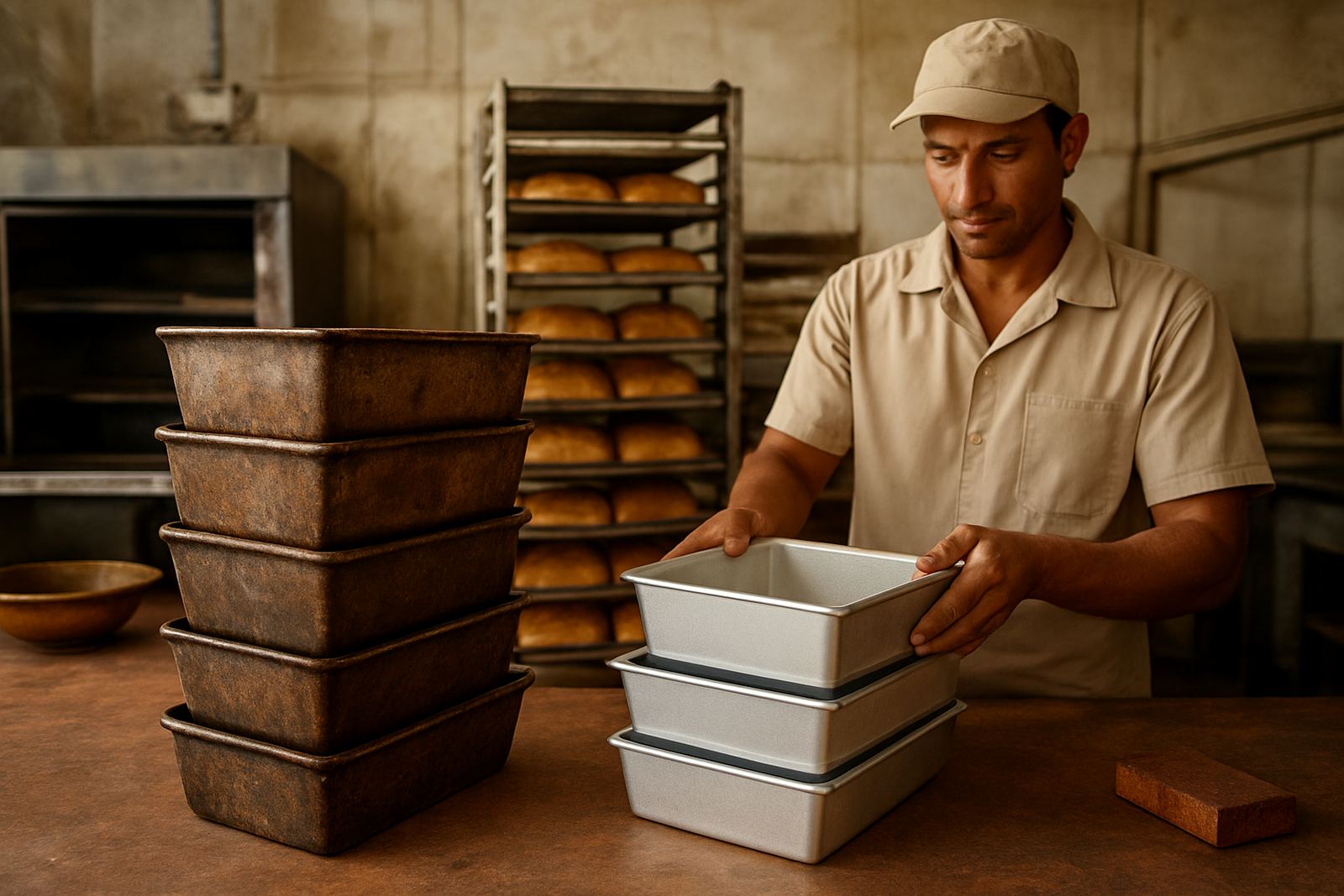
Small faults in bakeware become bigger faults in production. A cracked rim can catch on a rack. A weak weld can open under load. A lid that no longer sits properly can throw off baking times or cause uneven finish. Once this starts, operators compensate by working slower or handling items twice, and that takes a direct bite out of output.
There is also a cost in waste. If the product sticks, tears or bakes unevenly, the reject rate rises. In a plant bakery sending bread to retailers across KwaZulu-Natal or further afield, that means more returns and more pressure on delivery schedules. It is usually cheaper to repair, straighten or recoat bakeware than to keep pushing worn items through the line. Bakeries near the coast should also watch for corrosion and salt air damage, since it shortens the life of steel if items are left damp.
- Watch for sticky surfaces, bowed bases and loose joints.
- Check trays after heavy cleaning or rough handling.
- Do not wait for a full failure before booking repairs.
A Westmead example from a busy morning shift
A bakery in the Westmead area running bread for local retailers had a familiar problem: the oven was on time, but the line kept stalling during changeover. The staff were spending too long sorting mixed trays, setting aside damaged pans and finding spare lids. The result was not a recipe issue, it was a flow issue.
After the bakeware was assessed, the bakery put a simple control system in place. Bent trays went for straightening, worn surfaces were recoated, and damaged rims were repaired before items were returned to stock. The oven floor tiles were checked as part of the same routine, because the team had noticed uneven browning on one side of the chamber. Once the bakeware was brought back into order, the changeover time came down and the morning shift ran with far fewer stops. Nothing dramatic changed, just better control of what the line was asking from the equipment.
What to include in a practical bakeware review
A good review should look at the full production path, not only the finished loaf or tray of rolls. For plant bakeries, that means checking how each item moves through the day, where it gets damaged, and how quickly it can be returned to service. The aim is to keep usable stock in circulation and reduce unnecessary replacement.
At Bakerite, the services around the line are just as important as the items themselves. Pan recoating, tray recoating, pan straightening, corner repairs, rim repairs, lid repairs, weld repairs, fleet assessment, deep cleaning and spare lids all help keep the plant moving. For many bakeries, especially those supplying hotels, retailers and larger production kitchens, this support protects throughput without forcing a full buyout of the bakeware stock.
- Review the condition of each tray and pan on a set schedule.
- Track repeated faults so the same issue does not keep returning.
- Keep a small spare pool for high-use items and busy production days.