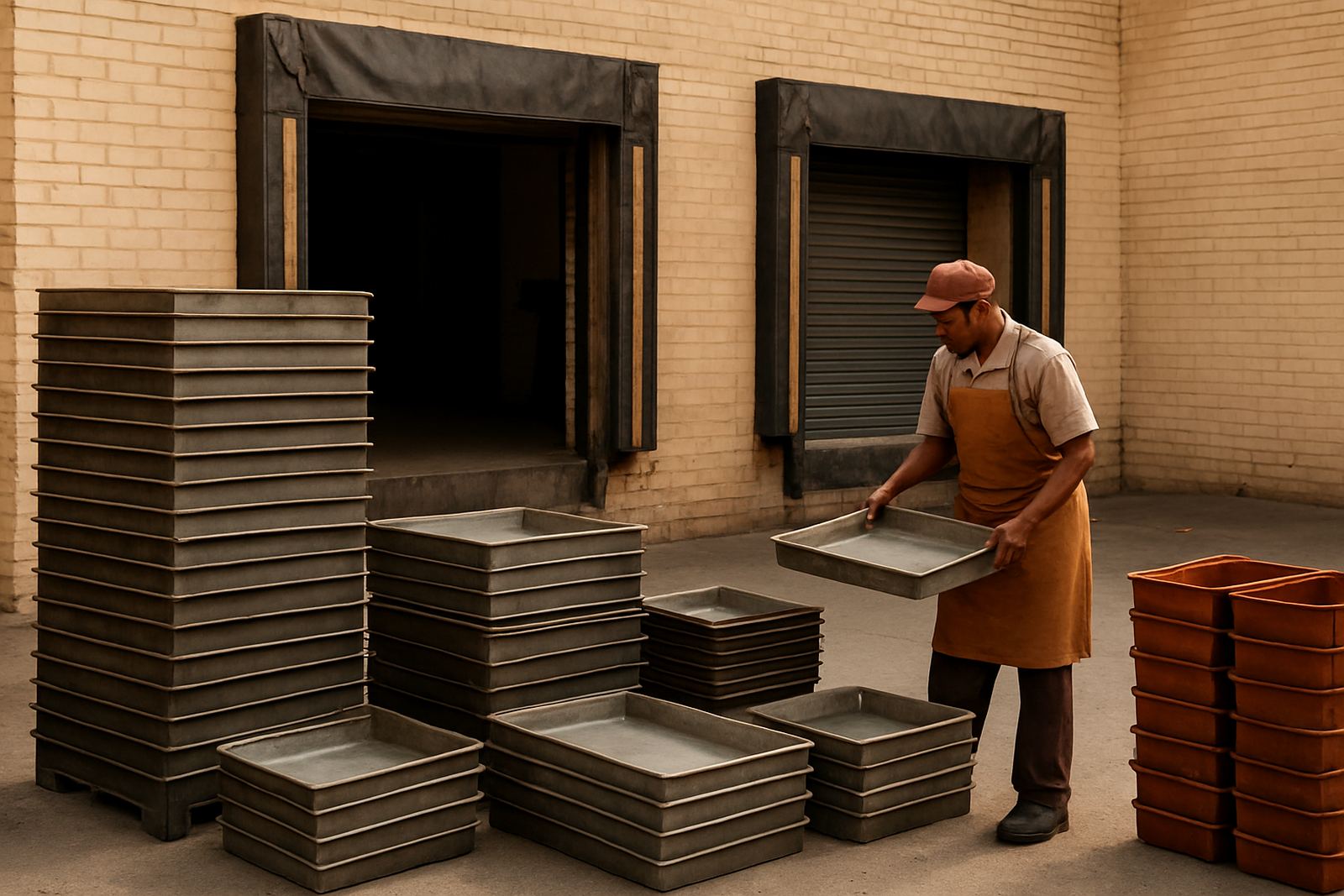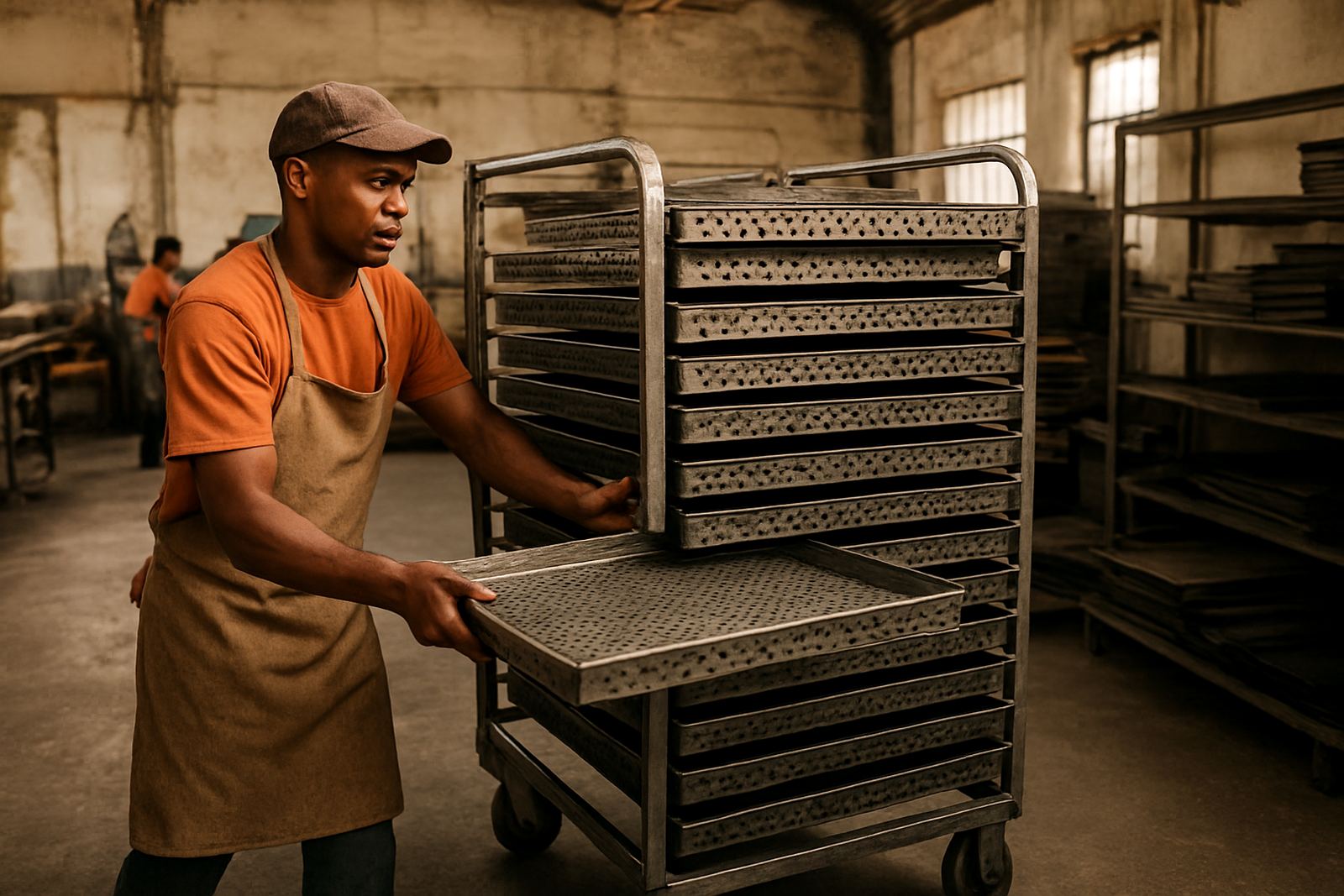
Breakfast growth needed more tray capacity
The client was a hotel bakery in Pietermaritzburg serving breakfast, room service and function orders from one production area. They were running a mixed set of old trays and light pans that had been patched over time, which made sorting harder and slowed down the early shift. Some trays sat flat, some had a slight twist, and a few had rim damage that caused spillages when staff carried them from the prep bench to the ovens.
The brief was simple enough on paper, but the detail mattered. They needed custom pastry trays that could handle repeat baking, fit their oven deck spacing, and hold shape in a warm kitchen that sees steam, dishwashing and long operating hours. They also wanted something that could be repeated later if breakfast volumes went up again, so measurements had to be kept properly from the start.
- Client type: hotel bakery in Pietermaritzburg
- Use: breakfast pastry production and function orders
- Need: custom tray supply for daily oven use
- Main concern: warping, handling and poor tray consistency
What the bakery asked us to solve
We first looked at how the trays moved through the kitchen. The bakery was not only baking croissants and Danish style items, it was also using the same area for proofing, loading, cooling and dispatch. That meant the trays had to do more than just sit in the oven. They had to be easy to stack, easy to clean, and strong enough to cope with the knocks that come from a busy hotel operation, especially when staff are working fast before breakfast service.
The biggest constraints were fit and finish. Their oven lanes had fixed width and depth, so even a few millimetres off would have caused sticking or wasted space. The client also asked for edges that would not catch gloves or cloths, because the old pans had sharp wear on the corners. In a kitchen with constant movement and hot trays, small flaws become daily annoyances, and that is where time gets lost.
- Tray size had to suit existing oven openings
- Edges needed safe handling for kitchen staff
- Finish had to cope with washing and humidity
- Stacking had to stay neat to save storage space
How we measured and built the tray set
We worked from samples and site measurements taken from the existing trays. Each tray pattern was checked for overall length, width, rim height and corner form before fabrication. Because the bakery wanted a dependable run of trays, we kept the spec consistent across the batch rather than mixing sizes. The steel profile was selected for oven duty, with enough stiffness to resist flex while still being practical for daily handling.
The trays were made with a clean formed edge and corners that would sit properly on racks. We also checked the loading side of the oven to make sure the lip height would not interfere with sliding or turning during peak prep times. The batch was finished for general bakery use, and the final check included flatness, fit against the sample rack and a visual inspection for burrs or rough points. Nothing fancy, just a proper working tray that does the job day after day.
- Custom tray pattern matched to the client’s oven and racks
- Steel selected for repeated pastry baking
- Formed edges for easier handling and cleaner stacking
- Final inspection done for flatness and finish
Timeline from first call to delivery
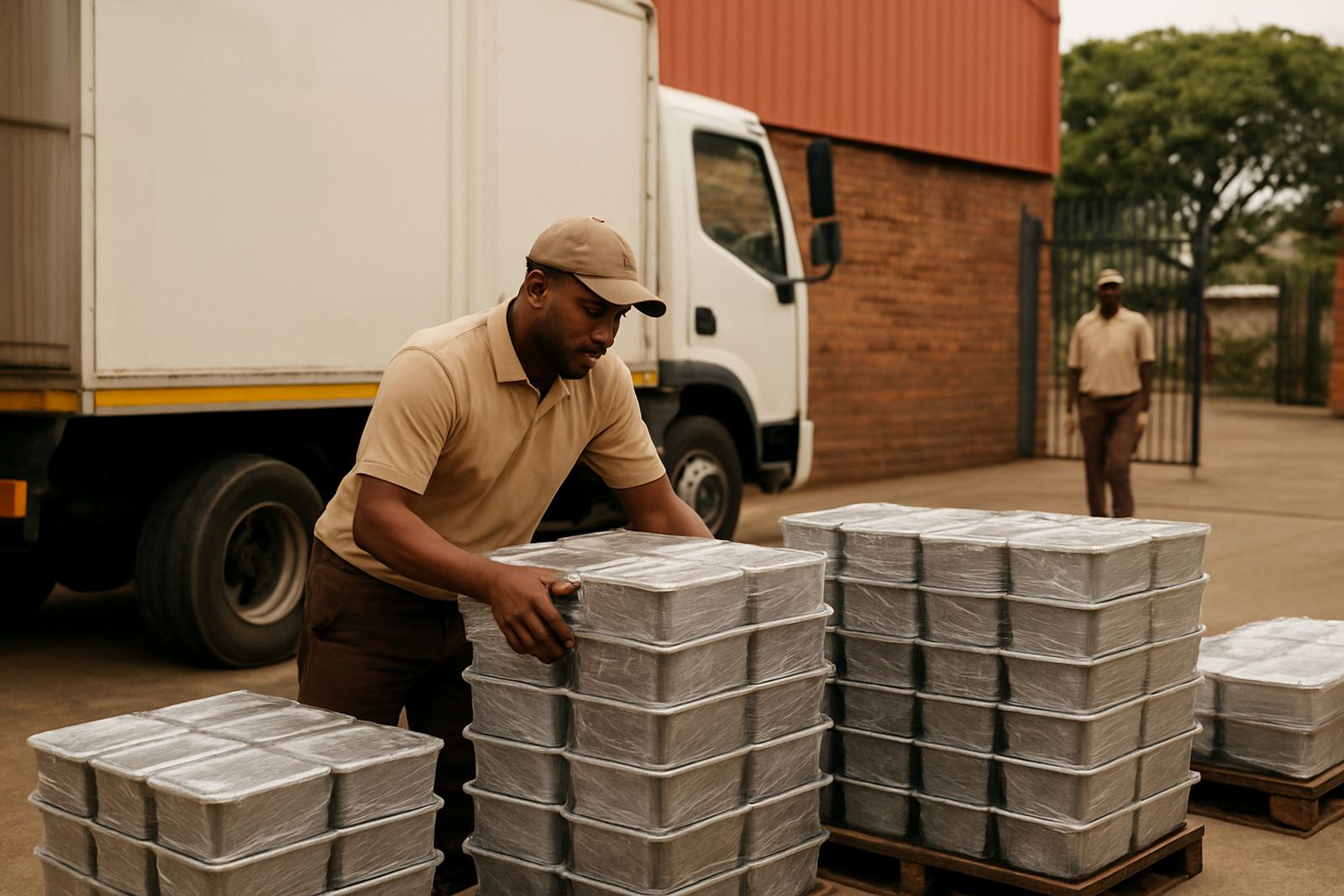
The job moved over about three weeks from first discussion to delivery. The first week was spent checking the old trays, confirming dimensions and agreeing on the tray count. In the second week we completed the fabrication and finish work, then did fit checks against the measured sample. The third week covered packing, transport and handover to the hotel bakery team in Pietermaritzburg.
The timeline stayed tight because breakfast production could not pause for long. The client wanted the changeover to happen between service periods, not in the middle of a busy weekend. That meant we kept communication direct, confirmed the final count early, and avoided unnecessary back and forth. It was a practical schedule, not rushed, but not dragged out either.
- Week 1: site discussion and measurements
- Week 2: fabrication and fit check
- Week 3: packing, delivery and handover
Results in the bakery after the change
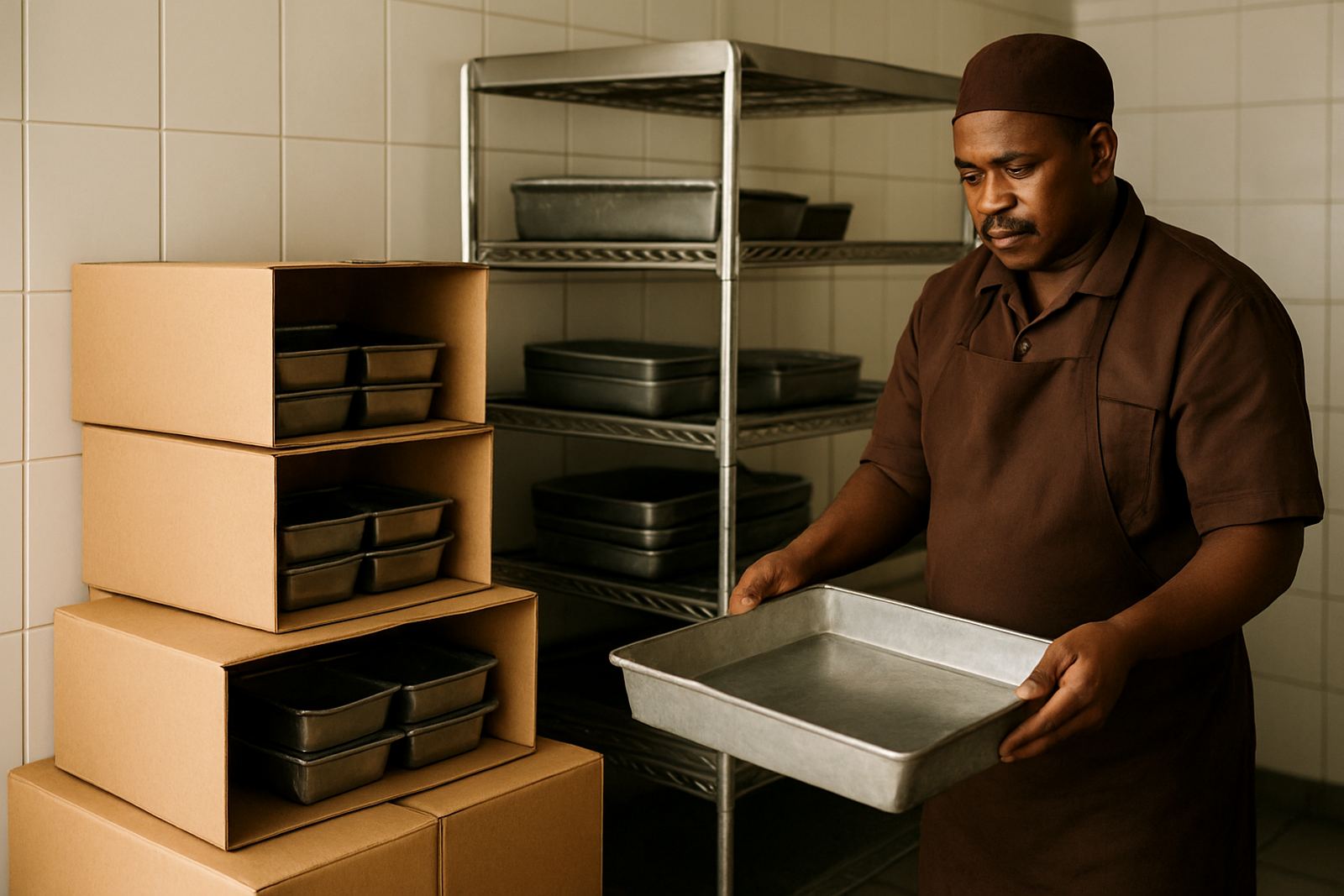
Once the new trays went into service, the bakery had a cleaner flow from prep to oven to rack. Staff could stack trays more neatly, and the better fit reduced wasted oven space. That helped the team keep pace with breakfast demand, especially on busy mornings and weekends when room occupancy was higher. The kitchen manager also noted that the trays sat more steadily during loading, which made the early shift less awkward.
The client was particularly pleased with how the batch handled repeated movement and washing. In a hotel setting, trays are not treated gently. They are wiped, washed, dried and returned quickly, and if the tray edge starts to distort the whole cycle becomes harder. With the new set in place, there was less chasing around for the straightest pan and less sorting before production. It saved time and gave the team a tidier system, which matters more than people think.
- Better tray fit improved oven use
- Less sorting was needed before early production
- Handling became easier for the kitchen team
- Storage and stacking stayed more orderly
What we would do again for a hotel bakery
If we were repeating the project, we would still start with the trays already in use and measure them against the actual oven layout, not just the drawing on paper. In hotel work, the small things matter: how a tray sits on a rack, how it clears a handhold, how it behaves when it is warm and slightly bent after years of use. That practical check gives a better result than guessing, every time.
We would also keep the batch repeatable from the start, so if the bakery adds more breakfast items later, the same tray pattern can be made again without confusion. For a site in Pietermaritzburg, where heat, washing and daily turnover all play a part, a plain well made tray is usually the best answer. No drama, just something that fits, lasts and keeps production moving.
- Measure against actual ovens and racks
- Keep the tray pattern repeatable for later orders
- Allow for heat, washing and daily handling
- Use a finish that stays serviceable in a busy kitchen
Hotel tray supply for Pietermaritzburg and beyond
Bakeries in hotels, lodges and restaurant kitchens often need tray sizes that are not covered by standard shelves or catalogue pans. We work from the production need, then build the tray around the oven and the product. That suits pastry work, breakfast lines and small batch baking where a little inconsistency can slow service. Our base in Westmead, Pinetown supports supply into Pietermaritzburg, Durban, the Upper Highway and broader KwaZulu-Natal, with national supply available for plant bakeries and hospitality groups too.
For this project, the key was getting the bakery ready for a busier breakfast run without changing the whole kitchen layout. The custom trays did that job. They gave the team a dependable set that fits the space they already have, and that is usually what a hotel kitchen needs most.
Key facts
| Project | Pietermaritzburg hotel pastry trays |
|---|---|
| Client type | Hotel bakery |
| Town | Pietermaritzburg, KwaZulu-Natal |
| Use | Breakfast pastries and function production |
| Timeline | 3 weeks from measure-up to delivery |
| Supply | Custom steel trays matched to existing ovens and racks |