What the bakery in Vryheid needed
The client is a busy bakery in Vryheid serving walk-in customers, local shops and a few regular functions around northern KwaZulu-Natal. Their volume had grown past what their old pans could comfortably manage. Some pans were bending at the corners, others were patchy after years of recoating, and a few were simply the wrong depth for the cakes they now bake every day. They needed a practical set of cake pans that would work in an upright production line, hold shape under heat, and still be easy to turn out and clean at the end of a shift.
The brief was straightforward but specific. The pans had to suit standard cake mixes, fit the oven racks properly, and give even bake results on both smaller celebration cakes and larger slab cakes. The bakery also asked for fewer handling problems because the team was losing time checking for leaks, straightening damaged trays and dealing with sticky corners. In a bakery where staff are balancing prep, baking, packing and collections, one bad pan can throw off the whole day.
The production constraints we worked around
We had three main constraints to work around. First, the oven space was fixed, so every pan had to match the usable width and depth exactly. Second, the bakery works long hours and cannot wait around for special cleaning or delicate handling, so the finish needed to cope with repeated use and normal wash-downs. Third, the bakery is in a part of the country where transport timing matters, so the order had to be completed and dispatched within a short window. No one wants an empty rack on a Friday morning, especially when orders for celebration cakes are already booked.
We also took into account that Vryheid can swing between dry inland heat and cooler periods, so the pans had to be made from steel that would stay true through regular heating and cooling cycles. A pan that twists after a few weeks costs more in labour than many buyers realise. You end up with sticking, uneven layers and extra wastage, all of which eats into margins. This is exactly the sort of thing that looks small at purchase stage but becomes a constant headache later on.
- Fixed oven rack sizes with limited clearance between shelves
- Daily batch production for cake lines with repeated loading and unloading
- Need for a finish that would stand up to cleaning and handling
- Short delivery timing so production would not stall
Cake pan specifications supplied
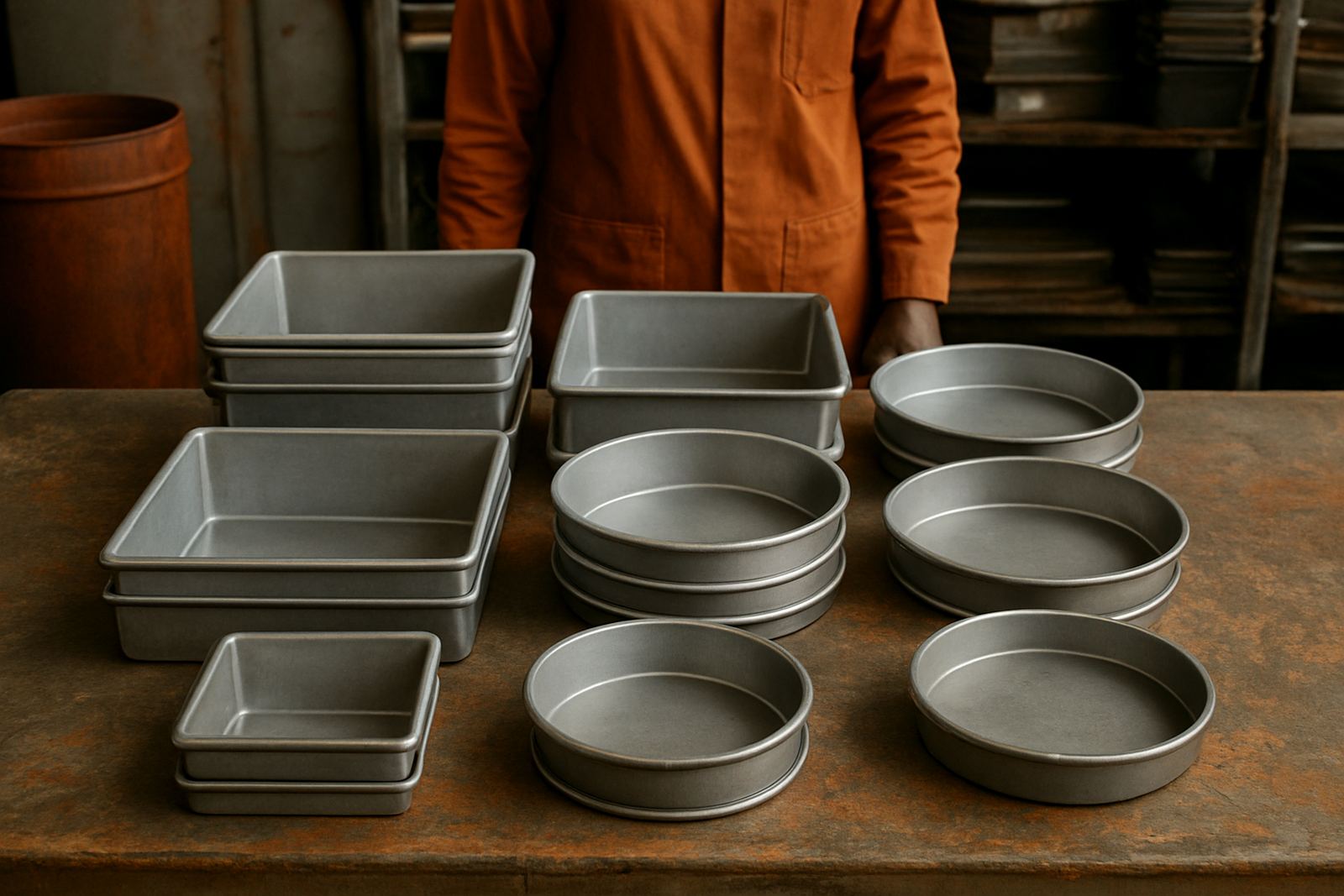
We made a matched set of custom steel cake pans for the bakery, sized to suit their production ovens and the cakes they bake most often. The order included pans for celebration cakes and slab cakes, with depths selected to give a proper rise without spill over. Each pan was made from steel suited to commercial oven use, with formed corners for cleaner release and consistent shape from bake to bake. We kept the build practical rather than fussy, because in a working bakery the job is to get a neat cake out every time, not to admire the tooling.
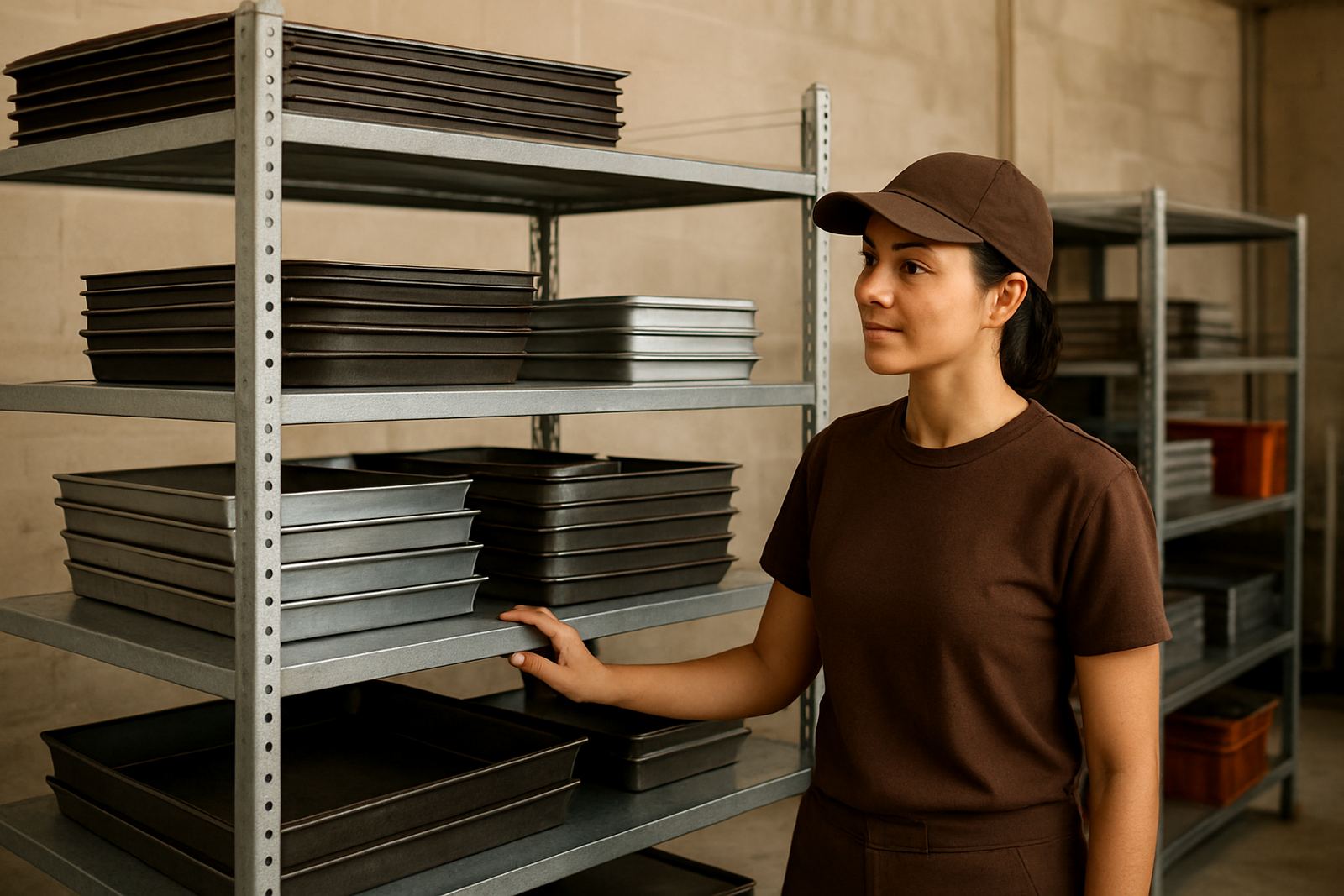
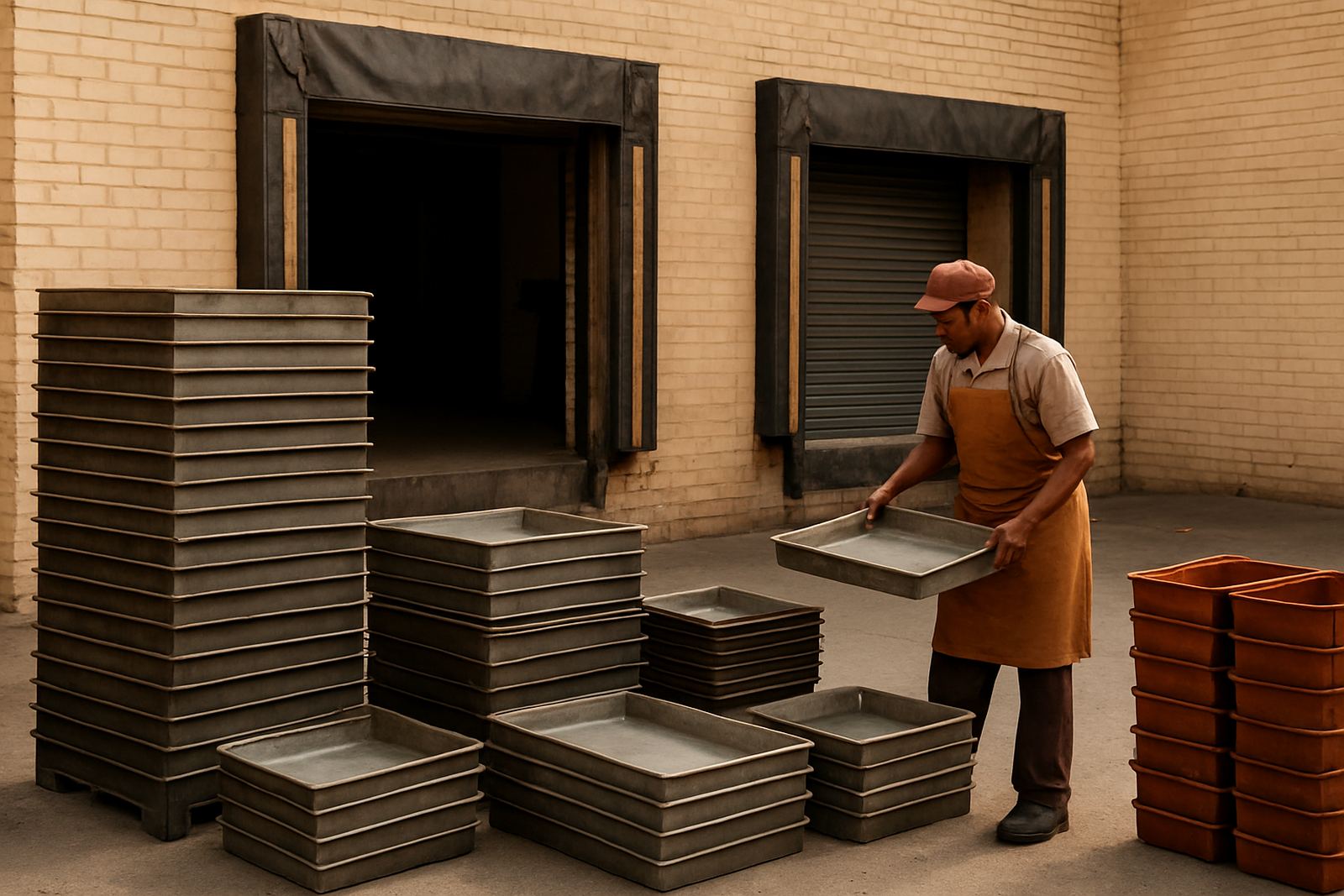
The client requested straight sides, firm rims for handling and enough strength to resist warping under load. We also checked that the pans could be stacked and stored without catching on each other. That saves time in a compact prep area. Where needed, we allowed for easy recoating in future, so the pans can stay in circulation longer instead of being thrown out too early.
- Material: commercial steel for repeated oven cycling
- Format: custom cake pans for celebration and slab cakes
- Edges: formed rims for handling and better rigidity
- Shape: straight-sided build for consistent cake profile
- Use: suitable for daily bakery production and stacking
- Maintenance: designed with future recoating and repair in mind
How we handled the order and turnaround
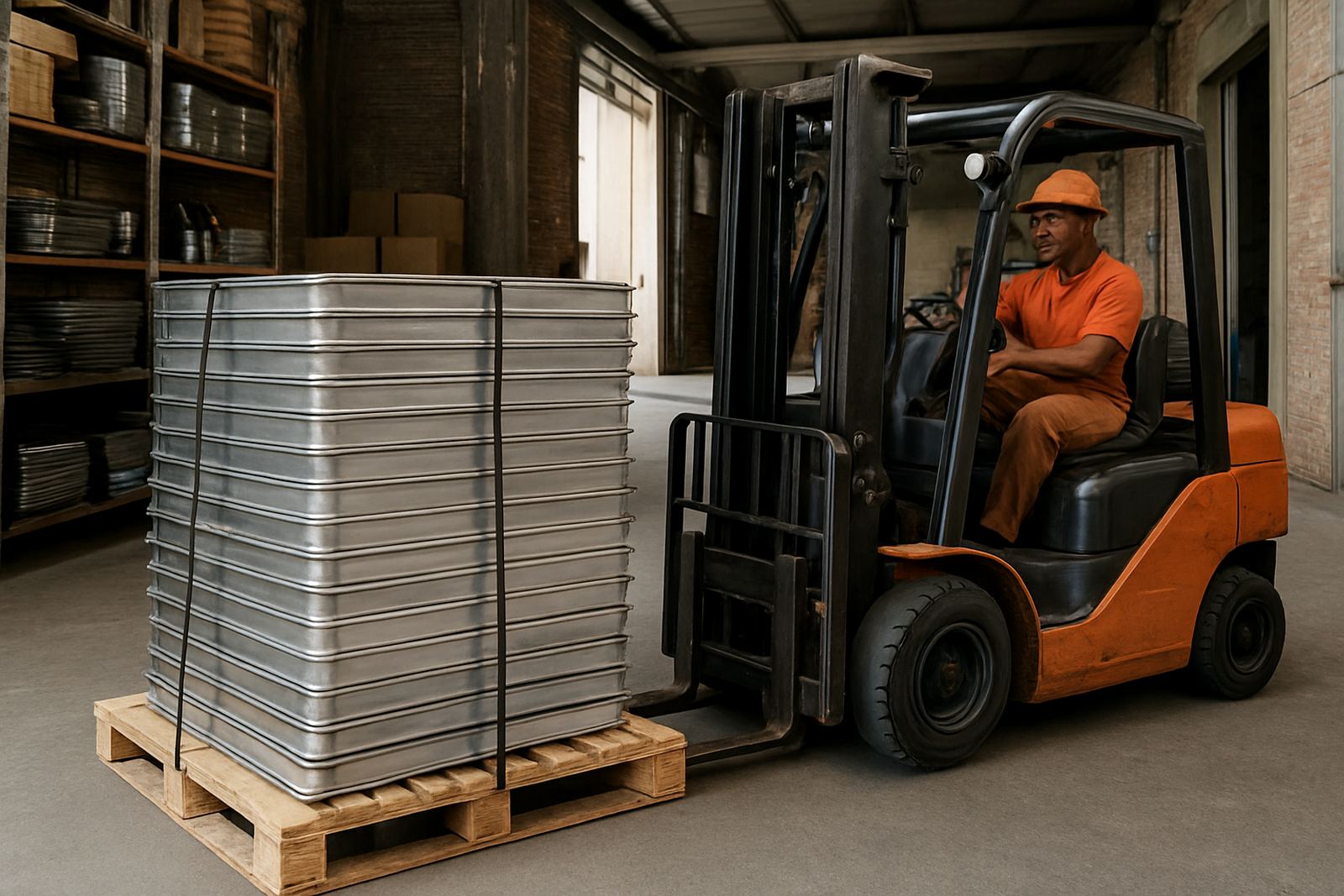
Once the measurements were confirmed, we moved the job through fabrication, final checks and dispatch in a three week window. Week one was for measuring, confirming the oven fit and finalising the pan sizes. Week two was for fabrication and finishing. Week three was for inspection, packing and handover. That pace suited the client because they were setting up for a planned increase in orders and did not want to delay the next production cycle.
We kept the communication direct. Priscilla handled the order flow, Johan checked the fabrication details, and Lerato coordinated the final dispatch so the bakery knew exactly when to expect delivery. That matters more than many people think. If a bakery is arranging staff shifts and ingredients around new pans, vague timing creates waste. We kept the schedule practical and gave the client enough time to prep the rack layout before the new pans arrived.
What changed on the bakery floor
After the new pans went into service, the bakery reported cleaner releases, less corner damage and steadier bake results. The staff could load pans faster because the fit was consistent and they were not stopping to check for warped edges. That sounds minor, but over a full production run it adds up to real time saved. The bakery also had fewer returns from the packing side because the cakes were coming out neater and holding shape better once cooled.
For the owner, the bigger gain was predictability. When you know the pans will hold their size and give the same result each day, it becomes easier to plan stock, labour and delivery. In a town like Vryheid, where bakery business can move quickly from quiet weekdays to full weekend demand, that kind of consistency is worth a lot. The team was able to keep production moving without constantly reworking pans or shifting cakes around to suit damaged trays.
- Cleaner release and less sticking at the corners
- More even baking across the batch
- Less time lost to straightening damaged pans
- Better packing because cake shape stayed consistent
What we would do again for a similar bakery
For a bakery like this, we would repeat the same approach. Measure the oven space first, confirm the batch sizes second, then make the pans to suit the actual production line. It is tempting to copy a standard size and hope it works, but bakeries rarely run on standard conditions. Rack spacing, product mix, cleaning routine and staff handling all change the answer. Getting those details right at the start saves money later.
We would also keep future maintenance in mind from day one. A bakery that runs hard should be able to recover good pans rather than replace them too soon. That is why we build with repair and recoating in mind, especially for clients who are feeding local shops and regular event orders. If the pans can be kept in service with the right care, the bakery gets a better return on the purchase and less interruption when demand picks up.
Key facts
| Project | Custom cake pans for a growing bakery in Vryheid |
|---|---|
| Products supplied | Celebration cake pans and slab cake pans |
| Material | Commercial steel for oven use |
| Turnaround | 3 weeks from measure up to dispatch |
| Key challenge | Fixed oven fit, daily production and fast turnaround |
| Outcome | Less warping, cleaner release and steadier batch baking |