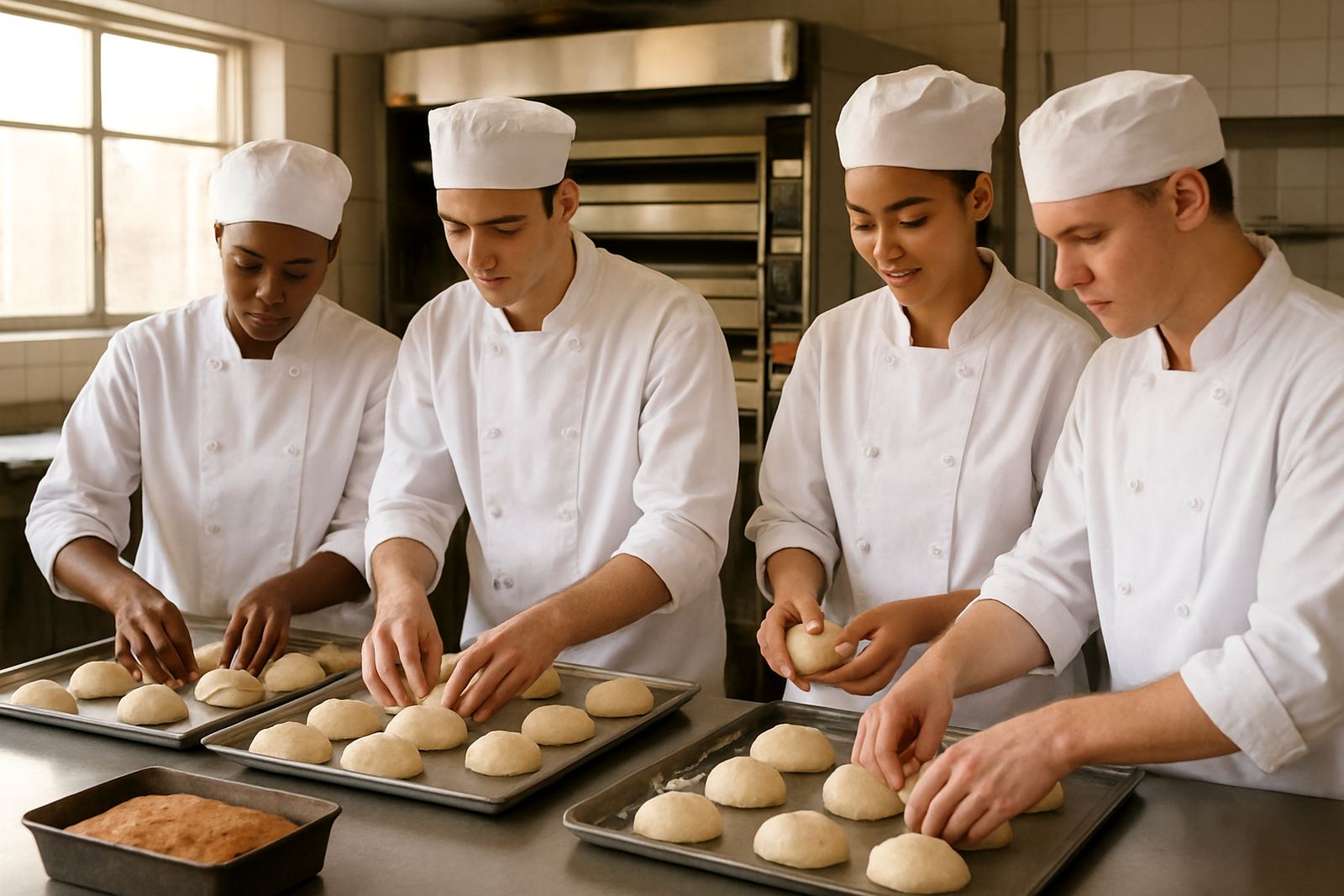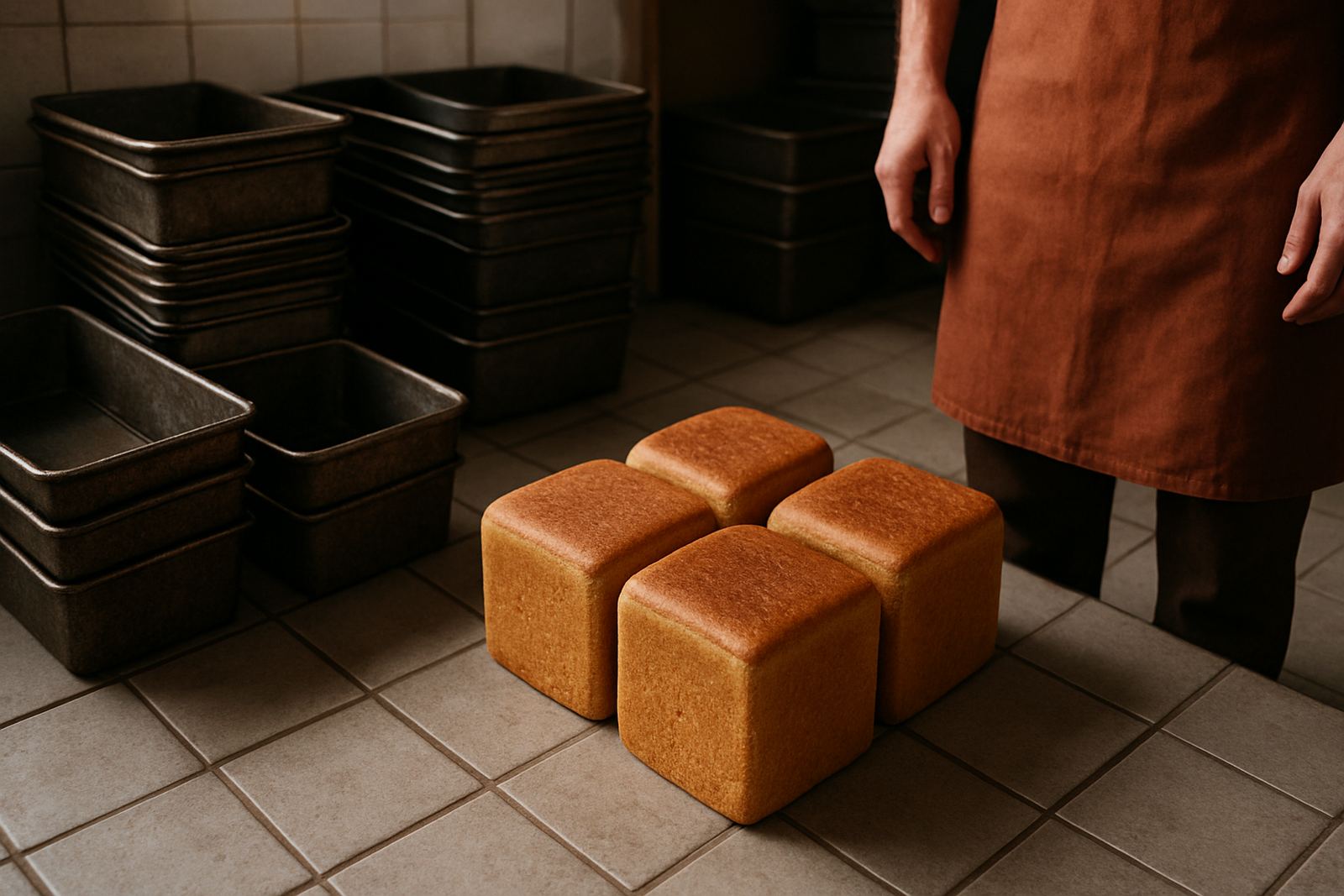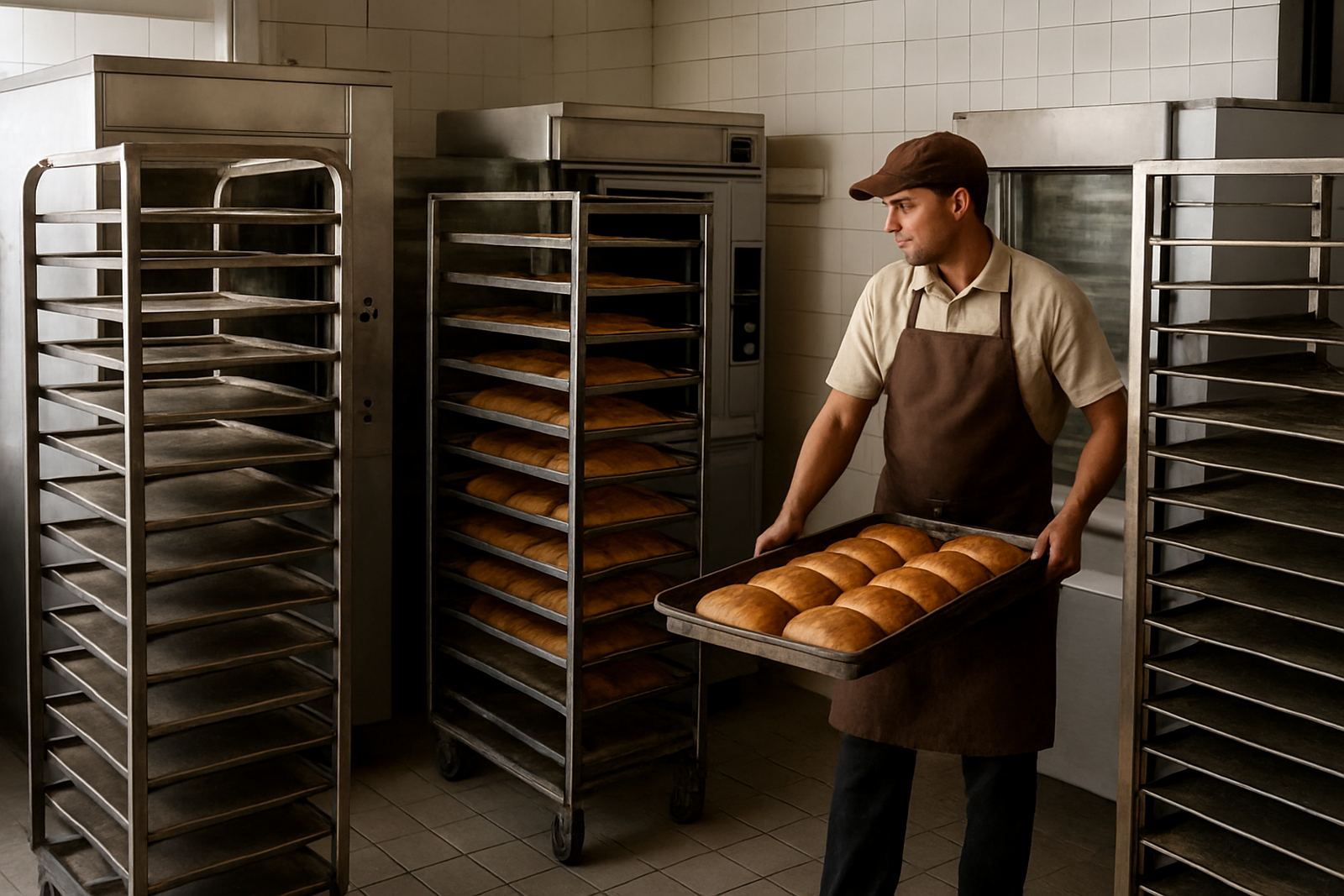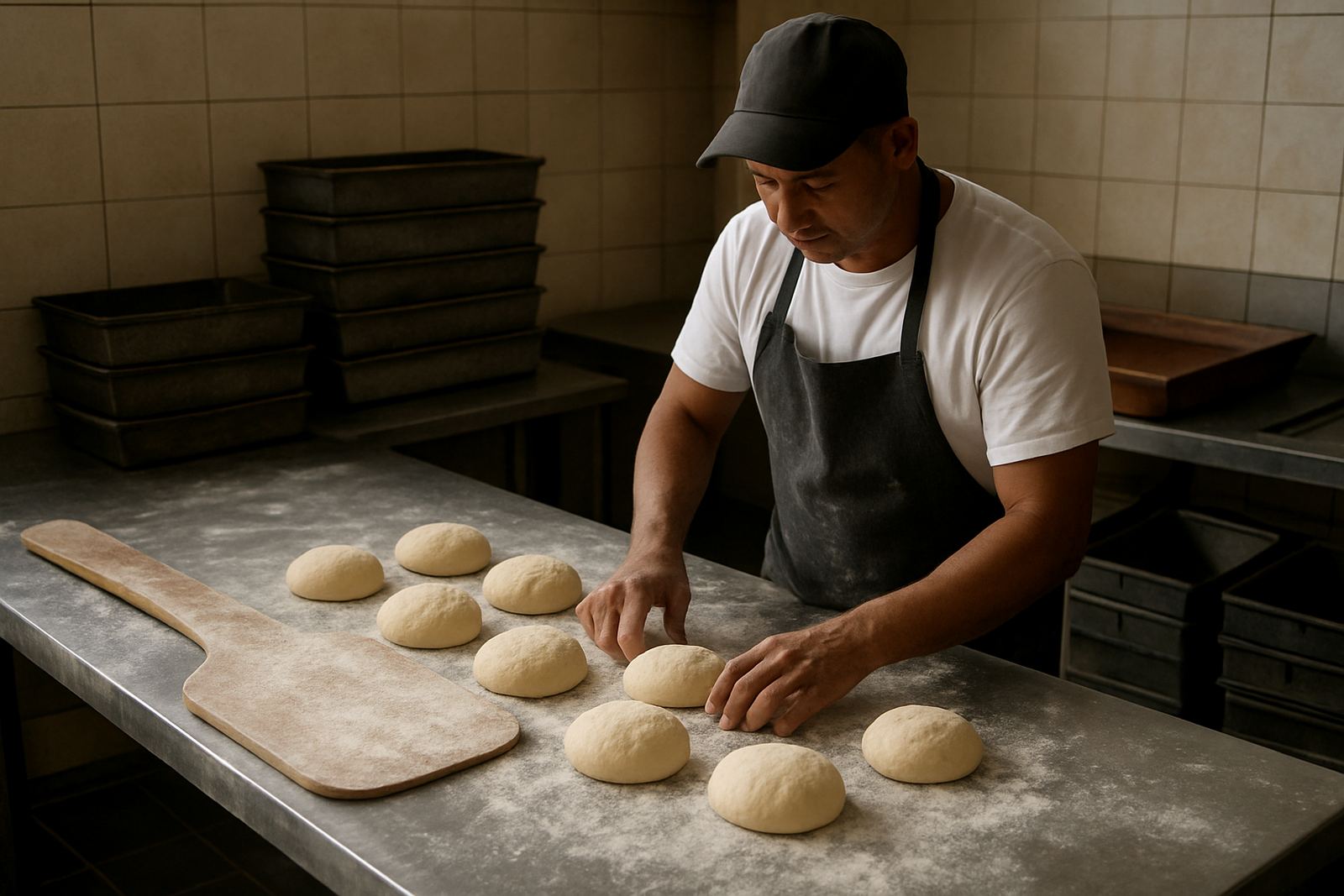
What artisan lines need from the oven floor
Crusted breads and hearth products behave differently from standard loaf production. They need heat from below, steady airflow and trays or floor tiles that do not twist when the oven gets hot. In many plant bakeries, the issue is not the recipe, it is the bakeware giving an uneven base, poor spring or pale bottoms. That shows up quickly when volumes rise, shifts change and the oven is loaded hard.
For this work, we normally look at the oven type, deck size, loading pattern and the product mix before recommending steel floor tiles or tray sets. A well matched floor tile helps with direct heat transfer, while a custom tray gives a cleaner edge and better handling for loaves that are proved in baskets or tins and then turned out. If the line runs through load-shedding, or the oven takes long to recover between bakes, steel selection and thickness matter even more.
Typical equipment set for artisan bread lines
Most artisan lines we support in Durban, Pinetown and across KZN use a mix of floor tiles, open trays and heavier pans for speciality items. The aim is to keep the product family together so the bakery can turn out consistent loaves without changing the whole plant around each time. In smaller hotel bakeries, the same set might also cover rolls, ciabatta, cottage loaves and seasonal breads.
- Steel oven floor tiles for direct hearth baking
- Custom trays for shaped loaves, rolls and batards
- Bread pans for sliced loaves and hybrid artisan breads
- Spare lids where covered proof-to-bake methods are used
- Reworked trays and pans for older lines that still have good frame sets
We also see bakeries using mixed sets where one oven bay carries floor tiles and another carries trays. That can work well if the product plan is clear. It can also become messy if the same rack is used for too many sizes, which slows production and creates wear at the corners and rims.
Layout and planning advice for plant bakeries
Good planning starts with the deck count, the product size and the daily bake cycle. For artisan lines, it helps to group products by heat demand rather than by what happens to fit on the same trolley. A crusted loaf usually needs a hotter base and a cleaner loading pattern than a soft roll. If the oven floor is too crowded, the bottoms darken unevenly and the side colour can go off before the centre is done.
We normally advise clients to measure the usable baking area, not just the outside oven size. Include the lip, the clearance for handling and the space needed for peel boards or loaders. In Westmead and New Germany, some bakeries also need to plan for humidity in summer, because damp storage can affect rusting, finish and handling. A simple storage rack and dry wash-down routine saves a lot of grief.
- Check exact internal deck measurements before ordering
- Allow for expansion when steel heats up
- Keep heavy floor tiles in a fixed loading pattern
- Separate artisan items from standard sandwich loaves where possible
Custom tray and floor tile choices
Bakerite was founded in 1997 and the original steel floor tile that our workshop makes is still used by plant bakeries looking for a hard working base. For artisan lines, we can build around that with trays in practical sizes, made for the bake pattern and the handling system on site. Some clients need deeper sides for wetter doughs, while others want a flatter tray for a cleaner crust and quicker turnover.
We also handle recoating, straightening and repairs on older bakeware where the frame is still sound. That is often the more sensible choice for a hotel or retailer running a few lines, because it keeps the cost lower and avoids replacing every item at once. Our team in Westmead checks rims, corners, welds and lids before a unit goes back into service, so the set works properly and does not catch on rails or trolley guides.
If a bakery is changing from standard pans to hearth-style products, the changeover should be done in stages. Start with one bay or one product group, confirm the bake profile, then add the rest. That gives cleaner results and prevents buying the wrong count of trays. It also helps during maintenance windows when the ovens are down only for a short shift.
Common mistakes that cost time and money
Many problems on artisan lines come from treating every tray as if it were the same. A pan that suits a sliced loaf may be wrong for a crusted batard. Another common fault is buying too many pieces before the bakery has settled the recipe and bake time. Then the stock sits unused while production keeps working around the gap.
- Using trays that are too light for repeated deck heat
- Ordering without checking the oven opening and trolley clearance
- Mixing damaged and straight units in the same line
- Ignoring corner wear until the tray stops stacking properly
- Storing bakeware wet, especially near the coast
For plant bakeries in Durban and coastal KwaZulu-Natal, rust is not a small issue. If pans or tiles are not dried and stacked correctly, surface damage builds up and the finish goes rough. That affects cleaning, release and appearance. It can also lead to more repairs than the bakery planned for, which pushes up downtime and labour use.
Budget ranges for artisan bakeware projects
Budget depends on size, thickness, volume and whether the job is new manufacture or repair. For a small hotel bakery, a starter set of trays and pans may sit in the lower tens of thousands of Rand, especially if some of the existing stock can be repaired. A plant bakery fitting out several decks with steel floor tiles and custom trays will usually be planning in the mid to higher tens of thousands, and often more if the line is large or the sizes are unusual.
As a rough working guide, a single round of straightening, rim repairs or lid repairs can be far cheaper than replacement, while deep cleaning and recoating are useful when the base metal is still serviceable. Fleet assessment helps before you commit to a bigger spend, because it shows which pieces can go back into rotation and which ones are done. That is often the quickest way to control a bakeware budget without affecting output.
We supply from Westmead, Pinetown to bakeries nationally, including plant sites, retailers and hotels that need regular stock or a once-off run. If the line is in Germiston, Pietermaritzburg, Cape Town or inland rural distribution, the same practical rule applies: measure properly, match the product, then buy or repair in the right order.