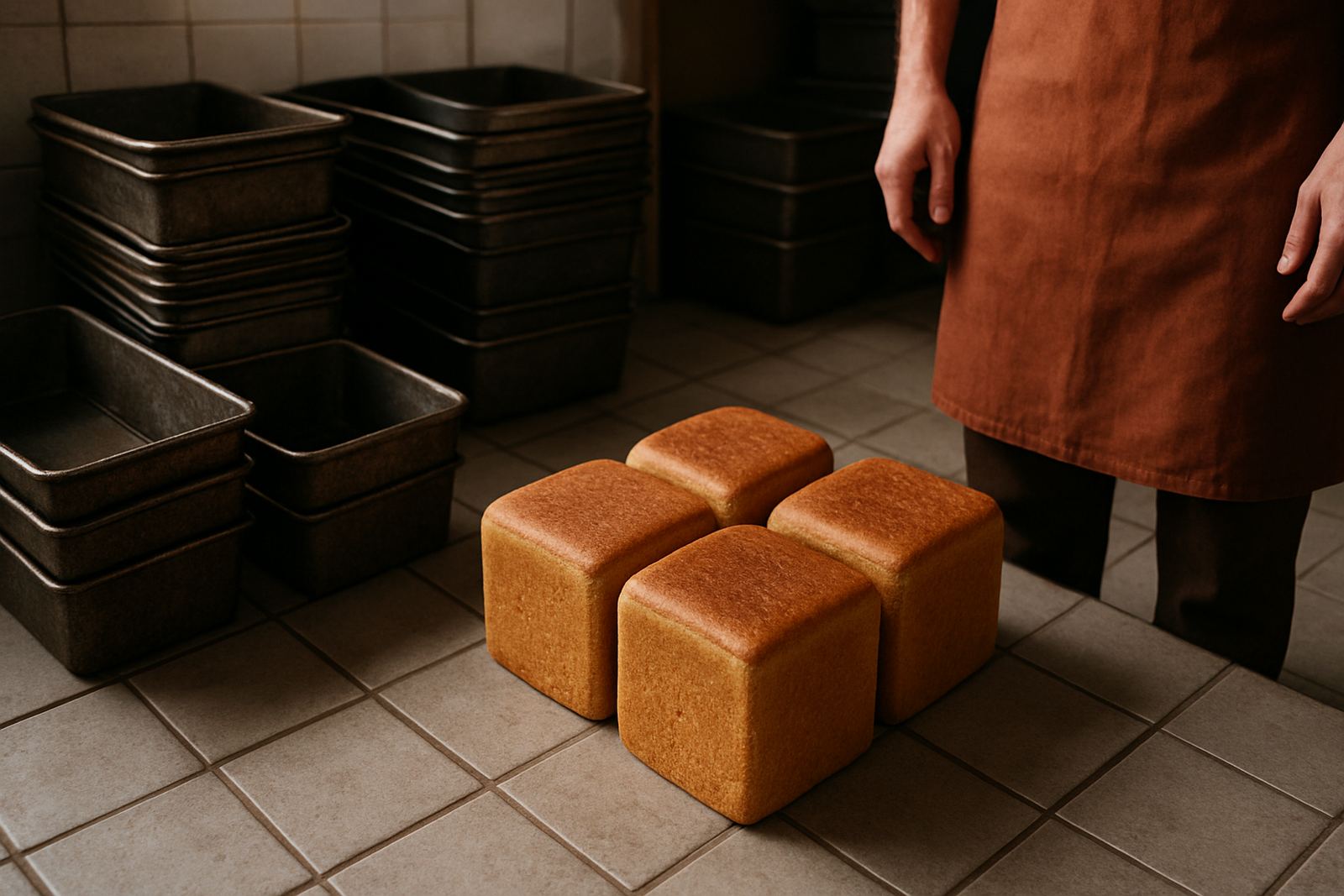
Square loaf production starts with the right pan set
Sandwich bread is usually judged by slice size, crust colour and how well the loaf holds its shape from proof to bake. If the pan is soft, out of square or badly worn, you get bulging sides, uneven browning and loaves that do not stack well for slicing and packing. In plant bakeries that run through load-shedding, heat recovery and stop-start shifts, the pan set has to stay true even when the line does not.
For this use, the usual equipment set is straightforward: steel bread pans, matched trays or carriers, oven floor tiles where the system needs a fixed baking base, and spare lids or covers where the recipe calls for a top constraint. Some clients also need linked handling between proofing, loading and cooling so the same loaf form is kept all the way through. That is where the original pan dimensions matter, because one small change can upset the whole run.
Typical equipment used for sandwich bread lines
Most sandwich bread lines use standard-sized pans that suit square loaves for slicing. The actual set depends on whether the bakery is working with hand loading, semi-automatic handling or a more fixed production layout. Bakerite supplies new pans and trays, and also reworks worn units when the frame is still worth keeping.
- Steel bread pans for square and pullman style loaves
- Custom trays for grouped baking or carrier use
- Oven floor tiles for direct hearth style baking systems
- Spare lids for loaves that need a controlled top profile
- Repair work for rims, corners, welds and bent sides
Where bakeries are close to the coast, like Durban and surrounding areas, humidity can affect storage and cleaning routines. Pans left wet after washdown can pit faster, and once the finish goes the bread starts sticking. In inland plants the issue is often dust and rough handling. The answer is usually the same, decent wash routines, dry storage and regular checks before the tin starts to fail.
Planning the pan layout so the line keeps moving
A sandwich bread system should be planned from the oven backwards. First check the bake size, then the oven deck or floor tile layout, then the handling path between proof room, loader and cooling racks. If the pan size is wrong for the oven zone, you lose space and the shift rate drops. If the trays are too heavy, staff slow down and accidents become more likely.
In Westmead, Pinetown and the greater Durban industrial area, many bakeries run in older buildings with tight doors, uneven floors and not much spare room. That means the layout must allow for trolley turning, hot pan movement and cleaning access. It is not enough to have the right pan, it has to fit the real building.
- Measure internal pan size and external carriage size before ordering
- Allow clearance for gloves, lifted lids and heat movement
- Check whether the oven needs floor tiles or direct trays
- Keep enough spares for cleaning, recoating and breakdowns
Common mistakes that hurt loaf quality and pan life
One of the biggest mistakes is mixing worn pans with new ones in the same batch. The old pans heat differently and the loaves come out with uneven colour or shape. Another common issue is forcing a pan that was bent on a trolley back into service without straightening it first. It might still work for a day or two, but the corners often crack later and the pan fails at the worst time.
Another problem is poor cleaning. Heavy scrape marks, caustic residue and uneven oiling shorten the life of the bakeware. Some bakeries also keep running pans after the rim has opened or a weld has started to fail. That can cause leaks, product waste and line stoppages. Small damage turns into bigger damage quickly if it is ignored, so a check every shift or two is worth the time.
Recoat, repair or replace: how to decide
Not every pan needs replacing. If the base metal is sound, recoat and repair work can buy a lot more life. Bakerite handles pan recoating, tray recoating, pan straightening, corner repairs, rim repairs, lid repairs, weld repairs and deep cleaning. That is useful when the shape is still correct but the surface has worn away or the edges have taken a knock.
As a rough guide, small repair jobs can start from about R180 to R450 per unit depending on the damage. Recoating and deeper restoration can run from about R320 to R780 per unit. New custom sandwich bread pans or tray sets are usually quoted from around R650 to R2 400 each, with larger or special-form units priced to drawing. For plant bakeries buying in volume, the total project often sits between R18 000 and R180 000 depending on the line size.
- Repair is best when the frame is still square and thick enough
- Replace when the metal is thin, cracked or badly warped
- Recoat when the surface is worn but the form is still correct
- Ask for a fleet assessment if multiple pans are already failing
Working with a local maker in Westmead, Pinetown
Bakerite has been making industrial bakeware since 1997 and is based in Westmead, Pinetown. That matters because plant bakeries need fast communication, practical measurements and clear turnaround times. If you are in KwaZulu-Natal, or anywhere nationally, you can send through pan sizes, photos and damage notes and get straight answers on what can be saved and what should be remade.
The team includes Sibusiso Ntuli, Priscilla Naidoo, Themba Zulu, Ayesha Khan, Johan van Rensburg and Lerato Mokoena. For sandwich bread projects, the usual starting point is a fleet assessment, then a plan for repairs, recoating or new manufacture. Many clients prefer to stage the work so the line keeps running while spare pans are introduced.
From hotel bakeries to retailer supply lines, the goal is the same, consistent sandwich bread that cuts cleanly and packs well. If your current pans are sticking, losing shape or slowing the line, it is usually cheaper to sort the bakeware now than lose product for months.