When bun output starts pushing the tray room
If your bakery is running repeated bun batches through the day, the tray room becomes part of production not storage. The wrong tray size slows loading, causes uneven browning and creates cleaning delays that show up at shift change. In Westmead and across KZN we often see bun lines where the oven is fine but the tray format is holding everything back.
For bun work you need repeatable spacing, straight edges and a tray that stays flat after heat cycling. That matters on long runs, especially where power dips, ovens are being opened often and the team is trying to keep one batch moving while the next is proofing.
- Standard bun trays for regular production runs
- Heavy-duty steel trays for daily oven cycling
- Custom tray layouts for fixed bun counts per pan
- Options that suit tunnel ovens, rack ovens and deck ovens
Tray formats that suit repetitive bun production
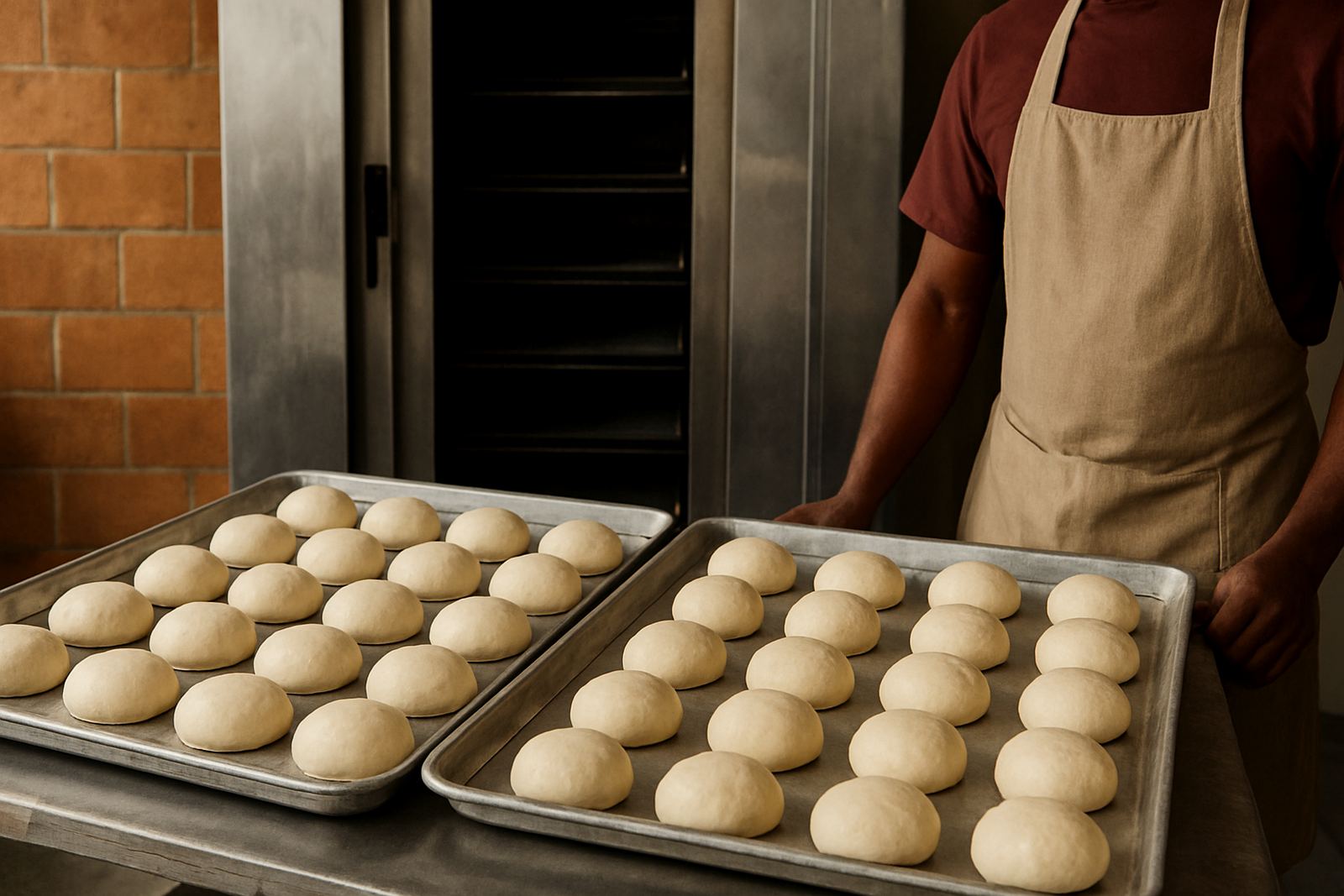
Bun lines work best when the tray format matches the recipe count and the oven pattern. A tray that is too wide leaves dead space on the rack. One that is too tight can trap steam and give patchy colour. Our steel trays are used for plain buns, filled buns and mixed bun sets where the bake needs to look the same from the first tray to the last.
Most bakeries choose a fixed format so staff can load by routine, not by guesswork. That helps when you are working early mornings, with new staff or split shifts. It also helps in high-humidity coastal areas where dough behaviour changes quicker than expected.
- Even spacing for airflow around each bun
- Consistent lip height for easy handling with gloves
- Flat base for reliable oven contact
- Tray sizes that stack properly on trolleys and in cool rooms
We can supply standard bun trays or make trays to suit your present oven racks and trolley width. If the line is already set up, we usually work to that footprint rather than forcing a new layout.
Planning the line around ovens, proofing and trolley movement
Good bun production is not only about the tray itself. You need the tray size to fit the proofing room, the oven mouth, the cooling area and the route back to packing. In a lot of South African sites, the trays are carried too far between stages and that adds handling damage and labour cost.
We normally look at the whole flow: dough division, tray loading, proofing, bake, cooling and return. If the tray is too heavy for the team to turn quickly, the line slows. If the tray is too light, it can buckle after months of heat and wash cycles.
- Measure rack spacing before ordering new trays
- Check oven entry height and door clearance
- Allow for trolleys, corners and narrow passages
- Keep a spare tray count for cleaning breaks and peak orders
For plant bakeries in Durban, Pinetown and inland sites running longer shifts, we also factor in cleaning and storage. A tray that stacks badly will always cause trouble later, especially when the line is busy and the depot wants every order out before midday.
Common mistakes on bun lines that cost money
The biggest problem we see is buying trays by price only. A cheaper tray may look fine at first, then warp at the corners or lose its edge after a few months. That creates sticking, uneven contact and trays that no longer sit properly on the rack. Once that starts, the oven crew spends more time sorting than baking.
Another common issue is ignoring maintenance. Bent trays, damaged rims and worn lids on related bakery equipment can lead to poor handling and unsafe stacking. Our repair service can help keep usable trays in circulation, which is often better than replacing everything at once.
- Warped trays that rock on the rack
- Wrong tray depth for the product size
- Poor airflow because the rows are packed too tightly
- No spare trays for washing or emergency breakdowns
If trays are already in service, we can assess them for straightening, corner repairs, rim repairs, weld repairs and deep cleaning. That is useful where the line is sound but the bakeware has started to show age.
Budget ranges for bun trays and related bakeware
Budgets depend on steel thickness, tray size, quantity and whether you need standard or custom work. For a small or medium bun line, businesses often start with a controlled order and add stock as output grows. That is common with hotels, retailers and plant bakeries that are testing a new product mix.
As a rough guide, plan for entry-level standard trays from a few hundred Rand each, with heavier custom trays costing more depending on dimensions and finish. Refurbishment is usually a lower-cost route when the tray body is still serviceable. Recoating, straightening and repairs can extend working life without a full replacement cycle.
- Standard replacement trays for regular bun output
- Custom tray sets for fixed product counts
- Repair and recoating for serviceable existing trays
- Spare lids where production needs covered handling
We quote to the actual site, the tray count and the work needed. That is the fairest way to budget when load-shedding, delivery timing and seasonal demand can change a bakery plan in one week.
Why Westmead bakeries keep the tray room local
Bakerite has been making industrial bakeware from Hillclimb Rd in Westmead, Pinetown since 1997, and bun line orders are a regular part of what we do. For plant bakeries and food operations, a local base matters when you need a quick size check, a repair assessment or a repeat order without long delays.
Our team works with Sibusiso Ntuli as Managing Director, together with Priscilla Naidoo, Themba Zulu, Ayesha Khan, Johan van Rensburg and Lerato Mokoena. That means production, service and sales are handled by people who know the bakeware side of bakery operations, not just the paperwork.
We supply nationally from Westmead, with regular demand from Durban, New Germany, the Upper Highway area and wider KwaZulu-Natal. If your bun line needs a better tray format, or your current trays need help to stay in use, we can talk through the job properly and give you a workable plan.