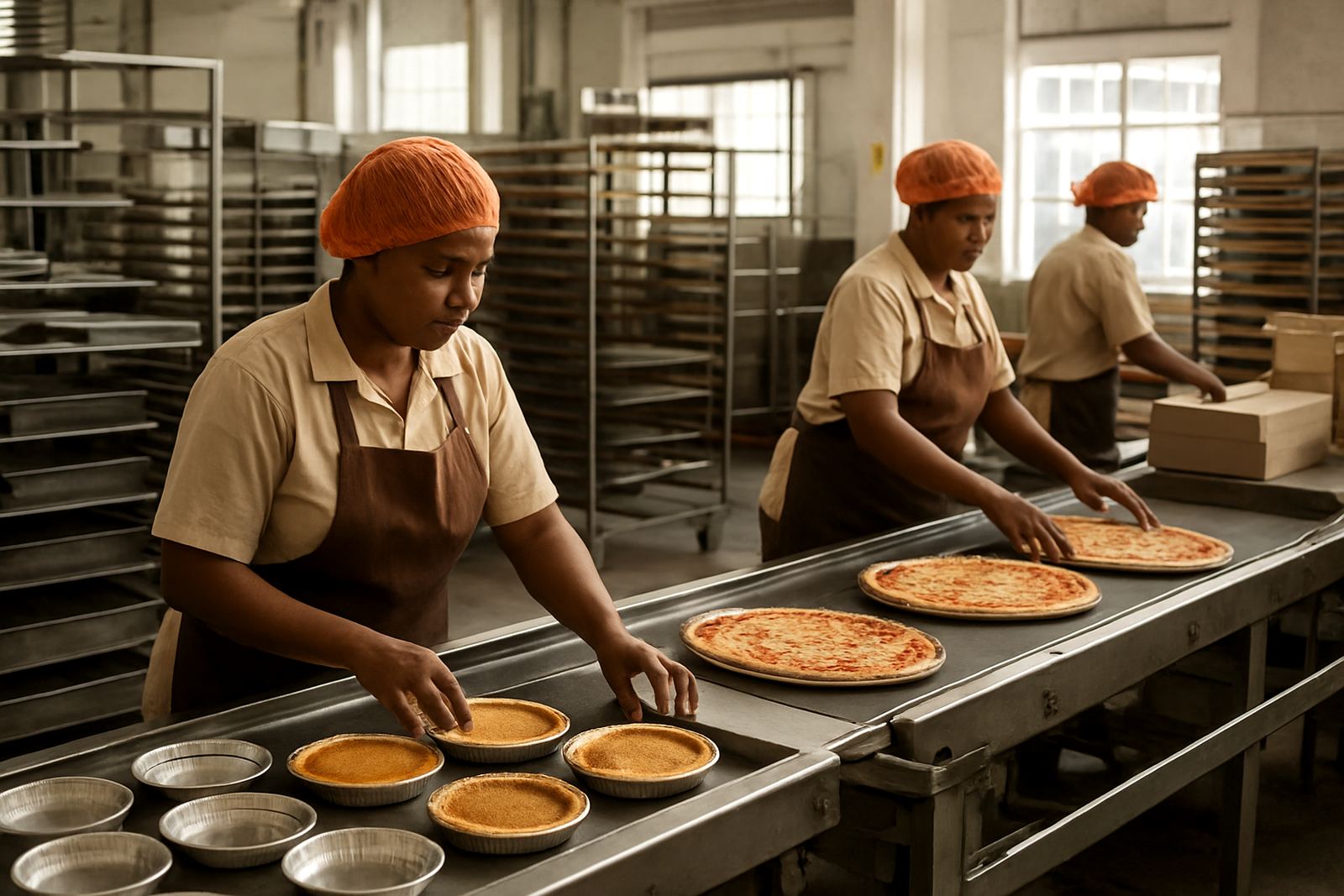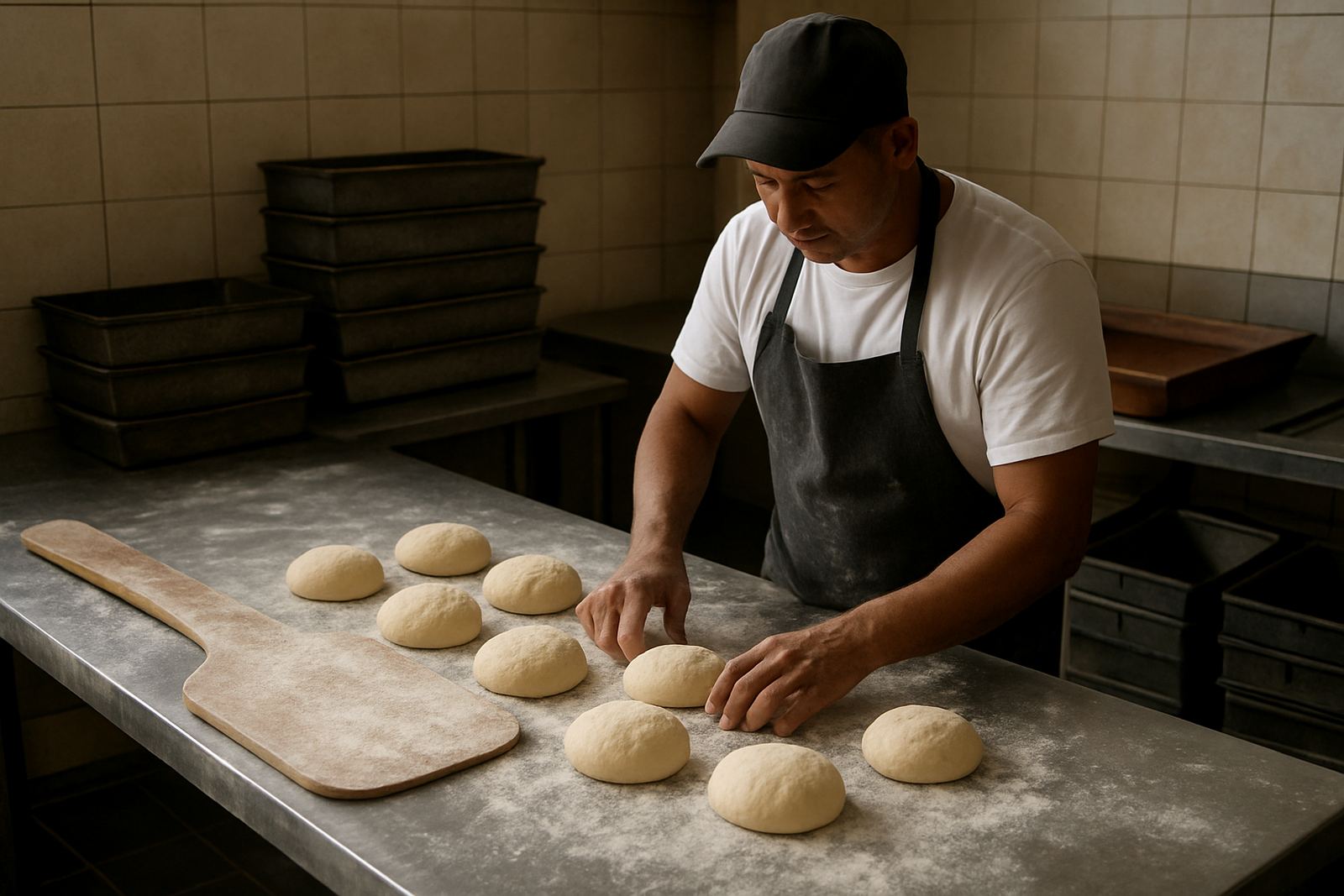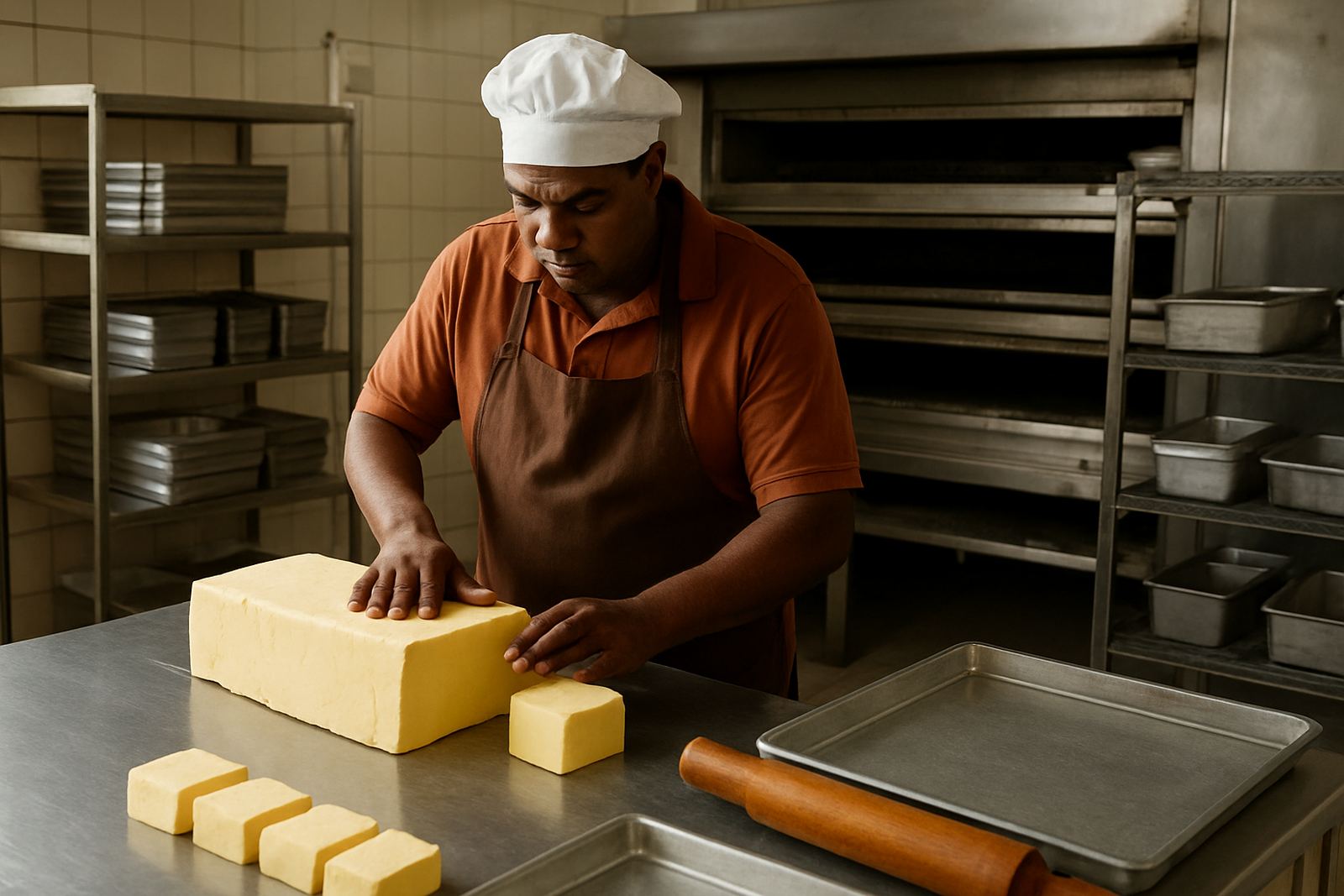
What a pastry section needs on a busy production floor
A pastry section is usually built around speed, repeatable sizing and clean release. That means flat trays for sheeted products, cavity pans for slices and individual portions, and enough spare sets to keep the line moving during washdowns or changeovers. In a plant bakery, the pastry area often shares ovens and trolleys with bread or savoury lines, so the bakeware has to handle mixed shifts, high turnover and a fair amount of handling.
For lamination work, the tray and pan profile matters as much as the dough. If the base flexes too much, corners lift and product spread becomes a problem. If the pan is too heavy, staff slow down on loading and unloading. The right set sits in the middle, with enough strength for daily use and enough consistency to keep pastries, slices and bars the same from rack to rack.
We work with plant bakeries, retailers and hotels that need practical bakeware for croissants, fruit slices, savoury pastry, brownies, Swiss rolls and similar products. The need is simple: clean edges, even browning and pans that can be recoated or repaired instead of thrown away after one hard season.
Typical bakeware set for pastries and slices
A good pastry section usually includes a mix of flat and formed items. Most sites will need standard flat trays for open bakes, deeper rims for products with more spread, and cavity pans where portion control is important. Hotels often ask for smaller batch trays for breakfast service, while plant bakeries need larger volumes and tighter stack handling for trolley work.
We can supply new steel trays and custom trays made to suit your oven, trolley and packing flow. Where trays are already in service, we also offer tray recoating, pan recoating, pan straightening, corner repairs, rim repairs, lid repairs, weld repairs, fleet assessment and deep cleaning. That helps extend the life of older equipment, especially where humidity, detergents and constant washing have started to mark the metal.
- Flat pastry trays for sheets, bars and sliced products
- Mini loaf and cavity pans for portioned items
- Custom tray sizes for tunnel ovens, rack ovens and proofing flow
- Spare lids where covered proofing or storage is part of the process
Layout and planning tips for pastry lines
Before ordering trays, measure the oven deck, rack spacing, trolley width and the packing table area. It sounds basic, but many pastry sections lose time because the tray size was copied from another site and not matched to the actual equipment. If a tray is 10 mm too wide, staff force it in and damage the rim. If it is too small, you lose loading efficiency and heat flow changes from side to side.
Plan the section around the full movement of the product. Raw trays need a clean handover from make-up to oven, then from oven to cooling and packing. If the route crosses wash areas or service doors, add more trays so the team is not waiting for the next clean set. In some bakeries the oven runs all day while the pastry team works in shorter windows, so the tray count should cover peak production plus one full wash cycle.
- Allow space for cooling racks and transfer trolleys, not only the oven footprint
- Keep tray sizes standard where possible to reduce handling mistakes
- Use heavier gauge steel where loading is rough or product weight is high
- Check that trays fit proofers, chillers and storage shelves as well as ovens
Common mistakes that cause waste and uneven baking
The first mistake is using the wrong tray depth for the product. Shallow trays are fine for slices and flat pastry, but they do not control spread on softer mixes. The second mistake is letting worn trays stay in service too long. Once the base starts to bow or the rim twists, baking becomes inconsistent and the product can come out pale on one side and overdone on the other.
Another issue is poor cleaning practice. Heavy scraping, harsh chemicals and stacking wet trays together all shorten life. On some sites the damage comes from forklifts or careless trolley loading, which bends the corners and cracks old welds. A tray that looks small damaged can still be costly because it wastes oven space every single shift.
- Do not mix worn and new trays in the same batch if uniformity matters
- Do not ignore minor rim damage, it spreads fast under heat
- Do not store trays wet, especially near the coast
- Do not overspecify tray thickness if staff must lift them by hand all day
Reconditioning older pastry trays and pans
Not every pastry section needs a full replacement. Many plants keep production moving by recoating pans, straightening twisted trays and repairing corners, rims or welds. That is especially useful where the oven set is still sound but the surface has started to stick, flake or corrode. Reconditioning also helps if you need to keep the same tray profile for product consistency but do not want the cost of a full new order right away.
For bakeries with long-running product lines, this is often the best way to stretch budget without changing the process. It also helps with spare stock. If you keep a few refurbished trays as backup, a breakdown or late wash return does not stop the shift.
- Recoat worn trays to improve release and reduce cleaning time
- Straighten bent pans before heat damage gets worse
- Repair damaged corners and rims to restore stack fit
- Keep spare lids and spare sets ready for peak production weeks
Budget ranges for pastry trays, pans and repairs
Budgets depend on size, steel gauge, quantity and whether the order is standard or custom. As a broad guide, small replacement items may start in the low hundreds of Rand per unit, while heavier custom trays, formed pans and matched sets can move into the higher hundreds or low thousands per item. Large bakery orders, especially with specific dimensions and batch counts, are usually quoted per set after checking the layout.
Repair work is often cheaper than replacement, but not always by much if the item needs several interventions. A quick recoating job is normally the lowest cost route, while straightening, weld work and corner repairs add to the total. The right option depends on how many more production cycles you need from the equipment and how critical the tray shape is to the product.
For sites in Durban, Westmead, Pinetown and surrounding industrial areas, we can review the current fleet and split the spend between repair and new supply. That way the pastry section gets what it needs without tying up the full budget in one go. It is a practical approach, especially when electricity interruptions, maintenance shutdowns or seasonal demand already put pressure on cash flow.