What wholesale bakeries need from bakeware
If you are baking for more than one shop, a hotel group, a supermarket depot or a delivery route, the bakeware has to do more than survive one good shift. It must stack well, clean fast, release product properly and keep size consistency from one batch to the next.
Our Westmead base has spent years making and repairing industrial bakeware for plant bakeries, and that is where the detail matters. A pan that is 3 mm out at the rim or a tray that sits twisted can slow down loading, affect proofing and leave one oven bay working harder than the next. On a wet Durban morning or in a warm inland plant, that sort of drift shows up quickly.
For wholesale work, the client is usually balancing volume, route timing and food quality. That means choosing equipment that suits your loaf size, bake cycle and handling system, not just the oven opening on paper.
Typical equipment set for multi-outlet supply
A wholesale bakery often runs a mix of standard and special items. The right set will depend on whether you are sending out sliced sandwich loaves, dinner rolls, specialty bread, burger buns or pre-baked stock for finishing on site.
- Steel oven floor tiles for even heat transfer in deck ovens and plant lines
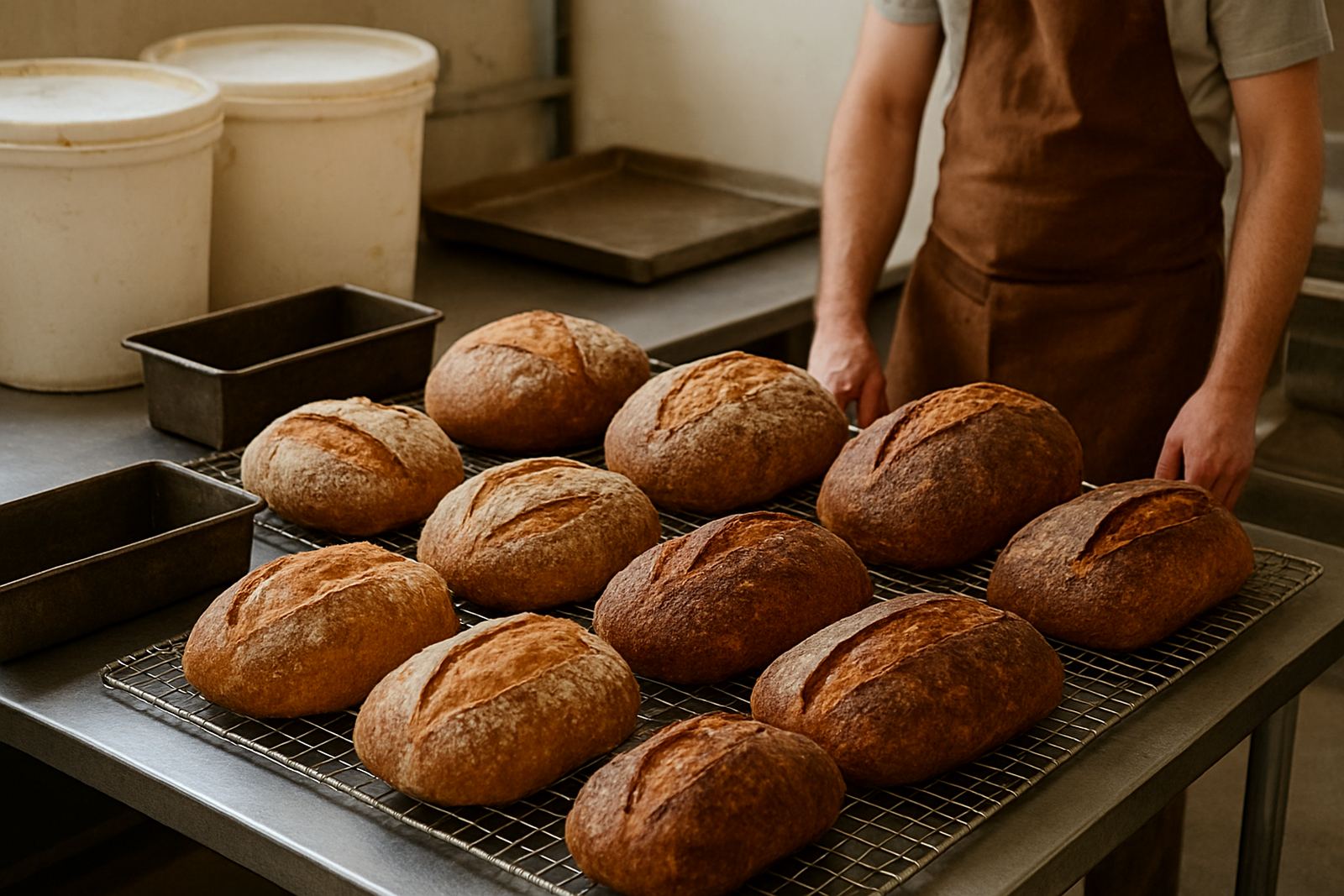
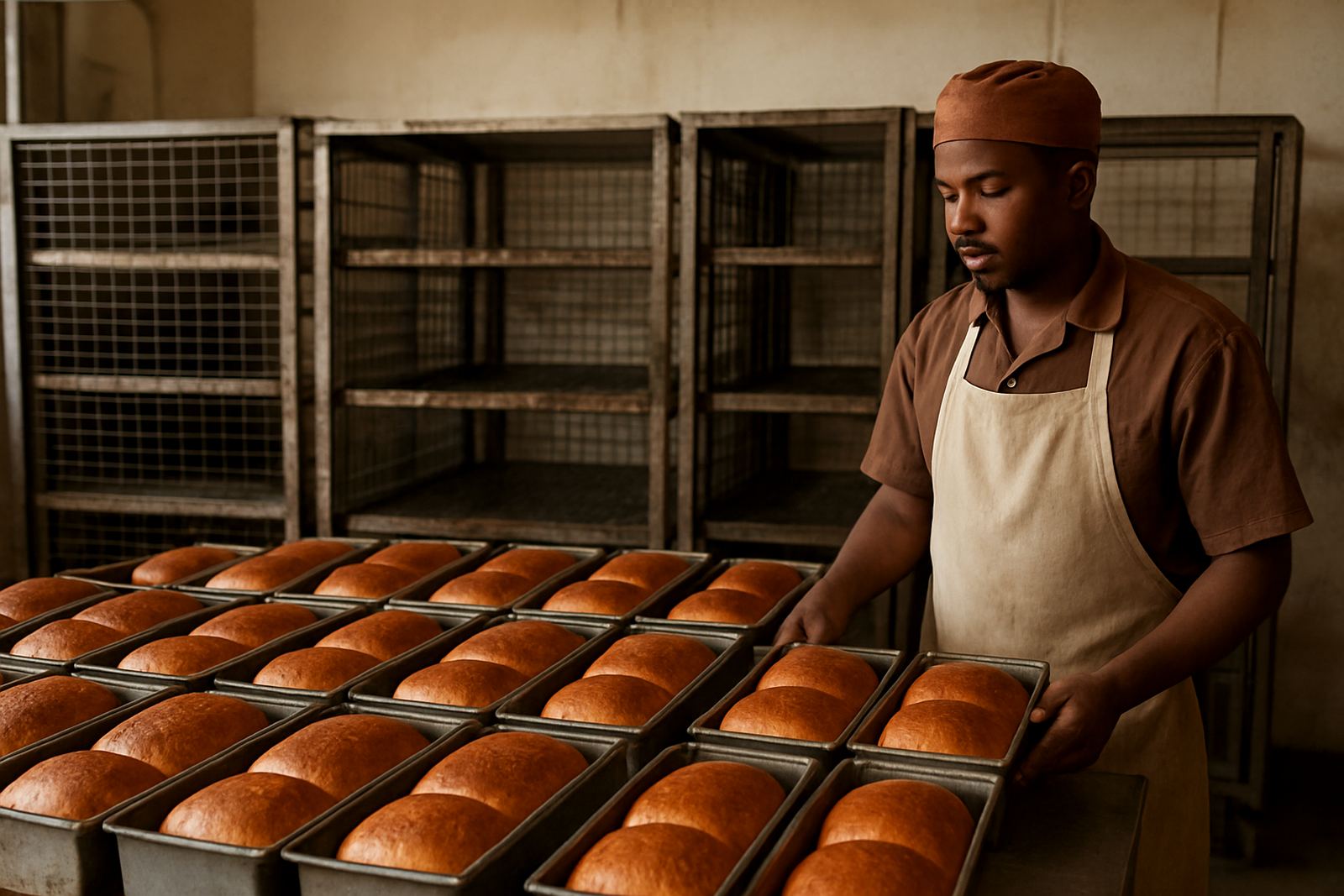
- Bread pans in matched sizes for standard loaves, pan loaves and pullman style loaves
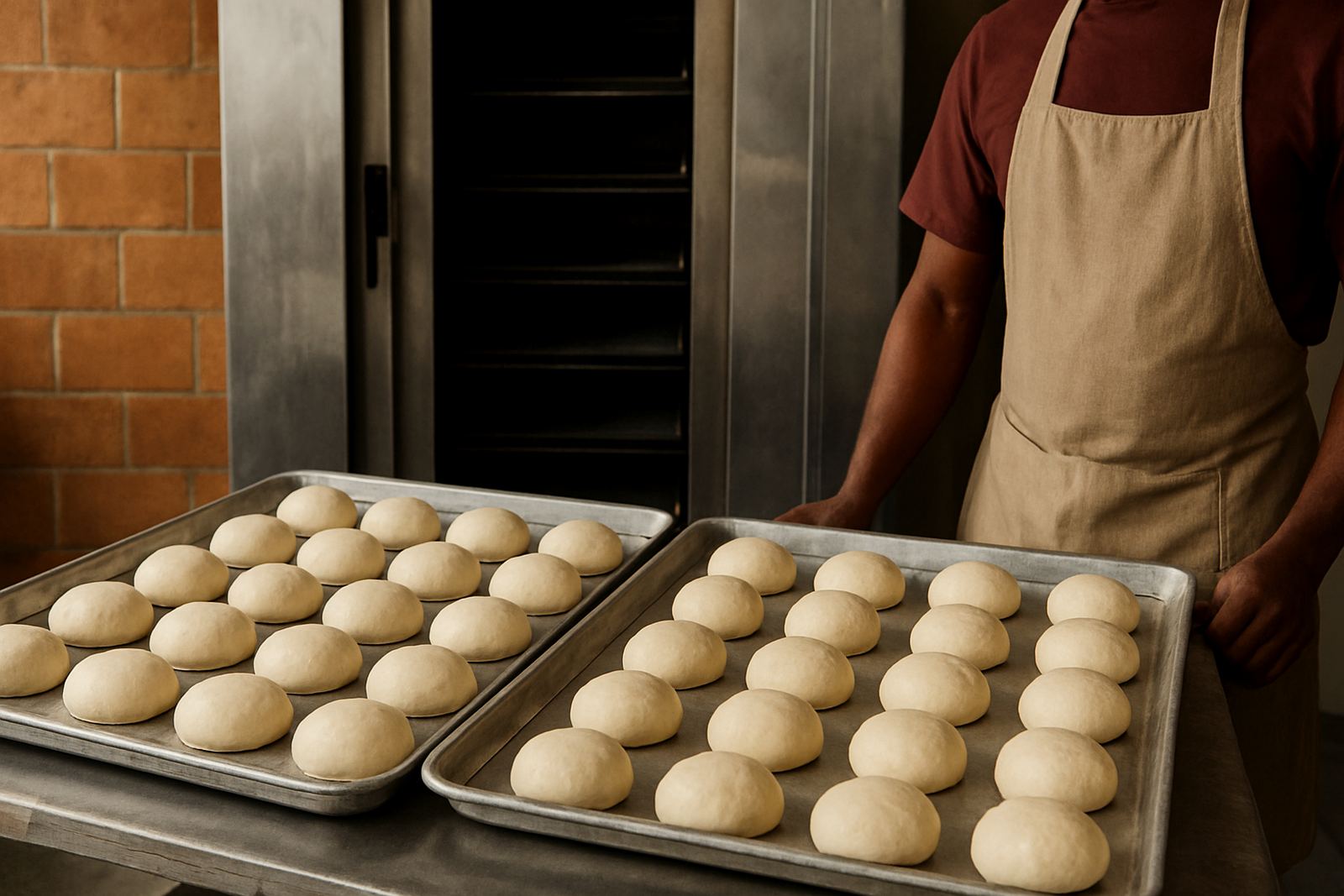
- Custom trays for rolls, buns, trays for proofed dough, and product staging
- Spare lids for products that need a tighter top finish or controlled rise
- Repaired pans and trays for older lines that still have years left in them
We also see bakeries that need a blend of new and serviced items. That is common when a plant is expanding slowly and cannot replace every pan at once. A sensible mix can keep production moving while you phase in new stock.
Layout and planning for busy production lines
A wholesale bakery layout should make the bakeware path simple. Dough comes in, pans and trays move to filling, then to proofing, baking, cooling and dispatch. If pans are too heavy, damaged or not standardised, staff waste time sorting instead of baking.
It helps to plan around handling points. Check whether your team lifts by hand, uses trolleys, or works with conveyor loading. Also check the space for stacking, because badly stacked trays can warp in hot rooms or near wash areas. In coastal areas, moisture can sit on steel overnight and start light surface rust if storage is poor.
- Keep sizes standard so staff do not mix batches by mistake
- Allow enough room for cooling and return flow from delivery routes
- Store spare pans in a dry area away from washdown spray
- Match tray weight to the team that will handle it all day
For plant bakeries supplying across KwaZulu-Natal, Gauteng or the Western Cape, planning also needs to account for transport vibration. Bent corners and weak welds get worse on the road. That is why a pre-delivery check on every tray set is worth doing.
Common mistakes we see in wholesale bakeries
The biggest mistake is keeping damaged bakeware in service for too long. Once a pan starts twisting, or the rim opens up, the product starts baking unevenly and the defect becomes part of daily production. Another common issue is buying mixed sizes from different suppliers and hoping they will all behave the same. They wont.
Some bakeries also overlook the effect of cleaning methods. Strong chemical washdowns, rough scraping and repeated impact on trolleys can shorten the life of the equipment. If you are near the coast, storage and drying matter even more because humidity makes light corrosion come back fast.
We also find teams postponing repairs until the damage is too far gone. A small corner repair or weld repair is usually cheaper than replacing a whole set. If the base metal is still sound, recoating and straightening can give it another useful run.
Budget ranges for wholesale bakery setups
Budget depends on size, material thickness, quantity and whether you are ordering standard items or custom work. A small wholesale section replacing a few pans and trays might spend from R8 000 to R25 000. A medium plant fitting out several production lines can move into the R35 000 to R120 000 range.
Larger bakeries with multiple ovens, route supply and backup stock often budget from R150 000 upwards, especially when they need a mix of new bakeware and repair work. It is usually better to set a yearly replacement and maintenance amount than to wait for a full breakdown.
We can also help with fleet assessment, so you know which pans are worth recoating, which trays need corner repairs, and which ones should be replaced. That sort of sorting can save money without lowering output.
How Bakerite supports wholesale bakeries
Bakerite, based in Westmead, Pinetown, has been making industrial bakeware since 1997 and continues the original steel floor tile work associated with the Bakerite name. We supply bakeries nationally from our KZN base, including plant bakeries, retailers and hotels that need steady repeat supply.
Our team includes Sibusiso Ntuli, Priscilla Naidoo, Themba Zulu, Ayesha Khan, Johan van Rensburg and Lerato Mokoena, and the work ranges from new manufacture to servicing older sets. If your operation needs pan recoating, tray recoating, pan straightening, rim repairs, lid repairs, weld repairs, deep cleaning or spare lids, we can handle it from one place.
- Westmead Supply
- Pinetown Supply
- Durban Supply
- New Germany Supply
- Upper Highway Supply
- KwaZulu-Natal Supply
If you need a quote for wholesale bakery bakeware, send the sizes, quantities and a few photos of the existing pieces to sales@bakerite.co.za. That gives us a clear starting point and helps us advise whether repair or replacement makes more sense.