Rusk trays built for repeat heat and careful handling
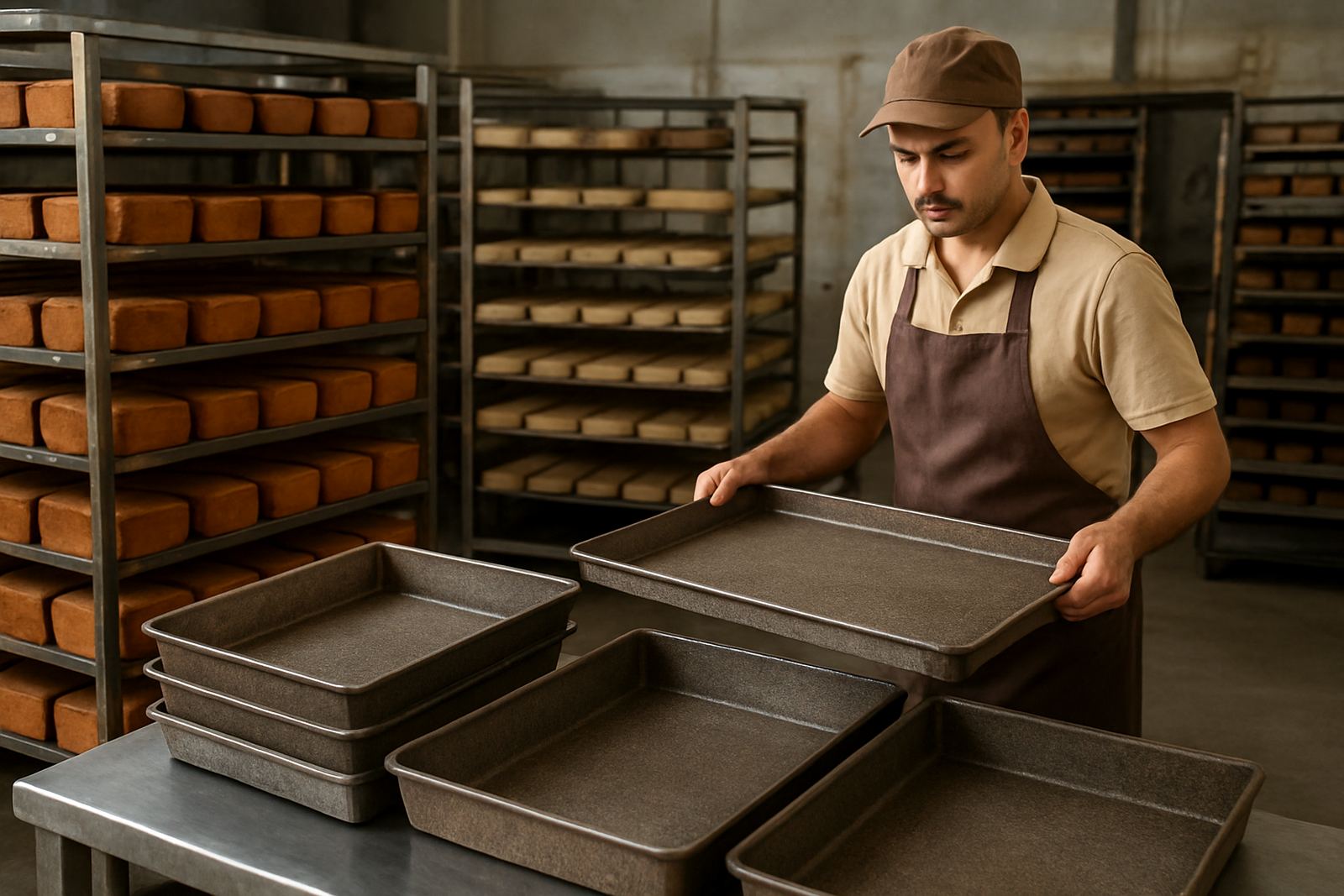
Rusk trays are used after the first bake, when sliced loaf pieces or cut product must be returned to the oven for a second dry cycle. That means the tray has to stay flat, hold its shape and move through heat changes without twisting. Bakerite makes steel rusk trays for this kind of work, with enough strength for busy bakery lines and enough consistency for trays to stack and swap without trouble.
These trays are common in industrial bakeries, wholesale bakeries, hotel kitchens and mixed production sites that handle breakfast rusks, wheat rusks or flavoured rusk lines. In practice, the tray must do three jobs well: carry the product cleanly, allow air movement for drying, and fit the oven system properly. If the tray is too light it can buckle, if it is too deep or uneven it can slow airflow and give patchy drying.
Sizes, build options and tray features
We make rusk trays to suit the oven, rack or trolley already in use. Standard tray sizes are commonly matched to bakery rack systems, but custom sizes are available where a plant has older equipment or non-standard ovens. The tray can be made with the edge depth, corner detail and stiffening required for repeated use. For sites in humid coastal areas such as Durban and the South Coast, a properly finished steel tray helps keep the surface easier to clean and maintain.
Typical build options include perforated or solid tray bases, folded rims for grip, and reinforced corners for longer service life. Some bakeries need trays that can be stacked tightly for storage, while others want a deeper side profile for better handling with oven gloves. We also make custom tray sets for new product trials, small-batch lines and replacement runs when a site needs to keep an old format going. The main thing is matching the tray to the process, not forcing the process to fit the tray.
- Custom lengths, widths and rim depths available
- Single-piece or batch tray sets for line production
- Options for perforation, stiffening and reinforced corners
- Suitable for slicing, rebaking and drying stages
Where rusk trays suit best
Rusk trays are best where production is steady and product appearance matters. Plant bakeries use them for larger batch runs, especially where sliced product is loaded onto racks and sent back into the oven for controlled drying. Retail bakeries use them when they pack their own rusk lines on site. Hotels and catering kitchens use smaller sets for breakfast production, staff meals and guest service items that must be made ahead and kept dry.
They also suit sites that manage load-shedding with gas assisted or diesel back-up ovens, because the tray itself must tolerate regular shifts in temperature and handling. In coastal conditions, where moisture can creep into storage areas and washing-up spaces, a tray that is easy to inspect and recoat helps keep production moving. For inland plants in places like Gauteng or the Free State, the same tray needs to hold up under long runs, repeated cooling and fast turnaround between batches.
- Plant bakeries and wholesale production
- Retail bakery back-of-house lines
- Hotels, caterers and institutional kitchens
- Product trials and short-run seasonal batches
Installation, oven fit and utility checks
Rusk trays do not need power or gas of their own, but they do need to suit the oven system they are going into. Before ordering, check the internal oven width and depth, rack spacing, trolley clearances and loading method. If the trays are for a tunnel oven, rack oven or a deck oven with tray loading, the tray size must match the handling route and the available heat zone. A tray that is too wide by even a few millimetres can cause delay at the loading point, and that slows the whole line.
We also recommend checking whether the site uses manual loading, trolley transfer or mechanical handling. If the product is still warm when sliced, the tray should be stable enough to avoid flexing when it is loaded by hand. For operations running around the clock, it helps to order a small spare batch so a cracked or bent tray does not stop production. Keep an eye on local municipal fire and hygiene requirements too, especially where trays are washed on site and stored close to prep areas.
- Measure oven clearances before ordering
- Confirm rack, trolley or shelf spacing
- Allow for operator gloves and loading tools
- Keep a spare batch for plant continuity
Care, cleaning and recoating for longer tray life
Rusk trays last longer when they are cleaned soon after use and stored flat. Do not leave baked-on crumbs or sugar residue on the tray for days, because that makes cleaning harder and can affect the next batch. A deep clean is worth doing on trays that are in heavy rotation, especially where oil or syrup from the product is building up. If a tray starts to twist, the team should check it early rather than letting it run bent for months.
Bakerite offers pan recoating, tray recoating, straightening, corner repairs, rim repairs, lid repairs and weld repairs for bakeware that has reached the maintenance stage but is still worth saving. This is useful for businesses trying to control costs and keep proven tray sizes in use. A well-maintained tray can often stay in circulation much longer than a rushed replacement, and that matters when a production line is already tuned to one specific fit. Regular fleet assessment also helps identify trays that are no longer worth repairing.
What to check before you place an order
When ordering rusk trays, it helps to give exact information from the start. That avoids delays and reduces the chance of a tray being made too tight or too loose for the process. If you have an older tray, send clear measurements and photos of the rim, base and corners. If you are replacing a whole batch, note how many trays are in service, how they are stacked and what product they carry. A small detail like the side height or lip form can make a big difference in day-to-day handling.
Check the following before sending your enquiry:
- Overall tray length, width and edge depth
- Solid or perforated base requirement
- Quantity needed for the full run or spare set
- Oven type and loading method
- Whether you need new trays or repair and recoating of existing trays
- Delivery location, for example Westmead, Pinetown, Durban or national supply routes
Our team in Westmead, Pinetown can help with standard production, custom making and practical repairs, so the right tray goes into the right place first time. That keeps slicing, rebaking and drying moving, without unnecessary stoppages.
Key facts
| Product type | Steel rusk tray for slicing, rebaking and drying |
|---|---|
| Material | Formed steel with reinforced edge options |
| Sizes | Made to order to suit rack, trolley and oven fit |
| Base options | Solid or perforated, depending on airflow and product |
| Use areas | Plant bakeries, retailers, hotels and caterers |
| Service support | Recoating, straightening, corner and rim repairs |