What a biscuit tray does in a busy bakehouse
A biscuit tray carries product through repeated oven cycles without warping too quickly or losing shape at the edges. In a plant bakery, that matters because tray movement affects spacing, bake colour and how neatly the finished biscuits lift off after cooling.
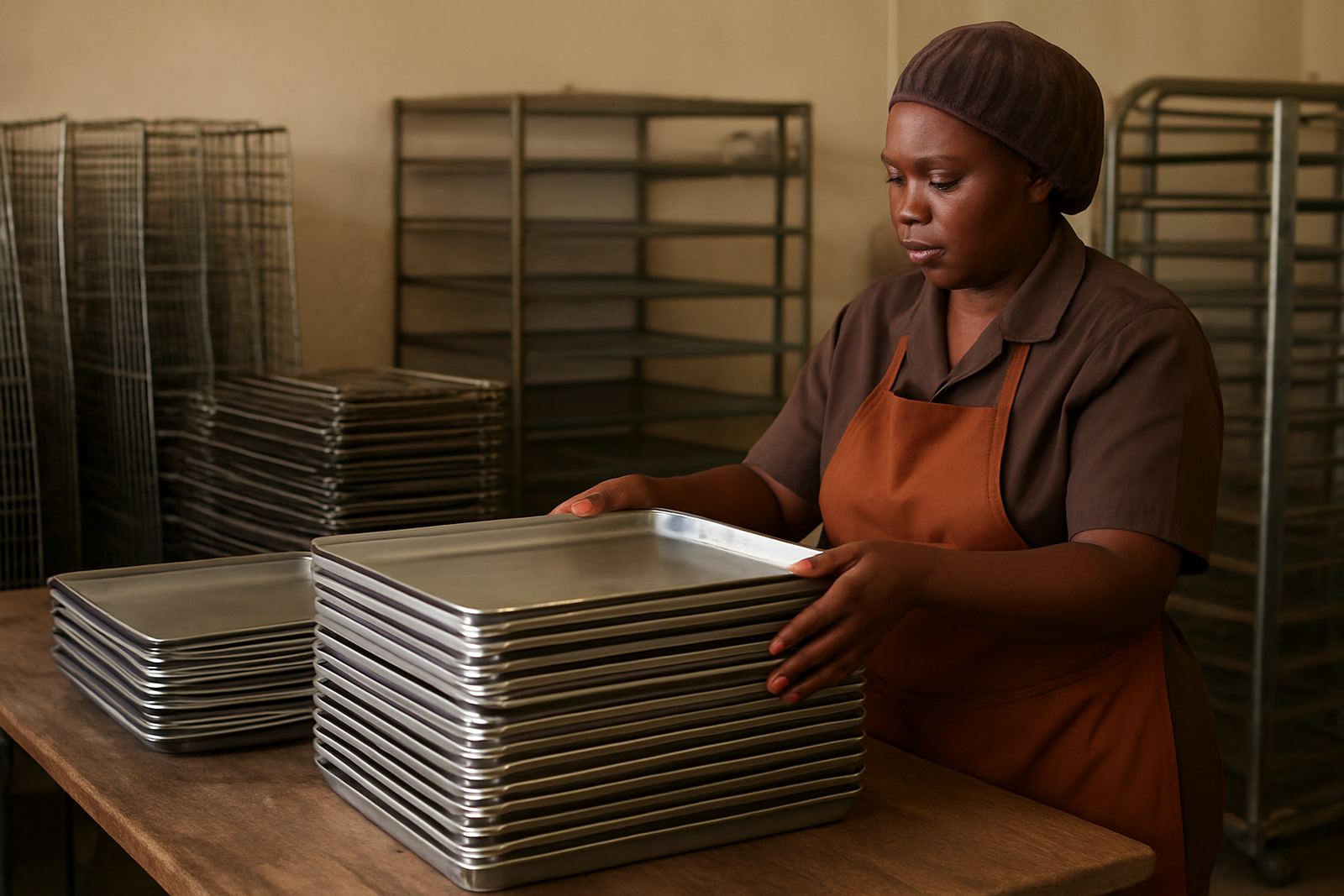
These trays are made as low-profile steel trays so they sit well on racks and conveyors, and they can be matched to the way your bakery loads, bakes and turns product. For operations running long shifts, that means less time fighting bent trays and more time keeping output steady. A tray that sits square in the oven also helps with even heat transfer, especially where ovens run hot on one side or where load-shedding forces frequent restarts.
Bakerite supplies biscuit trays for bakeries in Durban, Pinetown, New Germany and across KwaZulu-Natal, with national supply for plant bakeries, retailers and hospitality kitchens. If your team bakes biscuits, cookies, shortbread or similar products in volume, the tray needs to fit the process, not the other way around.
Sizes, finishes and tray build options
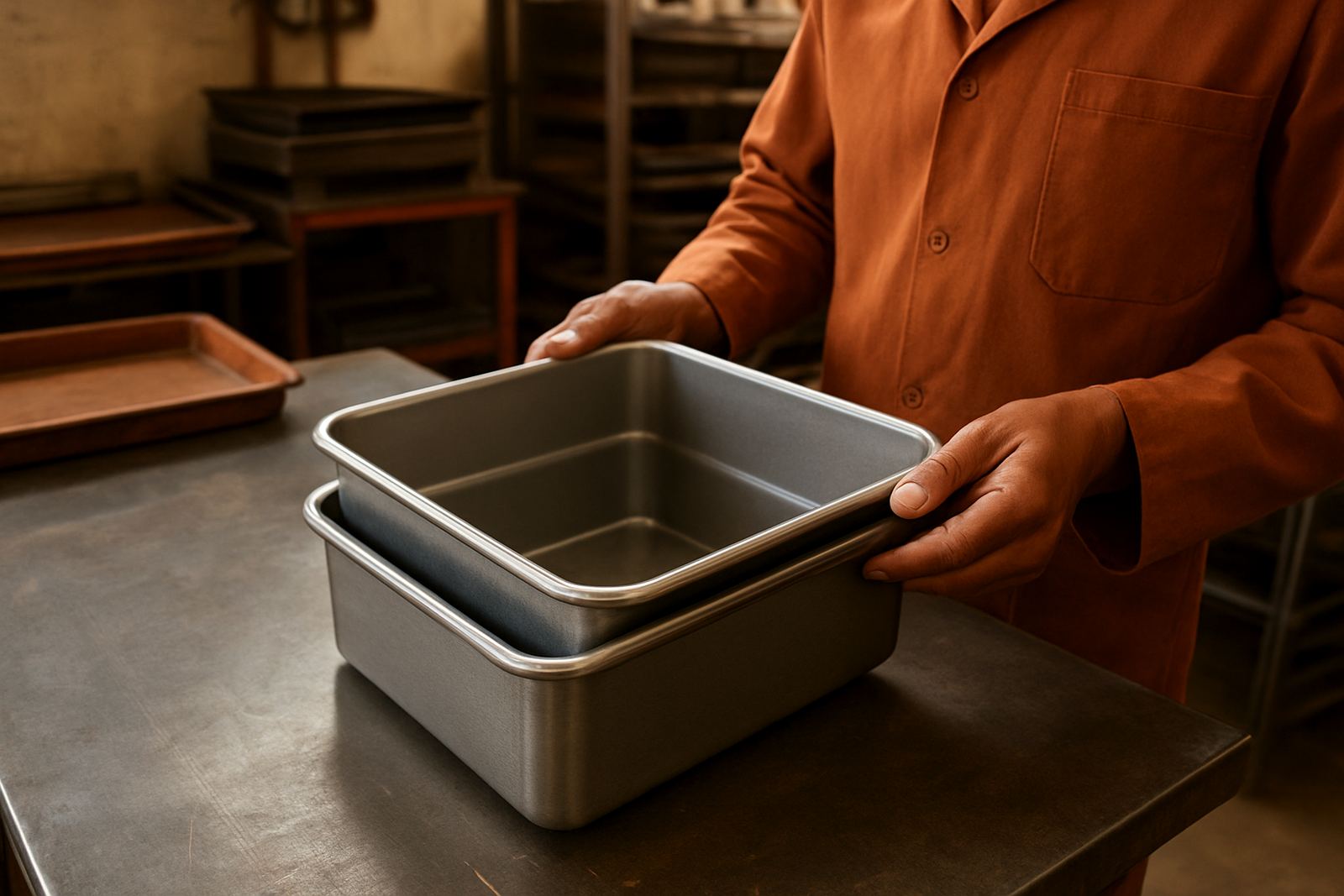
Tray sizing depends on the oven, rack spacing and how the product is portioned. We make and supply trays to suit standard plant bakery formats and can work from existing samples, drawings or measurements taken on site in Westmead or at your plant. If you are replacing older trays, we can also help match the lip height, corner shape and overall depth so your current handling setup still works.
- Common tray depths: low-profile bake trays for biscuit and cookie runs
- Steel construction suited to repeated heating and cooling
- Plain tray bodies or custom formed edges where handling needs extra support
- Sizes matched to rack spacing, oven floor layouts and manual loading systems
- Options for recoating, straightening and repair when trays are worth keeping in service
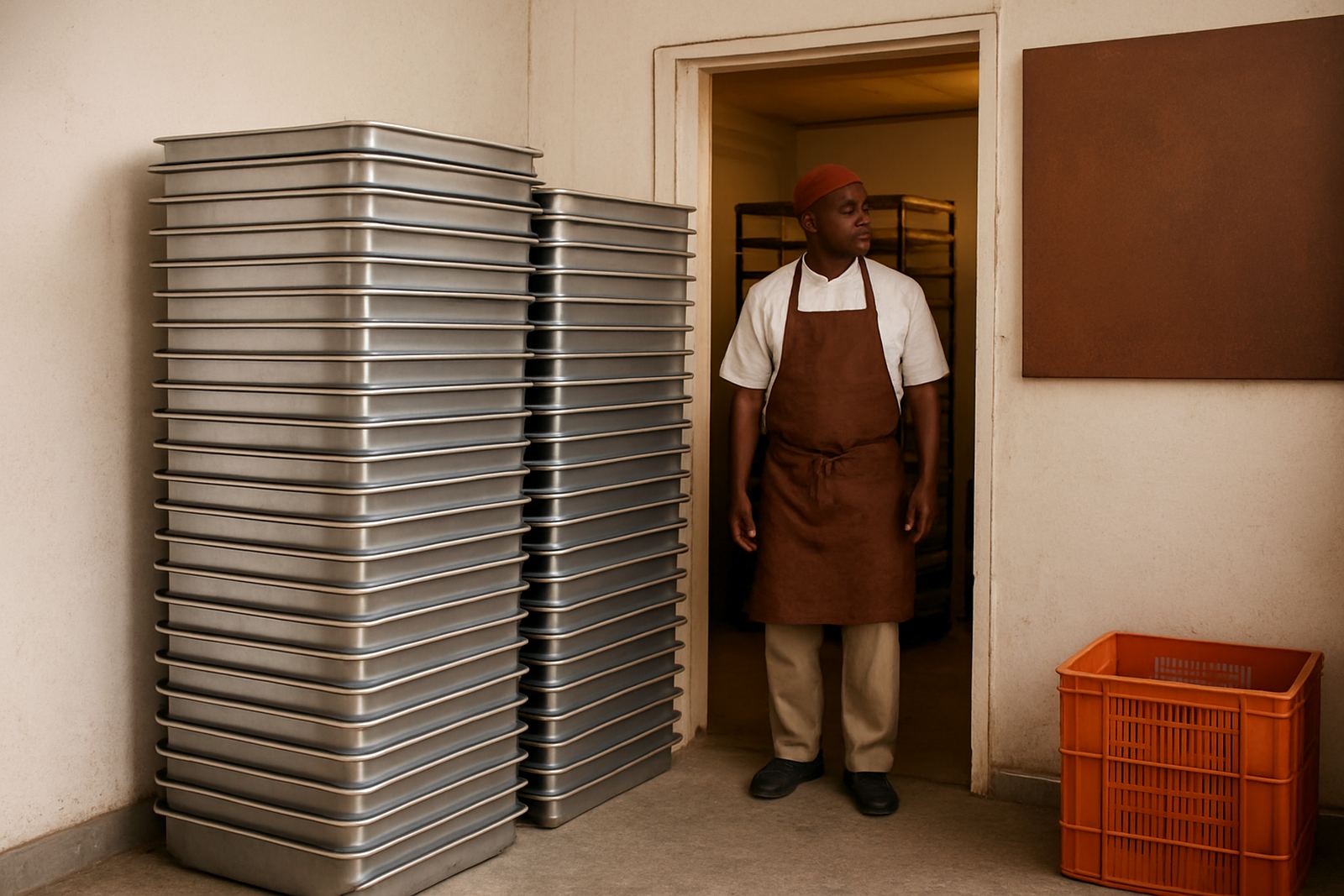
For high-volume plants, a consistent tray size helps when trays are swapped between shifts. It also makes storage easier because stacked trays sit neater and take up less space, which is important in tighter back-of-house areas. We do not overcomplicate the spec, but we do check the practical bits like corner clearance and how the tray is lifted with gloved hands.
Where biscuit trays suit best
Biscuit trays suit plant bakeries, central kitchens, hotel production kitchens and retail bakeries that run repeated batches through the day. They are also a good fit for manufacturers making plain biscuits, cream biscuit shells, shortbread and similar products that need a flat, even tray surface.
In coastal areas like Durban, salt air and humidity can shorten the life of unprotected steel. That is why tray care and finish matter, especially if trays are left near wash-up areas or cooling racks overnight. In hotter inland areas, repeated expansion and cooling can also stress weak trays at the corners. A tray built for the process handles that sort of use better, though it still needs proper cleaning and inspection.
If your operation bakes in shifts, or runs different product sizes on the same equipment, it helps to standardise tray type across the line. That makes counting, storage and replacement easier for the production team. It also gives the foreman a clearer idea of when a batch of trays is due for repair instead of waiting until several are bent at once.
- Plant bakeries with continuous or batch baking lines
- Hotels and caterers producing biscuits in house
- Retail bakeries needing repeatable tray sizes
- Food producers handling regular changeovers and cleaning cycles
Installation, rack fitment and utility needs
Biscuit trays do not need special utility connections on their own, but they do need to fit the oven, rack system and handling process properly. Before ordering, check the internal oven dimensions, rail spacing, rack width and whether the trays are lifted manually or on a trolley system. If trays are too tight, staff waste time forcing them in and out, and that leads to bent edges, spillages and worn corners.
For gas or electric ovens, the key point is heat distribution and tray loading pattern. A tray that overhangs a rack rail or sits unevenly can create hot spots and uneven browning. In plant bakeries this is a small thing that becomes a big thing across a full shift. If you have older ovens, load-shedding recovery or fluctuating gas performance, it is worth confirming the tray thickness and stiffness so the tray keeps its shape after repeated heating.
We can advise from the base in Westmead, Pinetown and supply nationally. If your site is in Durban, the Upper Highway or elsewhere in KZN, you can send measurements, photos or an existing tray for comparison before production starts. That saves time and helps avoid a tray that looks right but does not sit properly on your equipment. It also reduces the chance of rework, which nobody wants when the line is busy.
Care, recoating and repair to extend tray life
Good tray life starts with cleaning and storage. Let trays cool before washing, avoid harsh scraping on the baking surface, and do not leave wet trays stacked where moisture can sit between them. In coastal humidity, that small habit can decide whether a tray lasts a season or a few years. It sounds basic but many tray sets fail because of handling not because of baking.
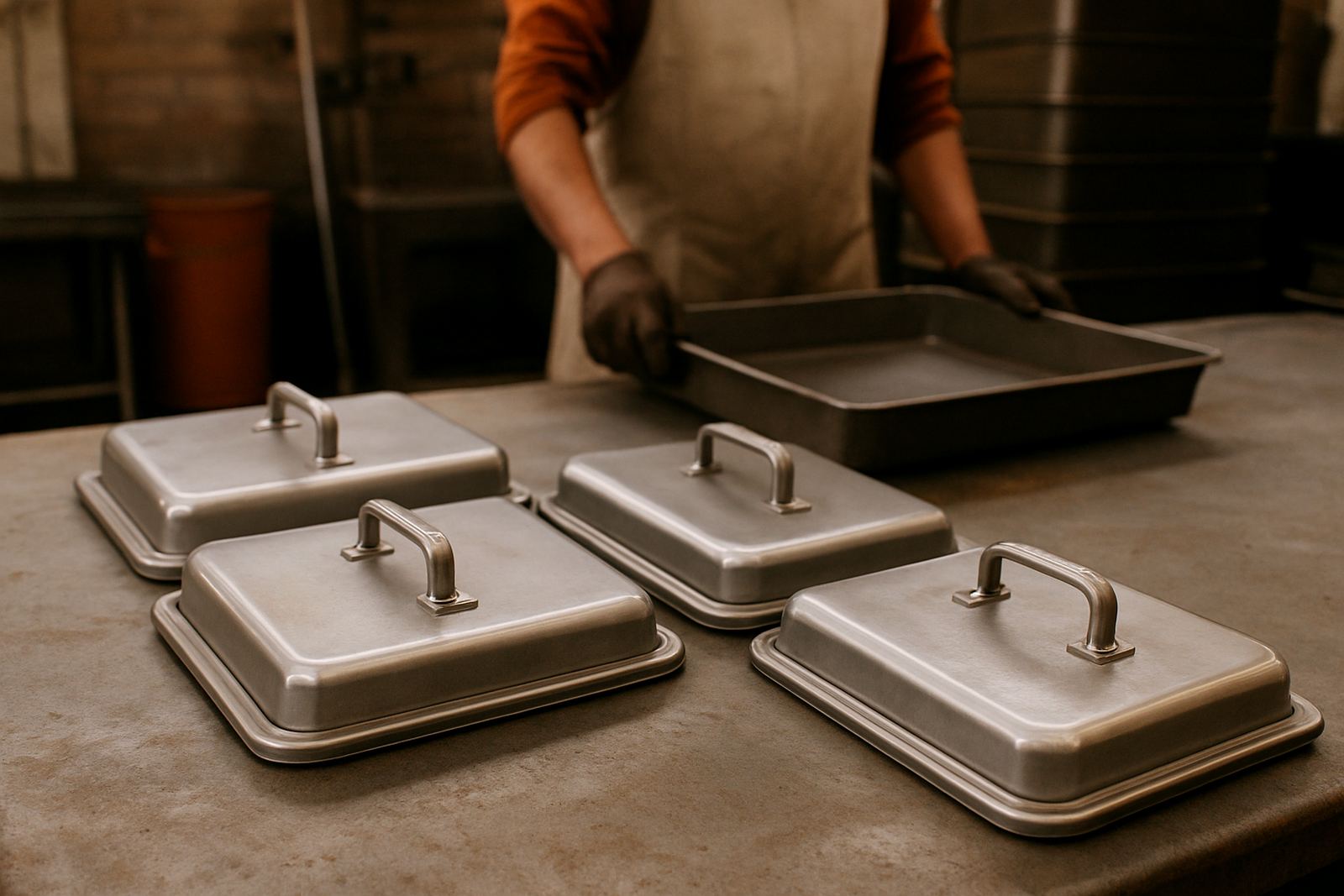
Bakerite supports Pan Recoating, Tray Recoating, Pan Straightening, Corner Repairs, Rim Repairs, Lid Repairs, Weld Repairs, Fleet Assessment, Deep Cleaning and Spare Lids. If your biscuit trays are still structurally sound, repair is often better value than replacing the full set. Straightened trays and repaired rims also help keep racks consistent, which matters when teams work across shifts and do not want to sort warped trays every morning.
- Inspect corners and rims for twist or lifting
- Keep trays dry before stacking
- Remove carbon build-up before it hardens
- Separate badly bent trays for assessment
- Plan regular fleet checks before peak production periods
Where trays are exposed to heavy use, a deep clean and fleet assessment can show which items are worth recoating and which ones are ready for retirement. That makes budgeting easier and avoids emergency buying when the plant is already under pressure.
What to check before you order biscuit trays
Before you order, measure the tray length, width and lip height, then confirm the oven or rack opening those trays must fit into. Check whether you need a plain flat tray, a tray with a slight edge, or a custom form to suit your handling method. If the biscuits are piped or deposited by machine, the spacing on the tray matters too because it affects product movement and bake evenness.
You should also confirm how many trays you need per batch and how many are kept in wash-up, on the cooling racks and in rotation. That tells you whether to order a small replacement run or a full fleet. For busy sites in Durban, Pinetown and the wider KZN area, it is worth factoring in spare trays so you can keep production going when a tray is out for repair or recoating.
If you are replacing old trays, send photos of the wear points, the base, corners and the lip. That helps us see whether the issue is simple wear, bend damage or repeated heat stress. It also helps us suggest whether a repaired tray will still give you proper service, or whether it is time to make a new set. One missing measurement can hold up a whole order so it pays to check twice.
Key facts
| Product | Biscuit trays for repeated baking runs |
|---|---|
| Material | Steel tray construction |
| Use | Biscuits, cookies, shortbread and similar bakery product |
| Typical format | Low-profile tray with custom size options |
| Service support | Recoating, straightening, corner and rim repairs |
| Supply area | Westmead, Pinetown and national delivery across South Africa |