Made for the product, not the other way round
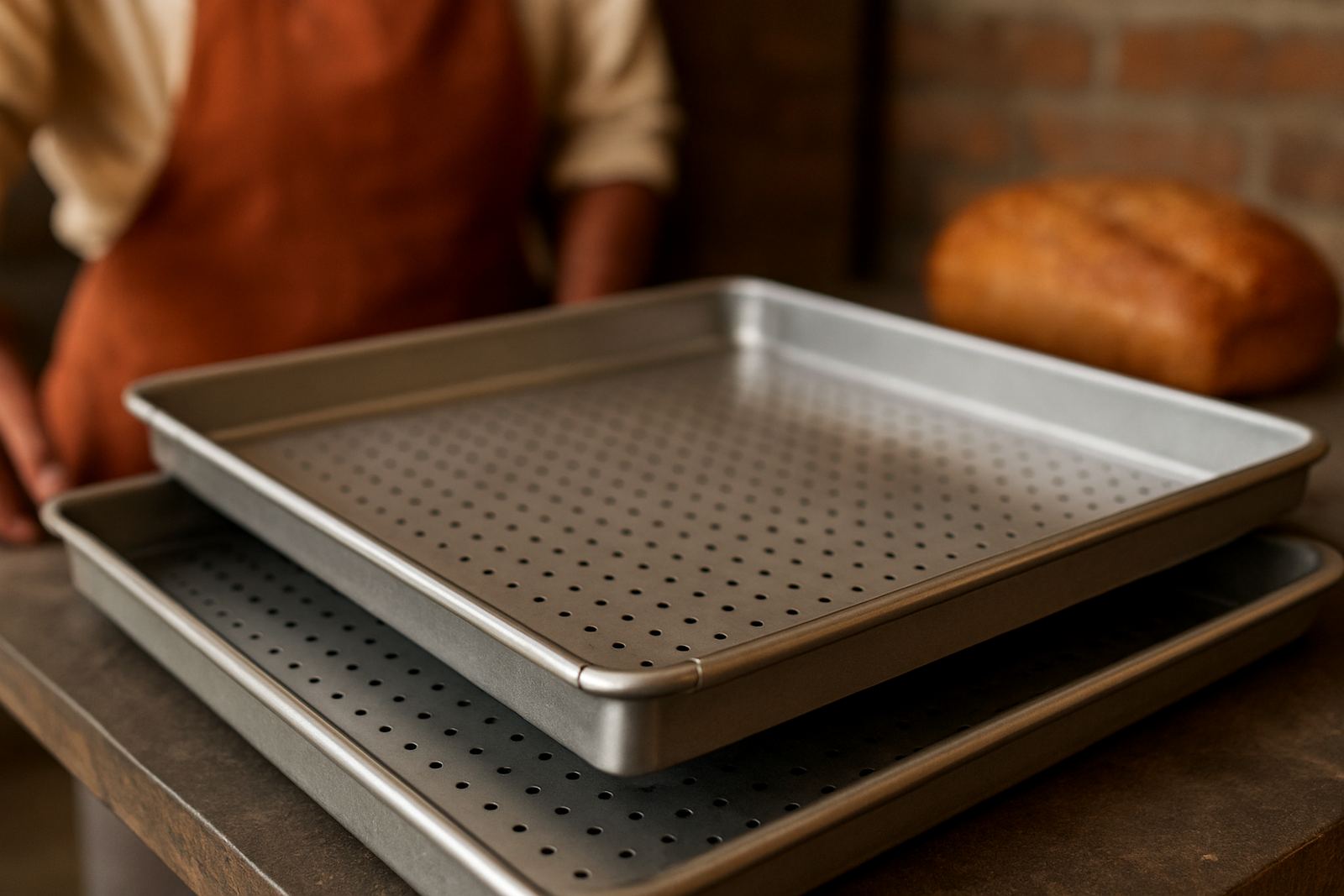
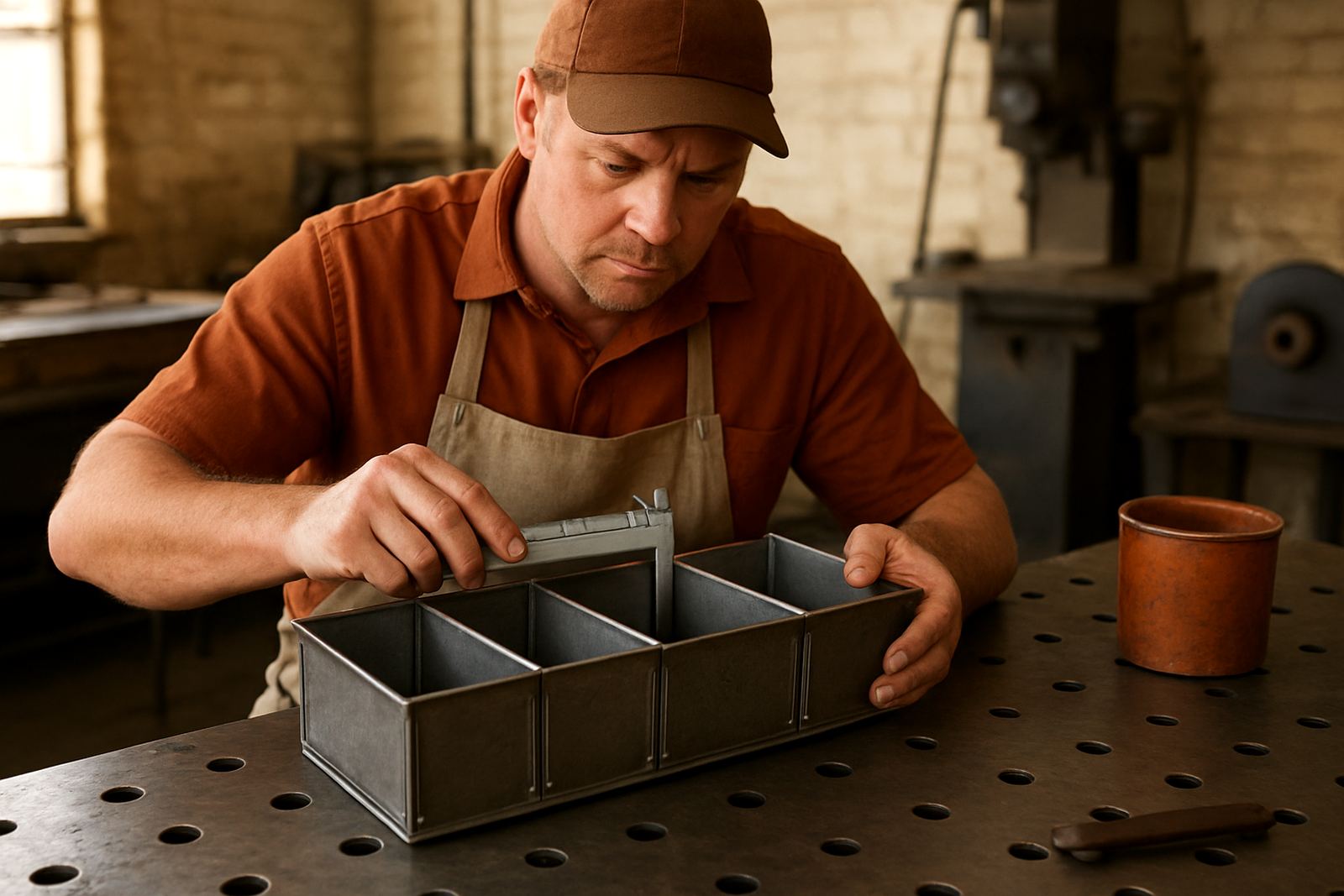
Custom pan builds are for bakeries that need something standard pans cannot do properly. That may be a loaf tin with a tighter cavity, a tray with a special pitch for buns, a deep pan for a dense batter, or a full oven set to match an older tunnel or rack oven. We build to the real working dimensions, so the product bakes evenly and the pan sits correctly on your rack, trolley or oven floor.
At Bakerite, custom work starts with the product and the plant conditions. We look at heat distribution, dough weight, batter spread, turning clearance, loading pattern and how the pan will be cleaned after each shift. If the line runs through load shedding backup power or a gas-fired oven with higher top heat, we factor that in as well. The result is a pan that lasts longer and gives more consistent output, with less scrap and less hand correction.
We have been making industrial bakeware in Westmead, Pinetown since 1997, including the original Bakerite steel floor tile. That experience matters when a bakery needs exact fitment and repeated production, not just one sample piece.
Sizes, gauges and finishes we can work with
Custom pans can be made in single units, test batches or full production runs. We work mainly in steel for strength, even heat transfer and repairability, and we can set the pan size to match your oven or handling system. Common requests include long loaf pans, bun trays, cake pans, specialty moulds, deep-dish pans and formed trays for pre-bake or proof-to-bake operations.
- Material options: mild steel or coated steel, depending on duty and cleaning routine
- Typical thickness: 0.8 mm to 2.0 mm, selected for product weight and handling
- Lengths and widths: made to order, from small test pans to full deck or rack tray sizes
- Wall depth: shallow, medium or deep, with straight or rolled sides
- Corner finish: square, eased or welded, depending on how the pan is washed and stacked
- Surface finish: plain steel, recoated surface or special finish for easier release
If you already use a pan shape that works but the steel has worn thin, we can often duplicate the form and improve the weak points. That saves time on line set-up and keeps the product profile consistent.
Where custom pans suit best
Custom pan builds suit bakeries that make more than standard sliced bread and standard tray products. They are common in plant bakeries, supermarket production kitchens, hotel bakeries, wholesalers and contract kitchens that run several product types through one oven line. They also help when you are moving from manual hand-panning to a more controlled line, or when a new recipe needs a shape that improves yield.
We often see requests from sites in Durban, Pinetown, New Germany and along the Upper Highway where plants are dealing with humidity, constant cleaning and heavy daily use. Coastal air can shorten the life of light tins, especially if the storage area is warm and damp. A properly made steel pan holds shape better, and it is easier to service later if a rim or corner takes a knock.
- New product launches where the pan profile is still being finalised
- Older ovens with non-standard chamber sizes or tray spacing
- High-volume bread, rolls, buns and speciality loaves
- Retail bakery production with repeatable portion control
- Hotels and foodservice kitchens needing durable tray sets
What to check before you place an order
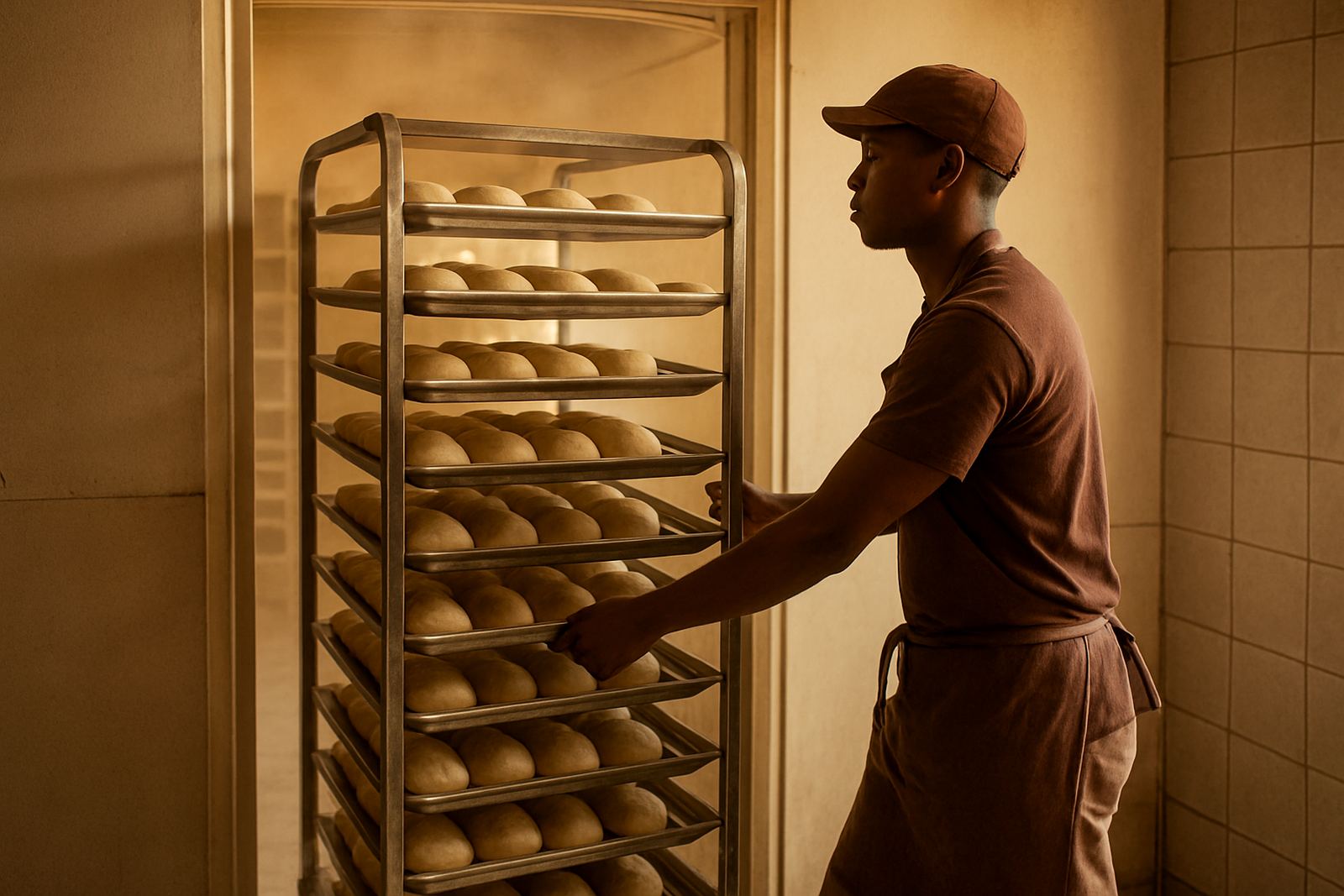
The better the brief, the better the pan. Before ordering, measure the internal oven space, rack opening, tray runner spacing and any fixed clearances around doors, seals and fans. If the pan must move through a depositor, proofing trolley or cooling rack, that route must be checked too. A few millimetres can make a difference, especially where the line is tight.
Please have the following ready where possible:
- Finished product size, weight and portion count per pan
- Oven type, fuel type and maximum baking temperature
- Required pan depth, lip height and stacking allowance
- Tray or rack size, including any taper or side handles
- Cleaning method, for example manual wash, soak or mechanical cleaning
- Expected daily output and whether the pan will stay on one site or move between plants
If you are unsure, we can work from a sample pan, a drawing or photos with a tape measure in the frame. That often avoids costly rework later. We also check whether the pan needs spare lids, weld repairs or later recoating so the first build is practical for long-term use.
Installation, heat and utility needs
Custom pans themselves do not need power or gas, but the oven system they work in does. For that reason we always ask what the pan will sit in and how the heat is delivered. A pan made for a gas deck oven will not behave the same way as one used in an electric rack oven or a plant line with forced air. If the oven has hot spots, the pan shape, gauge and finish can be adjusted to help balance the bake.
On installation day, make sure the oven floor tiles, rack rails or tray guides are level and free of build-up. Where a site has experienced load shedding or generator change-over, repeated temperature swings can affect some products, so it helps to test first with a small run. For plants in humid areas, dry storage before first use is important. Wet stacking causes staining and can shorten the life of a coated surface.
If you are fitting a new line, we can also look at whether the pan should be supplied with corner repairs or reinforced rims from the start. That saves stoppages later on when the line is already running at speed.
Care, recoating and service support
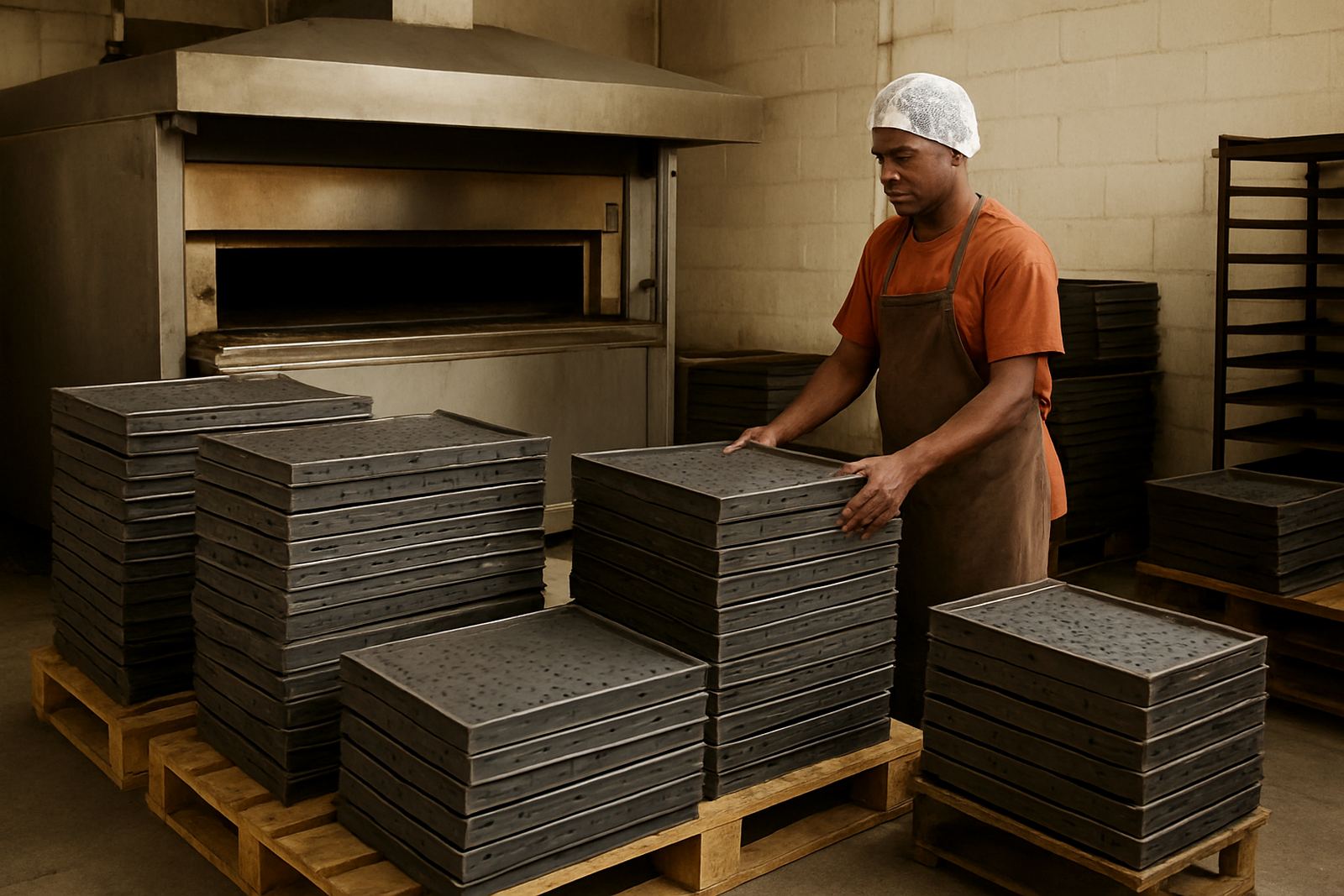
A custom pan lasts longer when it is cleaned and stored properly. Avoid harsh scraping, dropping trays on concrete and leaving product residue to bake on. Where pans are washed daily, allow them to dry fully before stacking. On heavier lines, a quick weekly check helps catch rim distortion, cracked welds and worn release surfaces before they become a bigger job.
Bakerite also supports pan recoating, tray recoating, pan straightening, corner repairs, rim repairs, lid repairs, weld repairs, fleet assessment, deep cleaning and spare lids. That means a custom build is not a once-off item with no backup. If the pan is still structurally sound, we can usually extend its life and keep the set working together. In many cases, a site only needs a few repairs to keep the line moving, not a full replacement.
For bakeries operating across several branches, we can assess the whole pan fleet and advise which items should be rebuilt, recoated or retired. That gives a clearer picture of ongoing cost and helps plan downtime more accurately.
Key facts
| Product | Custom pan builds for industrial baking |
|---|---|
| Main material | Steel, with optional recoated finish |
| Build range | Single samples to production batches |
| Typical thickness | 0.8 mm to 2.0 mm |
| Use cases | Plant bakeries, hotels, retailers and contract kitchens |
| Base | Westmead, Pinetown, KwaZulu-Natal |