Low-profile trays built for direct deck oven baking
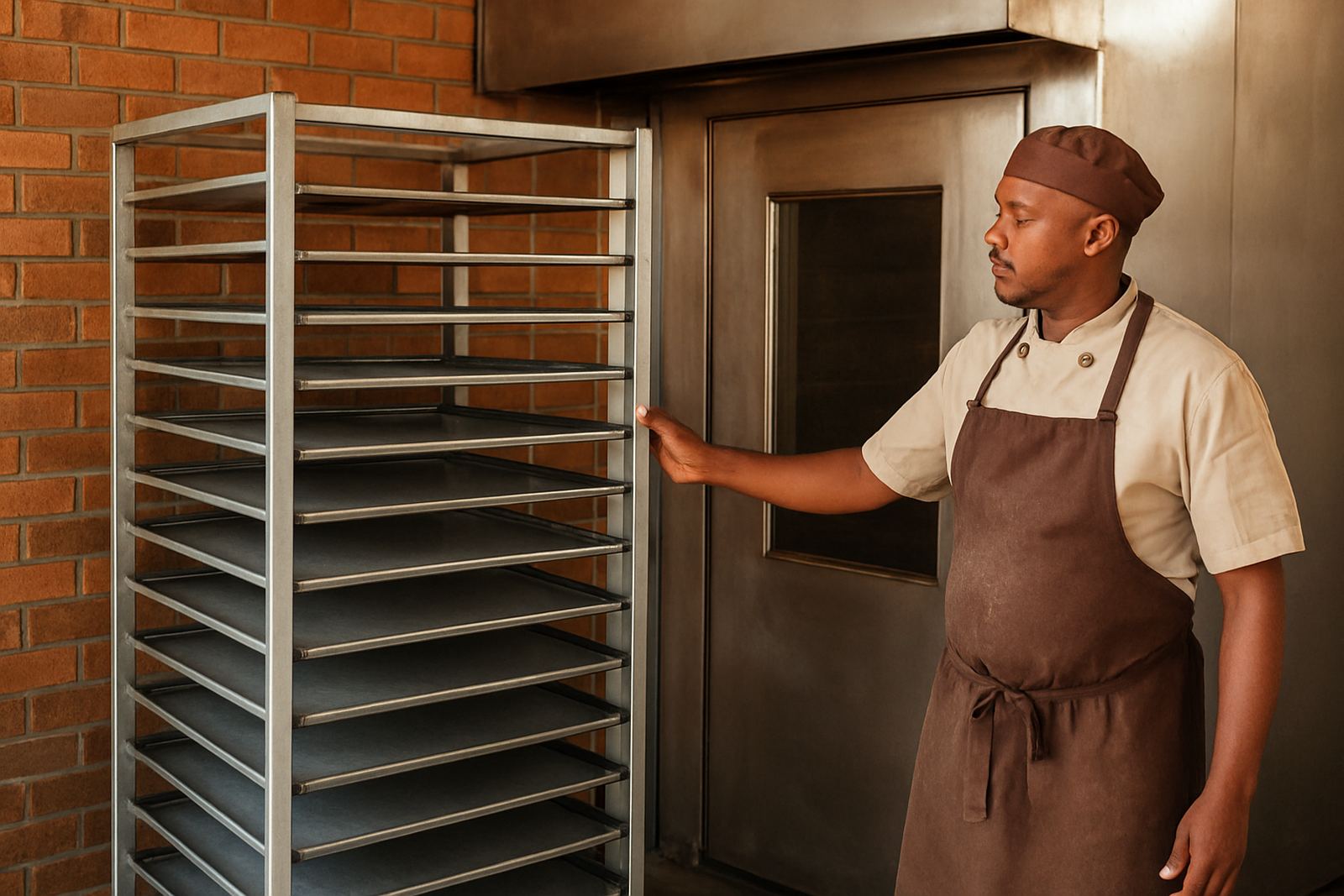
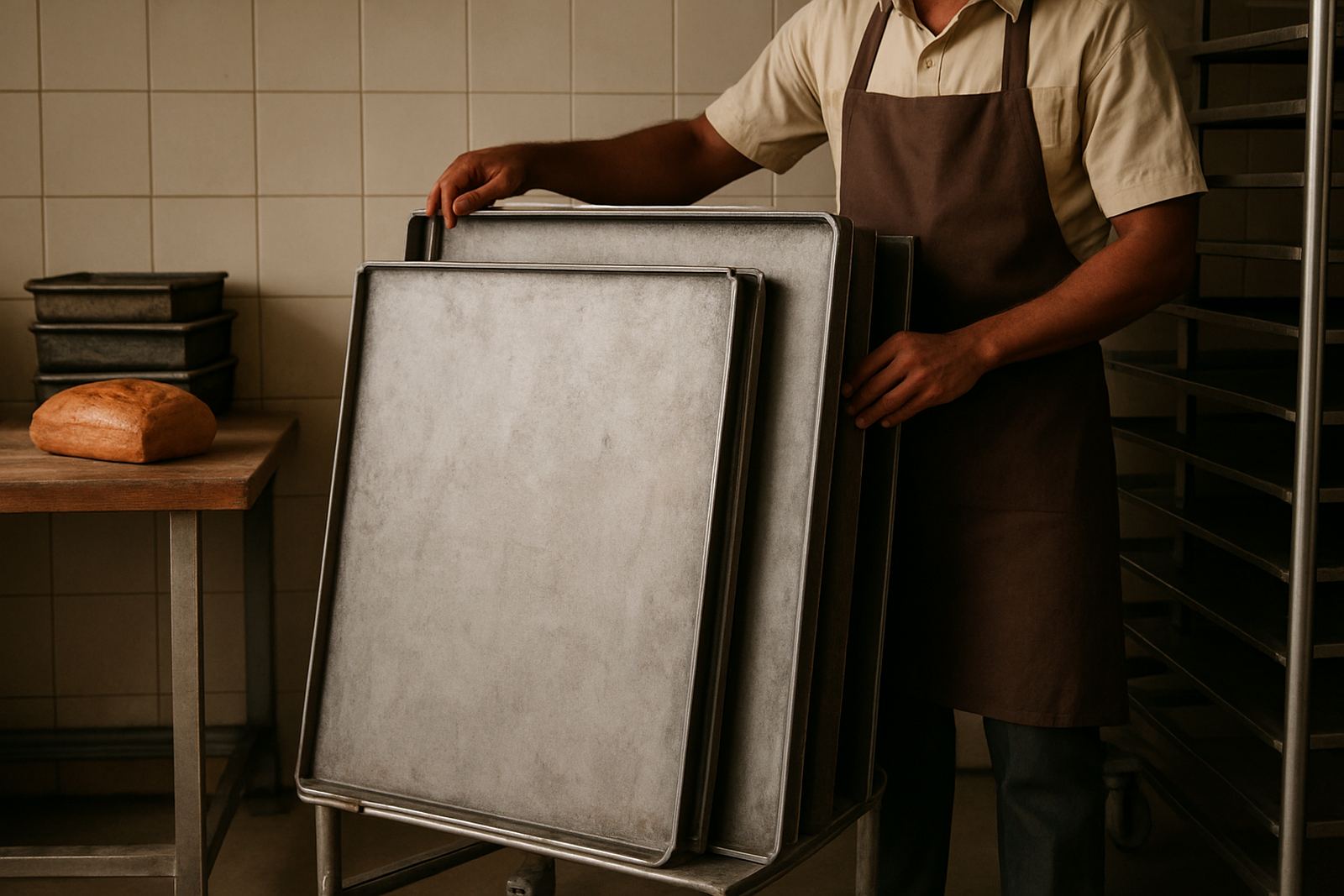
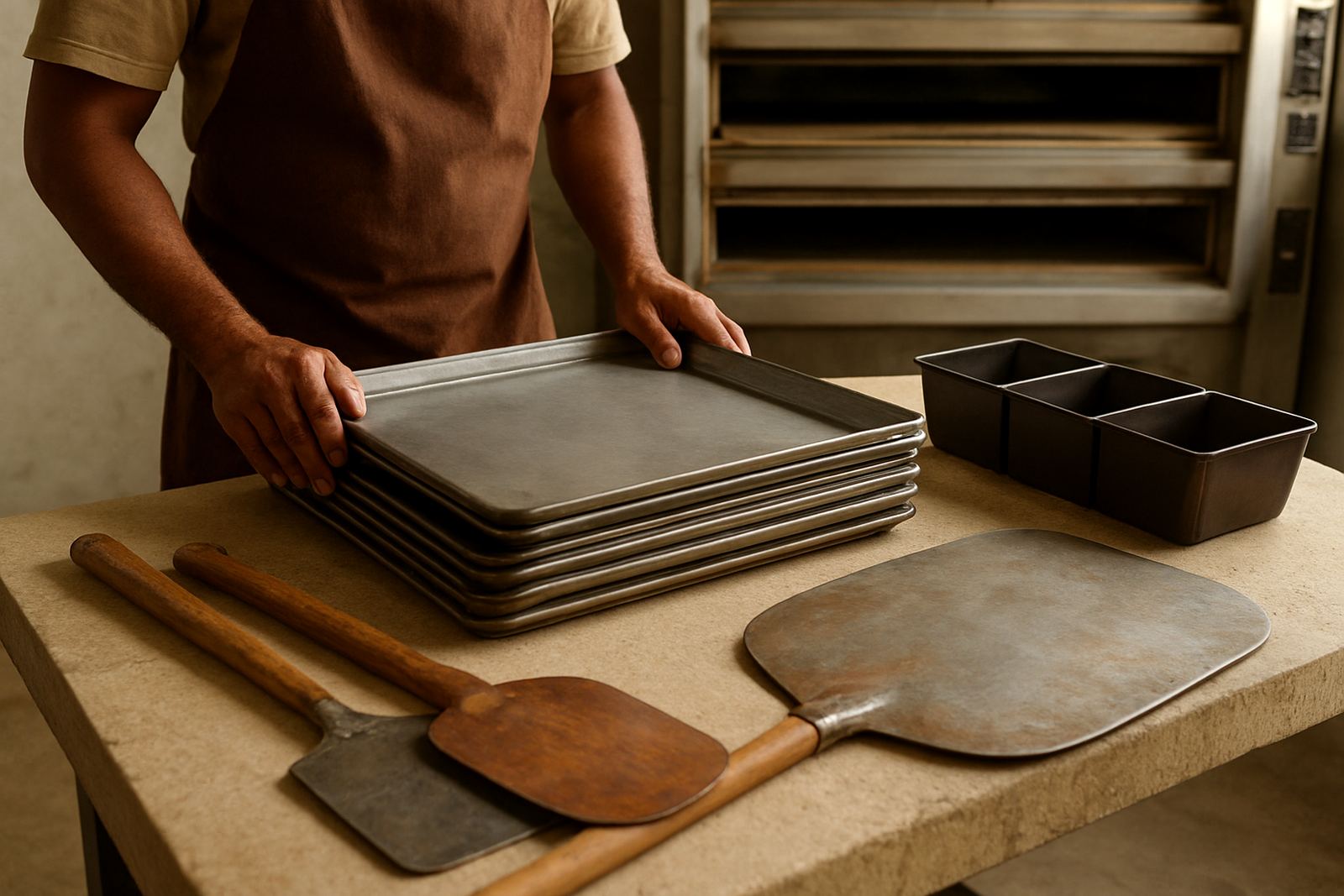
Deck oven trays are made to sit flat in the oven deck and handle the direct heat that comes from below and above. In practice that means a tray with a clean profile, straight edges and enough stiffness to keep its shape through repeated loading, cooling and washing. These trays are commonly used for rolls, buns, pastry items, savoury bakes and small batch products where even colour and a steady bake are important.
At Bakerite, the trays are produced in steel for hard daily use in South African bakeries. Steel gives a good balance between heat transfer and service life, and it can be recoated or repaired when it starts to show wear. For bakeries in Durban, Pinetown, New Germany and the Upper Highway area, that matters because heat, humidity and fast turnaround can wear lighter trays quickly. A tray that stays flat and clean is easier to load, easier to stack and less likely to give uneven bottoms.
The idea is simple: a tray must fit the oven, move through the bakery safely and hold up to frequent use. When the fit is right, staff waste less time forcing trays into place and there is less chance of damage to tray edges or oven racks.
Sizes, thickness and tray options to order
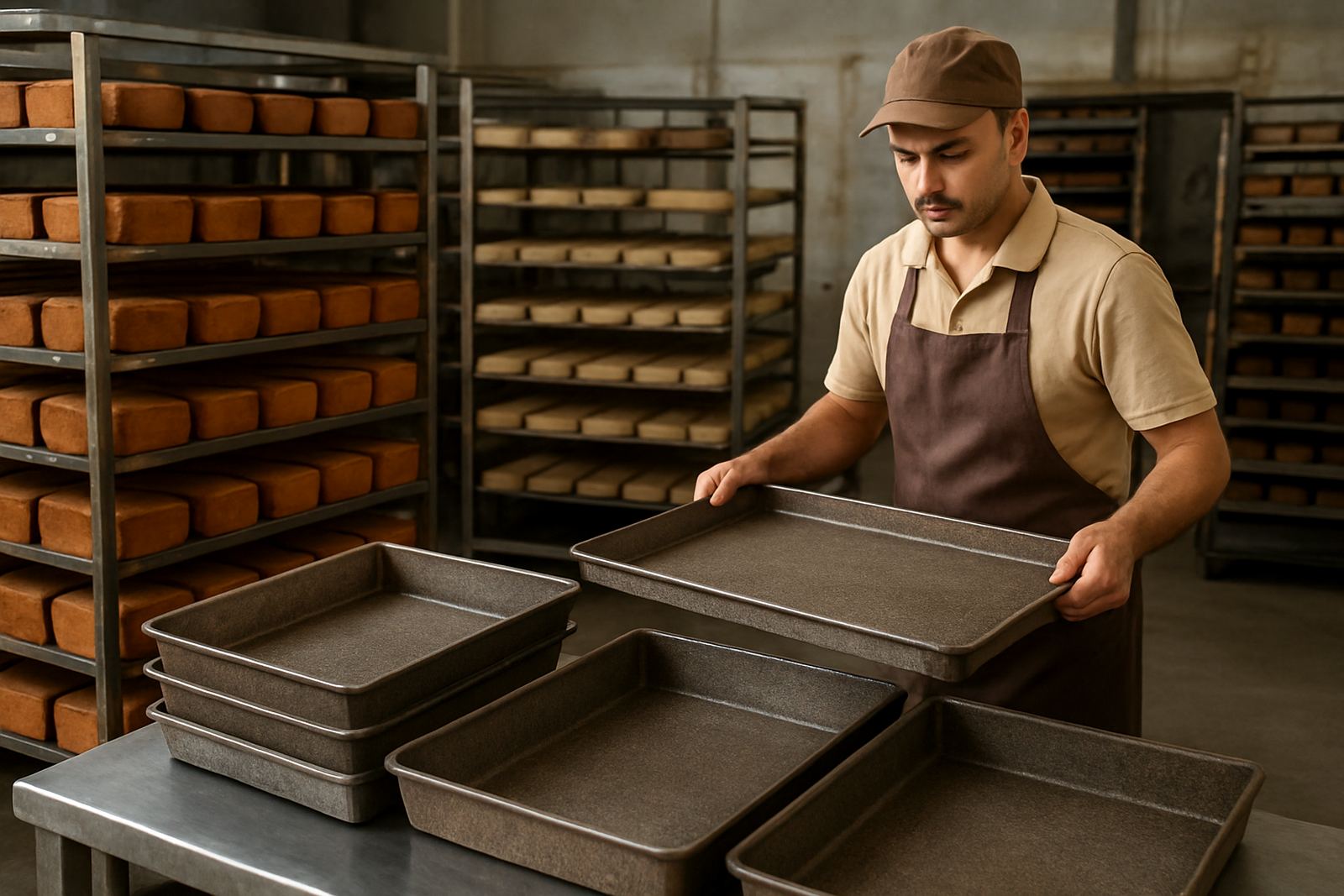
Deck oven trays can be made to standard bakery sizes or to suit a specific oven deck, trolley or rack layout. Most buyers ask for a tray size that matches the oven chamber and the product line, but custom sizes are often better when ovens have older dimensions or mixed equipment on site. We also make trays for bakeries that need a lower lip for easy sliding, or a slightly deeper edge for product control.
Common options include plain flat trays, reinforced trays for heavier loads and trays with folded edges for better rigidity. Thickness is chosen based on the duty cycle and the weight of product being baked. For plant bakeries and high volume kitchens, a heavier gauge is usually a better choice because it resists bowing under heat and handling. For lighter retail work, a standard gauge tray may be enough if the turnover is high and the trays are well cared for.
- Standard and custom lengths and widths to suit deck ovens and trolley systems
- Plain, reinforced or folded-edge tray styles
- Steel construction for direct heat use and repeated handling
- Options for recoating and repair after long service
If you are replacing an older tray set, send the inside oven measurements, the tray stack height and the product type. That helps us match the tray to the oven instead of guessing. A tray that is 10 mm off on width can become a daily irritation in a busy kitchen.
Where deck oven trays work best
These trays suit retail bakeries, hotel kitchens, butchery bakeries and plant bakeries that need direct deck oven use. They are also useful where product is mixed through the day and the tray must move from prep to oven to cooling and back again without fuss. In hotels, the tray is often part of a breakfast and banqueting schedule, so handling speed and clean presentation are important. In retail work, the tray usually has to cope with constant loading and enough heat to keep production moving during load shedding backed up baking, when the oven cycle changes and every tray shift counts.
For coastal sites in Durban and surrounding areas, humidity can affect how quickly steel surface wear appears, especially if trays are stored after washing while still damp. Inland sites around Westmead and the broader KwaZulu-Natal supply area usually see more dust and heat cycling. Both environments need trays that are easy to clean, dry and inspect. That is why a tray with sound edges and a clean surface finish can save time over the course of a week.
- Retail bakeries baking rolls, pies, pastries and savoury items
- Hotels and hospitality kitchens serving breakfast and function items
- Plant bakeries running multiple batches through the day
- Sites that need trays compatible with deck ovens, not open racks
We also work with bakeries that need the same tray format across several branches. That helps with stock control and reduces errors when trays are moved between Pinetown, Durban, the Upper Highway and other branches. One tray size, one handling method, less confusion.
Installation, oven fit and power or gas checks
Deck oven trays do not need electrical installation, but they do need the oven and loading system to be checked before order confirmation. The important points are tray width, tray length, handle clearance if applicable, deck height and the space needed for safe loading. If the oven is gas-fired, heat distribution and deck temperature control should be checked because tray choice can affect bake pattern and bottom colour. If the oven is electric, the deck settings and recovery time after loading are just as important.
Before you place an order, check the following:
- Internal deck size and usable opening size
- Product weight per tray and expected batch size
- Tray stack height for storage and transport
- Whether the oven uses racks, peel loading or direct deck loading
- Any municipal or site rules for fire safety, storage and cleaning around the bake area
At some sites in Pinetown and Westmead, the issue is not the oven itself but the route between prep, oven and cooling. A tray that is too deep or too wide can slow the line down and make handling awkward. Keep enough clearance for gloves, peels and oven doors, and allow for staff movement where trolleys pass. It sounds small but it saves injuries and dropped product.
Care, cleaning and repair service
With regular cleaning and sensible handling, deck oven trays last much longer. Let trays cool before washing, avoid harsh scraping that can lift the surface finish and dry them fully before stacking. Do not leave trays standing in water or against wet walls. In humid coastal conditions, that can lead to surface wear sooner than expected. If the tray starts to twist, the edge becomes dented or the surface coating wears through, it is often better to repair or recoat it than replace the full set at once.
Bakerite offers Pan Recoating, Tray Recoating, Pan Straightening, Corner Repairs, Rim Repairs, Lid Repairs, Weld Repairs, Fleet Assessment, Deep Cleaning and Spare Lids. That matters when a bakery has a mixed tray fleet and only some items need attention. A damaged tray can sometimes be brought back into service with straightening or weld repair, which is usually more practical than stopping production to wait for a full replacement order.
- Keep trays dry before stacking to reduce surface wear
- Inspect corners and rims weekly in busy bakeries
- Separate bent trays from good stock to prevent damage spread
- Use recoating when the surface begins to stick or flake
For bakeries that run seven days a week, a planned service check every few months helps keep tray condition under control. It also gives you a clearer idea of when to order replacements so there are no surprises during peak trading.
What to check before ordering your tray set
Ordering deck oven trays is easiest when you have the right measurements and product details on hand. Start with the oven model if you have it, then measure the inside deck space, the loading opening and any side guides or runners. Next, note the product type, the heaviest load per tray and how many trays are used in one bake cycle. If the trays will be moved between branches, add the storage and transport requirement as well.
We often work from photos, old tray samples or a quick site measure in Westmead, Pinetown and nearby areas. If the tray set is for a plant bakery or hotel group, it helps to know how many trays are needed now and how many may be added later. That way the set can be planned properly and future replacements can match. Also tell us if the trays must fit existing racks, because rack spacing can catch out even a good tray design.
Good ordering information usually includes:
- Tray length, width and any edge height required
- Oven type and loading method
- Product being baked and average batch weight
- Current tray problems such as twisting, rim wear or sticking
- Quantity needed for first order and future spares
When the details are right from the start, the trays fit better, bake more consistently and last longer. That is the real saving.
Key facts
| Product type | Low-profile steel deck oven trays |
|---|---|
| Use | Direct deck oven baking for retail, hotel and plant bakeries |
| Material | Steel construction for repeated heat cycles |
| Sizes | Standard and custom sizes to suit oven deck and rack layout |
| Options | Plain, reinforced or folded-edge formats |
| Service support | Recoating, straightening, repairs and fleet assessment |