What a lid pan does on a busy bake line
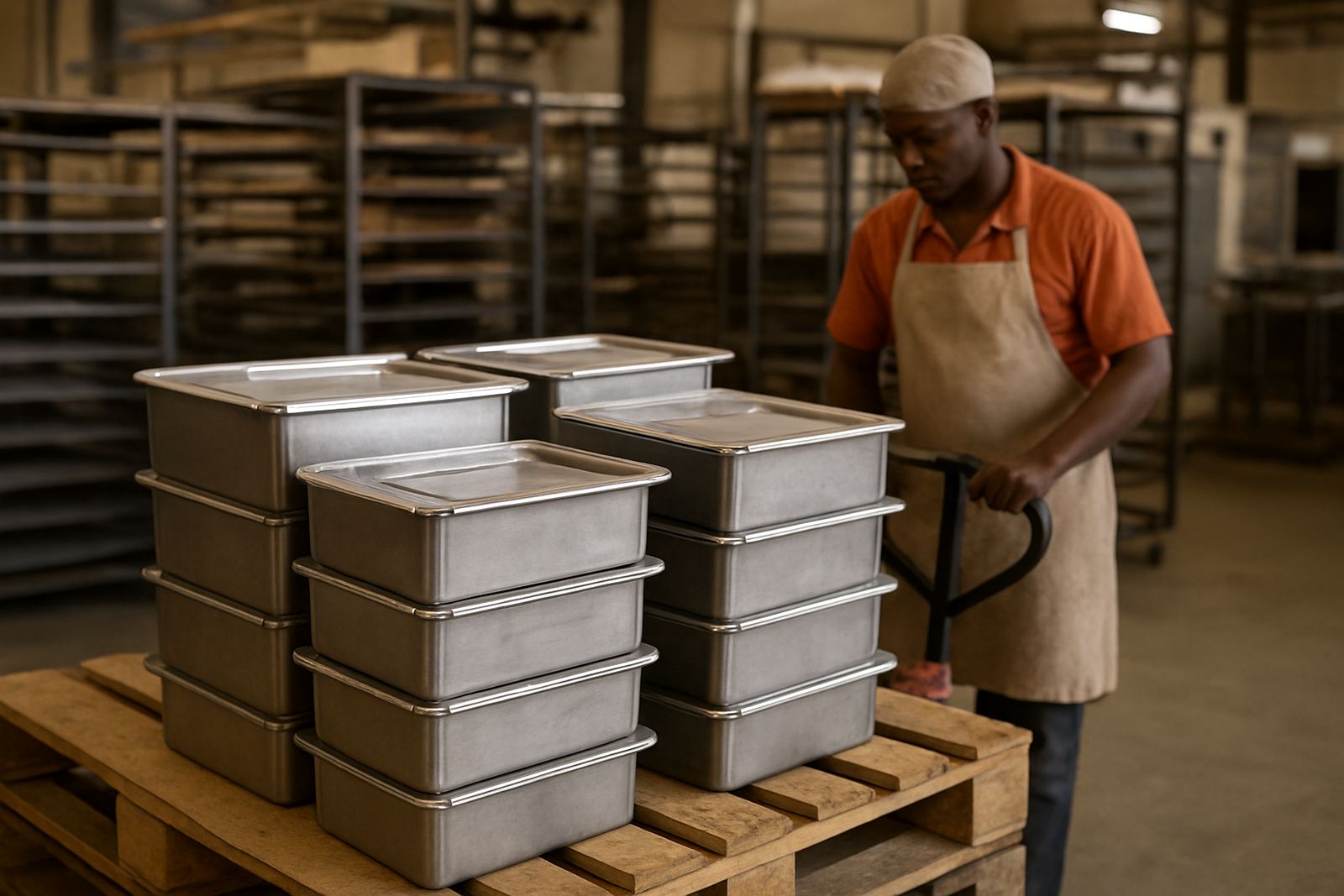
A lid pan is a matched pan and cover set used for closed-top bread, sandwich loaves and other products where the top shape must be held during proofing and baking. The lid controls the rise and keeps the loaf profile square, which helps with slicing, packing and display. In a plant bakery that is running through load-shedding, long shifts and mixed batch sizes, the right lid pan helps keep shape consistent from the first tray to the last.
Our lid pans are made from steel for repeat use in plant bakeries, hotel bakeries and larger food operations. They are suited to standard oven decks and tunnel type systems where predictable dimensions matter. Because they are made in Westmead, Pinetown, we can keep to local working sizes, talk through your oven clearances and make changes when your line needs a different depth or corner profile.
These pans are practical for bakeries that want controlled loaves with less spread and a cleaner top finish. They also suit sites close to the coast, where humidity can be hard on lighter tins and fittings. Steel gives a solid working life if the pans are cleaned and checked regularly, and small damage can often be repaired instead of scrapping the set.
Sizes, lid options and the details that matter
We supply lid pans in standard sizes and can make custom sets to match your loaf weight, oven space and handling method. The usual choice is a rectangular pan with a matching steel lid, but we can also work to special lengths, depths and return edges where the existing line calls for it. If your bakery uses fillers, dividers or manual loading, we can adjust the edge detail so the pan sits right in the rack and does not snag during transfer.
- Standard loaf pans for plant bakery volumes
- Custom lengths and depths for special bread formats
- Matching lids for controlled top shape and crust finish
- Heavy duty steel for repeated daily use
- Repairable sections for corners, rims and weld points
When ordering, the most useful measurements are internal length, width and depth, plus the lid drop or overlap. If you already have a working sample, send the old pan or clear photos with tape measurements. A small difference in the rim can change the fit and that leads to steam loss or loose lids. On some lines that is fine, but on a closed-top loaf it can mean uneven height and wasted dough.
Where lid pans suit best
Lid pans are used where consistency matters more than open top variety. That includes plant bakeries supplying retailers, hotels that bake in house, and production kitchens that need the same loaf shape day after day. They work well for sandwich loaves, tin breads and similar products where the top must stay compact and the sides must finish straight.
They are also useful where bread is packed in bulk for delivery to Durban, Pinetown, New Germany, Upper Highway and other KZN routes, because a steady loaf profile packs better and keeps presentation neat. For bakeries serving school contracts, canteens or retailer shelves, a lid pan helps keep slice size and crust even from batch to batch.
- Plant bakeries producing closed-top loaves at volume
- Hotel and hospitality bakeries with in-house baking
- Retail supply lines needing a uniform slice profile
- Sites with hot, humid conditions where shape control matters
- Operations that want repairable steel bakeware instead of quick replacement
If your bakery is running close to capacity, it is worth checking the lid pan fit against your oven loading pattern. A pan that is too wide for the rack wastes time at changeover. One that is too shallow can give a weak crown and too much expansion, which is not what you want on a closed-top loaf.
Installation, heat source and bakery setup
Lid pans do not need special electrical connection or plumbing, but they do need the right oven environment. They are used in gas and electric bakery ovens, and on deck or rack systems where even heat and proper spacing are maintained. The important point is not the fuel type, but how the oven holds temperature and how the pans move through proofing, loading and baking.
For a new line or a replacement order, check the oven opening, rack spacing, deck clearance and whether the lids need room for easy lift off after bake. In some bakeries there is little time between batches so the team needs a pan that can be handled quickly without bending the lid or catching a rim. Good setup also helps if load-shedding changes your production pattern and you need to bring ovens back up to temperature in a controlled way.
We can work from your current line details, drawings or a sample pan. If the bakery is in a coastal area like Durban or along the KZN North Coast, it is worth planning for moisture and storage conditions as well. Stacking wet pans overnight is where trouble starts, especially if the line is being pushed hard and there is no time for proper drying.
Care, cleaning and repair work that extends service life
A lid pan lasts longer when it is cleaned soon after use, dried fully and checked for distortion before the next shift. Heavy scraping and rough handling can bend the lid or open up the corners, and once that starts the fit changes. If a pan is still structurally sound, we can often bring it back with straightening, corner repairs, rim repairs, weld repairs or lid repairs. That is usually better value than replacing the whole set.
Our services for this product include deep cleaning, pan recoating, tray recoating, pan straightening and spare lids. Recoating is useful where the working surface is still serviceable but the finish has worn thin. Deep cleaning helps remove built-up residue that affects release and heat transfer. If a bakery has a mixed fleet of pans from different years, fleet assessment can help decide what to keep in circulation and what needs attention first.
- Allow pans to cool before washing or stacking
- Dry fully to reduce rust in storage areas
- Check lid fit after any impact or dropped load
- Rotate older sets into lower pressure production runs
- Book repairs early instead of running damaged pans until they fail
In many bakeries the damage is small at first, maybe a bent corner or a lid that sits slightly high. That is the best time to fix it. Leave it too long and the loaf shape begins to change, which shows up at slicing and packing.
What to check before you order lid pans
Before placing an order, check the loaf size, target weight, oven type and how the pans are loaded and unloaded. It also helps to know whether you need a standard pan or a custom set to match existing equipment. If you are replacing an old batch, measure a good sample and a worn sample, because wear at the rim can hide the real working size. A few millimetres can matter when the lid has to sit properly through bake.
Please confirm the following details when you enquire:
- Internal length, width and depth required
- Whether a matching lid is needed for each pan
- Oven type and rack or deck spacing
- Quantity required for daily production and spares
- Any existing problems such as warping, cracked welds or rust
- Delivery area, especially if you need supply to KZN or national dispatch
For Bakerite, the aim is simple: make a lid pan that fits the line, holds shape and can be serviced when the bakery starts working it hard. If you are in Westmead, Pinetown or anywhere in South Africa, we can discuss the build, the repair path and the practical size details that keep production moving.
Key facts
| Product type | Steel lid pans for closed-top loaves |
|---|---|
| Material | Heavy duty steel |
| Use | Plant bakeries, retailers, hotels and institutional baking |
| Size range | Standard sizes and custom dimensions available |
| Finish options | New build, recoating, deep cleaning and repair |
| Service area | Westmead, Pinetown, KwaZulu-Natal and national supply |