What a solid tray is and why bakeries use it
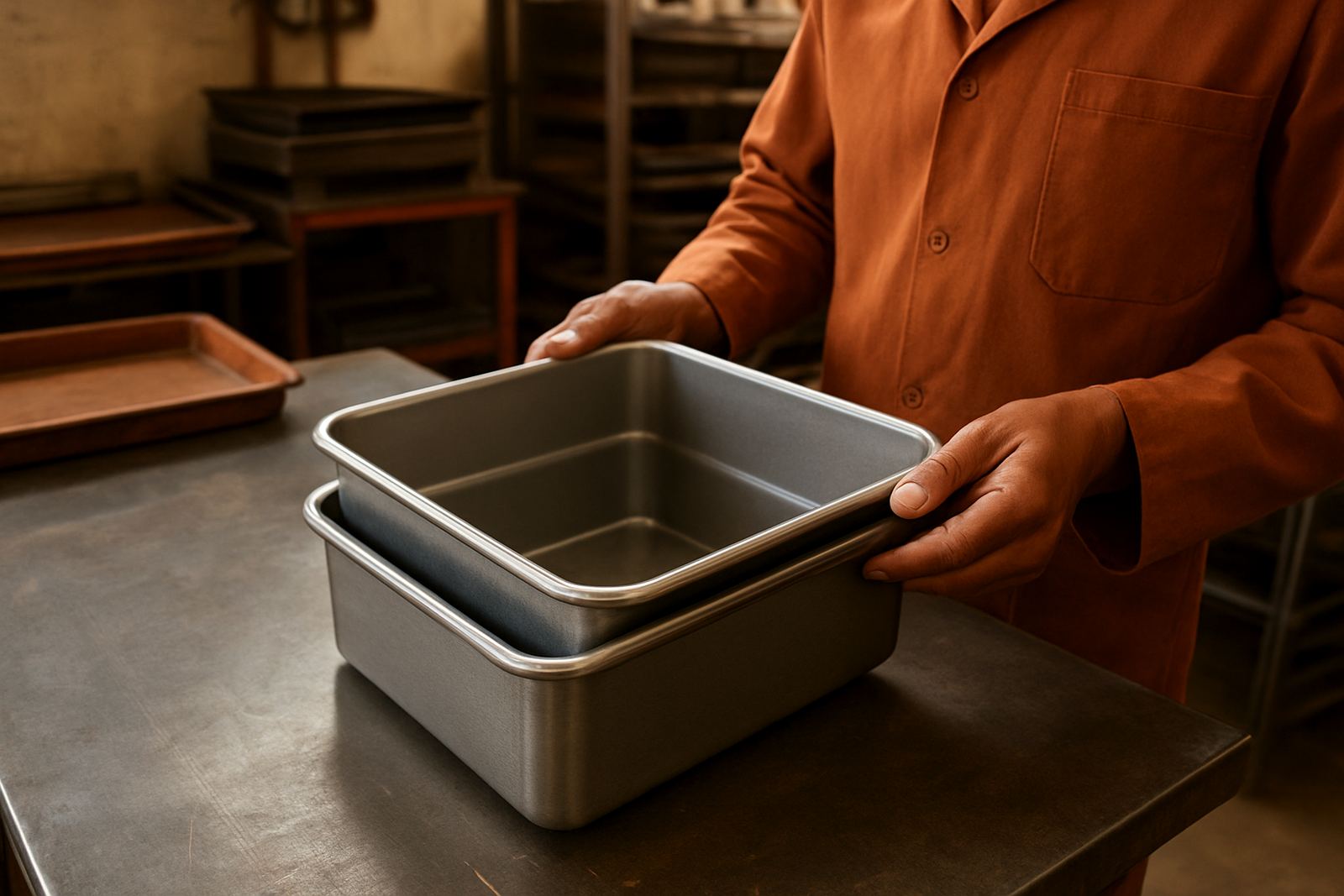
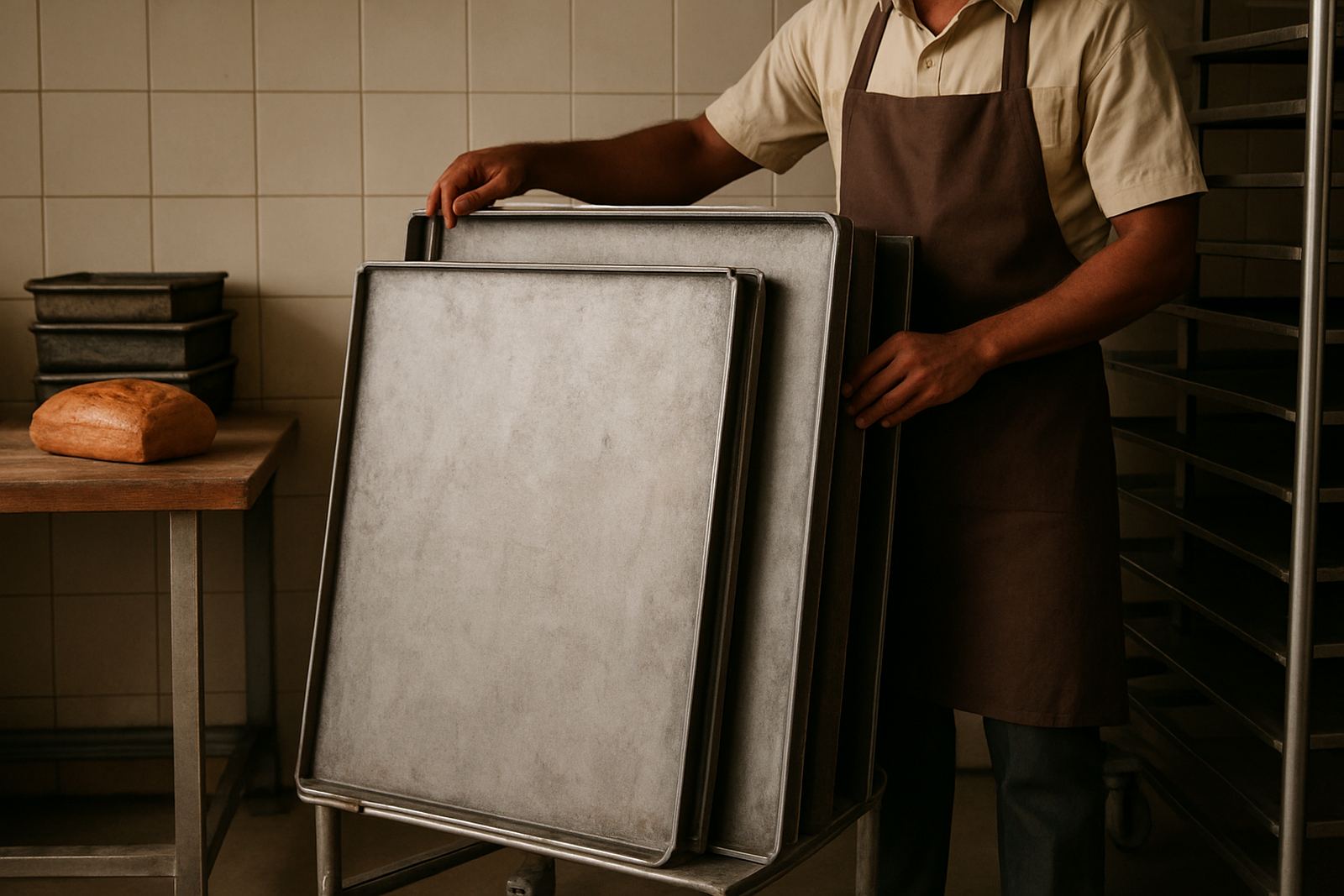
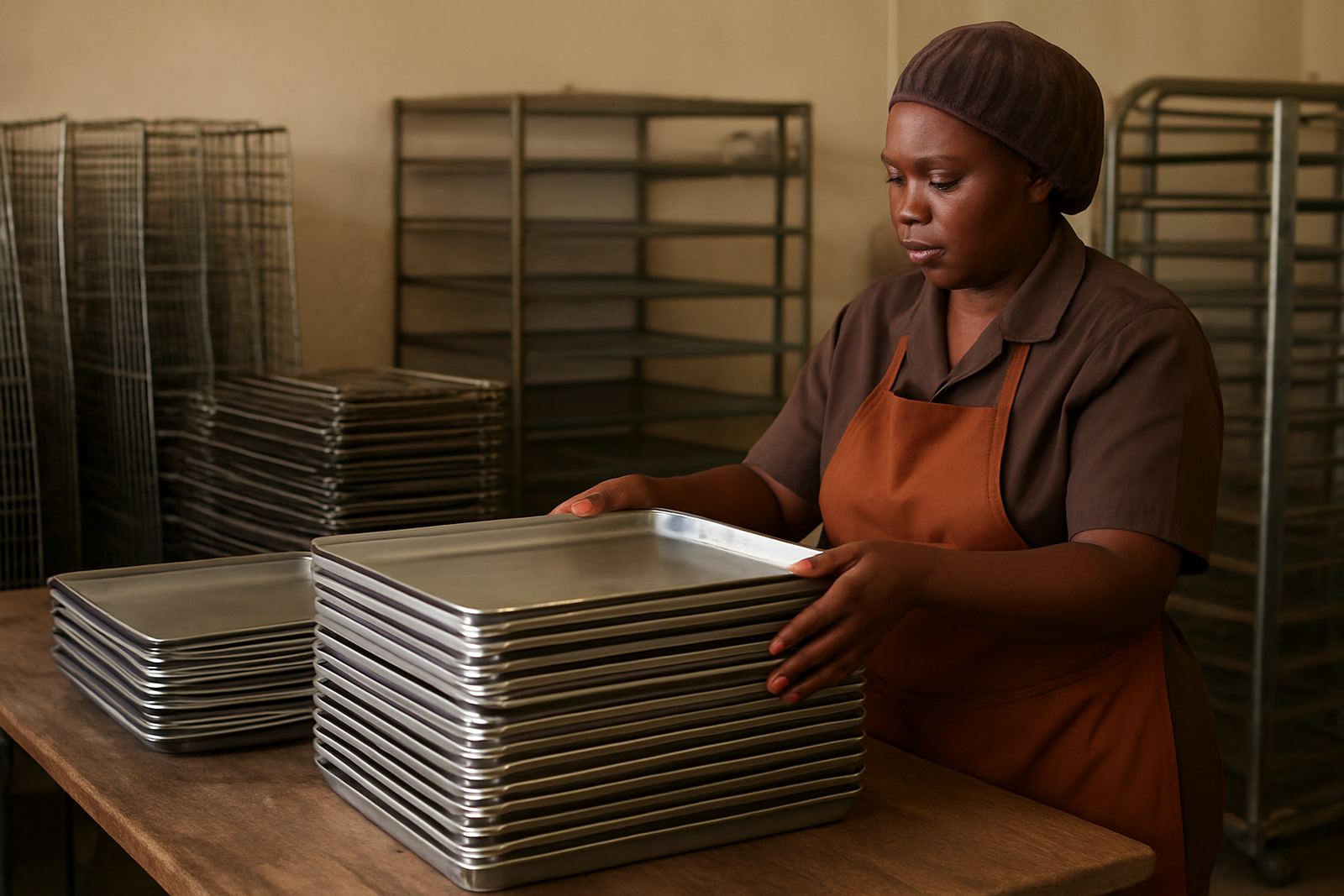
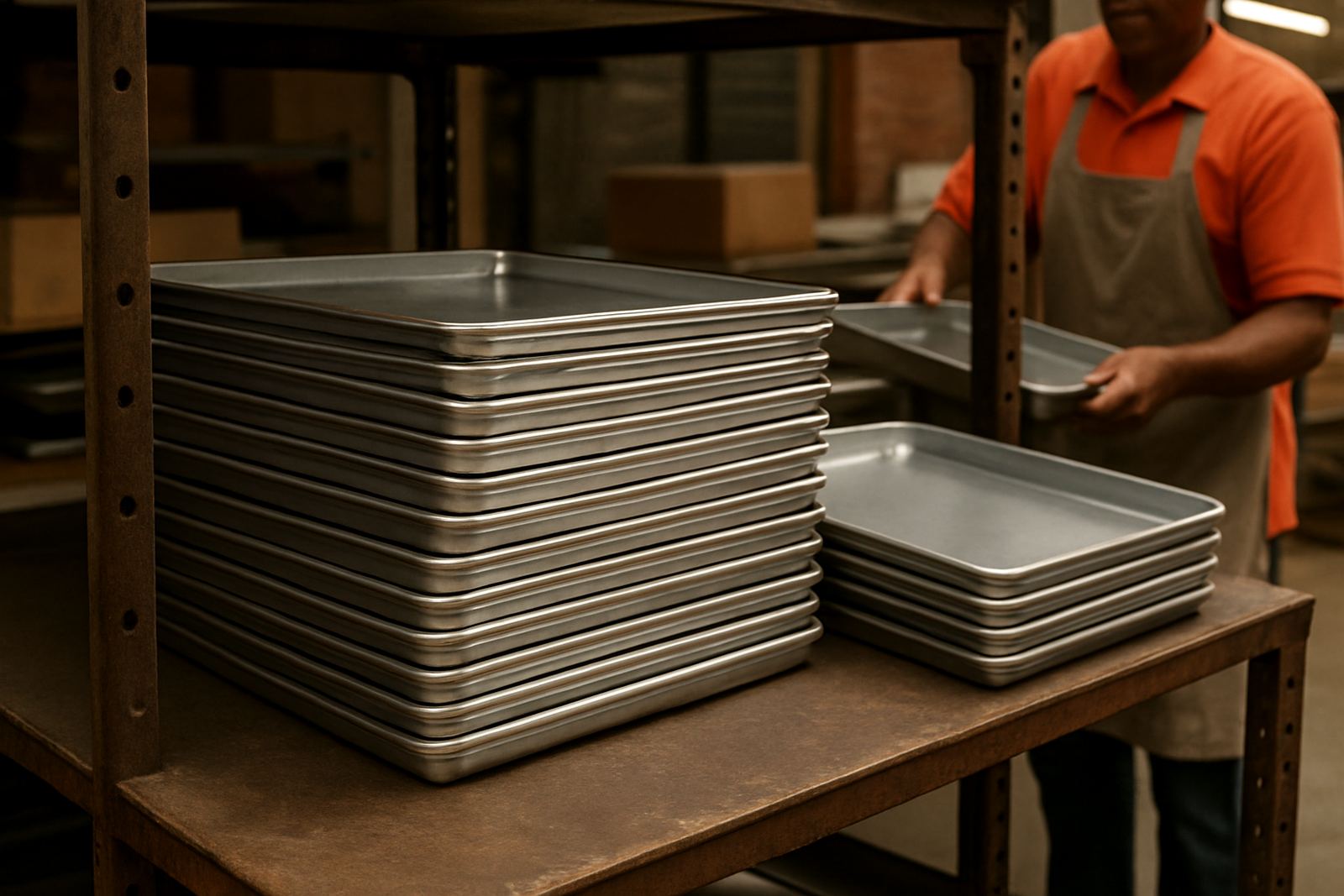
A solid tray is a flat steel tray with a continuous base instead of open mesh or perforation. That gives full support under dough pieces, laminated products, sliced loaves, sheet bakes and items that may sag or spread if they sit on a more open surface. It also helps with controlled contact where the bottom finish must stay even across the tray. In a busy plant, that matters when you are pushing volume through deck ovens, rack ovens or tunnel systems.
At our Westmead base in Pinetown, we make solid trays for South African bakery conditions, including heat cycling, steam, cleaning chemicals and heavy daily use. The tray format can be matched to your pan racks, trolleys and oven setup, so loading stays quick and the team does not fight with awkward sizes. Many customers replace mixed, worn stock with a standard tray size and the whole line becomes easier to manage.
Sizes, materials and finish options
We manufacture solid trays in common bakery sizes and also to order. The exact size depends on your racks, oven rails and product shape. Most buyers ask for trays that fit standard plant bakery handling, but we can work from a sample tray or drawing if your line is already set.
- Material: mild steel sheet for general bakery use, with heavier gauge options for high wear lines
- Finish: bare steel, coated or treated to suit your cleaning method and product type
- Edges: turned, reinforced or welded depending on load and handling
- Custom features: holes for lifting, side lips, locator points and corner strengthening
- Tray depth: flat base trays or shallow sided trays, depending on what you bake
For bakeries on the coast, including Durban and the wider KZN belt, storage matters too. A tray that sits unused in humid conditions can pick up surface rust if it is not stored and dried properly. We can advise on finish and handling so the trays last longer between recoating or maintenance cycles.
Best uses in plant bakeries, hotels and retail production
Solid trays suit products that need a firm base or controlled spread. They are used in plant bakeries for high output production, in hotel kitchens for batch baking and in retail bakery back-of-house areas where consistency is important and space is tight. They are also useful for proving-to-oven workflows where the product is moved once and not disturbed again before baking.
Common uses include dough pieces, savoury bakes, bakery sheets, fruit trays, prepared components and items that can deform if the base is uneven. If your product drops crumbs, leaks oil or needs easier transfer, a solid tray can make cleaning simpler than a more open style. It also helps in plants where staff work under load-shedding pressure and production windows are short, because the tray can be loaded, moved and unloaded with less faffing about.
- Plant bakeries running fixed-size production batches
- Hotels and catering kitchens with regular large-volume baking
- Retail bakery central kitchens
- Products needing flat support during transport or cooling
Installation, oven fitment and utility needs
Solid trays do not need gas or electrical connections of their own, but they must fit the system they run in. Before ordering, check the oven type, rail spacing, trolley dimensions and how the trays are lifted in and out. If the tray sits on a rack, the side walls and base must clear the guide rails without scraping. If it moves into a conveyor or oven floor setup, the edge profile has to suit the transfer method.
We recommend measuring in millimetres, not by eye. A tray that is 5 mm out can jam on a busy shift and cause delays. If the site has mixed equipment, we can make a trial piece or compare against an existing tray. For municipalities and food premises with regular inspections, a proper fit also reduces spillage around the oven area and makes cleaning easier to manage.
- Confirm internal tray size, not only external sheet size
- Check clearance for oven rails, trolleys and lifting hooks
- Tell us whether the tray will be loaded by hand or mechanically
- State if you need a lip, grip point or stacking allowance
Care, cleaning and when to send trays in for service
Solid trays last better when they are cleaned before build-up becomes hard. Burnt sugar, oil, flour paste and salt can all shorten tray life if they are left to bake on again and again. Wash and dry the trays properly, then store them off the floor in a dry area. If trays are stacked wet in a hot room, they can trap moisture and start to pit or stain.
We offer tray servicing that includes deep cleaning, straightening, weld repairs, corner repairs and rim repairs where needed. If a tray begins to bow, scrape on the oven rails, or develops a lifted edge, send it in before it damages the line. Recoating may also be useful on trays that have lost their surface condition but are still structurally sound. A small repair now is cheaper than replacing a whole batch later.
- Clean trays after every shift where possible
- Dry fully before stacking
- Check for twist, bowing or cracked corners
- Watch for hot spots that may show uneven wear
What to check before you place an order
When ordering solid trays, the more detail you give us the better the fit. We usually ask for the product type, tray quantity, dimensions, oven or rack type, and how the trays will be handled. If you already have trays in service, send one sample or a clear set of measurements so we can match the pattern. For new lines, we can work from your baking plan and available rack space.
It also helps to tell us whether the tray will hold wet dough, par-baked product, dry goods or items with oil. That affects material choice and finish. If your bakery works in a coastal area, in a hot inland plant or with frequent washdown, say so upfront. We will guide you on the practical side so the tray works on day one and keeps working after the first few months.
- Product type and baking temperature range
- Exact tray size, or a sample tray to copy
- Quantity needed and whether replacements must match existing stock
- Handling method, storage area and cleaning process
Key facts
| Product type | Solid base steel tray for bakery and food production use |
|---|---|
| Typical use | Products needing full support and controlled surface contact |
| Material | Mild steel with optional heavier gauge for high wear |
| Size range | Standard bakery sizes and custom manufacture to sample or drawing |
| Service options | Recoating, straightening, corner repairs, rim repairs and deep cleaning |
| Base location | Westmead, Pinetown, supplying nationally |