Pie trays built for regular batch baking
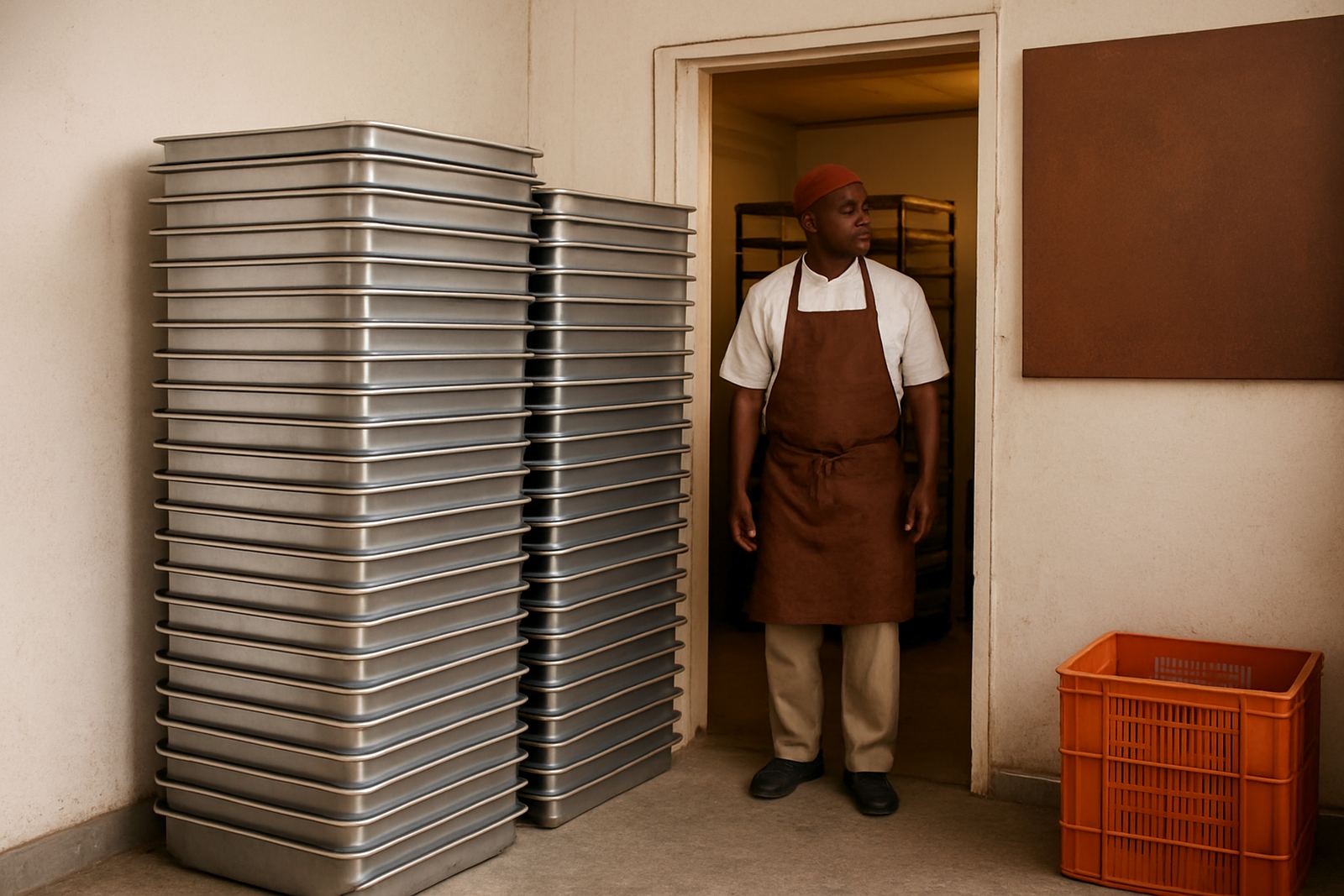
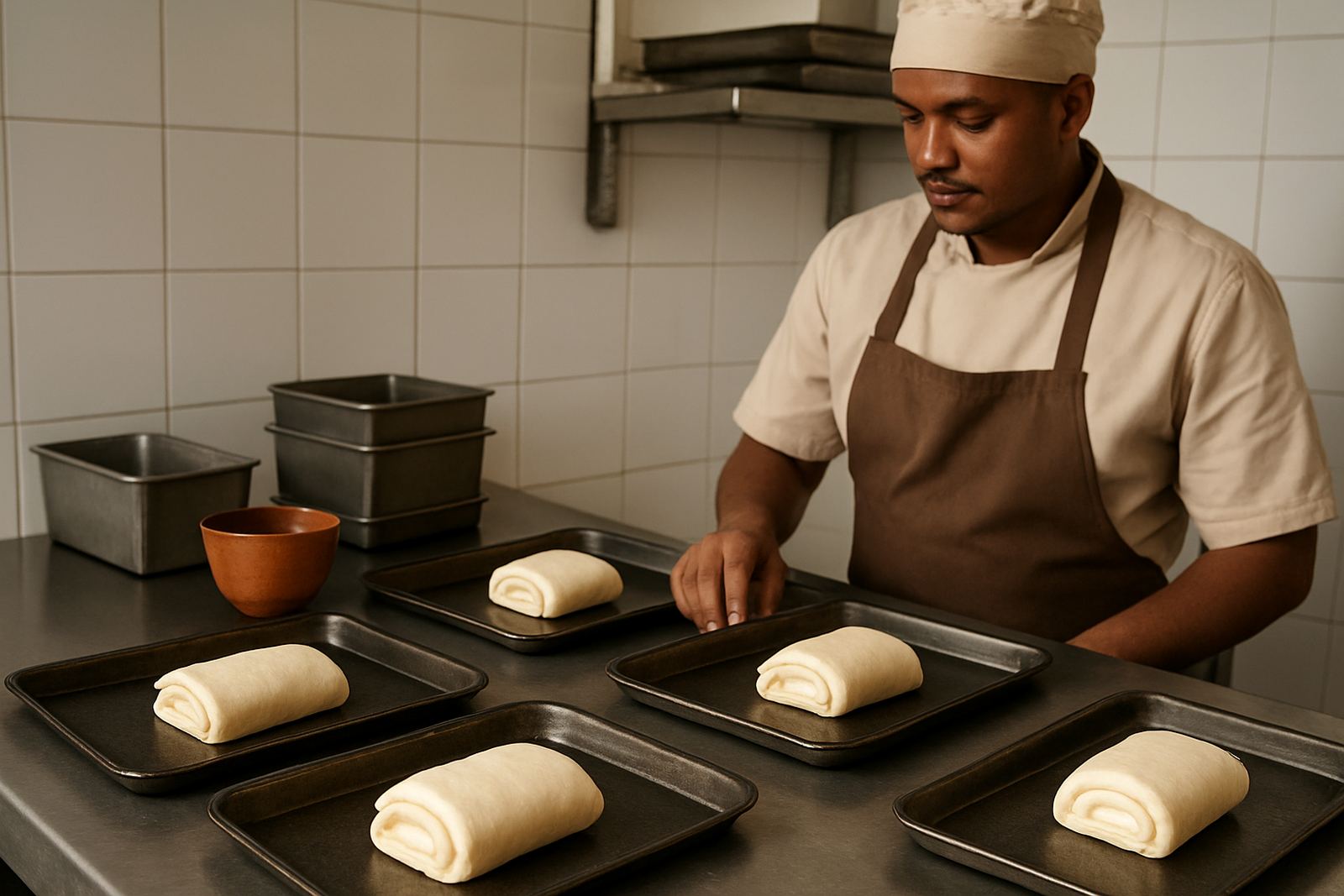
Pie trays are the pans and tray formats used to hold pastry shells, fillings and finished pies through proofing, baking and cooling. In a commercial bakery, the tray needs to keep its shape, sit flat on the oven floor or in the rack, and release product without excessive sticking or distortion. That matters when you are working through early shifts, load-shedding changes or a plant oven that has to keep to a set bake time all day.
Our pie trays are made for repeat use in busy kitchens and bakery lines. The steel construction gives steady heat transfer and a cleaner finish than thin, soft pans that bow after a few runs. For plant bakeries, hotels and retailers, the main benefit is simple: a tray that keeps the same profile from batch to batch, so the pies bake evenly and the pack-out looks right.
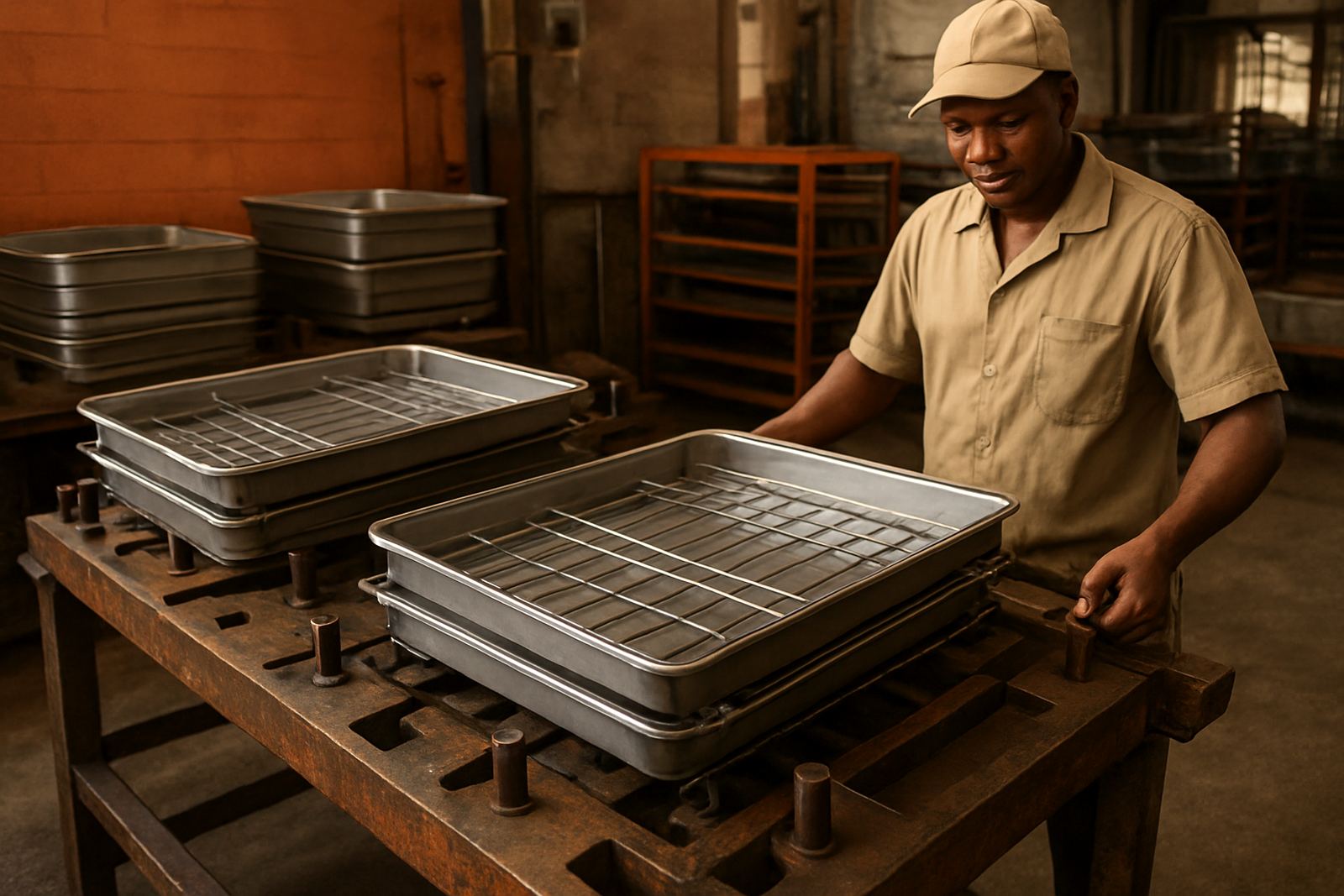
We make and service commercial tray work in Westmead, Pinetown, and supply clients nationally. If you need one tray style for a standard line or a small run of special formats, we can help with plain trays, formed edges, deeper sides and custom sizes to match your filling, lid and bake process.
Sizes, depths and tray formats we can supply
Pie trays are usually specified by the finished pie size, the number of cavities per tray and the depth needed for the filling. Some customers want a shallow tray for a lighter snack pie, while others need extra depth for meat and savoury pastry products. We also supply formats that work for open pies, closed pies and trays that support lids or pastry covers.
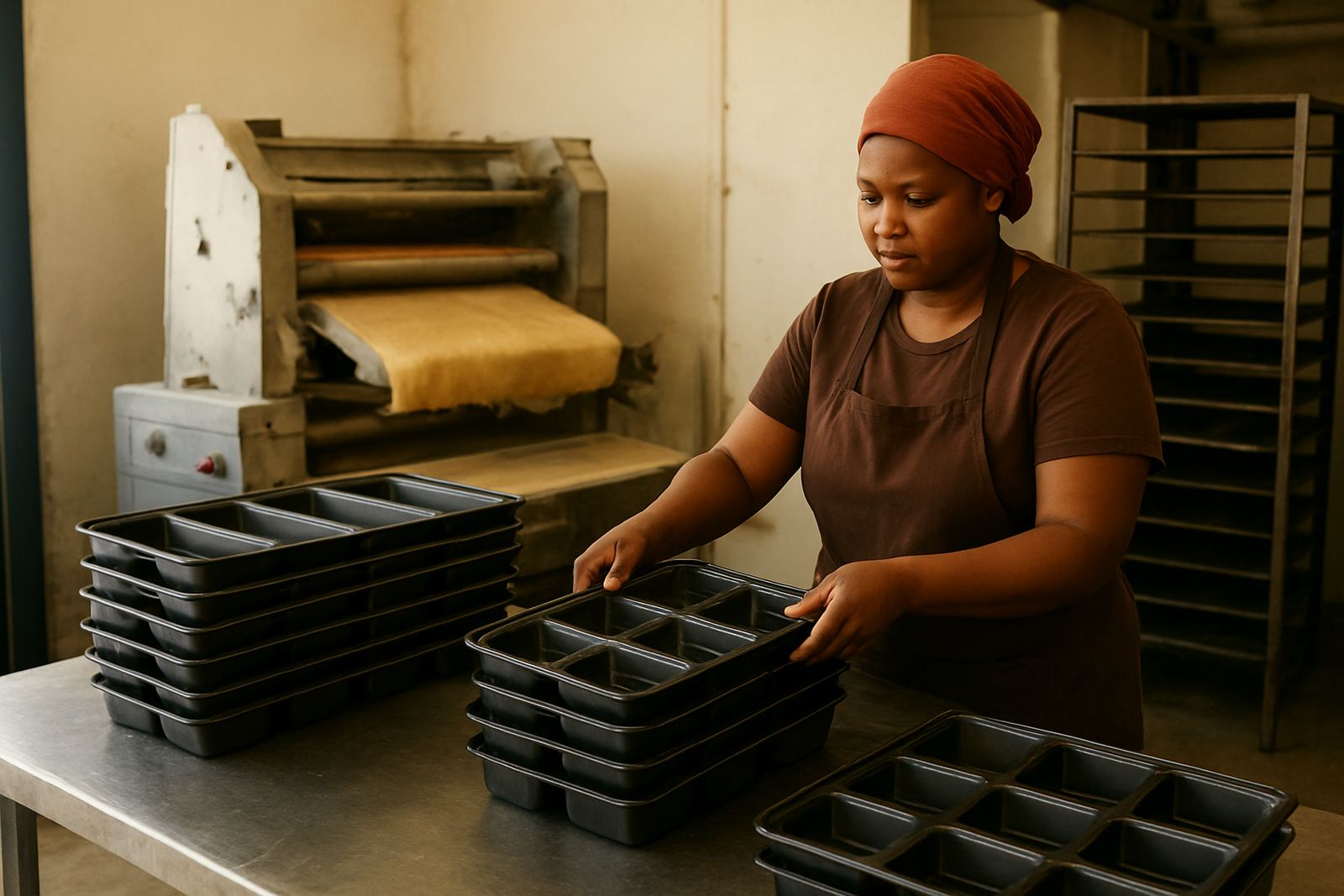
Typical options include single pans, multi cavity trays and custom production trays made to suit your oven deck or rack spacing. We can work to your existing sample, a worn tray that needs replacing, or a fresh specification if you are changing pack size. If you are baking in humid coastal conditions, it is worth choosing a finish and material thickness that will hold shape and not rust quickly in storage.
- Single pie pans for trial batches or special products
- Multi cavity trays for higher output lines
- Deeper formats for savoury fillings and heavier portions
- Plain edged trays for easier handling and stacking
- Custom hole layout, cavity spacing and tray dimensions
Common commercial work includes trays for 4, 6, 8, 10, 12 or more pies per tray, depending on the product size and the oven set-up. The final size is best confirmed against the baking tin, depositor and packing method, because even a small change in lip height or cavity shape can affect sealing and release.
Where pie trays suit best
These trays are used in plant bakeries, but they also suit hotel pastry kitchens, butcheries with hot food counters, supermarket bake rooms and contract caterers. If your line runs early, the trays need to hold up to quick turnover and repeated washing. If you bake near the coast, the steel needs proper care so the finish does not pit from moisture sitting overnight.
Pie trays are a practical choice where product consistency matters more than decorative presentation. They work well for regular savoury batches, school lunch supply, staff canteen production and retail freezer-to-oven planning where the same tray must be used many times. In Pinetown, Durban and inland plant bakeries, the most common issue is worn pans that no longer sit true. That leads to uneven baking, leaking fillings and more rejects at packing.
We also see demand from sites that want fewer delays when a tray fails. Having spare trays on hand means you can keep the line moving while damaged units are sent for recoating or straightening. For larger bakeries, this saves time during public holidays and high-volume periods when you cannot afford to stop a shift for one bent tray.
Installation, oven fit and power or gas needs
Pie trays themselves do not need separate power or gas, but they must be matched to the oven and handling system. Before ordering, check the oven deck size, rack spacing, loader clearance and whether trays need to pass through a prover, blast chiller or holding cabinet. A tray that is too wide or too tall can slow production and cause awkward handling at the bench.
For floor ovens and deck ovens, the tray base should sit flat so heat moves evenly across the bottom. For rack ovens, the outer dimensions must allow easy loading without scraping the sides. If your bakery changes over from gas to electric, or works through load-shedding with a generator, the tray spec should still suit the same heat pattern. The tray cannot fix a poor oven set-up, but the right size and steel gauge will help reduce hot spots and uneven bottoms.
- Check internal oven measurements, not just door size
- Confirm tray height if lids or covers are used
- Allow space for gloves, tongs and quick transfer at the bench
- Make sure the tray can be lifted safely when loaded with filling
- Match tray spacing to your racks, trolleys or floor tile pattern
If you are replacing an older tray format, send a sample or measurements and we can work from that. When we know the product weight, bake time and oven type, it is easier to choose a tray that will stay straight and hold the same finish over long service life.
Care, cleaning and recoating support
Good tray care starts as soon as the batch comes out. Let the tray cool enough for safe handling, then clear off residue before it hardens. A gentle clean is usually better than harsh scraping, because deep gouges shorten tray life and make sticking worse on the next run. In a busy plant, a simple cleaning routine after each shift helps more than waiting for a full washdown at the end of the week.
We support pan and tray maintenance with recoating, straightening and repairs, which is useful when a tray is still sound but the working surface is tired. Damaged corners, rim wear and light weld repairs can often be handled without replacing the full set. That is especially helpful for older pie trays in long-running bakeries where matching the existing format matters. A straight tray stacks better, heats more evenly and travels cleaner through production.
- Pan recoating and tray recoating for worn surfaces
- Pan straightening to correct bowing and twist
- Corner repairs and rim repairs for handling damage
- Weld repairs where joints have opened up
- Deep cleaning for build-up, residue and old release material
On coastal sites, dry storage is important. Trays should not be left stacked while still damp, and they should not sit against wet floors or open wash areas. A little upkeep saves money, and it also keeps the product looking better when the tray goes back into the line.
What to check before you order
Before placing an order for pie trays, it helps to have a clear checklist. That avoids delays and makes sure the tray matches your actual bakery process, not just the sample you kept on a shelf. The most useful details are the finished product size, the number of pies per tray, the tray depth, and whether you need a plain edge or a formed lip for handling.
It also helps to tell us how the trays are moved. A tray that is lifted by hand has different handling needs from one that rides on a trolley, rack or conveyor. If the tray will be washed often, or stored in a humid room, mention that too. Small changes in steel thickness or edge treatment can make a difference when trays are used every day. One overlooked measurement can mean a full batch of trays that are a tight fit or too loose in the oven.
- Finished pie diameter or rectangular size
- Tray depth and filling allowance
- Number of cavities per tray
- Oven type, rack size or deck spacing
- Required finish, repair history or recoating needs
- Delivery area and any site access limits
If you are unsure, send a sample tray, a sketch or a photo with measurements. From Westmead, Pinetown, we can assist plant bakeries, retailers and hotels across KwaZulu-Natal and the rest of the country. For ordering and support, contact sales@bakerite.co.za.
Key facts
| Product type | Commercial pie trays and pan formats |
|---|---|
| Material | Steel construction for repeated bakery use |
| Typical use | Plant bakeries, hotels, retailers and contract caterers |
| Sizes | Single, multi cavity and custom made to sample or drawing |
| Service support | Recoating, straightening, corner repairs, rim repairs and weld repairs |
| Base | Westmead, Pinetown with national supply |