What wire band trays are used for
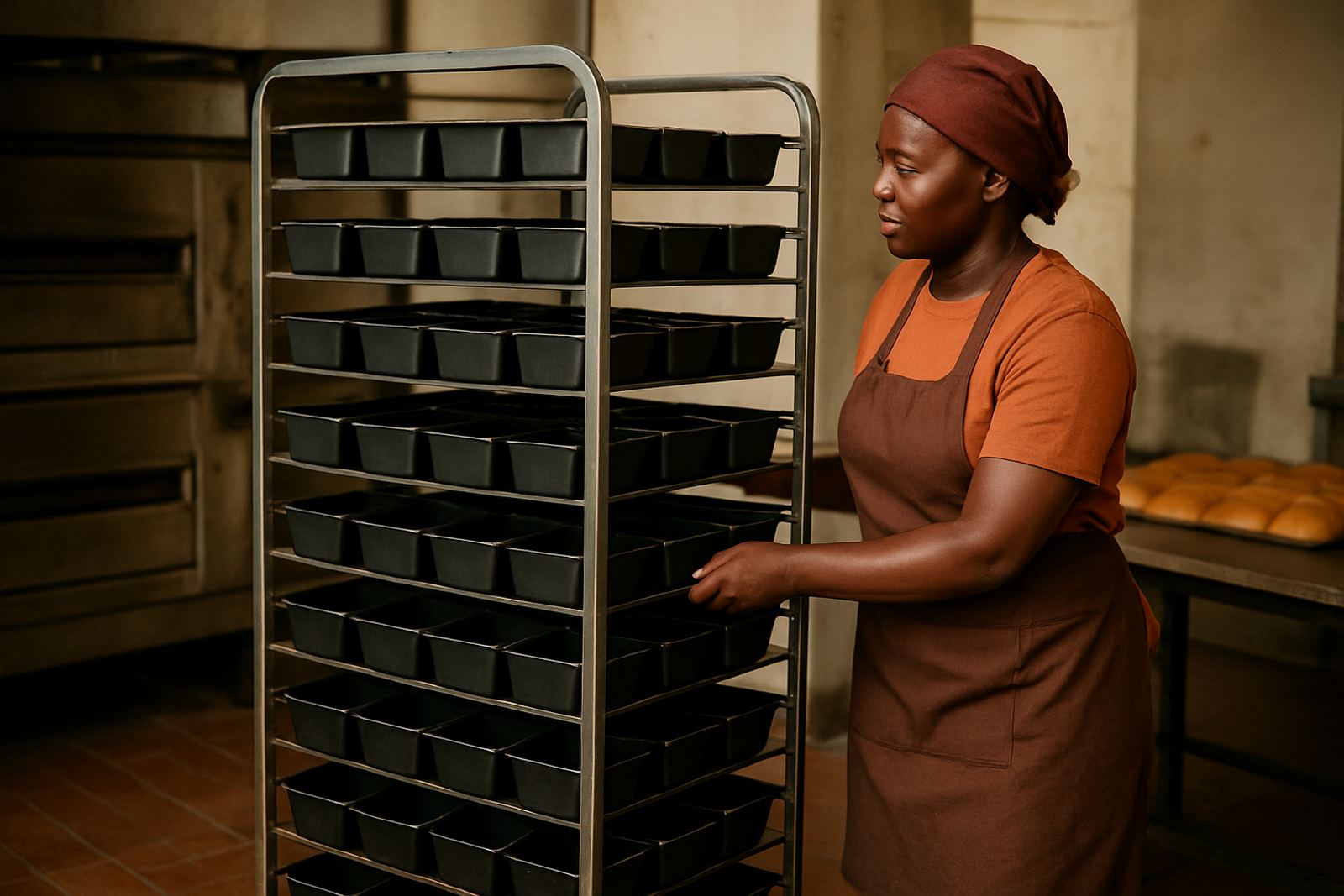
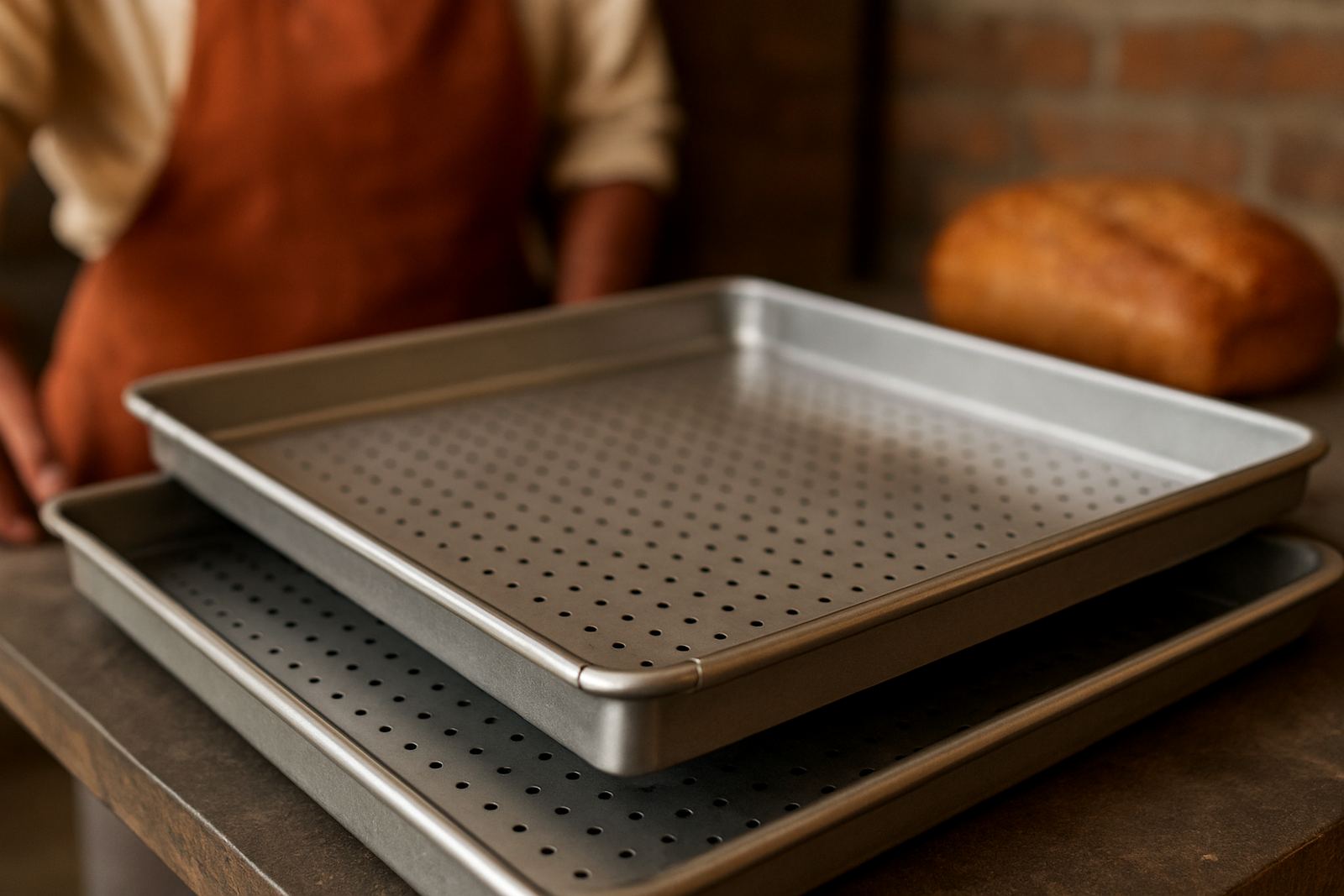
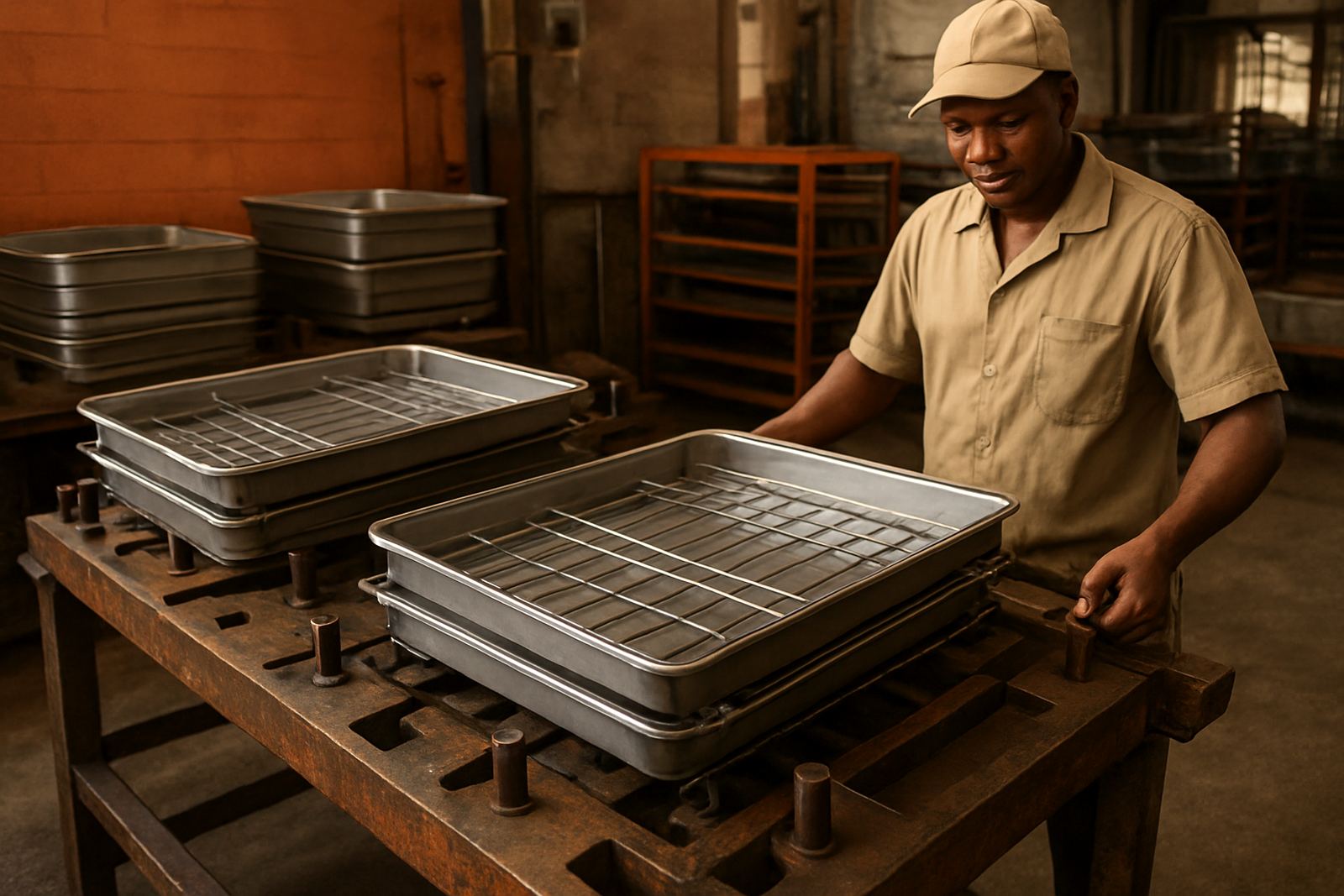
Wire band trays are special purpose bakeware made with a steel frame and a wire supported base or band section, depending on the application. They are used where a full flat pan is not the best fit, especially when the product needs airflow from underneath, less surface marking or a more open structure during heat transfer. In a plant bakery, that can mean better handling of certain dough pieces, proofed items, set mixes or products that must keep their shape without sitting in a heavy solid base.
We make these trays for continuous production lines, batch ovens and manual handling in hotels and food plants. The goal is simple: keep the product stable, allow even baking or setting, and make the tray easy enough to lift, stack and clean at the end of a shift. In humid coastal conditions around Durban and Pinetown, the tray spec also has to take daily moisture, steam and washdown into account, otherwise the frame starts going out of square quicker than it should.
Sizes, wire layouts and build options
Wire band trays are usually made to order, because the right size depends on your oven rack, conveyor width, proofing rack, cooling trolley or depositor pattern. We work from your actual internal measurements, not just the name of the machine. If a tray is 5 mm too wide it becomes a daily nuisance, and that is where time gets lost on the floor.
- Tray lengths can be set to suit single-pan handling or multi-up loading
- Widths can be matched to rack runners, shelf spacing or conveyor lanes
- Wire spacing can be adjusted for airflow, support and product release
- Frame depth can be built for lighter trays or heavier duty use
- Corner style, rim height and handle points can be changed to suit your line
Typical build choices include mild steel frames with formed wire sections, reinforced edges, or welded corners for higher cycle work. Where a tray sees regular washdown or coastal humidity, we can advise on the finish and the cleaning routine so the tray does not corrode too quickly. Small changes in the build can make a big difference, espescially on larger production runs.
Where wire band trays suit the best
These trays are a good fit for plant bakeries, in-store bakeries, hotel kitchens and production rooms that need controlled support without the weight of a solid pan. They suit products where airflow matters, where release is important, or where the tray needs to let excess heat and moisture move away from the underside. That can include selected bread products, proofed dough pieces, savoury items and specialty bakery goods made in repeat batches.
They are also useful where trays are stacked and moved often. In busy sites from Westmead through New Germany and the Upper Highway, teams need bakeware that can be handled without snagging, bending or dropping product. Wire band trays can reduce contact marks and help keep the base cleaner, but they still need correct loading. If one side is overloaded, the tray will twist and the wire pattern can distort over time.
- Plant bakeries running multiple shifts
- Retail production kitchens with compact ovens
- Hotels, hospitals and food service kitchens
- Products that need lower base contact
- Trays that must stack and carry neatly between areas
Installation, oven fit and utilities
Wire band trays do not need a special gas or electrical connection of their own, but they must suit the oven system they are going into. That includes rack size, shelf pitch, loading direction, conveyor spacing and heat pattern. In a plant bakery, the wrong tray shape can block circulation or make the operator tilt it just to get it in place, which is how damage starts.
If the tray is going into a gas oven, electric oven or tunnel setup, we check the clearances around the product and the carrier. Some ovens have hot spots near the sides or the rear, so tray length and wire opening need to match the actual bake profile. For load-shedding back-up systems, lighter trays are easier to move, but they still need enough stiffness to stay true when the power cuts during a cycle and the line restarts. We can work from site dimensions in Pinetown, Durban, Umlazi, Richards Bay or further afield.
When ordering, it helps to send the exact opening size, the product weight per tray, and whether the tray is lifted by hand, trolleys or a mechanical loader. That saves rework later and keeps the fit right first time.
Care, recoating and repairs
Like any steel bakeware, wire band trays last longer when they are cleaned properly and not left with baked-on residue for weeks. Dry product crumbs, fat build-up and detergent left on the metal all shorten service life. After washdown, trays should be dried fully before stacking, especially in coastal areas where humidity hangs around overnight.
We support trays with practical repair work, not just replacement. Depending on the condition, we can do tray recoating, weld repairs, corner repairs, rim repairs, pan straightening and deep cleaning. If a tray is still structurally sound but the edge has opened up or the frame has gone slightly out of square, repair is often the better spend. That keeps stock in rotation and avoids a full batch of new trays being ordered too early.
- Brush off loose crumbs before washdown
- Do not soak trays for long periods
- Dry before stacking to limit rusting
- Check weld points and wire sections weekly
- Keep damaged trays out of the line until repaired
What to check before you order
Before ordering wire band trays, gather the right measurements and product details. That prevents delays and avoids a tray that looks right on paper but fights the line in practice. We normally ask for the internal oven size, the usable rack opening, the product weight, the loading method and whether the tray must sit inside an existing carrier or stand alone.
- Exact internal length and width in millimetres
- Required tray depth or frame height
- Product weight and how many items per tray
- Whether airflow under the product is critical
- Current tray damage, photos and wear points
- Stacking, storage and cleaning method
If you are replacing an old tray, send a sample or a clear set of measurements from the worn unit. If you are starting a new product line, tell us how the dough, batter or set mix behaves on the tray now. That helps us decide on wire spacing, support points and corner strength. For national supply from our Westmead base, it is worth checking lead times early, especially when production runs are planned around month-end, school terms or holiday spikes.
Key facts
| Material | Steel frame with wire band support |
|---|---|
| Manufacture | Made to order from site or sample dimensions |
| Typical use | Plant bakeries, retail bakeries, hotels and food production |
| Fitment | For rack ovens, conveyor systems, proofing and handling lines |
| Care options | Deep cleaning, recoating, straightening and weld repairs |
| Supply area | Westmead, Pinetown and national delivery |