Built for small bakes that must come out the same every time
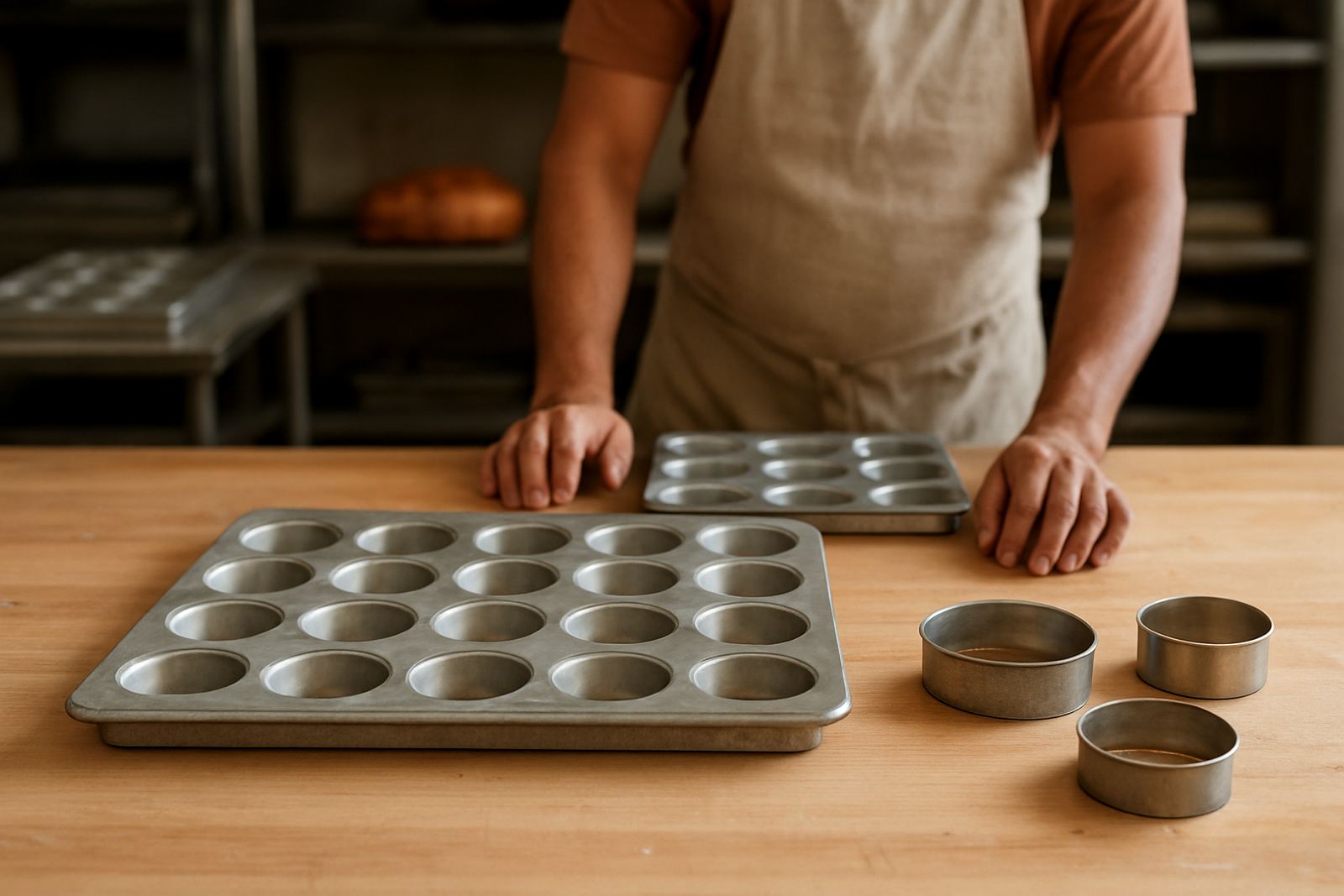
Tartlet trays are used where the product is small, busy and unforgiving. A tartlet that bakes too dark on one edge, sticks in the cavity or loses its shape can throw off a whole run, especially in a plant bakery or hotel kitchen serving the same item day after day. Our tartlet trays are made as cavity trays, with each recess formed to hold pastry, shortcrust, sweet shells or savoury quiche bases in a fixed pattern.
The trays are made for repeat use in commercial ovens and are suited to bakeries, caterers, hotels, retail supply kitchens and food manufacturers. They are also a practical option for seasonal production where volumes go up fast, such as Christmas catering, end of year functions or prom and wedding orders. Because the cavities are shaped and spaced properly, you get cleaner edges, more even colour and less handling after bake.
We make trays for regular production and for special sizes too. If your pastry is thin, rich in butter or more delicate in hot weather, we can adjust the tray layout and depth so the product holds its form without needing extra flour or overworking. In coastal areas like Durban, humidity can soften dough quickly, so the tray spec matters just as much as the recipe.
Tray sizes, cavity shapes and finish options
Tartlet trays are usually ordered by cavity count, cavity diameter and tray overall size. The best choice depends on the finished pastry diameter, the oven loading method and how the trays will be cooled or stacked after baking. Common production requests include round tartlets, square mini quiches and shallow pastry shells for finger food service.
We can manufacture trays in a range of cavity sizes, including small bite-size formats and slightly larger savoury portions. The cavity depth can be set for a low tartlet shell or a deeper quiche base, and the rim detail can be adjusted to suit the pastry finish you want. For filling lines that portion by hand, a consistent cavity mouth helps with speed and keeps the top edge tidy.
- Round tartlet cavities for sweet or savoury pastry shells
- Square or rectangular cavities for catering portions
- Shallow cavities for blind baking and filled finishes
- Deeper cavities for quiche style products
- Plain or reinforced tray edges for easier handling
- Custom pitch and layout to suit your oven rack size
Finish options can be set to suit your cleaning routine and release requirements. Some clients want a smoother cavity surface for easier turn-out, while others prefer a texture that grips the dough lightly during proofing and initial bake. For high output lines, we can also consider handling points that make the tray safer to move when hot, especially where operators are working fast during load shedding and backup generator windows.
Where tartlet trays suit production best
These trays suit any site producing small pastry items in volume. That includes plant bakeries supplying retail shelves, hotels with banquet pastry lines, caterers servicing functions, and producers making frozen pastry for later bake. They also work well where portion control matters, because each cavity gives a known yield and a known fill weight.
In a retail bakery, tartlet trays help keep stock uniform across branches. In a hotel kitchen, they support breakfast pastry, high tea service and plated dessert work. In a factory setting, they are useful for both manual and semi automated filling. If your process runs on timed oven cycles, the tray format helps keep every batch within the same bake window, which reduces waste and rework.
We supply nationally from Westmead, Pinetown, so trays can be matched to plants in KwaZulu-Natal, Gauteng, the Western Cape and other regions. For coastal and inland sites alike, the tray spec can be matched to your heat source, cooling time and handling method. That matters when your staff have to move quickly between mixing, portioning, baking and packing, with no room for sticky dough or bent trays.
- Plant bakeries needing repeatable shell size
- Retail bakeries with mixed sweet and savoury lines
- Hotels and resorts with banquet pastry production
- Caterers preparing finger food and plated service items
- Frozen pastry producers and contract bakers
Oven use, heat needs and line setup
Tartlet trays do not need gas or electricity themselves, but they do need the right oven setup around them. They are typically used in rack ovens, deck ovens or convection ovens, depending on the site. What matters most is even heat, practical tray size and enough clearance for loading and unloading without damaging the rims.
If you are running a gas oven, check the flame pattern and how it affects the tray corners. If you are using electric decks, check that the cavity layout matches the hot zones and that the product does not over brown on one side. In bakeries coping with load shedding, tray stability becomes important because temperature recovery can be slower after power returns and a bent tray can make that worse.
Allow for standard handling space around the tray, especially if staff are wearing gloves or working in a hurry. If trays will be placed on trolley racks, the overall tray footprint should line up with your rack width and the operator’s reach. In some kitchens a tray that is 10 mm too wide becomes a daily nuisance, not a small issue.
For best results, we recommend matching the tray to the cooling method too. If the product is turned out directly onto wire racks, the cavity shape and release finish should support that step. If it stays in the tray for packing, the edge detail must hold up to repeated handling without warping.
Cleaning, coating care and servicing support
Good tartlet trays last longer when they are cleaned and stored correctly. Do not soak damaged trays for long periods, and do not use sharp tools to prise out baked residue. That can lift the surface finish and start a cycle of sticking and tearing. Warm wash, gentle scrubbing and full drying before storage is usually better than harsh treatment.
Where trays are used every day, we can support them with our repair and recoating services. That includes tray recoating, pan recoating, pan straightening, corner repairs, rim repairs, weld repairs and deep cleaning. If the tray has taken a knock in transport or storage, a straightening and check can often extend its life instead of replacing the whole set.
- Clean after each shift to stop sugar and fat build-up
- Dry fully before stacking to avoid corrosion in storage
- Check cavity edges for wear, dents or lifting finish
- Keep a spare set for peak periods and service breaks
- Report warped trays early, before they affect product size
In humid coastal stores and kitchens near Durban, storage matters just as much as washing. Trays stacked while still damp can stain or rust faster, especially if they are left near open prep sinks or in poorly ventilated rooms.
What to confirm before you place an order
When ordering tartlet trays, the best results come from a proper check of your product and your line. We usually ask for the finished pastry size, the cavity depth, the tray outside size, the number of cavities required and the oven type. If you already have a working tray, a sample or measurement is often enough to copy the layout and improve on it where needed.
It also helps to know whether the tray must fit an existing rack, whether operators will turn the product out by hand, and whether the tray will be used for blind baking, filled baking or both. If the tartlet is filled after bake, the cavity finish can be different to a tray used for full-bake savoury items. A small change in pitch or rim height can save a lot of cursing on the floor, specially during night shift.
For larger production runs, ask about ordering extra trays at the same time so your line has spares. That helps when one tray is away for repair or recoating, or when a batch is damaged during transport. We supply from Westmead, Pinetown and work with plant bakeries and food businesses across South Africa that need plain speaking, measured work and proper fit from the start.
Key facts
| Product type | Small-format cavity tray for tartlets, quiches and catering pastry |
|---|---|
| Typical use | Plant bakeries, hotels, caterers, retail bakeries and frozen pastry production |
| Cavity options | Round, square or rectangular layouts with shallow or deeper cavity profiles |
| Material | Commercial steel bakeware for repeated oven use |
| Supply area | Manufactured in Westmead, Pinetown and supplied nationally |
| Related services | Pan recoating, tray recoating, straightening, corner repairs, rim repairs, weld repairs and deep cleaning |