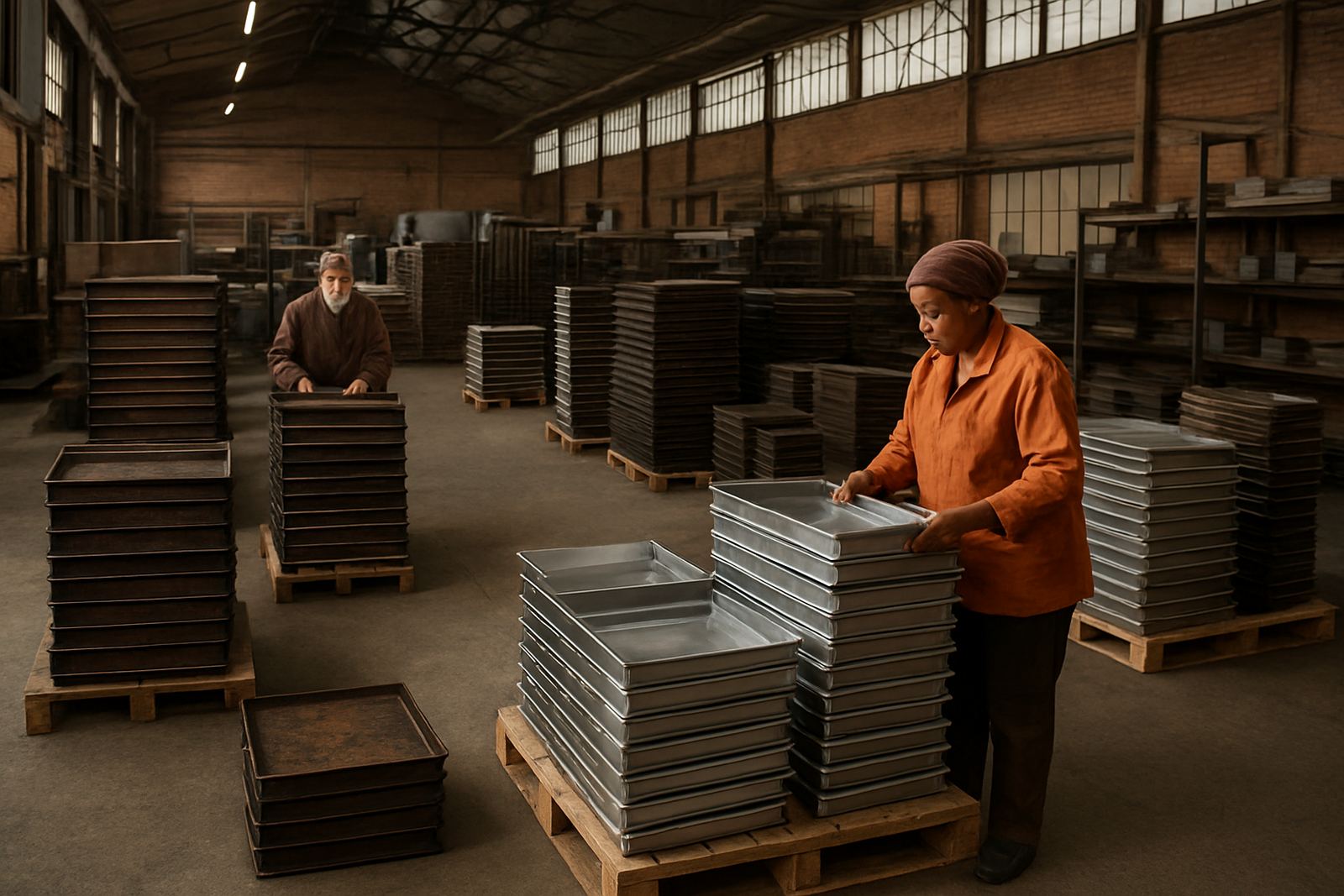
Start with a full pan fleet check
Before you replace anything, count every pan, tray and tile in service. Do it by oven line, product type and shift, then mark the items that are dented, twisted, cracked at the corners or wearing thin on the base. In plant bakeries around Westmead, Pinetown and Durban, the biggest mistake is replacing by guesswork. That usually leaves one oven short on the day a truck is due or a rack line with mixed sizes that slows loading.
A proper fleet check should also note which items are still repairable. Straightening, rim repairs, weld repairs and pan recoating can buy time on pans that still have useful life left. If you record the condition now, you can plan replacement in batches rather than taking a hit all at once.
- Count pans by size, depth and product line
- Mark damage type: twist, rust, dents, split corners, worn coating
- Check oven fit, rack spacing and stack height
- Separate repairable items from end of life items
Match replacement timing to production cycles
Replace pans in smaller batches during slower production weeks, stock takes or planned shut downs. For many bakeries, that means using low demand periods, school holiday dips or the days before scheduled sanitation. If you run on municipal water restrictions or have load-shedding windows to work around, build those into the plan as well. You do not want fresh pans arriving on a day when the ovens are already under pressure.
A good rule is to keep enough serviceable pans on hand to cover normal output plus one shift buffer. That way if a batch comes back late from recoating or a repair needs a second pass, the line still runs. In humid coastal areas, keep a closer watch on storage and wrapping too because bare steel can pick up surface rust quicker than people expect.
- Plan batches around quiet production periods
- Hold one shift buffer in reserve
- Allow time for cleaning, curing and fit checks
- Factor in transport days and return dates
Separate emergency replacement from planned changeovers
Not every pan should wait for the next planned cycle. If a pan has sharp edges, open welds or a bent frame that makes handling unsafe, take it out straight away. That is not a cosmetic issue, it affects staff safety and product quality. Keep a small emergency stock for this purpose so one failed item does not stop a whole rack or oven run.
Planned changeovers are different. These are the pans you phase out because they are wearing evenly, coatings are thinning or the shape has moved enough to affect bake results. Those items can be used right to the end of the scheduled run, then replaced in a controlled way. Keep the emergency shelf separate from the planned replacement stack so there is no confusion during a busy shift.
- Remove unsafe pans immediately
- Keep a small emergency stock on site
- Use planned replacements for wear, not damage
- Tag items clearly so they do not return to circulation by mistake
Set acceptance checks before new pans go onto the floor
When new or recoated pans arrive, do not send them straight to the oven. Check dimensions, corners, weld points and stacking fit first. A tray that looks right on a pallet can still jam in a rack or sit unevenly on an oven floor tile. At Bakerite, the point is to make sure the replacement works in your plant, not just on paper.
Use a simple sign off process. One person checks dimensions, one checks finish and one confirms the item matches the correct line. If a pan is for a bread plant, a hotel bakery or a retailer supply kitchen, the tolerances may differ slightly. Write those specs down and keep them with the fleet list so the next order is easier.
- Check size, depth and stack fit on arrival
- Inspect welds, rims, lids and corners
- Confirm coating or finish before use
- Record the batch against the oven or product line
Use repairs to extend the replacement window
Many bakeries overspend because they replace pans before getting full value out of them. If the base is still sound, services like pan recoating, tray recoating, corner repairs and deep cleaning can extend life for months. Pan straightening is also useful where the body has moved but the frame is still worth saving. That said, not every item is a candidate. Once distortion affects loading or bread release, replacement is usually the better call.
Think in terms of service life, not just age. A pan that has worked for years in a busy plant may still perform well after repair, while a younger pan exposed to poor washdown or rough handling may fail early. Keep notes on which repairs last and which ones do not. That makes next year’s decision easier and prevents repeat spend on hopeless items.
- Recoat before release quality starts dropping
- Repair corners and rims before the damage spreads
- Deep clean before judging whether an item is truly worn out
- Track which repairs give proper service life and which do not
Keep the replacement plan visible to the whole team
Replacement only works when operations, production and dispatch all know the schedule. Put the plan in the shift handover book and mark which pans are leaving, which are in repair and which are due back. In a plant with early starts and split shifts, memory is not enough. A whiteboard at the pan store helps, but a simple printed list works just as well.
For bakeries supplying national retail contracts or hotel groups, it helps to link the pan plan to customer peaks. That way the team knows why a batch is being held back or why one line is running on reserve stock. Clear communication avoids last minute panic and keeps output steady even when the weather, load-shedding or a breakdown changes the day.
- Share the plan with production, dispatch and maintenance
- Mark out, in repair and returned items clearly
- Keep a dated replacement register
- Review the plan after each batch changeover