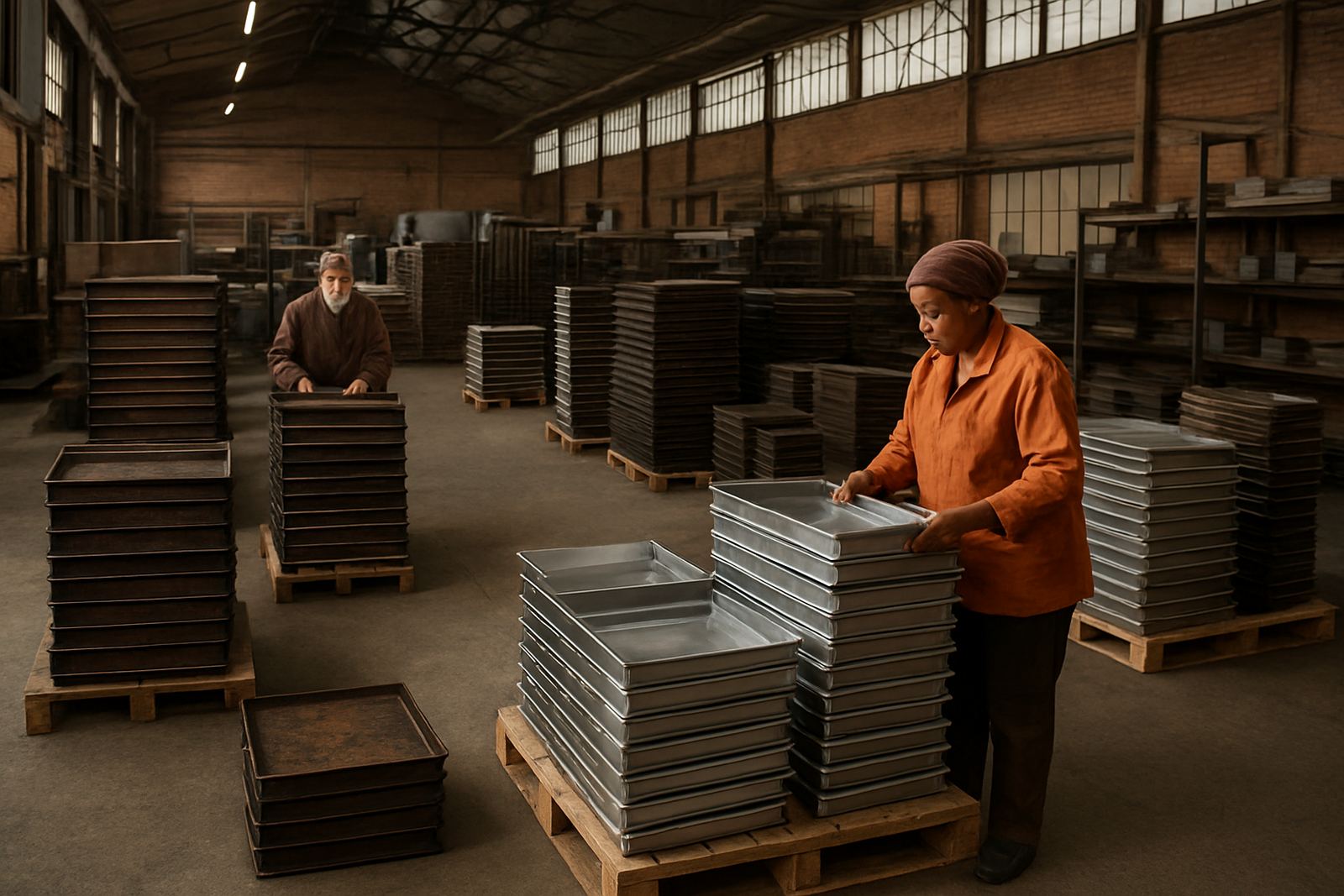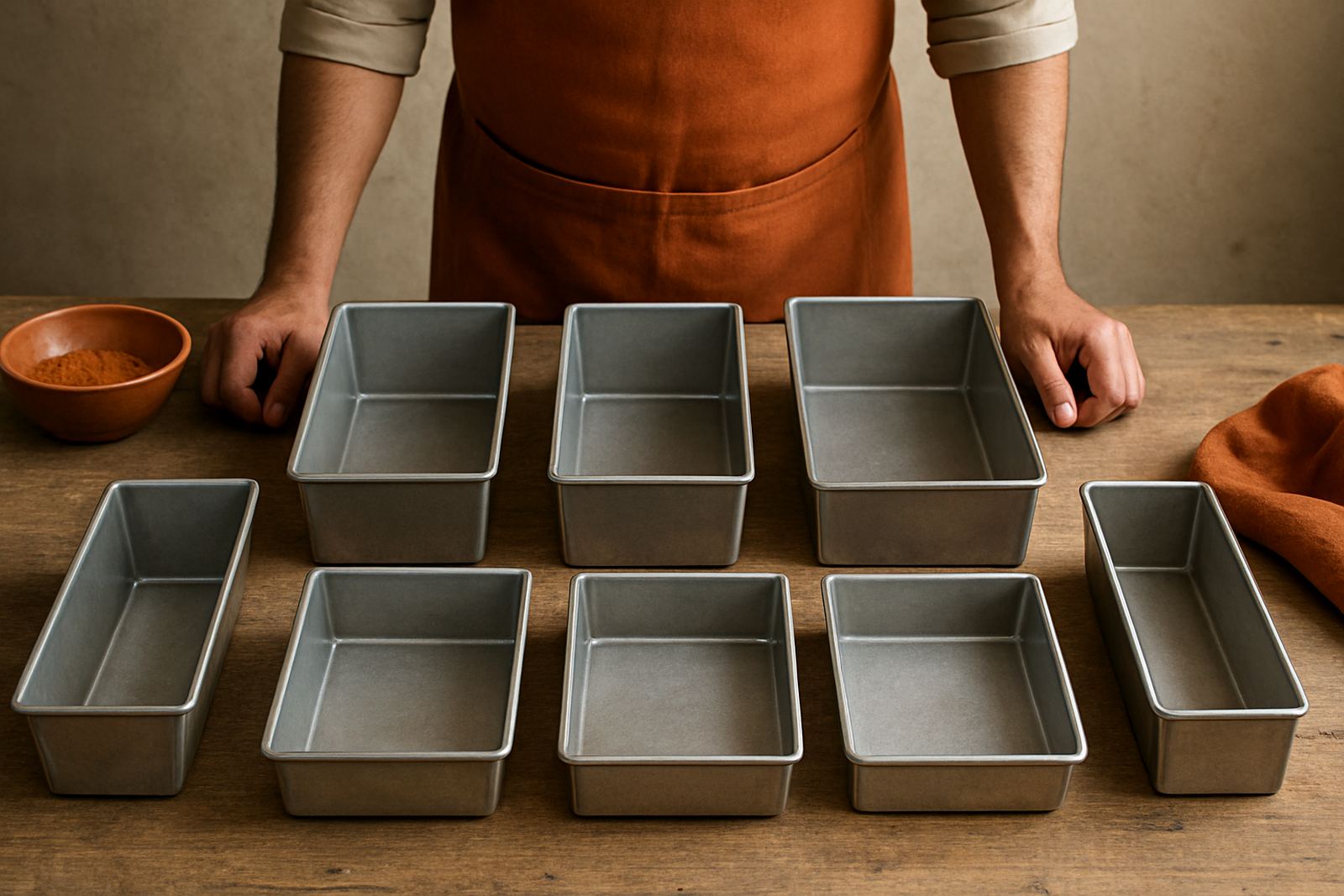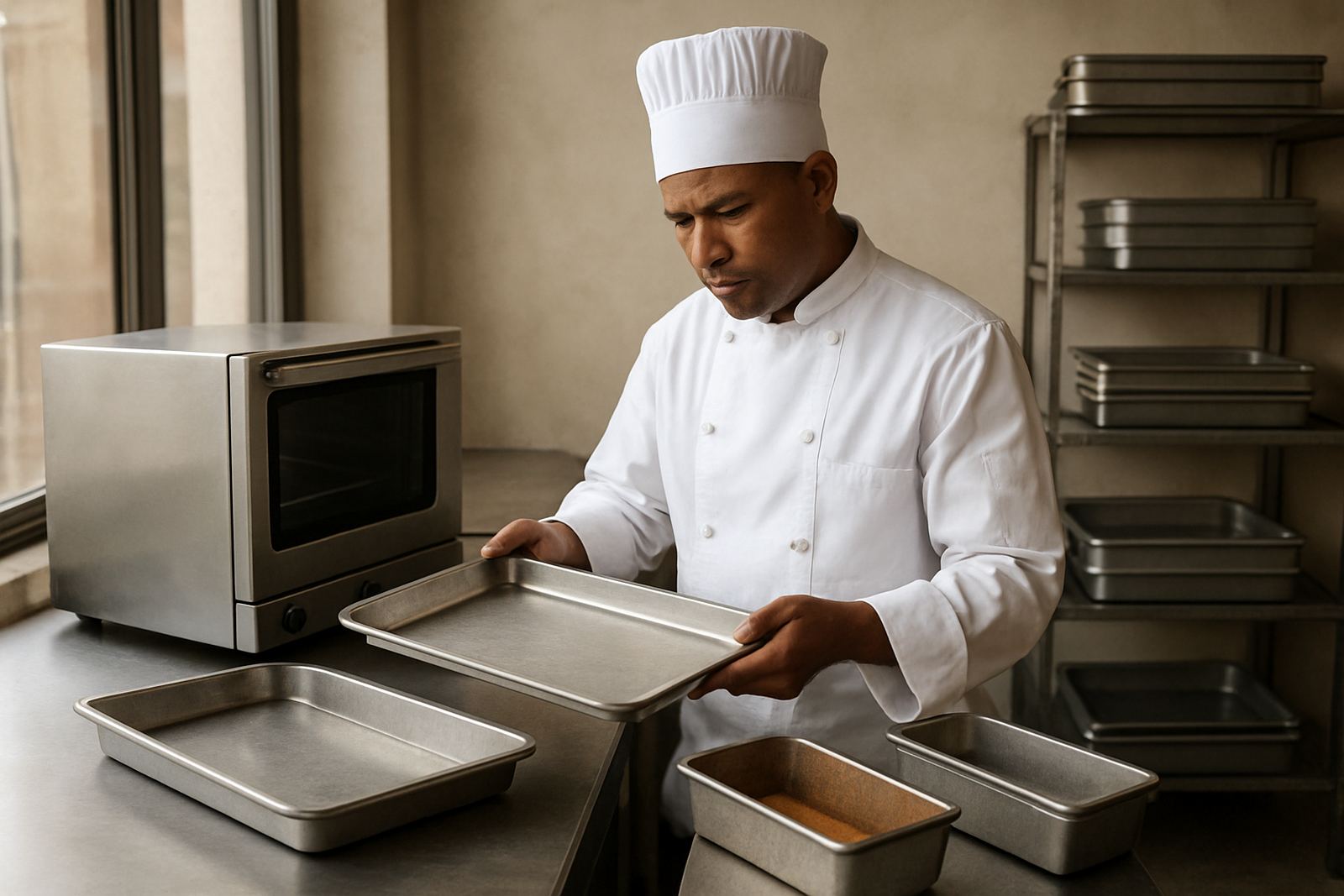
Start with the day’s real production mix
Before you order anything, write down what leaves the oven on a normal weekday, a Saturday, and month-end trading. A store baking 40 loaves and 18 trays of rolls needs a different tray mix to a site turning out pies, burger rolls, sliced bread and a few sweet items. The aim is not to buy more pans, it is to buy the right sizes for the products that actually move.
In retail bakeries the trouble usually starts when one tray must do too much. If the team is shifting from bread to savoury bakes and then to sweet pastry, the bakeware needs to cope with heat, handling and quick turnaround. Write the main product list first, then work back to pan dimensions, tray depth and how many sets you need for one full day.
- List the top 10 products sold in store by volume.
- Note the bake time and cooling time for each item.
- Check whether the same tray must fit more than one product.
- Record which items need lids, covers or tighter edges.
Choose sizes that fit the oven and the shelf
Many retail bakery teams order bakeware by habit, then find it does not fit the oven deck, proofing rack or cold room shelf. Measure the usable space in millimetres, not by eye. Check the internal oven floor, rack width, trolley rails and door clearance. A tray that is 5 mm too wide will cause daily irritation, especially during early starts when the shift is trying to get product out before the first trade rush.
Also think about stacking. If trays nest poorly they take up too much room in the wash area and create handling delays. In older stores and in tight back-of-house spaces, every extra shelf matters. For stores near the coast, where humidity and salt air can make light materials fatigue faster, heavier duty steel often gives better life when the cleaning routine is managed properly.
- Measure oven, rack and trolley openings at their narrowest point.
- Confirm the tray depth against product rise and bake spread.
- Leave room for gloves, lifting tongs and cooling air flow.
- Ask whether stack height will work in the store room and wash bay.
Build around one or two versatile pan families
Retail stores do better when they standardise on a small set of pan types rather than collecting many odd sizes. A core pan family can cover loaves, rolls and selected specials while keeping handling simple for the team. That also helps when staff rotate between shifts and need clear routines. Fewer pan types means fewer mistakes, faster sorting and less time hunting for the right tray.
For stores supplying mixed demand, a practical buying list may include standard bread pans, shallow trays for rolls, and a few custom trays for speciality lines. If a branch has a high waste rate because tins are bent or warped, it is often better to replace the worst items early than keep forcing them through another season. Straight pans support even baking and neater slice size, which matters when customers compare the loaf on the shelf.
- Keep the main bakeware range as small as the menu allows.
- Use custom trays only where a set product needs them.
- Replace bent pans before they begin causing uneven bake.
- Separate daily-use trays from special-order trays so stock control stays clear.
Plan for cleaning, recoating and repairs from the start
Retail bakery bakeware takes a lot of handling. Pan edges get knocked, lids bend, trays warp and welds can open after repeated heating and washing. Buying new is not always the first answer. A good buying plan includes recoating, straightening, corner repairs and lid repairs so the team can keep usable items in service longer. That matters when deliveries are delayed or a store is under pressure to keep the shelves filled over weekend trading.
Set aside a monthly inspection day. Look for scratches that expose metal, weak welds, bowed bases and lids that no longer close properly. In busy stores, a few damaged items can slow the whole line because operators start working around the fault. Keep a simple repair log with dates, product type and the problem found. It helps decide when to repair and when to replace. A quick check now can save a bigger loss later, and staff learn what to spot earlier.
- Inspect pans after cleaning and before re-use.
- Separate recoatable items from items that need structural repair.
- Log bent edges, cracked corners and loose seams.
- Keep spare lids and a small reserve of key trays on hand.
Match the supply plan to your trading pattern
Retail bakery demand is not steady. It shifts with payday, school holidays, rain, power interruptions and local events. Stores in Durban, Pinetown, Westmead and the Upper Highway often see different peak times and product demand, so the bakeware plan should have some flexibility. If load-shedding is still part of the week, teams need trays that move quickly from prep to oven and back again without extra handling.
Good buyers think in sets. For example, one working set, one set cooling, one set washed, and a small reserve for unplanned surges. That gives breathing room when a Sunday order comes in late or the morning batch runs short. Talk to the bakery team, not only the buyer. The people lifting hot pans every day know which edges cut hands, which tray sizes slow packing and which items are worth keeping as spares.
- Plan for peak trade days, not only average days.
- Keep spare pans for the most used sizes first.
- Review stock after seasonal spikes and promotions.
- Choose items that can be handled safely by the whole shift team.
Use a simple buying checklist before placing the order
Once the product mix, sizes and repair plan are clear, the final order should be checked line by line. A short checklist stops costly mistakes and makes sure the order suits the site, the oven and the cleaning setup. It also helps when several branches are buying at once, because the store can compare like with like.
Ask for the drawing or size list to be confirmed before production starts. If there is a custom tray, make sure the corners, rim height and handle points are understood. One wrong measurement can delay the whole batch. Keep the order notes with the store team, the operations manager and the person who receives the delivery. That way everyone knows what was approved and what should arrive.
- Product name and quantity
- Exact measurements in millimetres
- Material type and finish required
- Need for recoating, straightening or repairs
- Delivery site and contact person
Build a relationship with the maker, not just the quote
Retail bakery teams need a supplier who understands pressure, not only price. When a store is trying to keep bread moving through a wet winter morning or a public holiday weekend, the practical details matter. Fast answers, clear sizing and reliable follow-up save time for the whole branch. A good supplier will also tell you when a repair makes more sense than a full replacement.
For national groups and single stores alike, it helps to work with one contact who knows the branch history, the common tray sizes and the service record. That makes future orders simpler and cuts down on repeat explanations. If your bakery team is based in KwaZulu-Natal, a local Westmead, Pinetown supply point can be useful for turnaround and collection planning. In retail trade, small efficiencies matter every day and often twice on a Saturday.
For product advice, repair scheduling or new tray orders, contact the Bakerite team at sales@bakerite.co.za.