Why the return path matters more than most people think
The return path of pans and trays decides how smoothly a bakery moves from bake to clean-up and back to production. If hot bakeware is left sitting around the oven area, staff work around it, damage builds up faster, and the next batch waits. A proper route also reduces slip risks, which matters in plant bakeries where flour dust, oil and steam can all appear in the same shift.
At Bakerite in Westmead, we see the same pattern across Durban, Pinetown, New Germany and further afield. The bakeries that plan cooling and return early usually get longer service life from steel pans and trays, fewer bent corners, and less cross-traffic during changeovers. It is basic layout work, but it pays for itself.
Set a cooling zone that matches your output
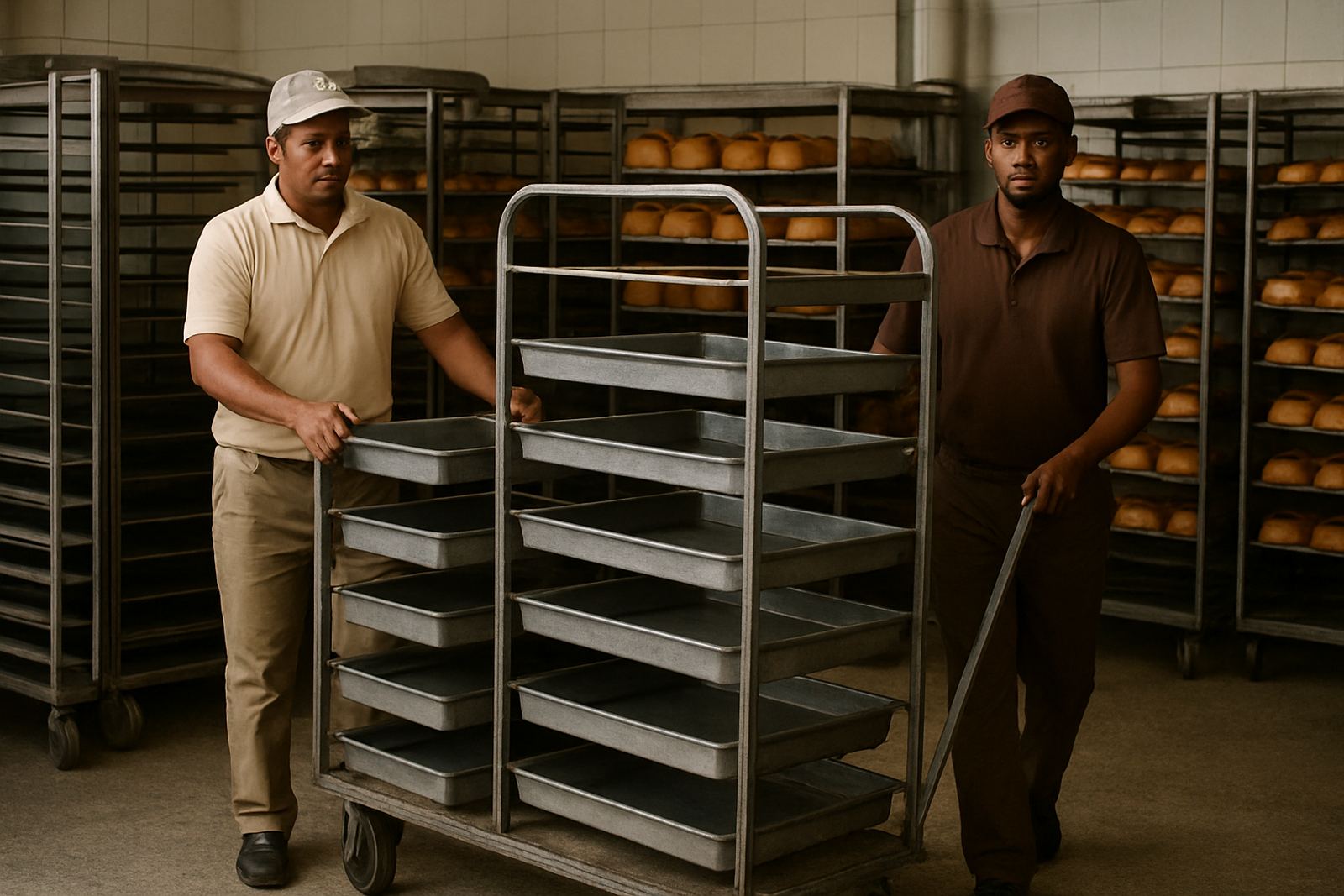
Cooling should happen in a defined space, not in the middle of the production floor. That space needs enough clearance for air movement and enough rack or trolley capacity to handle the peak load after each bake. If the area is too small, pans get stacked while still warm and moisture stays trapped. That leads to staining, warped sections and coating failure.
For bakeries in coastal areas like Durban and the Upper Highway, humidity makes the problem worse because steam lingers longer. In these conditions, a return area should be close enough to the oven for short handling time, but not so close that hot metal keeps heating the room. A simple fan arrangement can help, although it must not blow dust onto open product.
- Keep hot return items off the floor
- Allow space between racks for airflow
- Separate cleaned items from dirty returns
- Use marked routes for trolleys and hand movement
Build the route around people, not just equipment
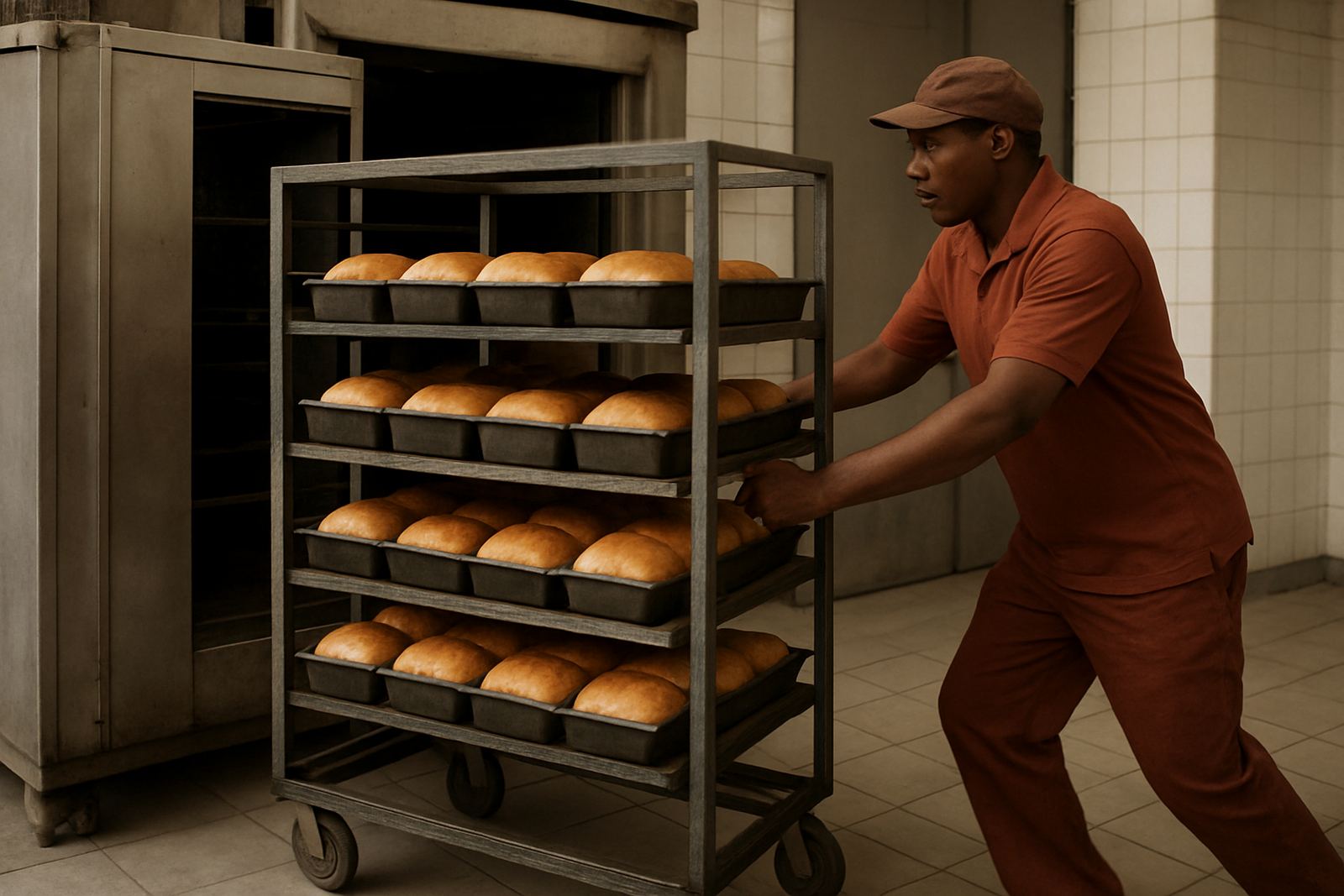
Good return flow starts with the people who move the bakeware. If staff have to turn sharply, squeeze past mixers or cross forklift routes, the chance of damage goes up. Straight runs are better than complicated loops. Where the building is tight, use one-way movement where possible so full trolleys do not meet empty ones head on.
In many factories, the return route is informal at first and then becomes permanent by habit. That is where trouble starts. Once a pan route cuts through a busy prep area, everyone adapts to the mistake instead of fixing it. It is worth mapping the route on paper and then checking it during a real shift, not just on a quiet morning.
What to look for when pans and trays come back
Return time is the best time to spot wear. A quick inspection can catch rim bends, corner splits, loose welds and surface damage before the next bake. For bread pans, even a small twist can affect loaf shape and release. For trays, a slight bow may not look serious but it changes heat spread and stacking behaviour.
Our team handles Pan Recoating, Tray Recoating, Pan Straightening, Corner Repairs, Rim Repairs, Lid Repairs, Weld Repairs, Fleet Assessment, Deep Cleaning and Spare Lids. That means a returned item can move from inspection to repair without sitting idle for days. For a plant bakery, that kind of turnaround matters when load-shedding or a broken oven line already puts pressure on the shift.
- Check each item for heat marks and distortion
- Separate items that need repair from items that can return to service
- Keep a simple count by size and type
- Record repeated damage in the same area, it usually points to a handling problem
Cooling and return in coastal and inland conditions
Not every bakery fights the same conditions. In coastal Durban, moisture and salt air can accelerate surface wear if pans are stored damp. Inland, dry air can help cooling, but dust can settle quickly if trays are left uncovered. Either way, the return area must suit the local climate and the way the plant runs each day.
A hotel kitchen in Umhlanga may return smaller batches through a tight service corridor, while a plant bakery in Pinetown may move full racks from oven line to wash bay. The detail changes, but the principle stays the same: reduce handling, keep air moving and make sure dirty and clean equipment never mix. If the route is too long, staff will improvise and that is where chips, dents and mix-ups happen.
A practical example from Westmead and the Durban side
A bakery in Westmead supplying stores across Durban had a return path that crossed the packing area. During peak production, warm pans came back fast and were parked anywhere there was space. The result was bent corners, delayed cleaning and a lot of extra handling at shift end. After a simple layout review, the bakery moved to a direct return lane beside the wash point, with one set area for damage checks and another for cleaned stock.
The change did not need major building work. It needed clear marking, better rack positioning and one person assigned to check returned items before they went back into circulation. Within a few weeks the team had fewer hold-ups and less rework. That is often the answer in real bakeries, not a bigger machine but a better path.
- Direct route from oven to cooling racks
- Separate return and wash zones
- One person responsible for damage checks
- Written count of repaired and ready stock
Keep the return system simple enough to run every day
The best return system is the one staff can follow on a busy Friday and still use when the power goes out and the shift is under pressure. Simplicity matters. Clear routes, fixed rack positions, and regular inspection points do more for output than a complicated setup that only works on paper.
For bakeries, hotels and retailers, the return path should be treated as part of production, not as an afterthought. When pans and trays come back in the right order, get checked, cleaned and repaired quickly, the whole operation keeps moving. That is the point of good industrial bakeware management, and it starts with the way items return from the oven.