Why transfer from proofing to oven changes the bake
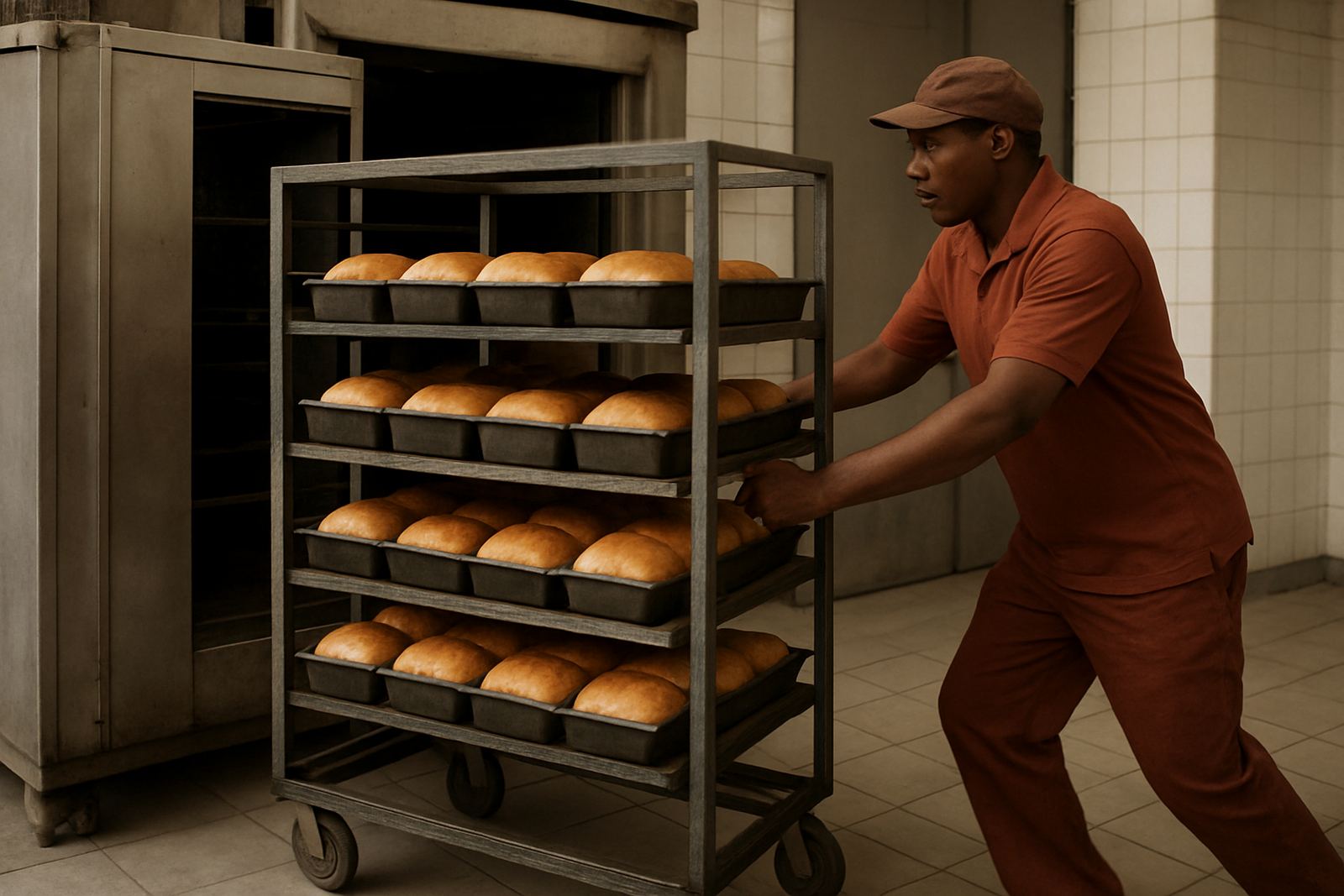
In a plant bakery, the move from proofing to baking is where small faults show up fast. A tray that flexes, a pan that sticks, or a floor tile that does not sit true can throw off loaf shape before the product even gets colour. If the load is heavy and the proof is soft, the container has to keep its form while still allowing a clean release.
That matters in Durban heat and coastal humidity, where doughs can be a bit more active and handling windows tighter. It also matters during load shedding when production may be restarted in shifts and equipment gets moved, stacked and cleaned more often. The less predictable the day, the more important it is that bakeware behaves the same every time.
- Proofed dough should move without distortion
- Trays must carry weight without bowing at the corners
- Pan surfaces need to release cleanly after bake
- Floor tiles must sit level for even heat contact
Steel floor tiles and even contact in the oven
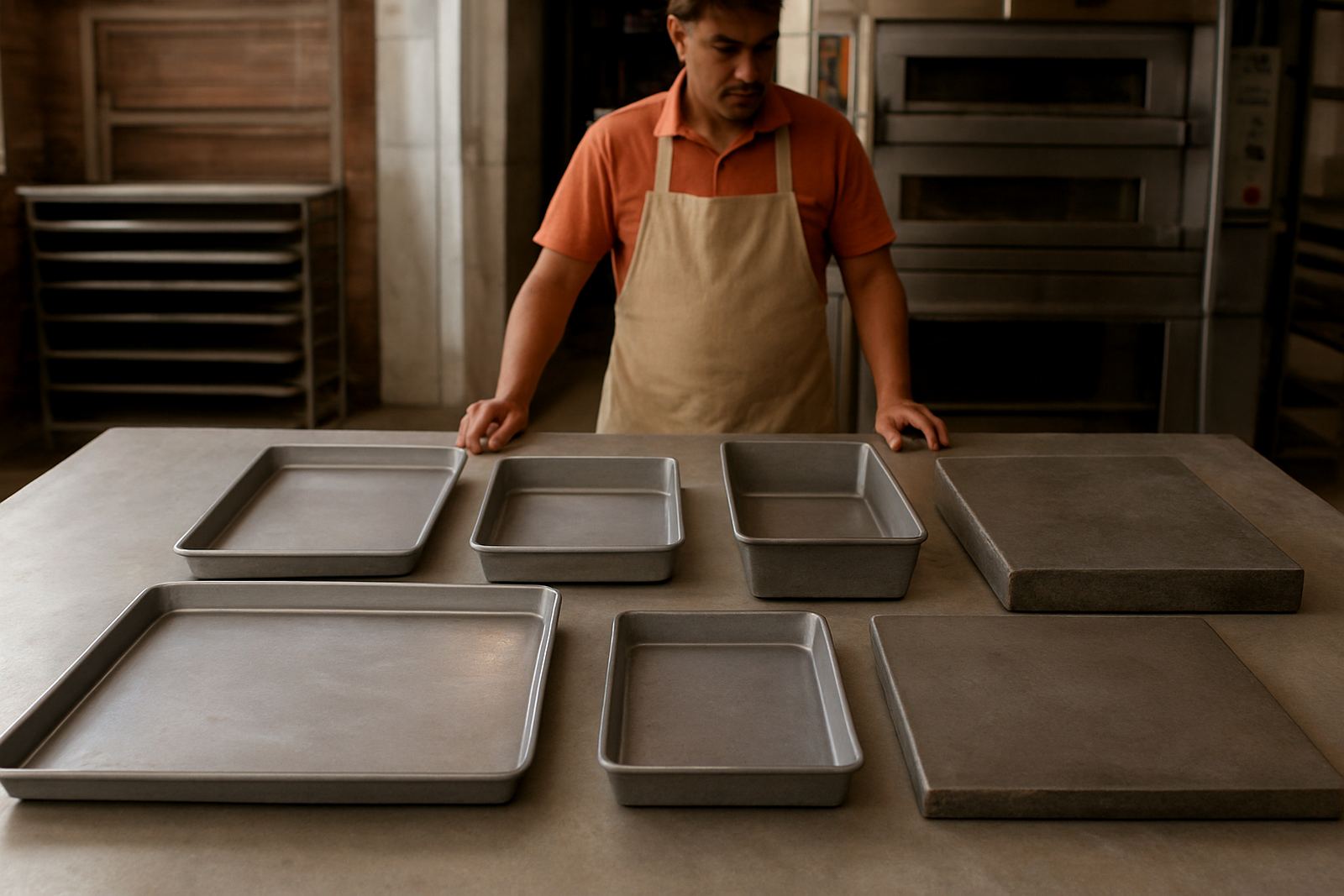
The original steel floor tile is still important where plants need a direct bake surface that can take daily use. A proper tile gives a steady base for bread and other products that need reliable bottom heat. When the tile warps or the joints are not right, the bake can show pale patches, uneven bottoms or a loaf that pulls to one side.
Our steel oven floor tiles are made for plant bakeries that need repeat loading, cleaning and movement. In Pinetown and Westmead, many production lines run hard and any floor piece that is out by even a few millimetres creates trouble during loading. Tiles should fit the oven layout, line up properly and cope with the sort of heat cycling that happens every day, not just on paper.
- Check for rocking or movement when installed
- Look for sagging after repeated heating and cooling
- Keep joints clear so trays and peels slide properly
- Replace damaged sections before they affect adjacent tiles
Bread pans that release well save time at the oven mouth
Bread pans are not just containers, they control shape, crust contact and how quickly loaves can be turned out. A worn pan with rough corners or a tired coating can slow down release and leave marks on the loaf. That means more handling, more breakage and more waste at the oven mouth.
For bakeries supplying retailers and hotels, appearance matters as much as structure. A loaf that catches on one side or tears at the edge does not present well on the shelf. Pan straightening, corner repairs and rim repairs all help extend the life of the pan and keep the profile true. It is cheaper to keep a good pan in service than replace a whole batch because a few units have gone out of shape.
Plant supervisors often tell us the problem starts quietly. One pan begins sticking, then three more show the same signs after the next cleaning cycle. That is usually the point to inspect the full set, not just the obvious ones.
Tray design affects loading speed and product spacing
Custom trays need to match the product, the rack and the way the line is set up. If tray depth, edge height or weight is wrong, staff spend more time adjusting in the proof room and the oven line slows down. In a busy bakery that may sound minor, but over a shift it adds up to fewer trays baked and more handling damage.
Good tray design also supports hygiene. Smooth welds, clean corners and sound rims make deep cleaning easier and reduce the places where dough, oil or crumbs build up. Where trays are used outdoors between sections or in humid coastal storage areas, corrosion and surface damage can set in faster. That is why tray recoating and weld repairs can be useful before the tray reaches scrap.
- Match tray size to the oven rack and proving set up
- Allow enough space for airflow between pieces
- Keep tray edges even so loading stays quick
- Inspect for loose welds and bent corners after heavy use
Recoating and repairs that keep production moving
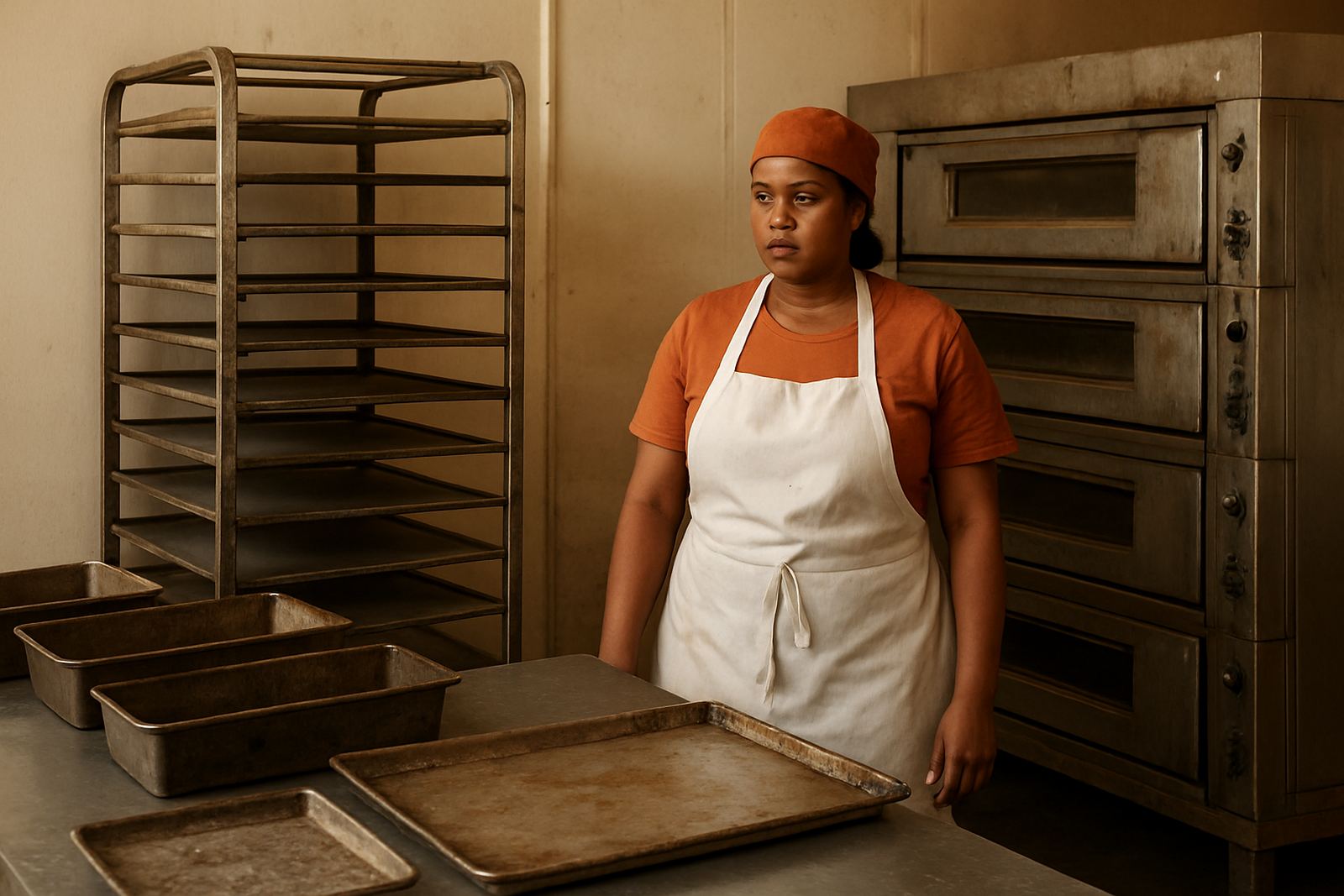
When bakeware starts to age, the choice is not always replacement. Pan recoating, tray recoating, lid repairs and spare lid supply can give a working item more time in service. That is especially useful for operations that run long shifts and cannot wait for imported parts or long lead times. If a pan or tray is still structurally sound, targeted repair often makes more sense.
Our service team handles fleet assessment, deep cleaning and repair work for plant bakeries that need practical turnaround. We look at wear patterns, not just one faulty item, because a full batch may be showing the same stress points. Sibusiso Ntuli and the Bakerite team have seen how one small fault can ripple through a whole production run if it is left too long.
For bakeries in New Germany, Upper Highway and across KwaZulu-Natal, planned maintenance is usually easier than emergency replacement. A set that is checked on schedule stays in circulation longer and gives the oven room to keep running.
A Durban plant example: fewer stoppages after a bakeware check
A plant bakery on the Durban side was finding that loaves near the front of the oven finished well, while a few at the back needed extra time. The ovens were being blamed at first. After a bakeware review, the issue turned out to be a mix of slight pan twist, tray rim wear and a few floor pieces that no longer sat level. Nothing dramatic, but enough to disturb the bake.
Once the pans were straightened, the affected trays repaired and the floor layout rechecked, loading became steadier and the oven results were more even. The bakery did not change the recipe. It simply brought the proof to oven path back into order. That is often the case in production: the fault is practical, not complicated.
In a city where humidity, cleaning routines and shift pressure all play a part, keeping bakeware true can save more time than chasing machine settings one by one.
What to inspect before the next shift starts
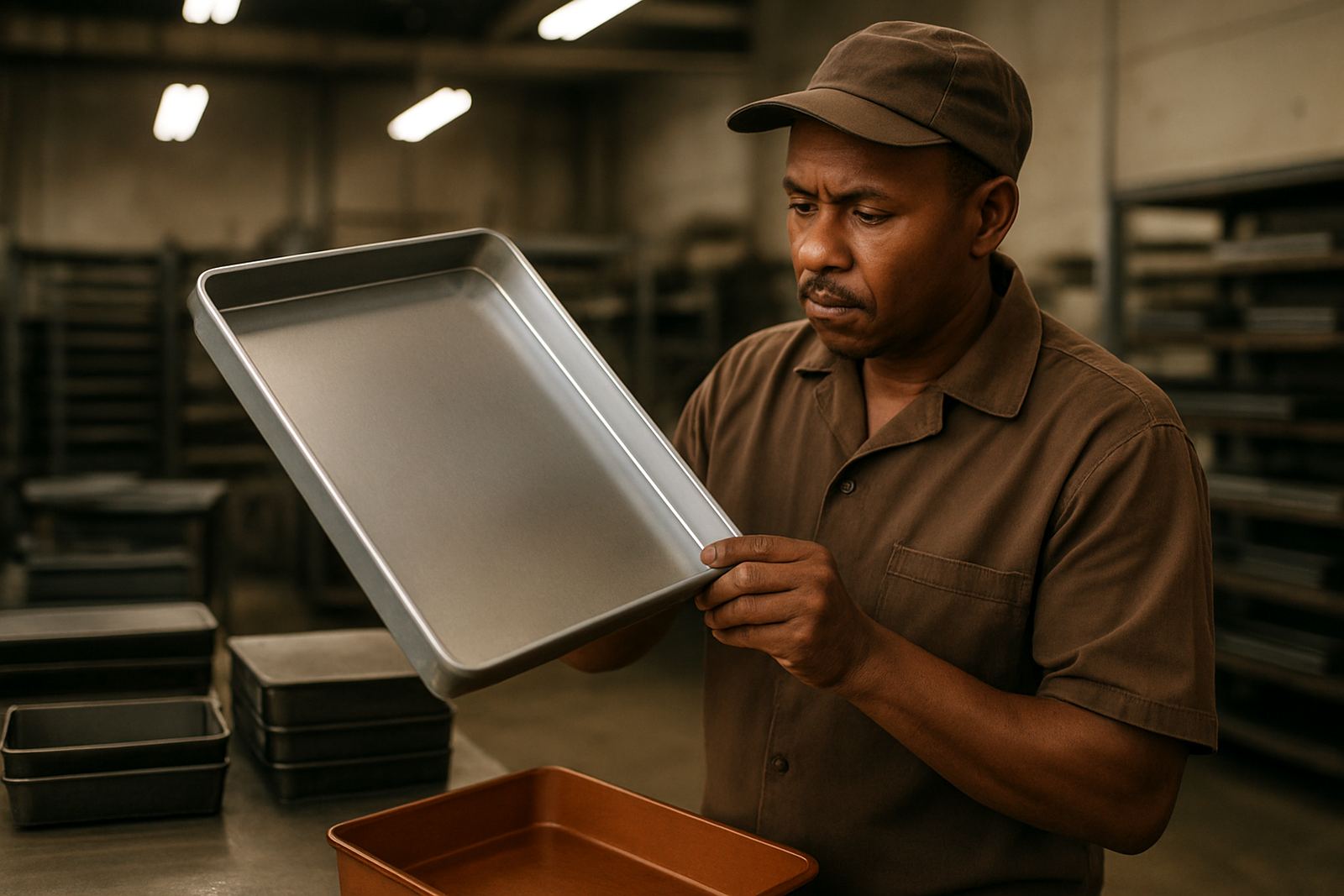
Before the next production run, it helps to do a quick check on every part that touches the product between proof and bake. That includes pans, trays, lids and oven floor pieces. If items are bent, loose, pitted or difficult to release, they should be marked for service before they slow the line.
- Check for bends, twist or corner lift
- Test release on a sample unit from each batch
- Look for worn rims, cracked welds and damaged lids
- Keep spare items ready for planned rotation
- Record repeated faults so the same problem does not return
Bakeware is not the place to guess. The closer the fit is to the product and the oven, the more dependable the bake will be. That is the value of working with a maker that understands plant conditions, local humidity and the pressure of daily output.