1. Measuring the oven and the product first
Every custom job starts with the oven opening, rack spacing and the size of the loaf, roll or tray pack that has to fit. If the pan is too tight, it slows loading and can cause damage during peak shifts. If it is too loose, product moves around and bakes unevenly.
For plant bakeries in Durban and the wider KZN area, we also look at heat flow, handling points and how much weight the team can move safely on a busy line. That matters when the plant is running early mornings, with load-shedding schedules and limited time between cycles.
- Overall tray or pan size
- Internal depth and wall height
- Handle or grip details
- Stacking and storage space
2. Choosing the steel and finish for the job
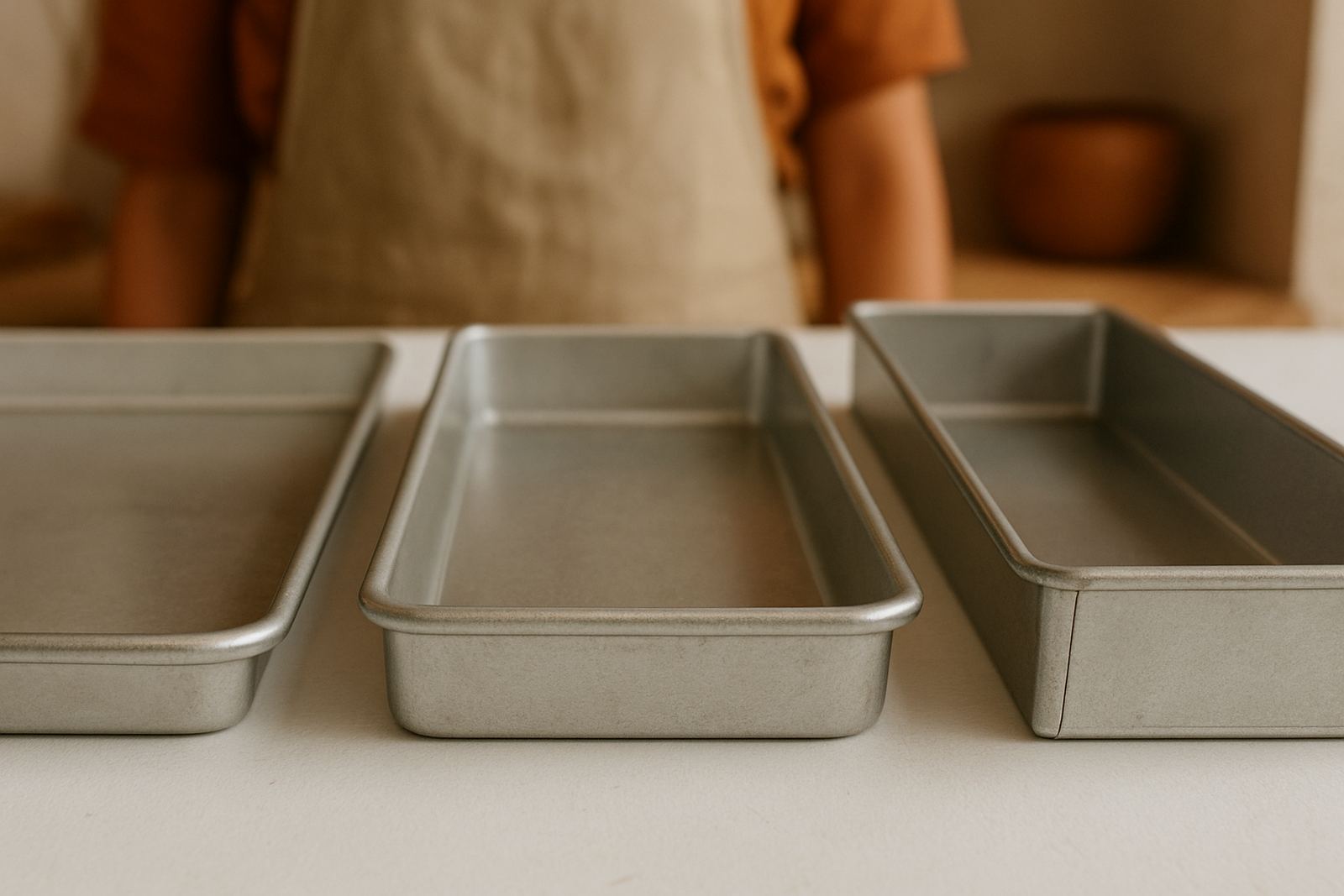
Once the dimensions are confirmed, the next step is material selection. Different thicknesses and finishes suit different bakeries. A hotel kitchen doing smaller batches needs something different from a plant bakery that runs trays hard all week.
In coastal areas, humidity and salt air can shorten the life of bakeware if the wrong finish is used. That is why the material choice is made with the local conditions in mind, not just the drawing on paper. The aim is long service life, steady performance and easier cleaning.
- Steel thickness for strength and weight
- Finish suited to heat, cleaning and corrosion risk
- Reinforcement where the tray takes more strain
- Allowance for recoating or repair later
3. Cutting, forming and welding the shape
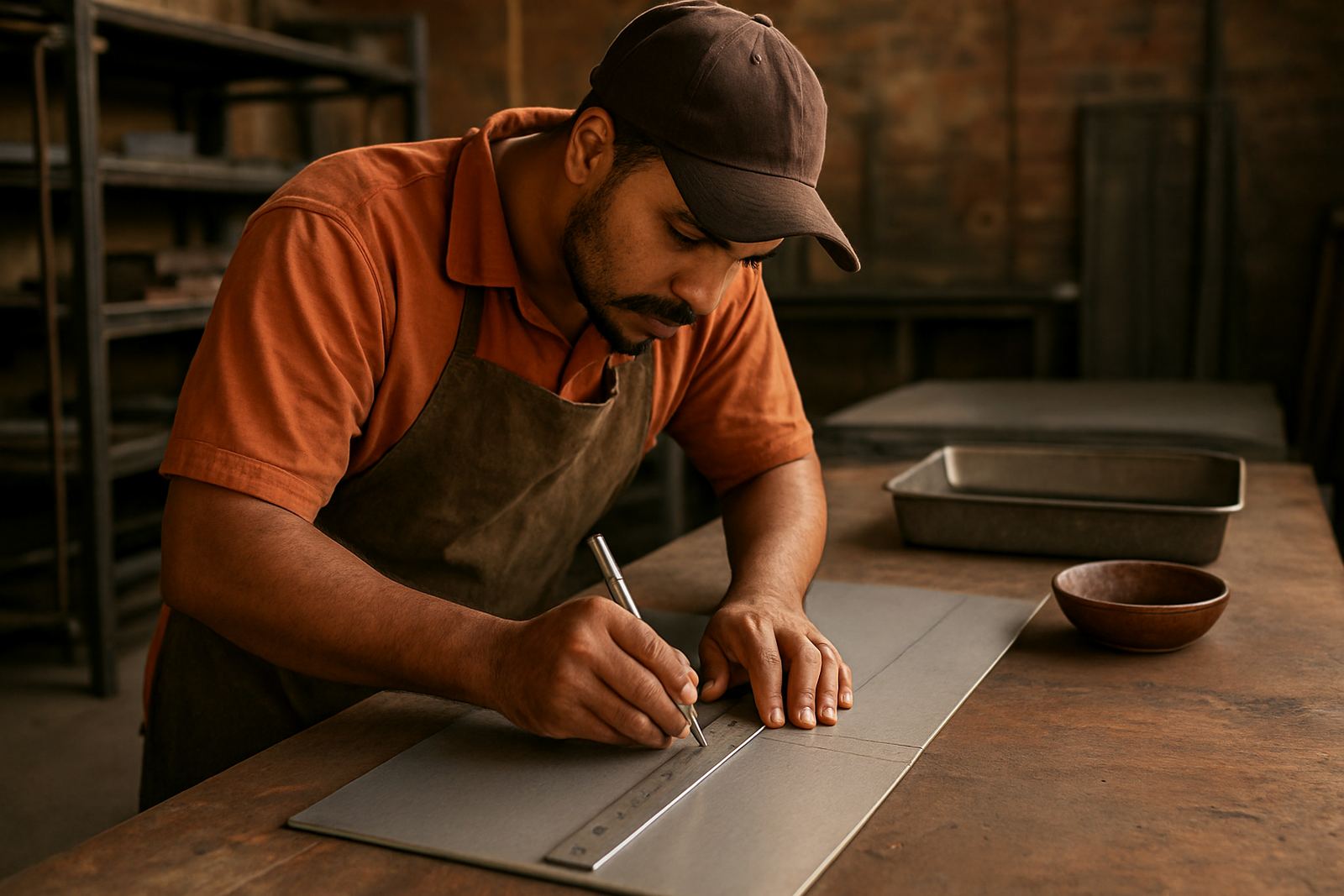
With the spec approved, the workshop moves into cutting and forming. This is where the bakeware starts to take shape and the tolerances matter most. A small mismatch at this stage can affect how the tray sits on a rack or how a pan releases product after baking.
In our Westmead base, each item is formed to suit the actual use case. Corners are checked, bends are kept clean and welds are placed where they will not trap debris or weaken under repeated heating. It is careful work, not guess work.
- Cutting to the required size
- Forming sides, lips and corners
- Welding joints and stress points
- Checking fit against the order spec
4. Matching the tray to bakery handling
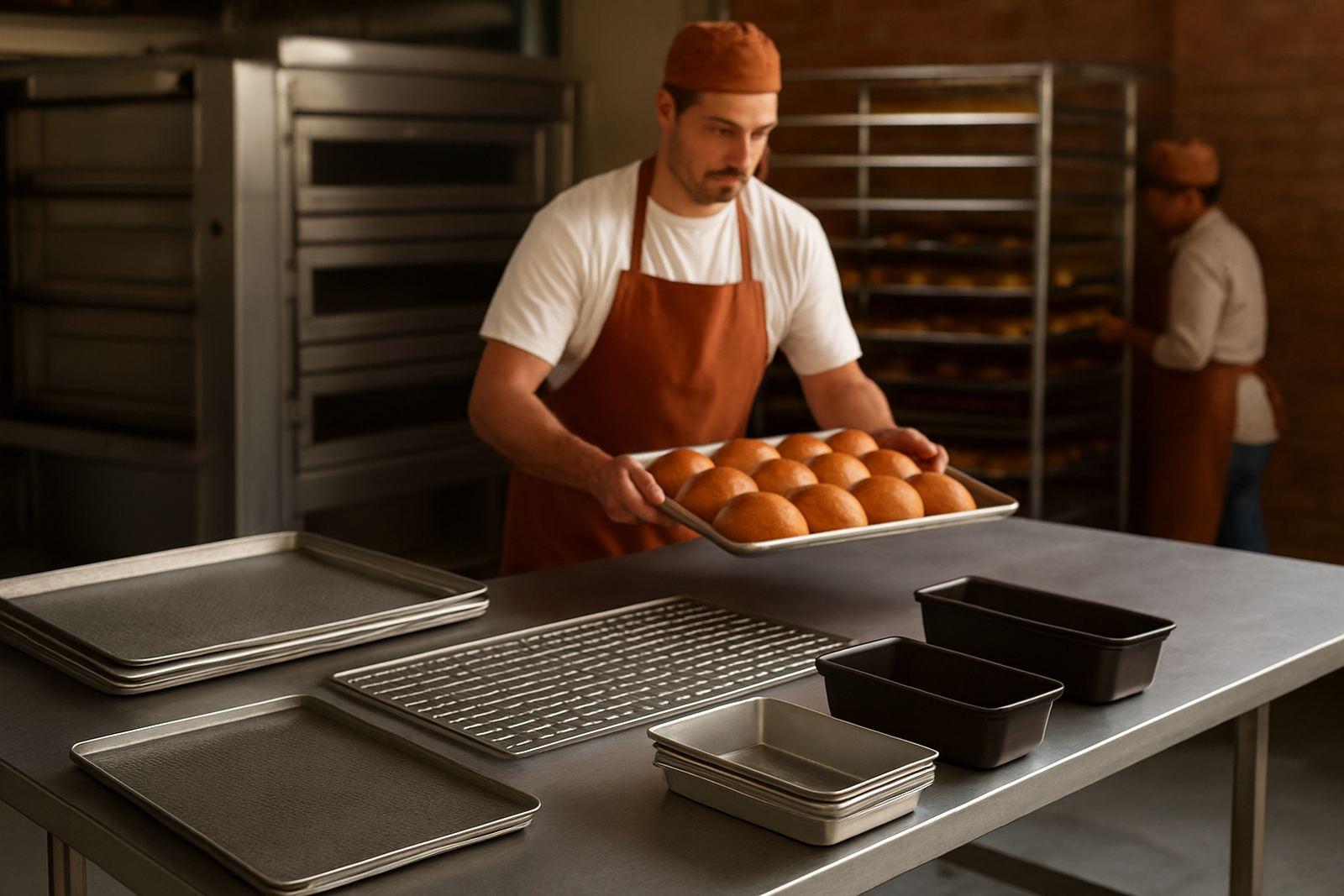
Good bakeware has to work for the people using it. That means considering gloved hands, trolley movement, oven loading and how fast a team can turn equipment around during a shift. A tray that is awkward to lift can slow the line and lead to damage, especially when staff are busy and ovens are hot.
We often adjust the design for practical handling. That can mean stronger edges, better stacking, or a layout that suits the bakery's existing fleet. For a retailer with back-of-house baking in Pinetown, for example, a tray may need to move smoothly from prep bench to oven to cooling rack without extra handling.
- Grip points for safe lifting
- Stacking space for trolleys and racks
- Edge strength for daily movement
- Compatibility with existing bakery equipment
5. Heat checks and finishing work
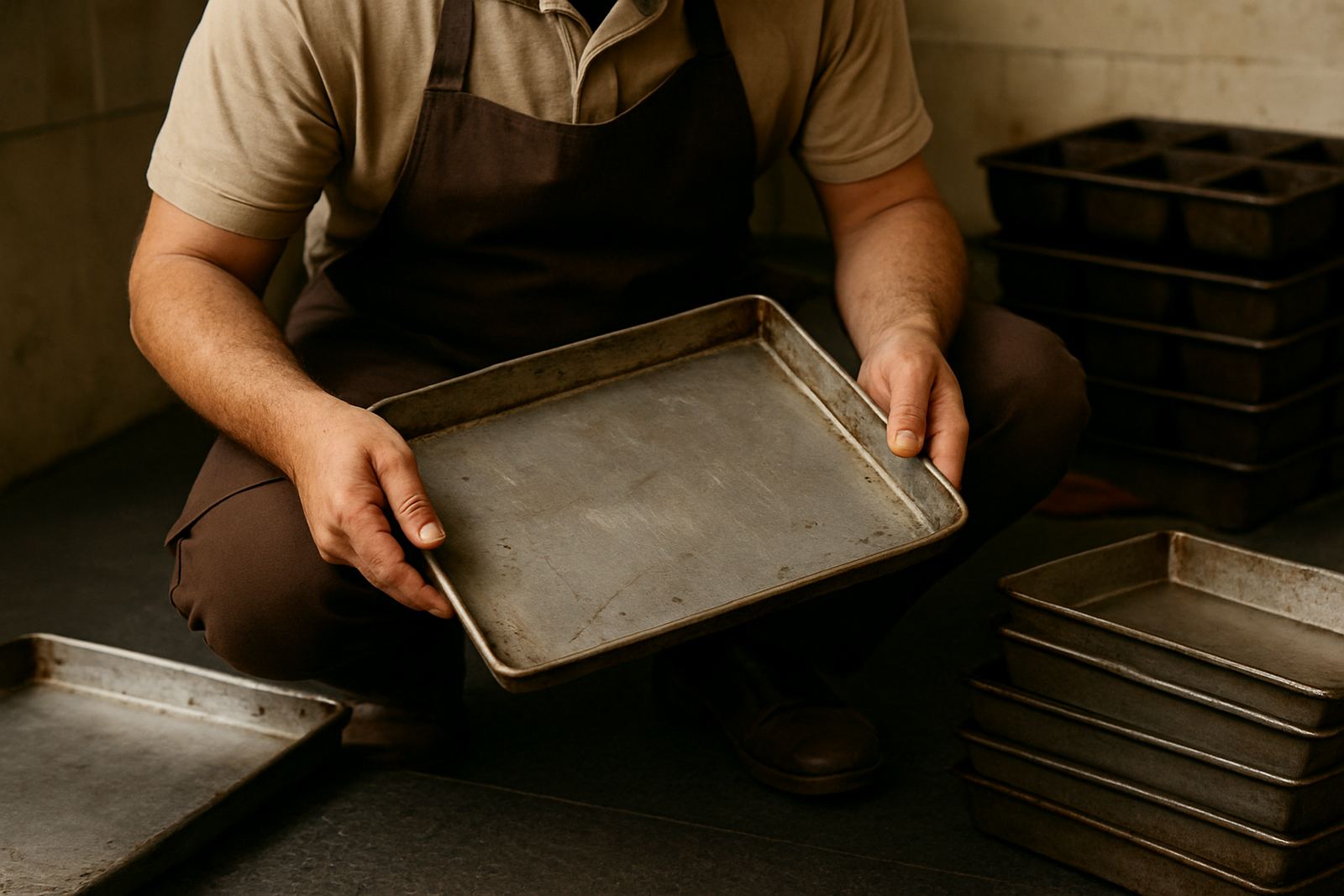
Before any item goes out, the finishing stage is used to clean up sharp edges, check welds and confirm the tray or pan will handle repeated heat cycles. This is important for bakeries that cannot afford warped bakeware during a rush. A slight twist can throw off product quality and cause delays on the floor.
We also look at repairable details at this stage. A custom tray should not be difficult to maintain. If a rim can be strengthened or a lid section can be replaced later, that is built into the thinking from the start, rather than treated as an afterthought.
- Deburring and edge checks
- Warp and straightness inspection
- Heat-cycle suitability
- Repair access for future service
6. Final inspection before dispatch
The last step is a practical inspection, not just a visual one. Measurements are confirmed again, the finish is checked for defects and the order is matched to the original brief. If something is not right, it stays in the workshop. That saves time and avoids disruption on site.
For national plant bakery clients, this final check is what keeps repeat orders consistent. The team knows what was delivered before, what wore out, and what needs to change on the next batch. That is why clear records matter as much as steel. A tray made in Westmead must still fit the job in Cape Town, Bloemfontein or Durban.
- Dimensional verification
- Finish and weld review
- Order matching and labelling
- Packing for local or national delivery
7. Why the process matters on the shop floor
When custom fabrication is done properly, the bakery feels the benefit every day. There is less jamming in ovens, fewer damaged pans and better consistency across batches. That is especially useful in South Africa where power interruptions, rushed shifts and high output all put extra pressure on equipment.
A practical process also makes later repairs easier. Whether the job needs straightening, rim repairs or a recoating service, a well-made tray or pan is simpler to keep in service. For bakeries that want value over the long term, that is the difference between replacing equipment often and getting proper use from what was made.