Howick bakery needed trays that matched the plant, not the catalogue
The client was a commercial bakery in Howick supplying fresh loaves and rolls into local stores and food service. Their existing trays were a mix of old stock and imported pieces, so the team was losing time with uneven fit, poor stacking, and pan gaps that caused product movement in transit. The job called for a set of custom trays and pans that would suit the plant layout, the oven doors and the handling trolleys already in use.
The brief was simple enough on paper, but exact in practice. We had to work to site measurements, keep the weights manageable for staff doing repeated changeovers, and make sure the pieces would stand up to high heat, steam, and daily washdown. In Howick, where humidity can be an issue and baking runs do not slow down for much, the finishing had to be practical as well. Not shiny for show, just correct for the job.
- Client type: plant bakery serving retail and hospitality channels
- Town: Howick, KwaZulu-Natal
- Need: non-standard trays and pans made to site dimensions
- Use: daily production, loading, baking and washdown
Site measurements, oven checks and a clear drawing set
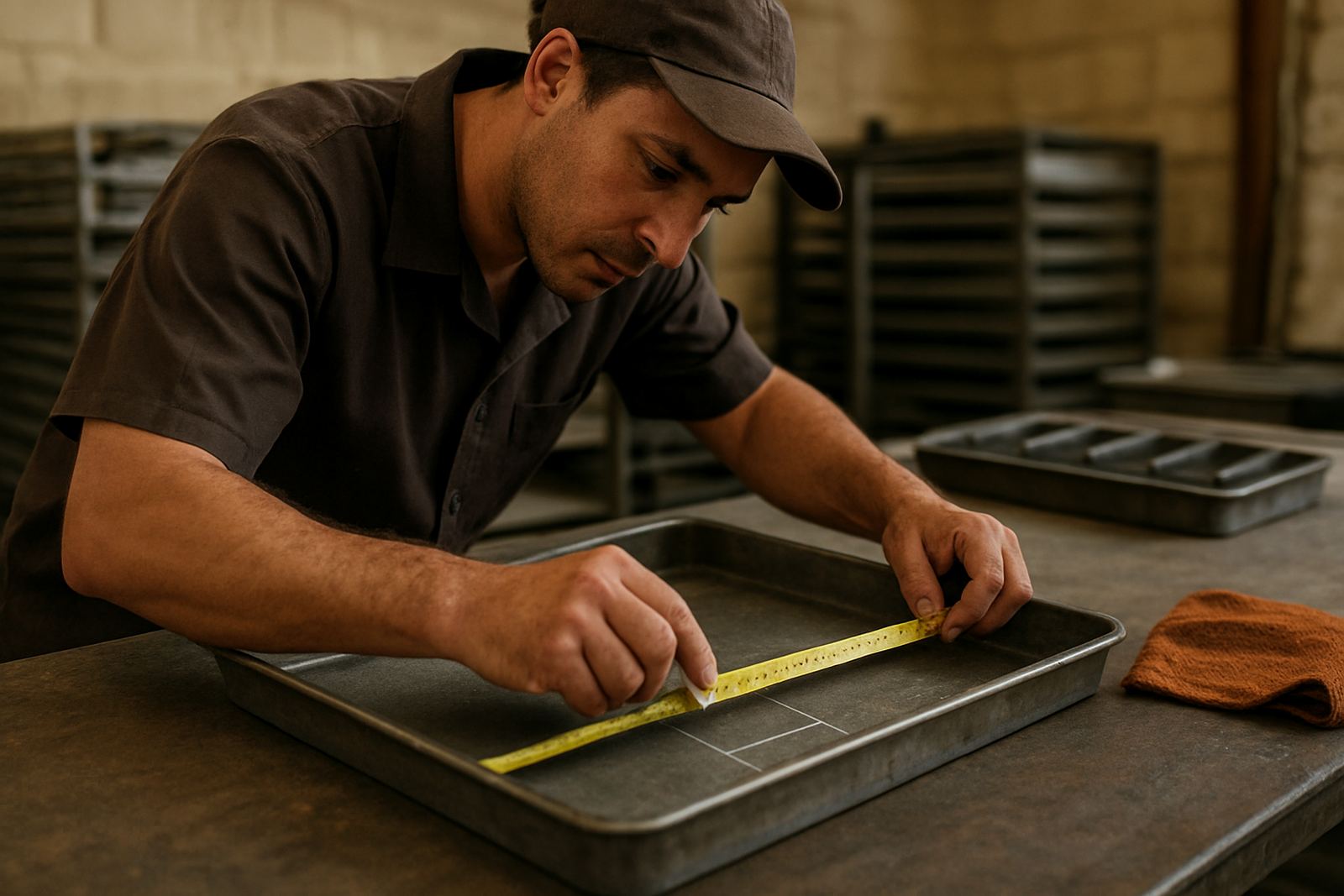
We started with measurements taken from the bakery floor rather than from an old sample alone. That mattered because the plant had mixed equipment, and the usable space inside the ovens was slightly tighter than the original paperwork suggested. We checked internal clearances, stack height, trolley spacing and the turning room at the loading point. It sounds basic, but one missed millimetre can cause jamming, bent rims or trays that only fit when the line is quiet, which is no use at 3am.
The drawings were kept practical, with a focus on edge return, corner strength and easy release. The client wanted pans that could be cleaned properly between runs, so we avoided deep folds and awkward pockets where dough or debris would sit. A small adjustment was also made for handling gloves, because the staff needed a clean grip when trays came out hot. We have found that these small details make a real difference over time.
- Measured on site in Howick and confirmed against the oven openings
- Allowance made for heat expansion and handling clearances
- Forming details kept simple for easier cleaning and inspection
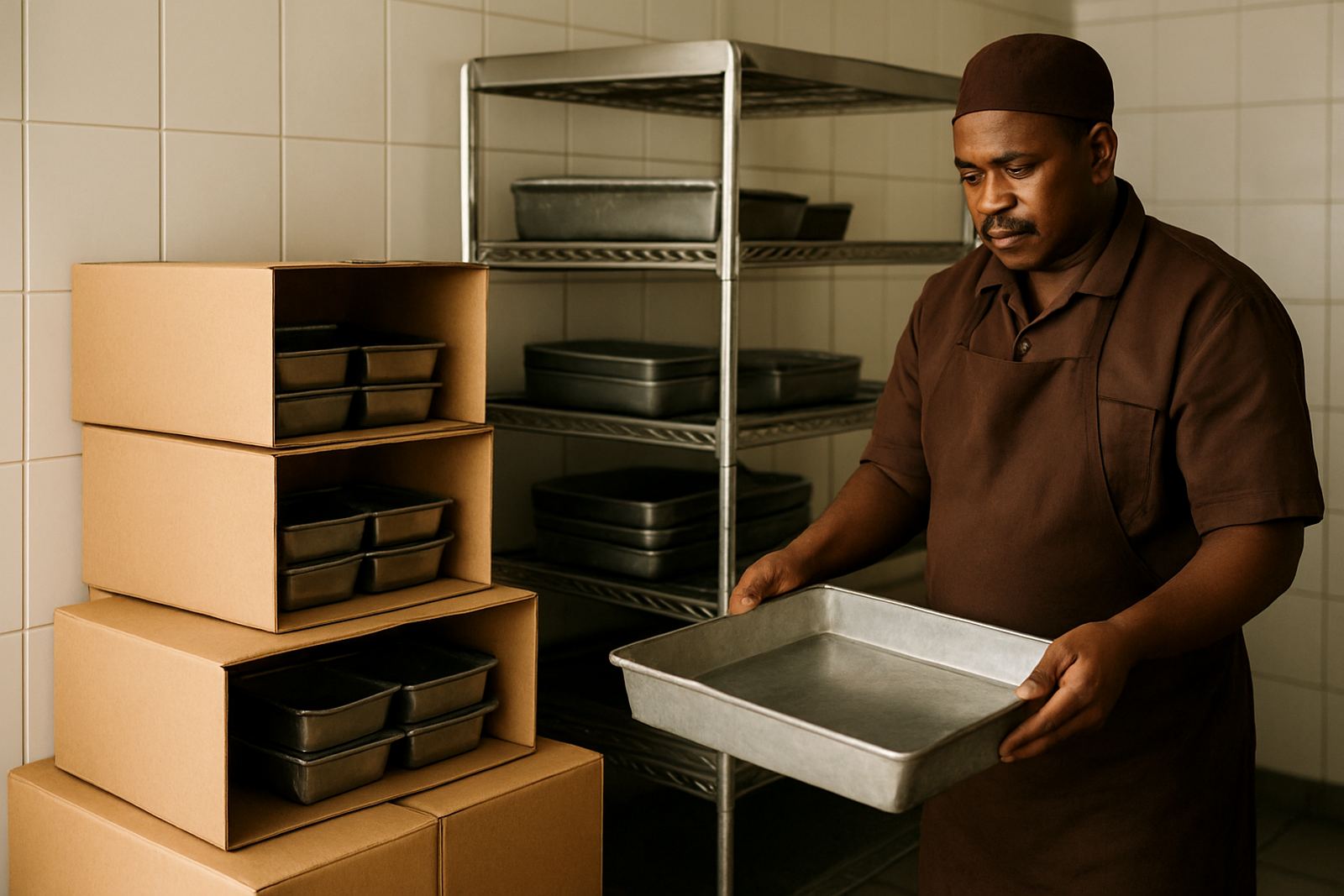
- Stacking profile set to suit trolley transport without binding
Fabrication in Westmead for plant use and repeated heat cycles
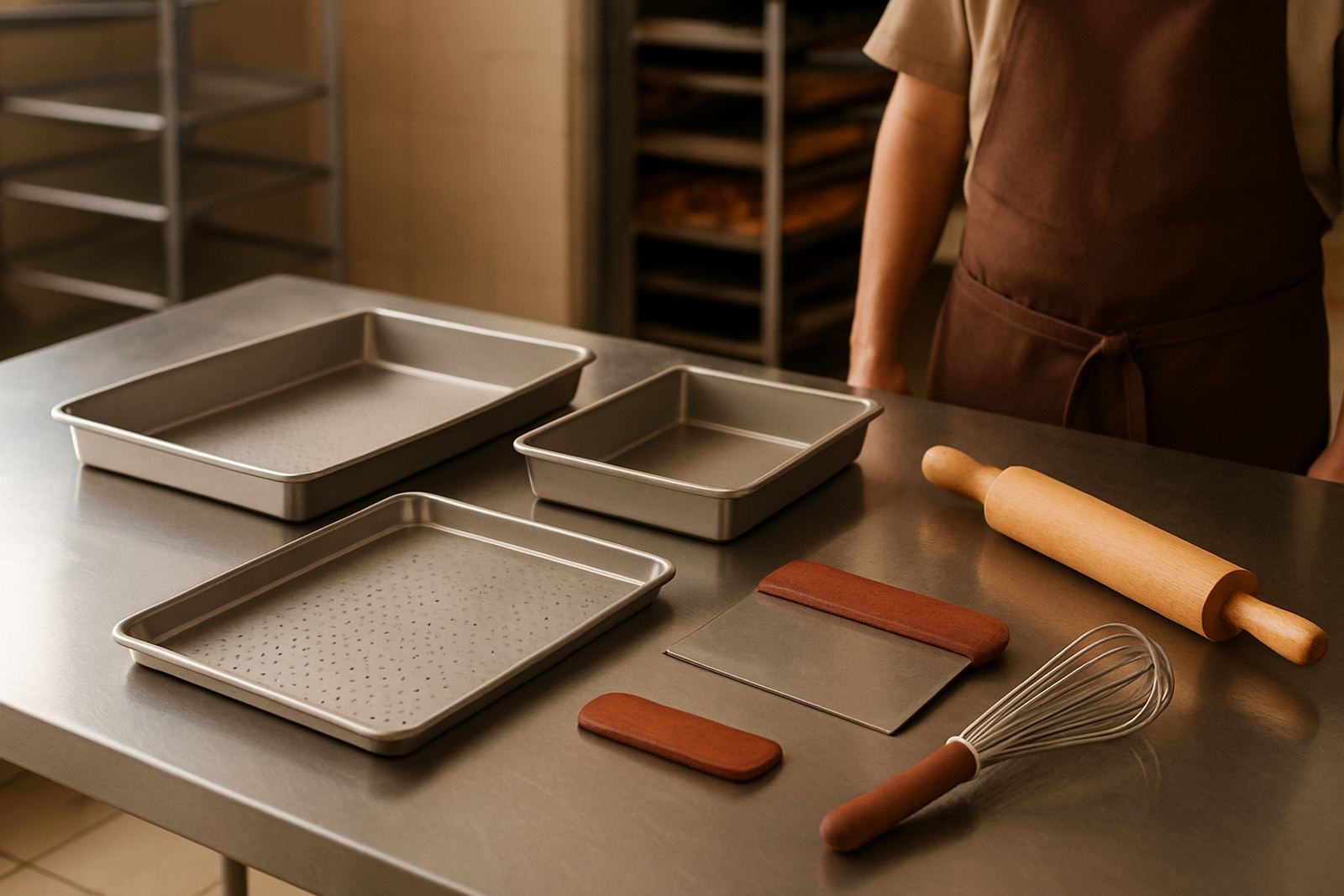
Back in Westmead, Pinetown, we fabricated the batch using sheet steel suitable for oven work and repeated handling. The steel choice was made for strength, but also for practical weight. These were not decorative items, they were working bakeware for daily use in a busy plant. We formed the trays and pans to the agreed dimensions, checked the corners, and kept the seams neat so there were no sharp edges for staff or for product release.
Where the design needed extra life, we added local reinforcement at corners and rim points that take the most punishment. A tray that is loaded and unloaded all day must keep its shape. If it twists, product spreads unevenly and the line slows down. That is where our workshop experience helps. We know what fails first, and we build against it rather than fixing it later.
- Fabricated from steel suited to bakery heat conditions
- Corner and rim points strengthened where wear was expected
- Edges finished smooth for handling and cleaning
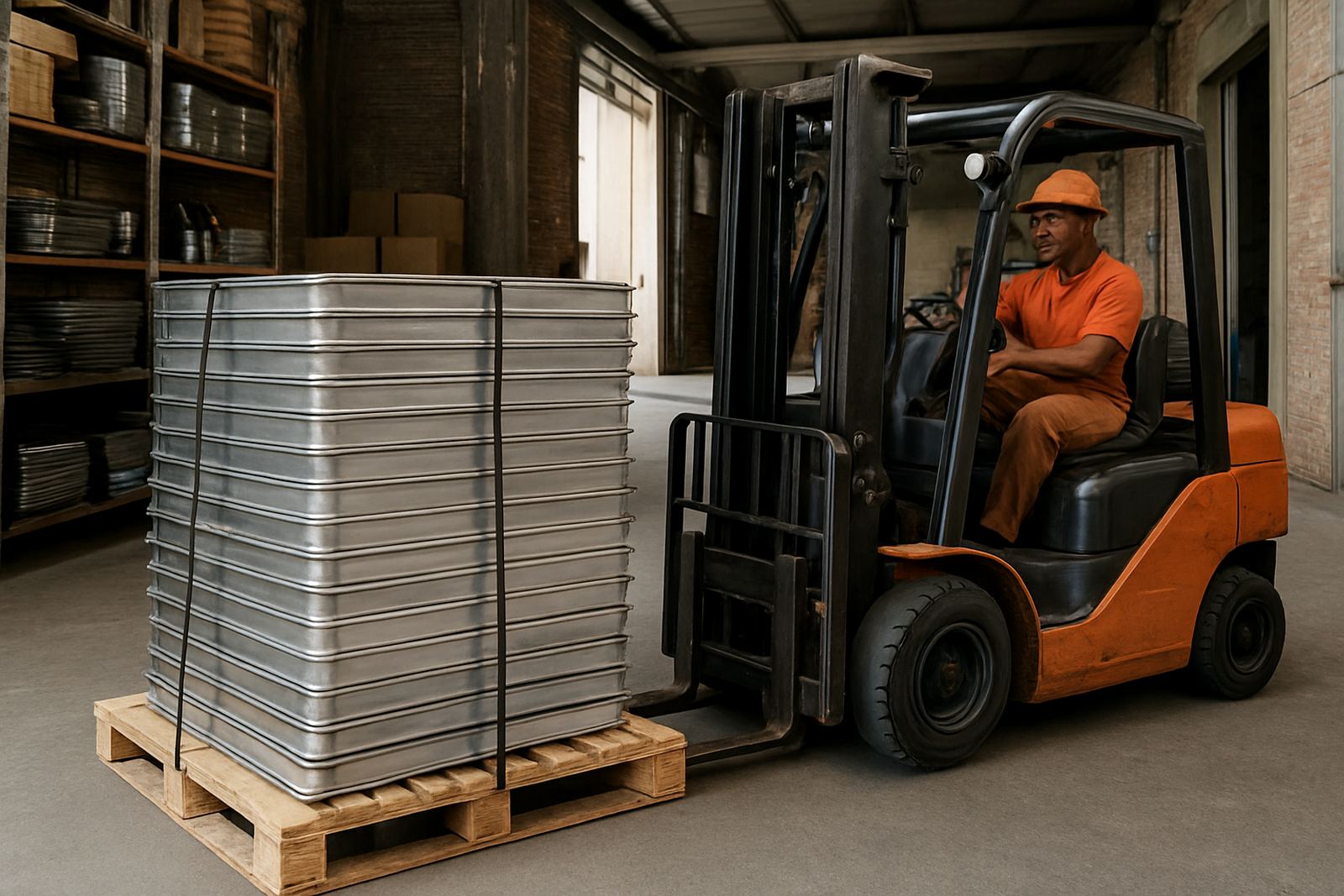
- Built to suit repeated use in plant ovens and trolley movement
Trial fit and final adjustments before dispatch
Before dispatch, the pieces were trial fitted against the measurements and checked for stacking, nesting and flatness. A small correction was made to one set of corners because the client wanted a tighter slide into the trolley rails. That adjustment took little time, but it prevented a bigger issue once production started. It is always easier to resolve a fit concern in the workshop than on a bakery floor with a shift waiting.
The full job moved from measurement to delivery in three weeks. That included the site visit, drawing approval, fabrication and final check. Because the client was in Howick and the workshop is in Westmead, the logistics were straightforward, and we were able to keep the turnaround tight without cutting corners.
- Total timeline: 3 weeks from measurement to delivery
- One round of fit adjustments completed before despatch
- Final check covered flatness, stacking and trolley entry
- Delivery arranged to suit the bakery’s receiving window
Results at plant level
The bakery ended up with trays and pans that matched the equipment instead of fighting it. The change improved line flow, reduced handling strain and gave the team a cleaner loading pattern inside the ovens. Product placement became more even too, because the trays sat properly on the trolleys and did not ride up at one end. On a busy production shift, that saves time in small ways all day long.
The client also wanted a setup that would hold up in the KZN climate, where washdown routines and damp conditions can shorten the life of poor bakeware. The final set has been used in normal plant rotation, and the bakery has a cleaner spares picture as well. They no longer need to keep odd mixed trays on standby just to patch gaps in the line.
- Better fit on trolleys and in the ovens
- Less handling strain for bakery staff
- More even product placement during bake cycles
- Cleaner spares planning and fewer mixed pieces in circulation
What we would do again for a similar Howick job
For a similar project, we would again start with site measurements and a physical check of the handling route from prep area to oven. That is the best way to avoid guessing. We would also keep the first sample set simple, then confirm any corner or rim changes before the full batch is made. In our experience, that keeps the job on budget and reduces rework.
If the bakery is coastal or works with heavy washdown, we would still suggest regular cleaning, inspection and straightening where needed, because even good steel bakeware needs care. Bakerite also supports tray recoating, pan recoating, pan straightening, corner repairs, rim repairs, lid repairs, weld repairs, fleet assessment and deep cleaning when existing stock can be saved instead of replaced. For plant bakeries around Howick, Pinetown, Durban and wider KZN, that service mix matters as much as the new build itself.
- Start with on-site measurements, not assumptions
- Approve one sample set before full fabrication
- Plan for maintenance from the beginning
- Use repair options where existing bakeware still has life left
Key facts
| Project type | Custom non-standard trays and pans |
|---|---|
| Client location | Howick, KwaZulu-Natal |
| Manufactured by | Bakerite, Westmead, Pinetown |
| Timeline | 3 weeks |
| Key build points | Site measurements, fit checks, corner reinforcement |
| Use case | Daily plant bakery production, loading and baking |