A rusk tray job built around harder handling
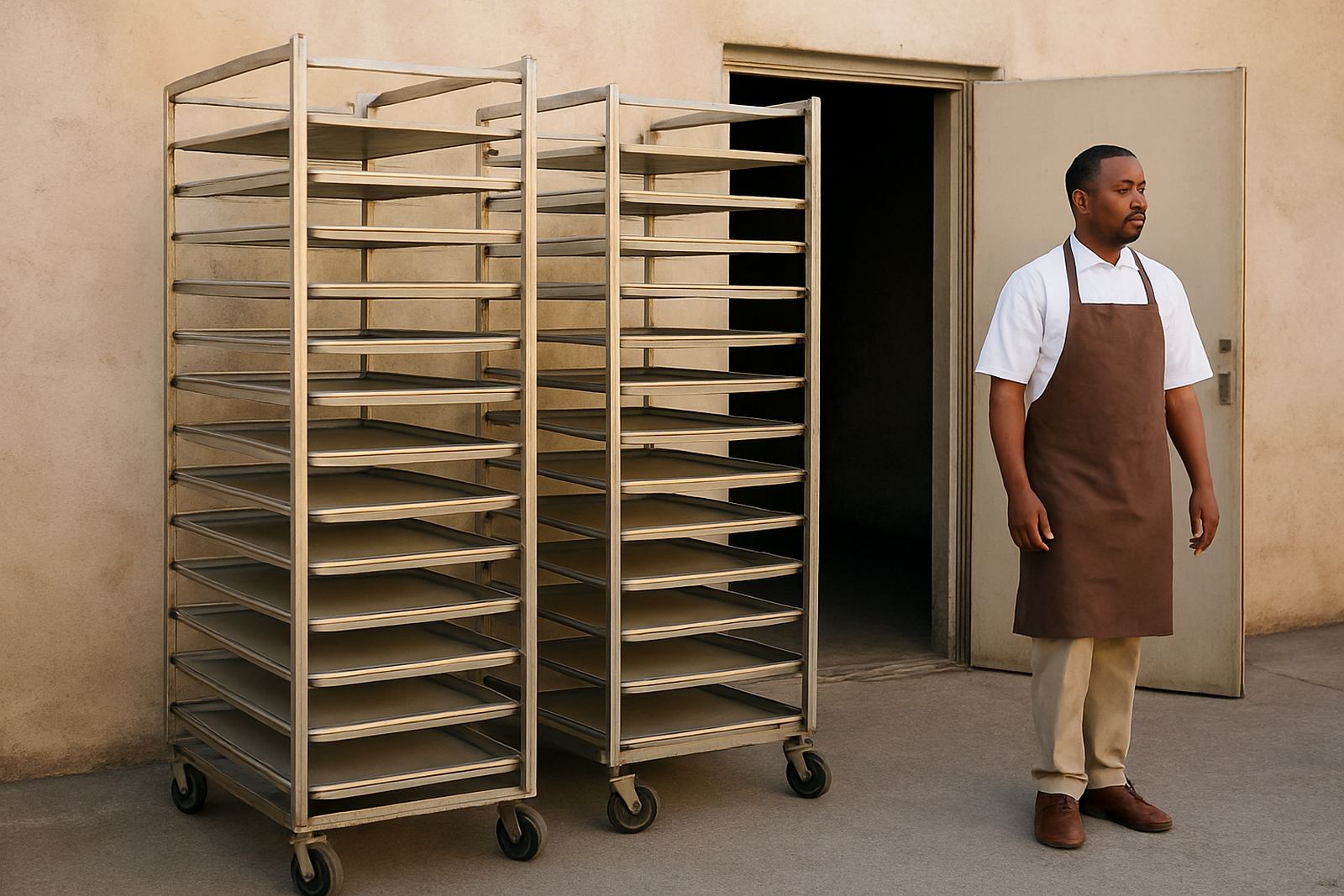
The client was a rusk producer in Ladysmith running regular oven batches and moving trays by hand between mixing, proofing, baking and cooling areas. Their existing trays were doing the job, but the edges were getting knocked and twisted where staff lifted, stacked and unloaded them. In a busy bakery, that small damage adds up quickly. Once a tray is out of square, it starts hanging up in racks, wobbling on trolleys and wasting time on the floor.
The brief was straightforward: build a tray set with stronger handling edges, keep the weight manageable and make sure the trays would still fit the plant bakery routine without forcing any changes to ovens or trolleys. The client wanted something that could cope with heat, steam and wash-downs, but still remain easy to carry in a shift where speed matters.
- Client type: rusk producer serving local and regional retail demand
- Town: Ladysmith, KwaZulu-Natal
- Use case: oven loading, cooling, stacking and product movement
- Main problem: bent rims and damaged tray corners from daily handling
Measurements that had to fit the line exactly
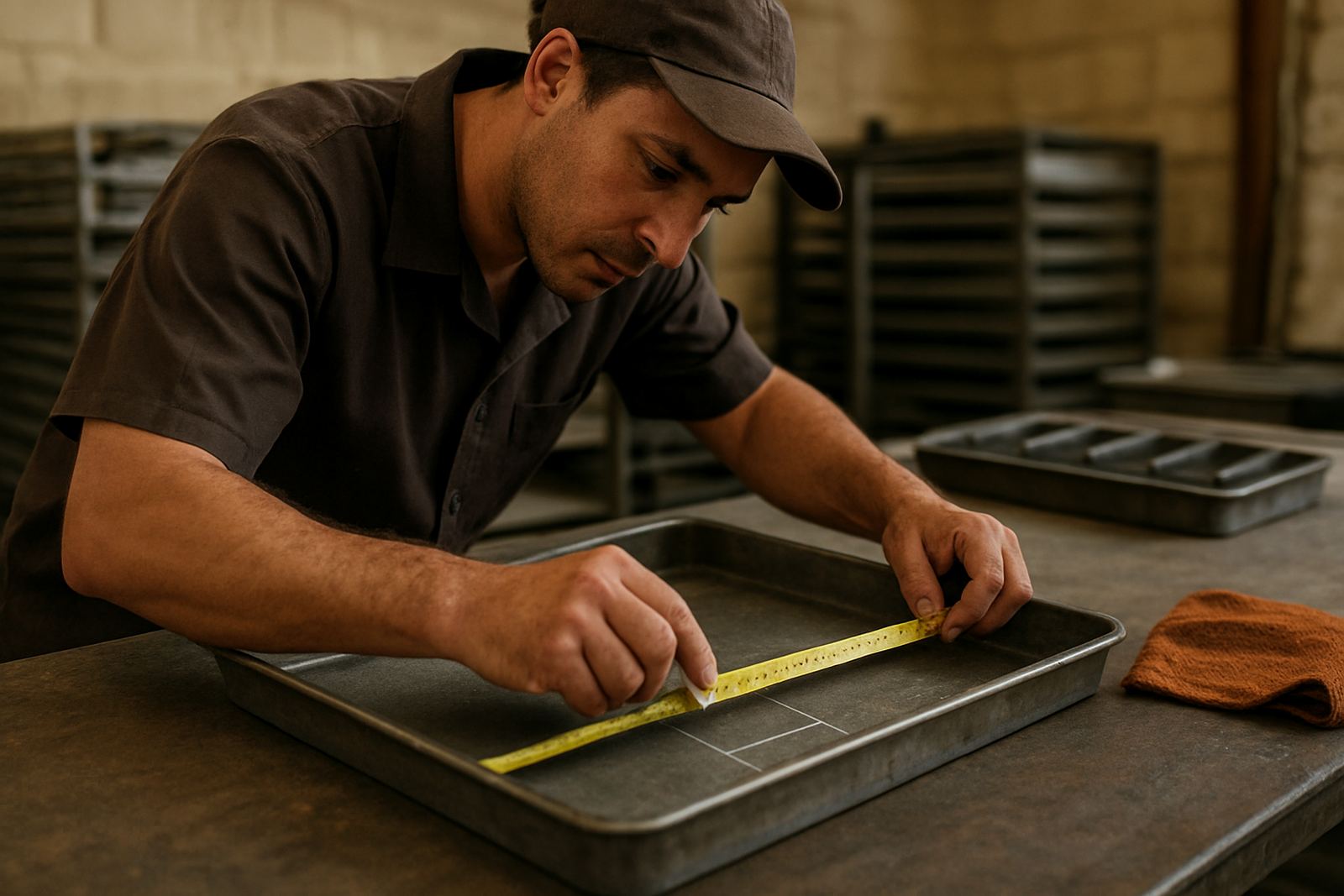
We started with the tray dimensions and the support points in the plant. That is always the important part because a tray that is a few millimetres off can cause trouble in a high-volume bakery. The new set had to match the existing rack spacing and allow full air flow around the rusk pieces during baking, while keeping a neat stack for cooling and dispatch.
The production notes also had to allow for steel movement during heating. Trays that are too light can oil-can or flex, while trays that are too heavy slow the team down and add strain. We balanced that with reinforced sides and handling edges, plus a clean finish that would not trap crumbs or moisture. In Ladysmith, where dust and warm kitchen air can work into open joins, simple cleaning matters just as much as strength.
- Tray size matched to existing bakery racks
- Reinforced perimeter for better grip and less edge damage
- Flat loading surface to support even bake results
- Smooth finish for quick cleaning and crumb removal
What we supplied and how it was made
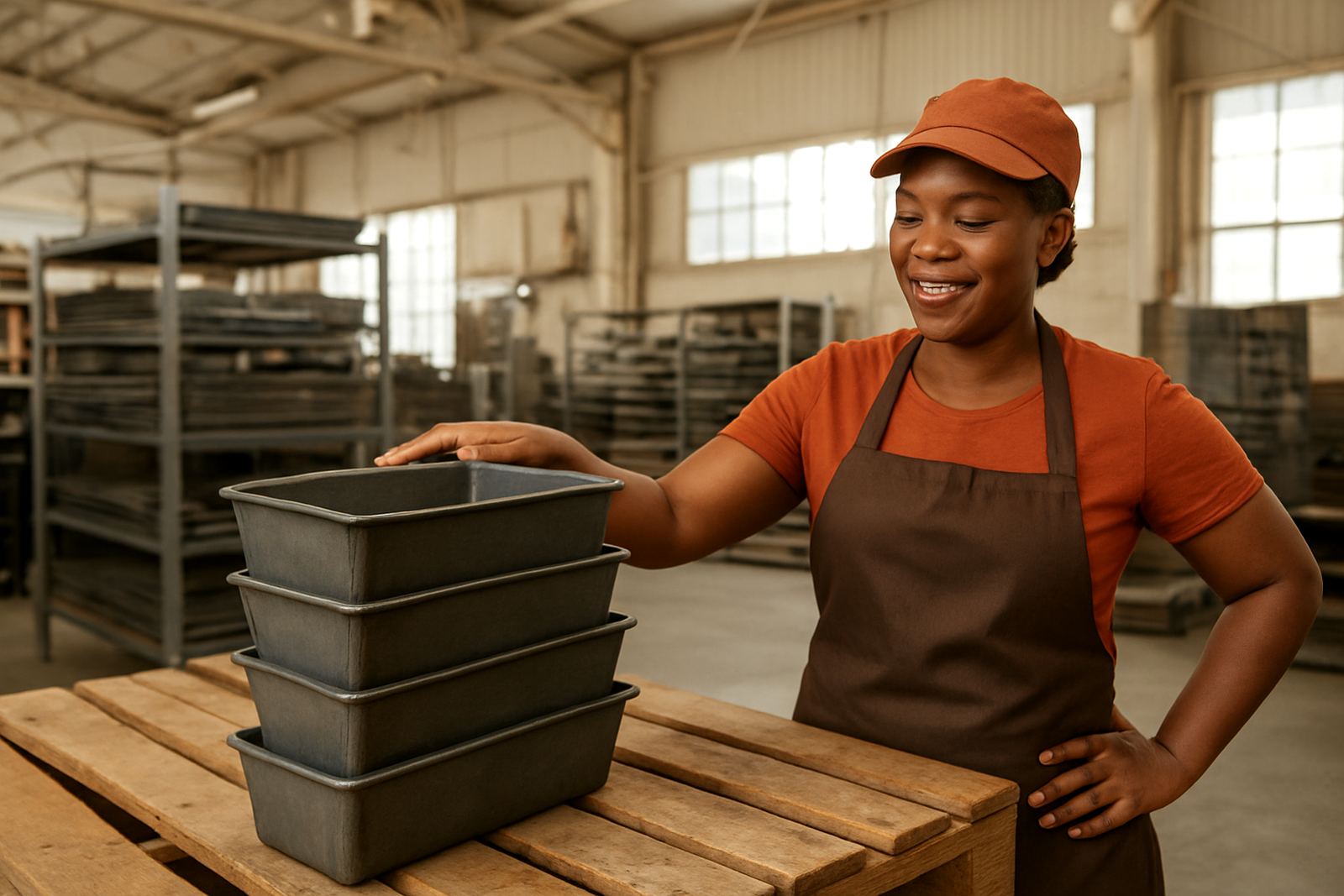
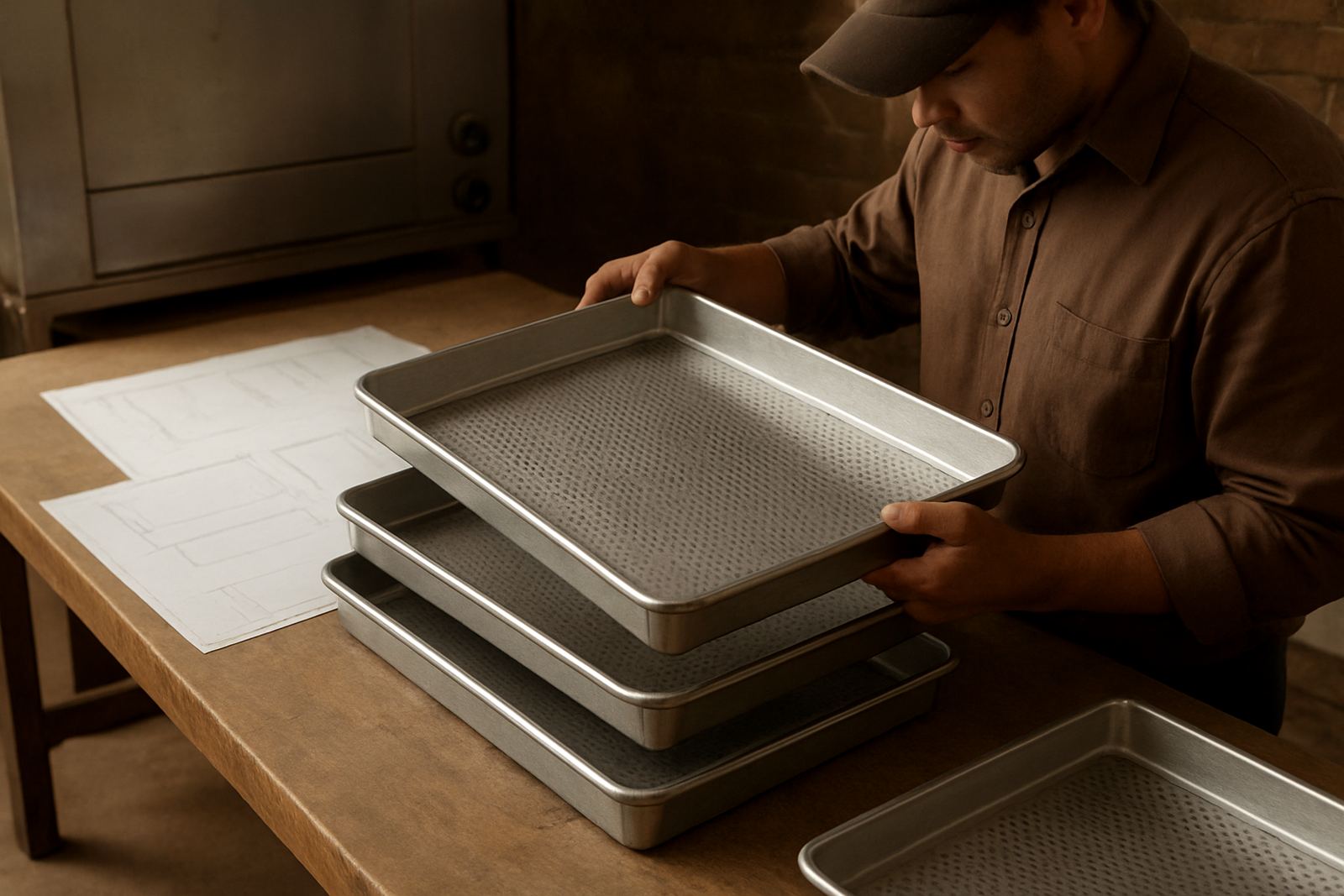
Bakerite supplied a custom set of steel rusk trays built for repeated plant use. We used heavy-duty sheet steel with formed sides and strengthened corners, then added handling edges that gave staff a better hold point when lifting hot trays from the oven. The design was kept plain and practical, with no unnecessary fittings that would catch flour, rusks bits or cleaning water.
Because this was a food production environment, we checked for straightness and consistency across the full set before dispatch. Every tray had to sit properly on the trolley rails and stack without forcing. That saves time on the floor and reduces the chance of a dropped load. The client also asked for a format that could be repeated later if output grew, so we kept the pattern suitable for future batch production.
- Material: heavy-duty steel for plant bakery handling
- Construction: formed sides, strengthened corners, reinforced edges
- Finish: smooth, washable surface for bakery hygiene routines
- Repeatability: pattern kept suitable for later top-up orders
Production timeline and practical coordination
The full job ran over 3 weeks from brief to completed trays. Week 1 was for measurement checks, use-case confirmation and finalising the tray pattern. Week 2 covered fabrication and edge forming. Week 3 was for inspection, fitting checks and collection planning. For a bakery that needs to keep output moving, that timing worked well because the client could slot the trays into a planned changeover rather than stopping a live line.
Our team kept the coordination simple. Lerato Mokoena handled service updates, while Priscilla Naidoo and Themba Zulu tracked the production stage so the set could move through the workshop without delay. If a bakery is working around load-shedding or hot weather, timing gets important fast. You do not want trays arriving when there is no spare labour to unpack and sort them, so we planned around the plant's schedule and collection window.
- Week 1: measure-up and specification confirmation
- Week 2: fabrication and edge reinforcement
- Week 3: inspection, fit checks and dispatch
- Collection arranged to suit the bakery shift pattern
Results seen on the bakery floor
Once in service, the new trays gave the team a better hold point and far less damage on the loading edges. That improved daily handling straight away, especially where trays were being moved while hot. The stronger corners also helped the set keep its shape through stacking, so the trays stayed neater in storage and were quicker to grab for the next batch.
The client also wanted better consistency from tray to tray, and that was another win. When a baker knows every tray sits the same way on the rack, the line runs more smoothly and there is less second-guessing during peak shifts. For rusk production, that kind of consistency is worth a lot because even a small delay in one part of the process can throw off the rest of the morning.
- Better grip during hot handling
- Less rim damage from stacking and lifting
- Improved tray alignment on racks and trolleys
- More consistent daily movement through the plant
What we would repeat for another rusk producer
If we were doing the same job again, we would keep the same practical approach: measure the existing racks first, confirm how staff lift and stack the trays, then build the edge detail around real plant use rather than just the drawing. That usually gives the best outcome because the tray has to survive people, heat and cleaning, not just sit in a store room.
For similar rusk producers in Ladysmith, Pinetown, Durban or further inland, we would also recommend setting aside one reference tray for future checks. It makes it easier to match a replacement batch later and avoids small differences creeping in over time. Bakerite can also support tray recoating, straightening, corner repairs and weld repairs if a bakery wants to extend the life of older steelware before ordering a full replacement. That can be useful where budgets are tight and the tray base is still sound.
- Keep one sample tray for future matching
- Record rack spacing and oven opening sizes
- Inspect handling edges before damage spreads
- Repair usable trays before replacing the full set
Key facts
| Project | Ladysmith Rusk Trays |
|---|---|
| Client type | Rusk producer |
| Location | Ladysmith, KwaZulu-Natal |
| Timeline | 3 weeks from brief to dispatch |
| Product supplied | Custom steel rusk tray set with reinforced handling edges |
| Key benefit | Stronger daily handling with better stacking and cleaner fit on bakery racks |