Start with a clean, dry return from the oven
Once pans or trays come out of the oven, let them cool in a safe, open area before they are stacked. Moving hot steel straight onto damp benches or into closed trolleys traps moisture and can cause light rust spots, warping, or stubborn residue that is harder to remove later.
If the bakehouse is near the coast, or in a humid area like Durban and Pinetown, this matters even more. Salt in the air and overnight damp can attack bare steel quickly, especially when load-shedding leaves fans and extraction off for a few hours.
- Allow enough cooling time before washing or stacking.
- Keep trays off wet floors and away from leaking pipes.
- Do not cover warm bakeware with plastic or cling wrap.
- Wipe off flour build-up before it hardens.
Stack pans and trays so they do not bend
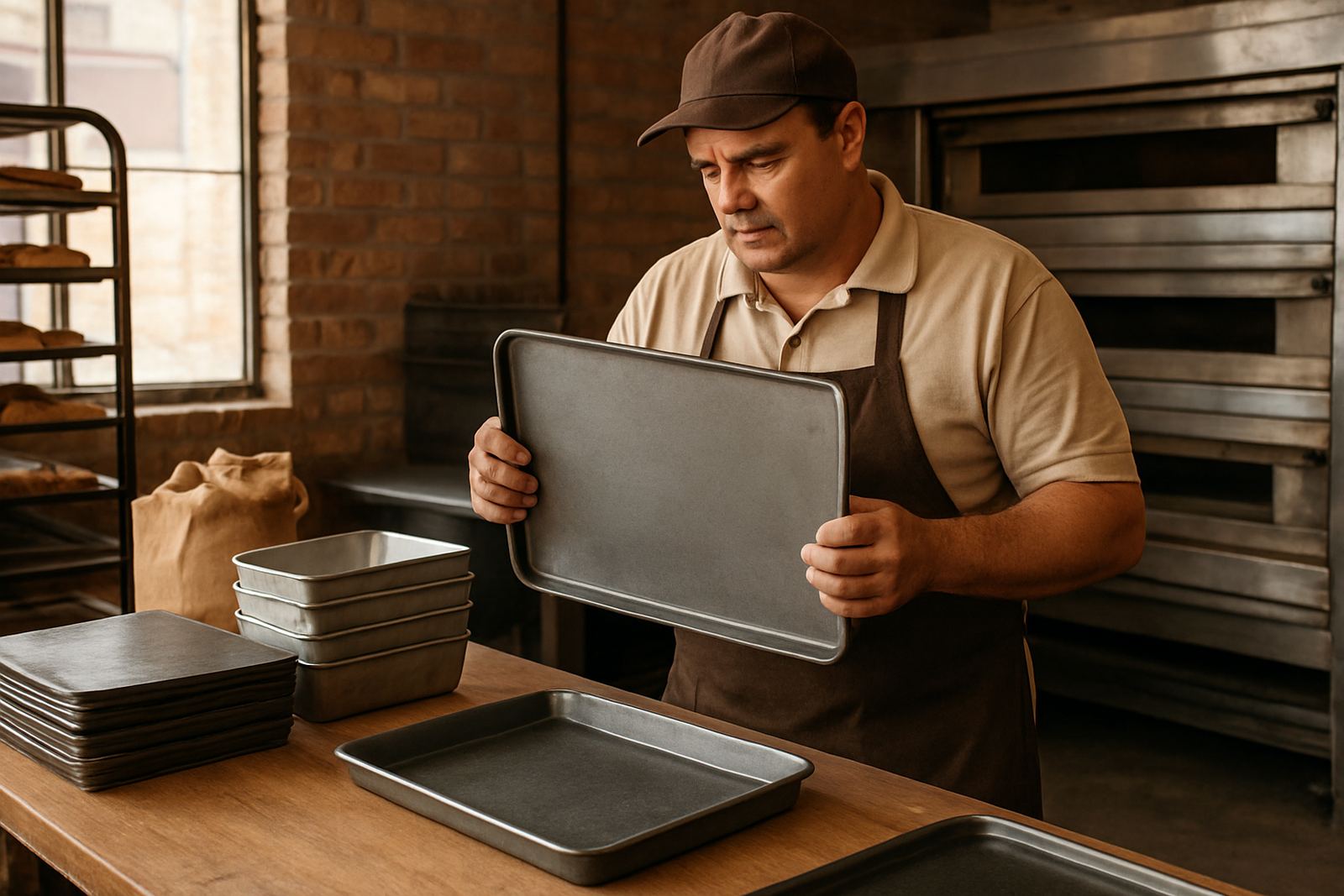
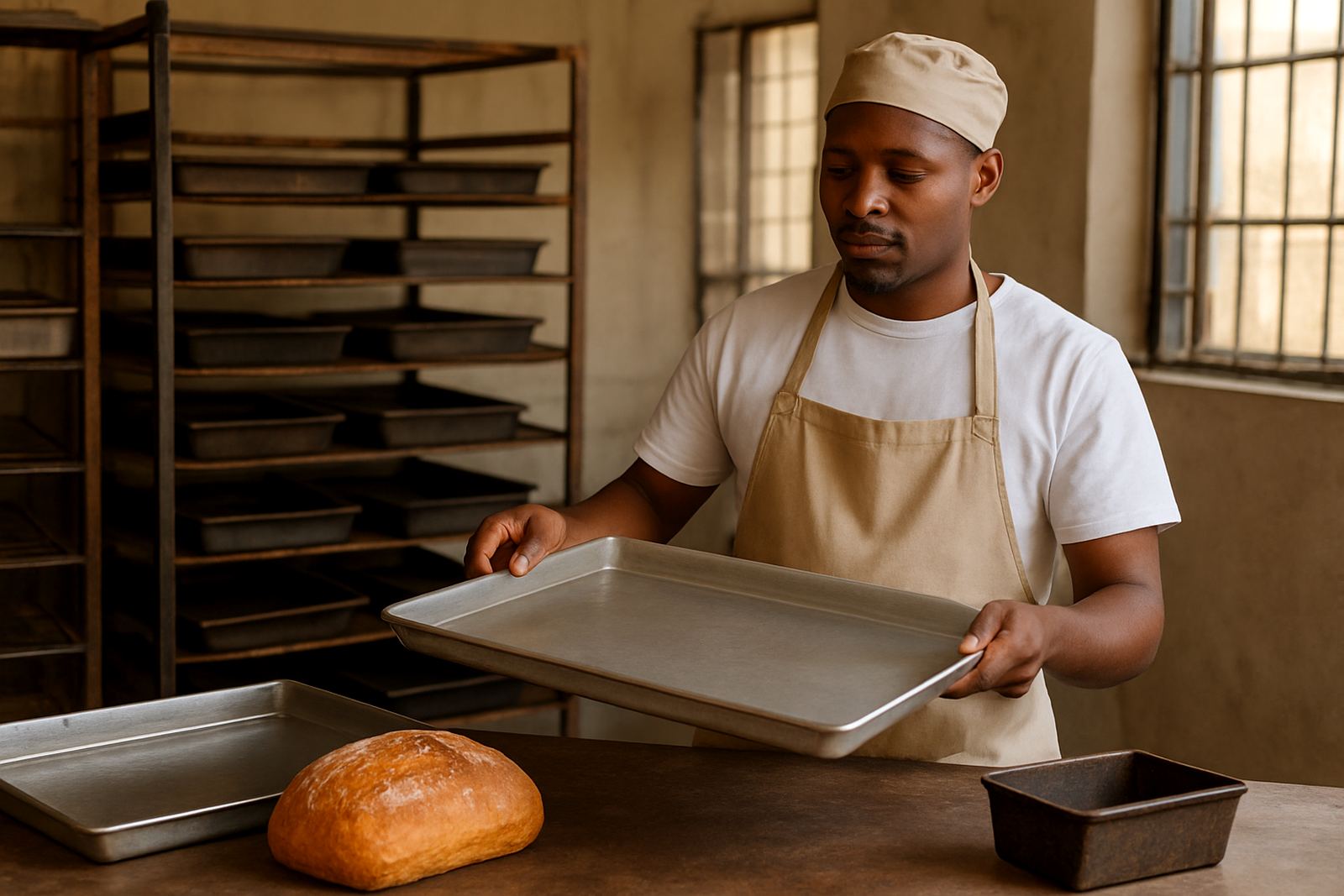
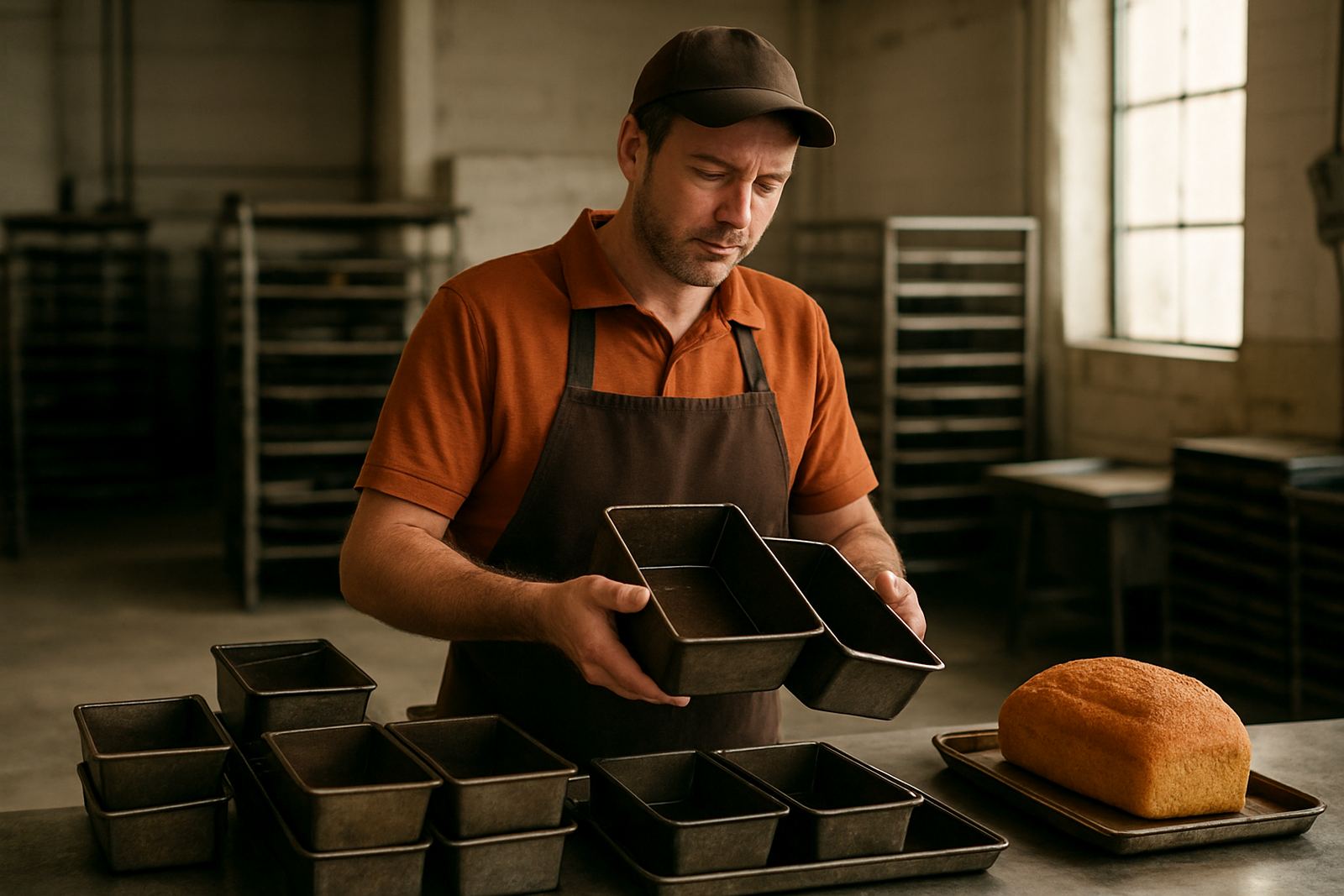
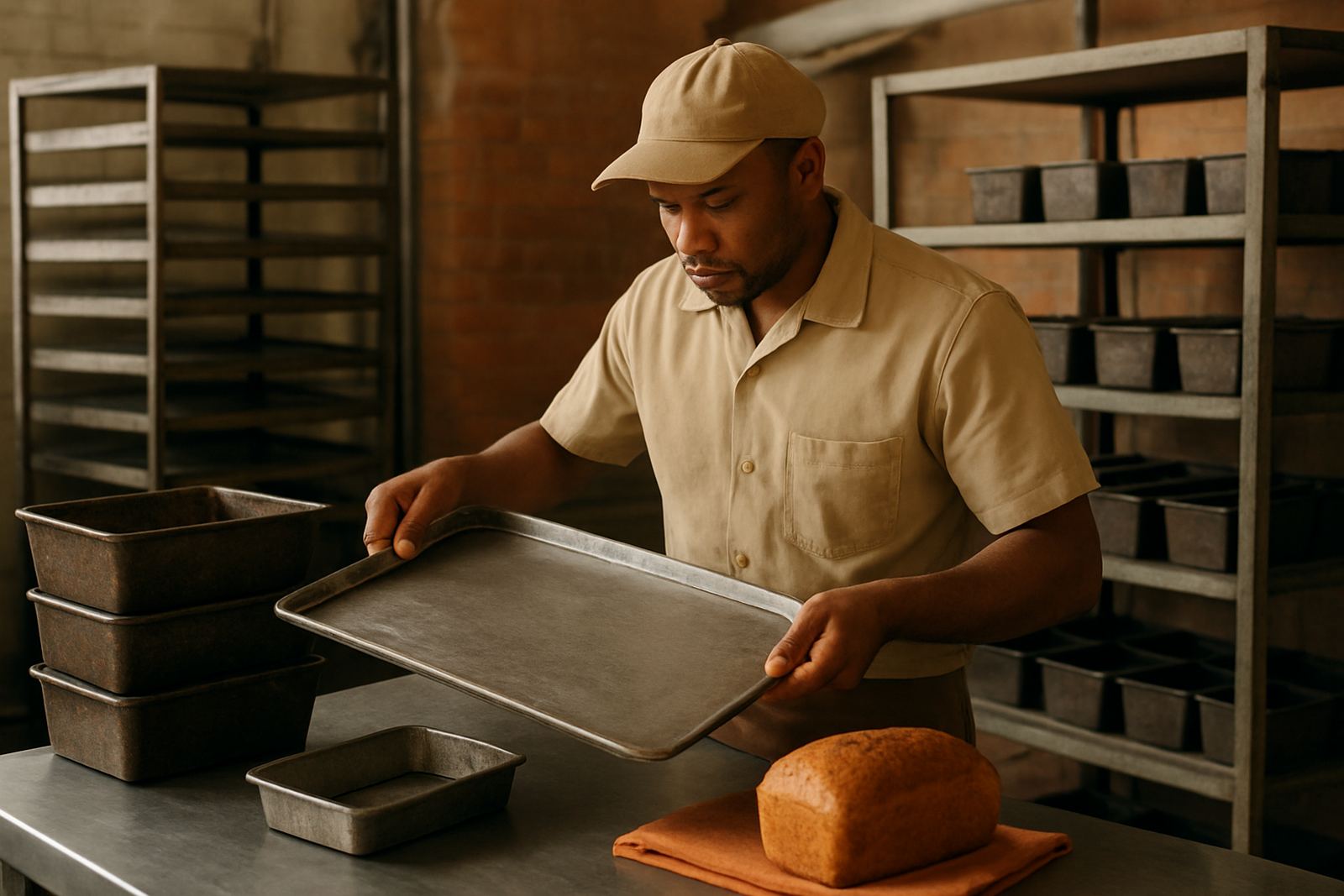
Most damage happens during stacking and carrying, not in the oven. Heavy stacks placed unevenly can twist rims, crush corners and bend the base of bread pans. If trays are lifted by one end only, the centre can sag over time. A bent tray may still be usable, but it will sit badly on racks and bake unevenly.
Use the right trolley or rack for the load. Keep similar sizes together and avoid mixing damaged items with good stock. One bent pan in a stack can put pressure on the rest, so it pays to sort them early.
- Stack by size and shape, not just by availability.
- Keep the heaviest pans at the bottom.
- Use two hands or two people for long trays and floor tiles.
- Do not throw trays into the stack from waist height.
Use the correct release method before every bake
Whether you are baking rolls, loaves or confectionery, the release method needs to suit the product and the pan condition. Too much oil builds up a sticky film that attracts burnt flour. Too little release can tear the loaf, damage the coating, and pull at the corners. For plant bakeries running repeated shifts, consistency matters more than guesswork.
Check that the pan or tray is suited to the product being baked. A pan used for oily doughs will behave differently from one used for plain sandwich loaves. If the surface has worn thin, arrange recoating before the base metal starts to mark the product.
- Apply release evenly, not in heavy patches.
- Keep separate bakeware where products differ a lot.
- Do not use sharp tools to pry stuck loaves or pies loose.
- Inspect the first few bakes after any recoating or repair.
Wash gently and dry fully before storage
Scrubbing with harsh pads, strong caustic cleaners or metal tools shortens the life of bakeware. It strips protective surfaces and can leave scratches that hold carbon and moisture. Warm water, a suitable detergent and a nylon brush are usually enough for day-to-day cleaning.
After washing, dry pans and trays properly before they go back into storage. In Westmead and across KwaZulu-Natal, a part dry pan left overnight can show rust by morning, specially in rooms that close early and sit still until the next shift. Air drying is useful, but final hand drying is better where humidity is high.
- Do not soak bakeware for long periods unless needed for heavy residue.
- Avoid steel wool and abrasive scrapers on coated surfaces.
- Dry seams, corners and folded edges carefully.
- Store only when the metal is fully dry to the touch.
Watch for small faults before they become bigger repairs
Regular checks help you catch issues early. A small rim split, a loose lid, a cracked weld or a slightly out-of-square tray can often be repaired before the item fails in service. Left too long, the same fault can spread through the entire pan or rack load and cost more in downtime and replacement.
It helps to set aside damaged items for inspection instead of pushing them back into service. Our team at Bakerite often sees the same pattern: one corner gets knocked, then the pan is dropped, then the damage runs through the side wall. Small faults are cheaper to fix than full breakdowns, that is the plain truth.
- Look for bowed sides, split corners and loose handles.
- Check weld lines after hard use or rough handling.
- Remove damaged items from circulation straight away.
- Keep a simple fault log by shift or section.
Store spare bakeware where air can move around it
Spare pans, trays and floor tiles should be stored neatly, not wedged into tight corners where moisture sits. Leave a little air space between stacks and keep them off direct floor contact where possible. Wooden sleepers, steel stillages or clean shelving are better than a damp concrete slab.
For plant bakeries, hotels and retailers with back-of-house stores, this also helps during municipal inspections and food safety checks. A clear, tidy store shows the bakeware is being managed properly and makes stock counts easier when the team is under pressure during peak trade or load-shedding recovery.
- Store by type, size and condition.
- Label repaired items so they are used in the right area.
- Keep spare lids, racks and trays together where practical.
- Do not leave bakeware outside, even for a short time.