How we book in orders at Westmead
Every order starts with a clear brief and a check on current production. We confirm the item type, quantities, material thickness, measurements and any special finish before we place it in the schedule. If a bakery in Durban or a hotel on the South Coast needs an urgent run, we look at the job list and advise the next practical slot.
For standard items, timing is usually quicker because the tools and settings are already in place. For custom trays or pans, we need to check drawings or sample pieces, then allow time for setup, cutting, forming and final checks. If your order needs recoating or repairs, the job moves through cleaning, inspection, work done and final review. That process can take longer than a new standard item, but it often saves buying a full replacement.
Standard stock orders and repeat items
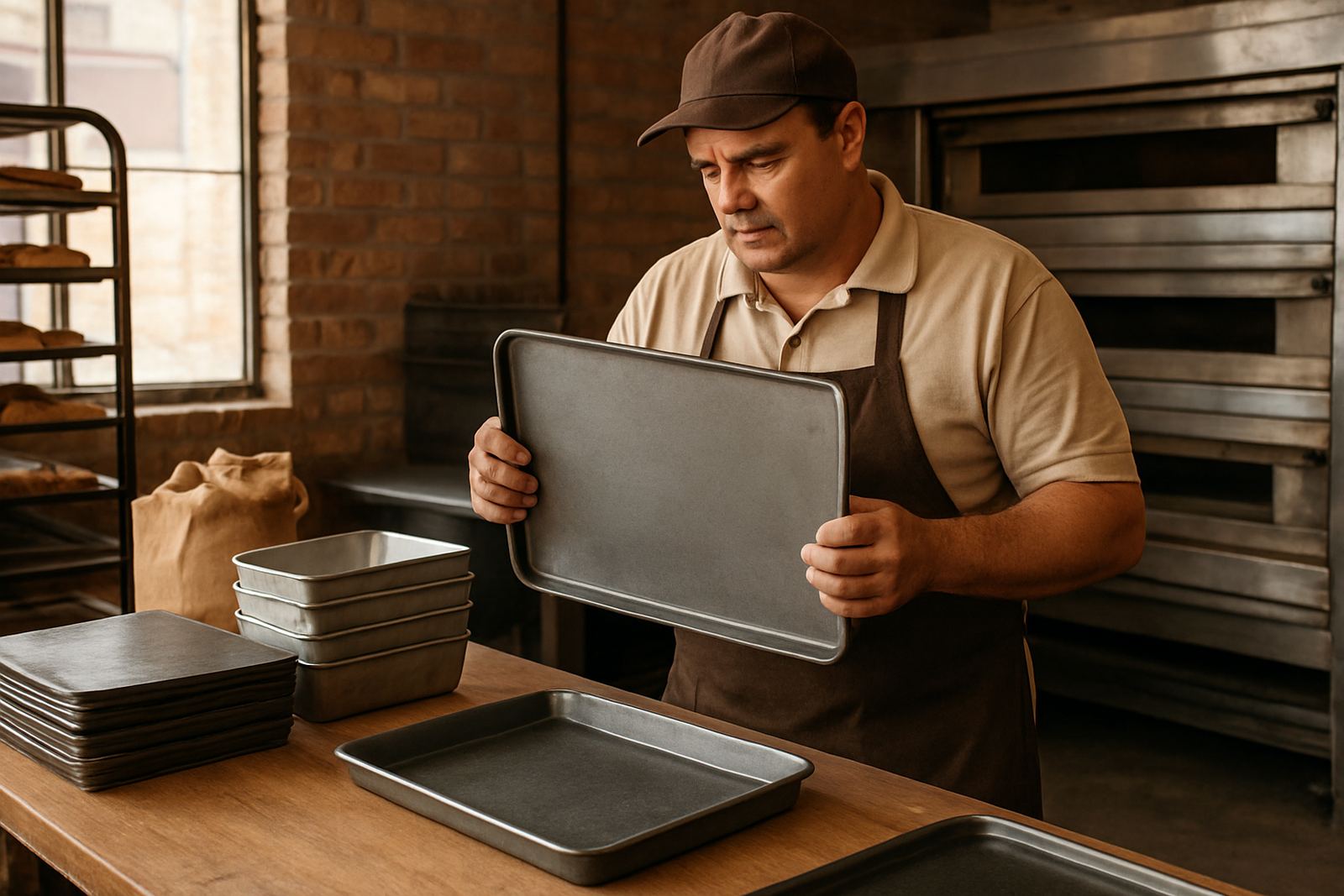
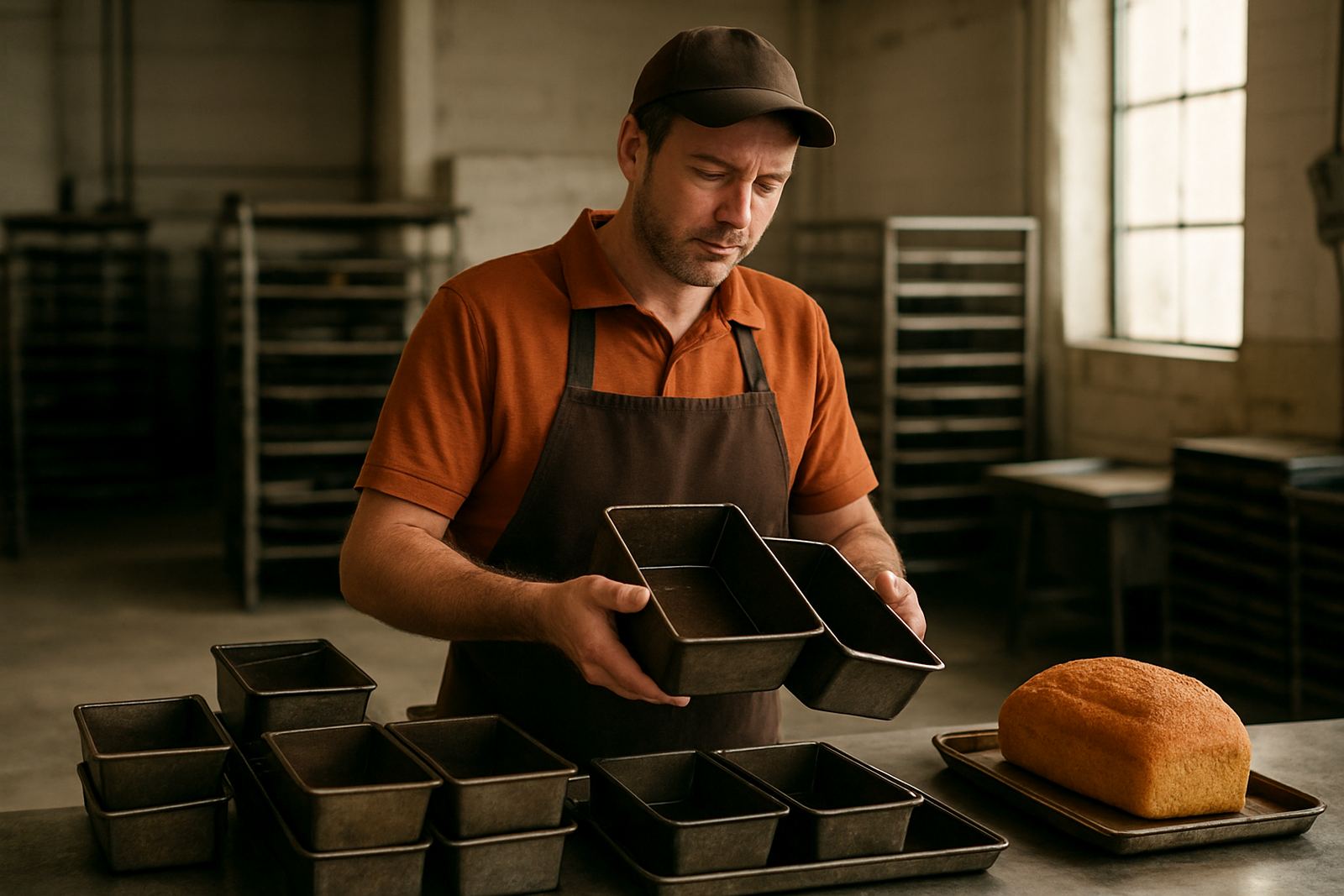
Repeat orders are the fastest to process, especially when the size and spec are already on record. This includes common bread pans, floor tiles and trays made to a known pattern. If stock is on hand, we can often move straight to packing and dispatch. If we need to run a production batch, we will give you a realistic completion window based on the queue and material availability.
- Same spec and same quantity as before usually means a shorter turnaround.
- Larger volumes may be split into batches so you can receive part of the order sooner.
- If your delivery needs to go to Cape Town, Gqeberha or inland, allow extra time for courier or transport collection.
- Public holidays, month-end pressure and load-shedding can affect the schedule so it helps to book early.
Custom trays and made-to-size bakeware
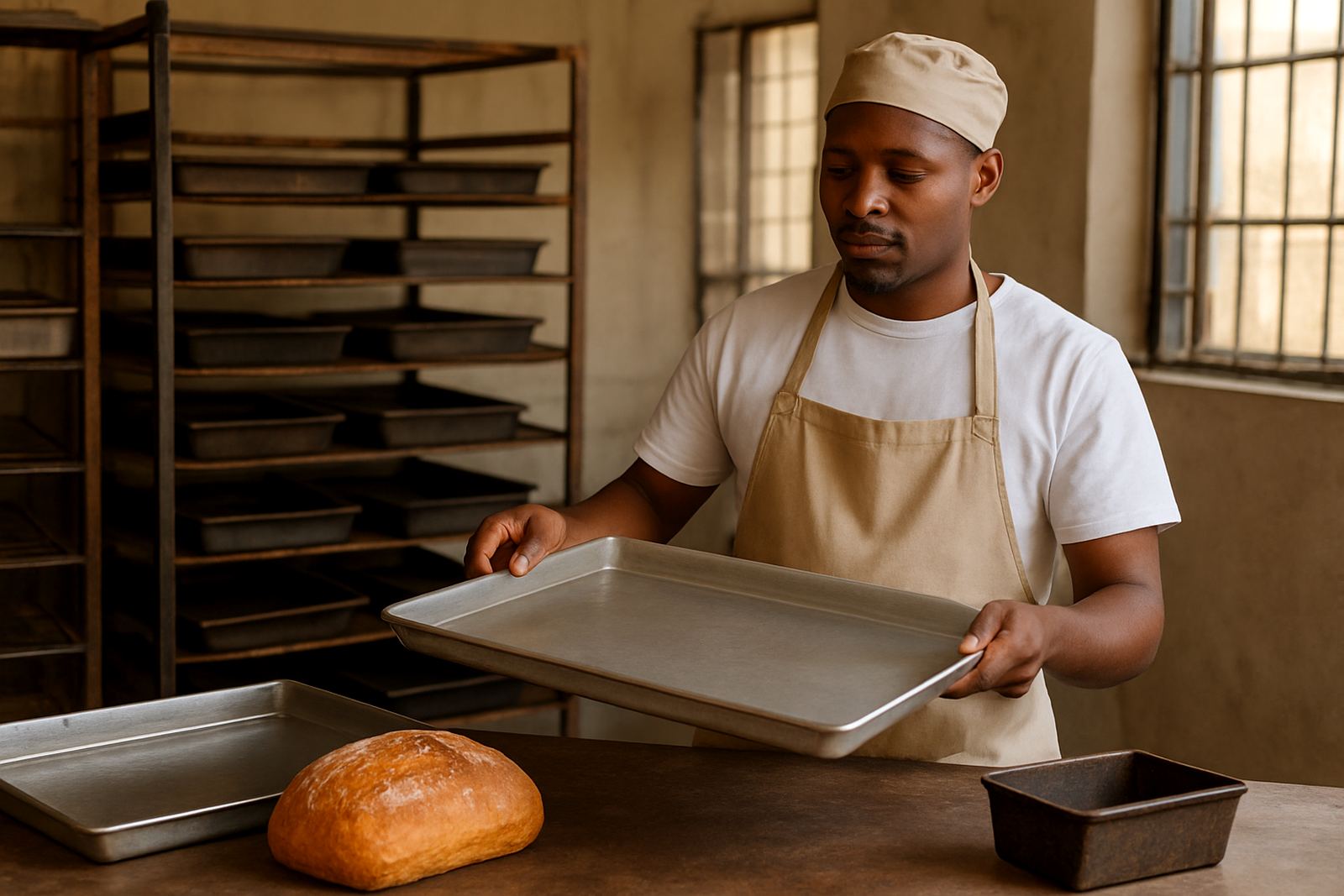
Custom work takes more time because each job is checked against the size, fit and the way the item will be used in the oven or rack. A tray for a plant bakery in KwaZulu-Natal may need different support points than a tray for a hotel kitchen in Pietermaritzburg. We look at the operating heat, loading weight and handling method before cutting metal or starting fabrication.
Where a sample is available, we can work from that. Where there is only a sketch or an old tray, we may ask for measurements in millimetres, photos and a few notes on the fault or change. This reduces back-and-forth and helps us give a more accurate completion time.
- Custom size and shape affect the lead time more than colour or finish.
- Complex bends, welded corners or strengthened rims add extra production steps.
- When a batch must match existing equipment, please send the exact inside and outside measurements.
- If you need several sizes in one order, we can often group the work to save time.
Repair and recoating jobs
Repair work is booked separately from new manufacture because every item has to be inspected first. A pan with a bent rim may need straightening only, while another one may need weld repairs, a new lid or a deep clean before recoating. We do not treat every item the same way, because some pieces are still worth saving and others are too far gone.
For service jobs, the lead time depends on condition and the number of items in the fleet. A small top-up order can move quickly, but a full bakery set with many pans and trays will need more time in the workshop. If your operation is in a coastal area, moisture and salt air can also change the amount of prep work required.
- Send a list of items needing Pan Recoating, Tray Recoating or Deep Cleaning.
- Mark urgent pieces clearly if production is waiting on them.
- Give us a count of repairs needed, not just a total weight or box count.
- Let us know if lids, corners or rims must match an existing line exactly.
What can slow an order down
Most delays come from missing details. If we do not have the correct measurements, clear photos or a complete list of items, the order has to pause while we confirm the spec. Material availability can also change timings, especially on unusual sizes or heavier gauge work. The earlier we know what you need, the easier it is to protect your production date.
Transport can also affect delivery, particularly for plant bakeries outside Durban. If a courier collection is booked late, the goods may be ready but still sit on site for an extra day or two. It is always better to plan transport at the same time as the order, not after completion. That saves alot of back and forth.
How to plan ahead for plant bakery work
If your bakery runs seven days a week, place repeat orders before you run low. For maintenance work, build in time for inspection, cleaning and repairs before the items fail completely. This is important on lines that cannot stop, because one missing tray can slow the whole shift.
When you send an enquiry, include the item type, quantity, town, deadline and whether collection is from Westmead, Pinetown, New Germany, Upper Highway or elsewhere in KwaZulu-Natal. Clear information helps us slot the job correctly and avoid surprises later.
Best way to get a firm lead time
The quickest way to get a reliable turnaround is to send the full order details in one message. We can then check the current schedule, advise what can be done first and tell you if a standard order, custom build or repair will need extra time. If the job is urgent, say so at the start and we will be direct about what is possible.
For ordering and service enquiries, contact our Westmead base by email and include photos where possible. That gives the team a better view of the job before it enters production, and helps us keep your bakery, hotel or retail line moving.