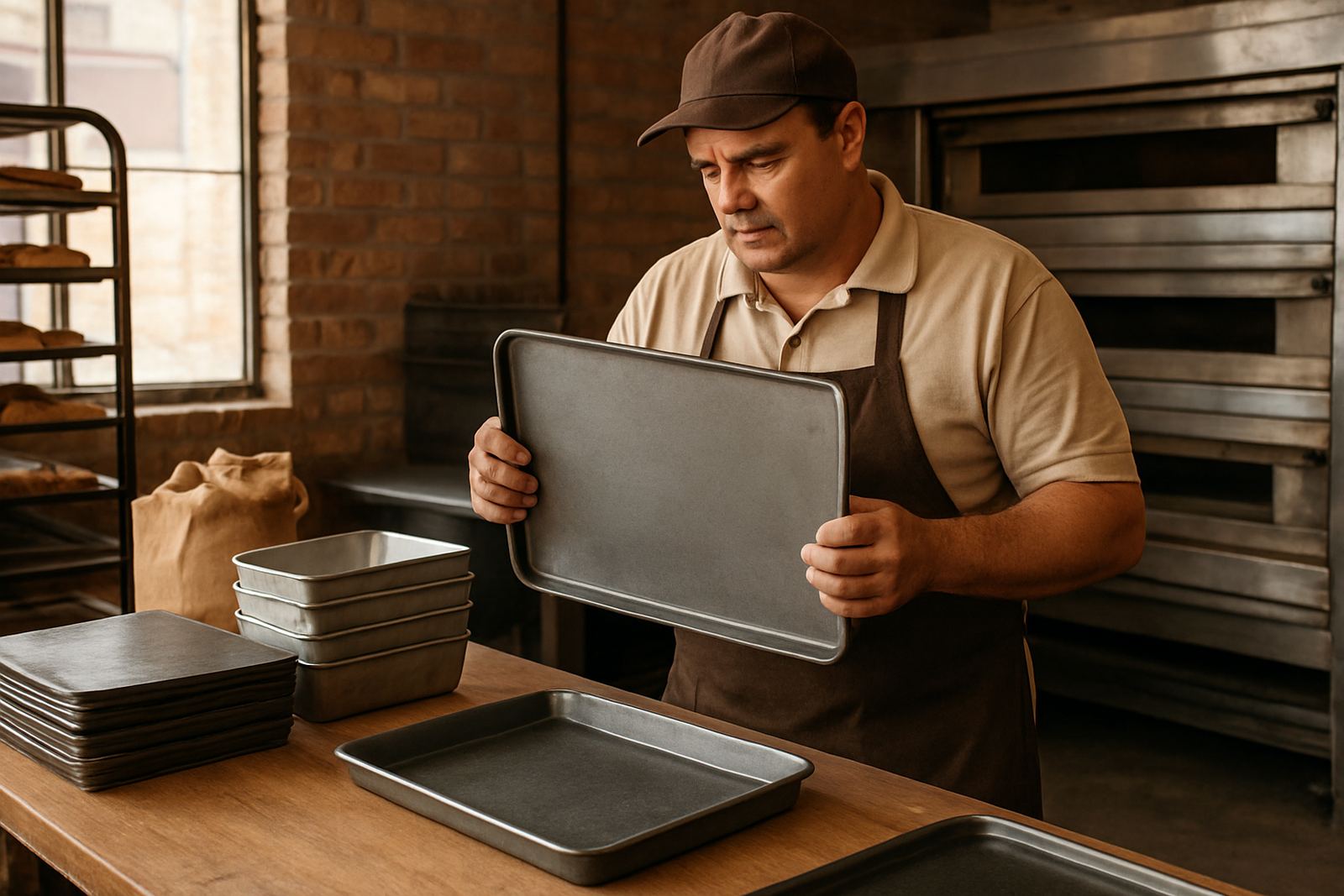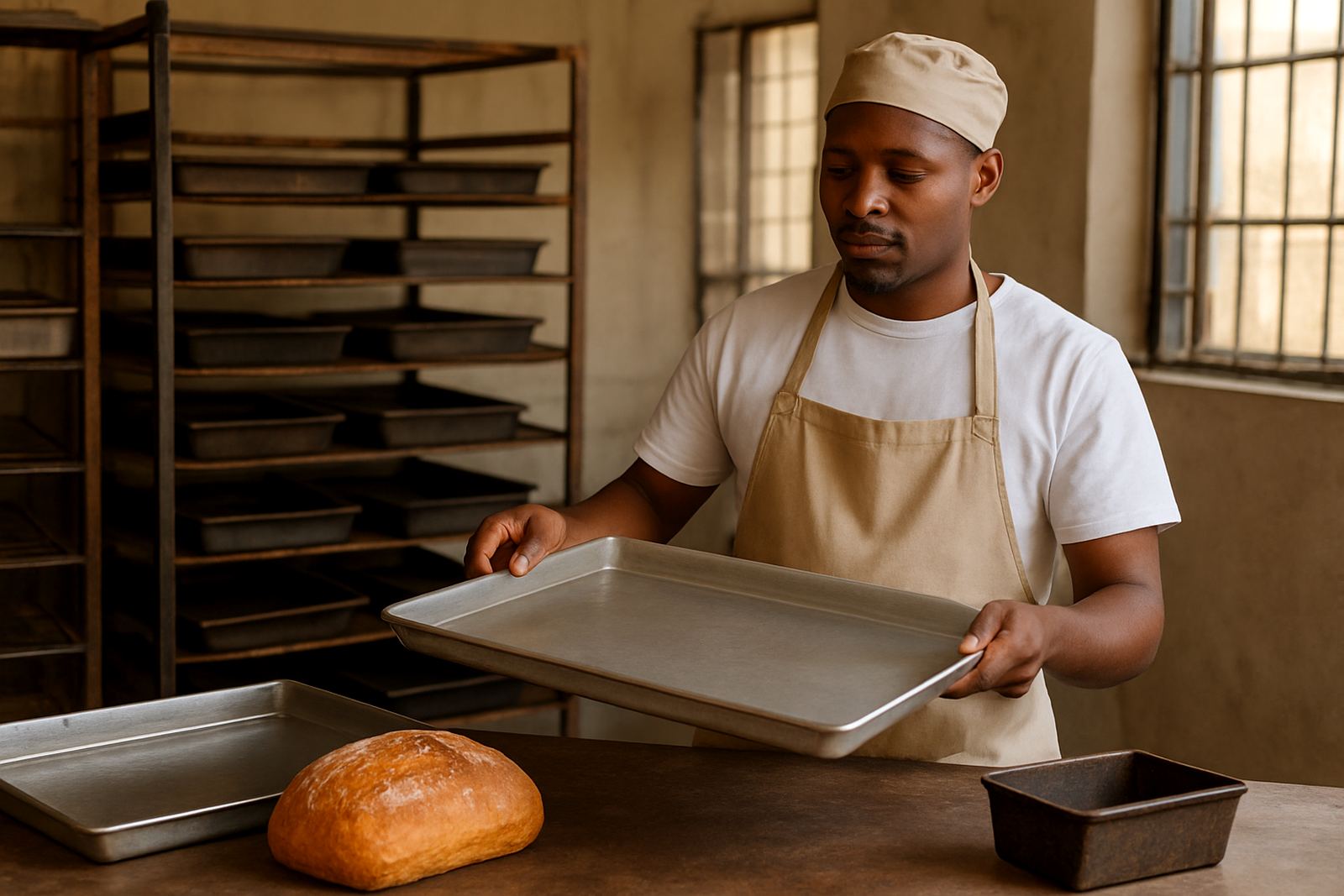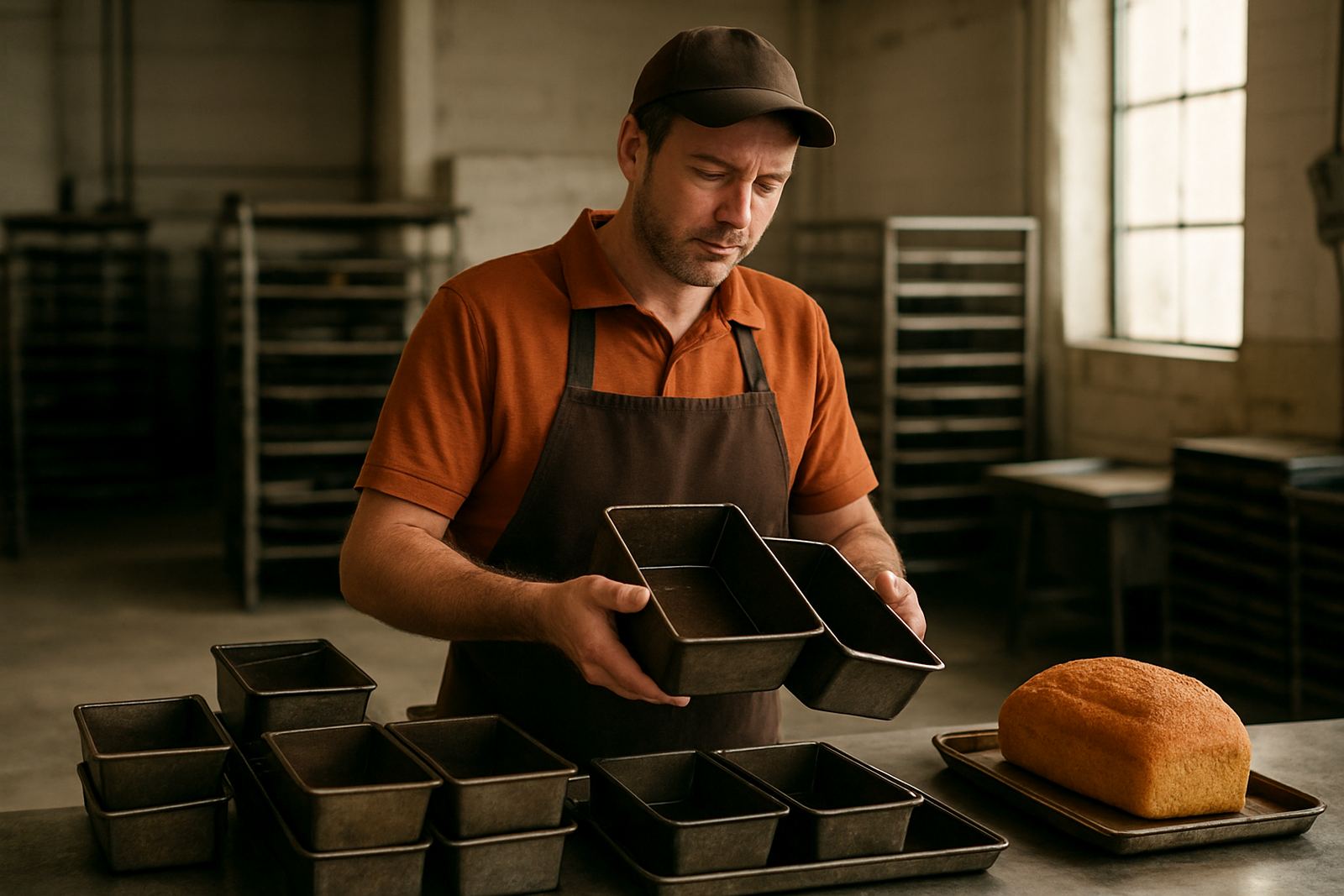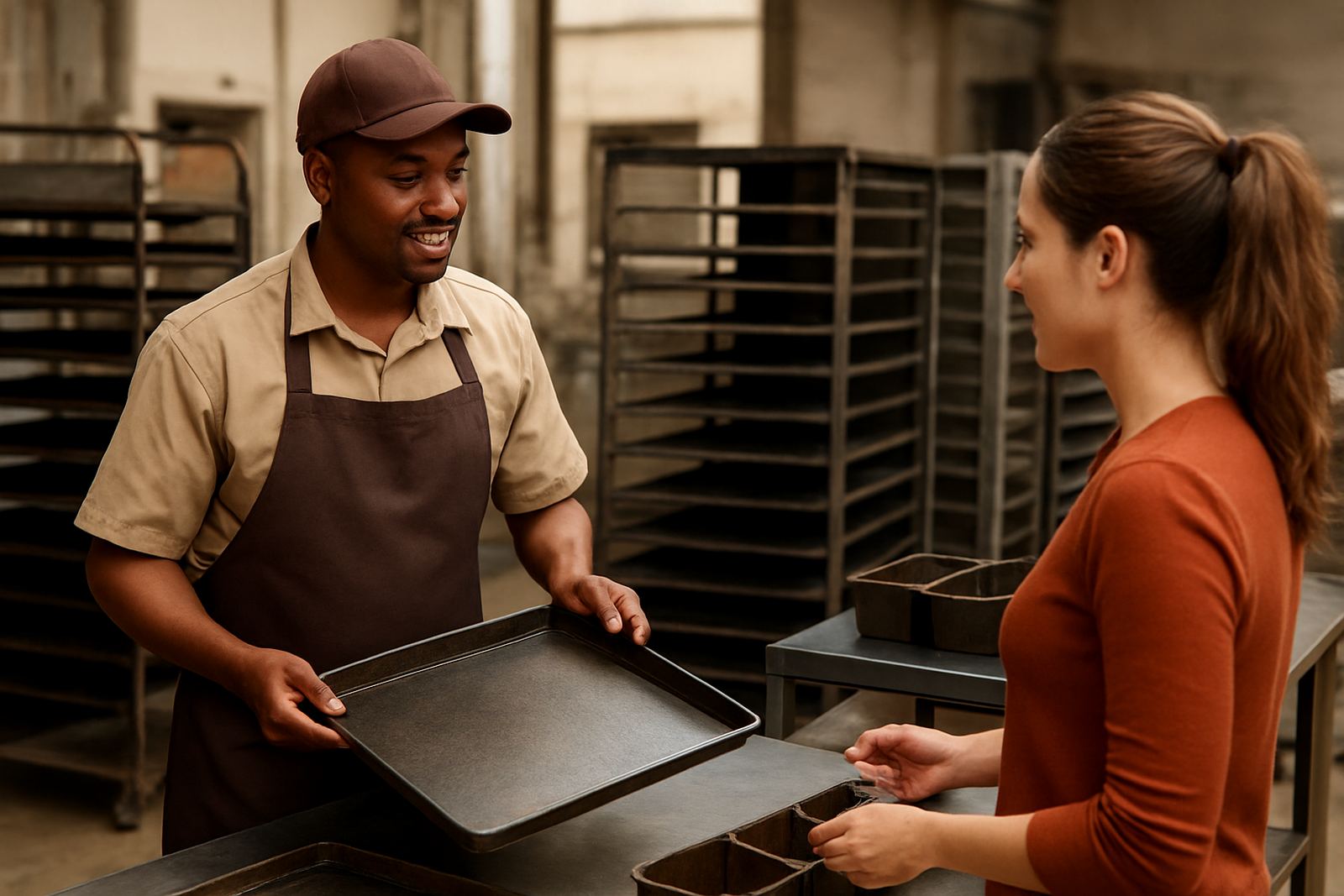
Start with the item, the fault and the quantity
The quickest way to get useful advice is to tell us exactly what you have on hand. A single bent bread pan is very different from a full fleet that is thinning at the corners, losing coating or starting to leak at the seams. When you contact us, include the item type, the number of pieces, the size or mould count, and what is going wrong. If you are in Durban, Pinetown, New Germany or further afield, photos help a lot because we can often spot wear patterns before the item gets packed up.
We also need to know how the equipment is used. High heat, long bake cycles, frequent washdowns and coastal humidity all affect service life. In some bakeries the issue is simple wear, in others the tray is still sound but the coating has gone brittle or the rims have been knocked out of line. The more detail you give us upfront, the faster we can advise on recoating, straightening or replacement.
What happens when your service enquiry lands
Once we receive your enquiry, our team checks the item type, condition and likely repair path. We look at whether the piece can be recoated, whether it needs straightening or welding, and whether a spare lid, corner repair or rim repair will extend its working life. If you are managing a plant bakery fleet, we can also help you sequence the work so you do not send every pan out at once.
- Initial review of photos, notes and quantities
- Repair or recoating recommendation
- Assessment of turnaround time and practical options
- Replacement planning where repairs will not pay off
For larger fleets, we may suggest a phased plan instead of a full stop. That matters when ovens must keep moving and there is no room for a sudden shortage. It also helps with stock control, because you can see which items are worth saving and which should be replaced before they fail on the line.
Recoating for pans and trays that still have good structure
Recoating is often the best answer when the steel is still straight and the base is sound. We deal with pan recoating and tray recoating for bakery operations that want to keep using proven equipment rather than buying everything again. If the coating is worn but the frame is still solid, recoating can save time and money, and it can keep your product release more consistent too.
Before recoating, we check for deeper faults. If a tray has cracks, warped edges or failed welds, recoating alone will not solve it. In that case we will advise on weld repairs, rim repairs or a straight replacement. This is where honest assessment matters. It is no use spending money on a piece that will fail after a few more bakes.
We also help with deep cleaning before service work begins. Built up residue can hide damage and it can affect the finish after recoating. A clean item gives a better result and a more accurate view of the condition.
Repair assessment for damage, wear and distorted fit
Some problems are obvious, such as a bent tray, missing lid or broken corner. Others only show once the item is back in service, like a pan that no longer sits correctly in the oven or a lid that does not seal as it should. Our repair assessment looks at fit, function and the pattern of wear, so the fix matches the actual problem.
- Pan straightening for items that have pulled out of shape
- Corner repairs for knocks and cracked edges
- Rim repairs where the lip has weakened or split
- Lid repairs and spare lids for lost or damaged parts
- Weld repairs where joints need attention
In many cases, the issue is a mix of wear and handling. Forklift movement, stacking pressure and quick changeovers can all leave marks. We see that often in busy bakeries around KwaZulu-Natal, especially where equipment is used hard and cleaned often. A proper assessment saves guesswork and helps you plan the next step with a clear head.
Fleet assessment and replacement planning for busy bakeries
If you run a working fleet, do not wait for every item to fail at once. Fleet assessment gives you a view of what is still serviceable, what needs repair, and what should be earmarked for replacement. That is especially useful for plant bakeries, hotels and retailers that need predictable output and cannot afford to lose production because of a run of tired pans or trays.
We can help you split your fleet into three groups: keep in service, repair now, replace next. That makes budgeting easier and avoids emergency buying. It also gives your team a realistic timeline for maintenance. If a batch of trays needs recoating before the December rush, or if floor tiles are wearing under constant oven traffic, it is better to know now than after a breakdown.
For ovens that run daily, floor tiles and bread pans take a lot of punishment. Small cracks or surface loss can spread quickly under heat. A planned replacement cycle is usually cheaper than waiting for a full failure, and it keeps production steadier through load-shedding disruptions too, when every usable item matters.
How to send photos and details for faster help
You do not need a long report, but a few clear details make a big difference. Send photos in good light, show the top and underside if possible, and include a ruler or tape measure for scale. If the damage is localised, take a close-up and one wider shot. If it is a batch issue, give us an example from the front, middle and back of the stack.
- Item type and quantity
- Approximate size or mould count
- What the fault looks like
- How urgently you need it back
- Your site location and collection preference
If you are based in Westmead, Pinetown, Durban, Upper Highway or further out in the country, we can still work through the enquiry with you. Sometimes we can advise straight away and sometimes we need to see the pieces in hand. Either way, clear photos and measurements help us keep the process moving without back-and-forth delays.
Contact Bakerite for service support
For service enquiries, send your details to sales@bakerite.co.za and include as much useful information as you can. Bakerite is based in Westmead, Pinetown and we support plant bakeries nationally, with practical help for recoating, repair work and replacement planning. If you are unsure whether an item is worth saving, ask anyway. It is better to check first than throw out equipment that still has life left in it.
We work with plant bakeries, retailers and hotels that need their bakeware to stay in use day after day. When the fleet is under pressure, a straightforward answer is more useful than guesswork. That is why we look at condition, fit and actual working life before recommending the next step. One good assessment can save a whole run of unnecessary spend.